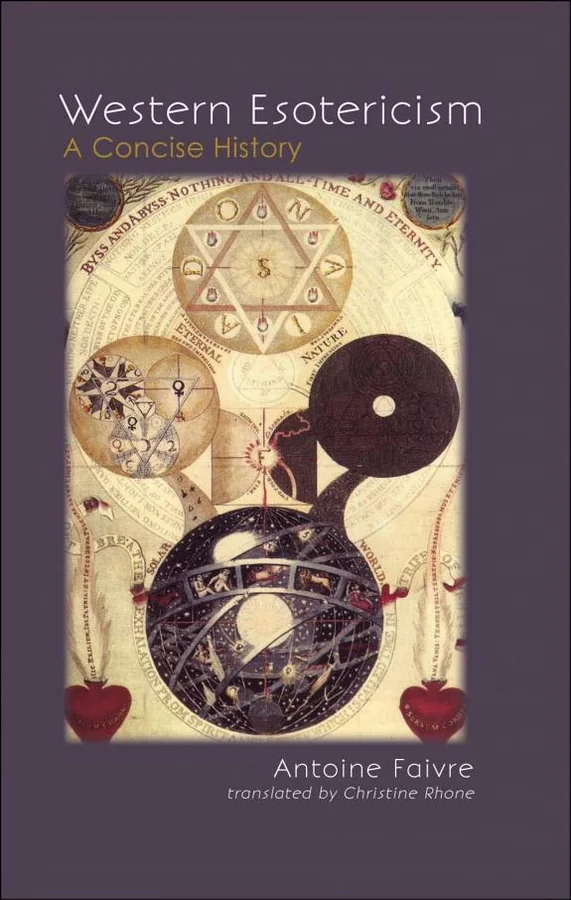
Western Esotericism
 78
78

Western Esotericism
Antoine Faivre's "Western Esotericism" serves as an indispensable, if somewhat dry, primer on a field he largely defined. The book’s strength lies in its systematic historical overview, meticulously charting the evolution of esoteric thought from antiquity to the modern era. Faivre’s meticulous scholarship is evident in his careful distinctions between various esoteric currents, avoiding facile generalizations. A notable passage details the Renaissance alchemical tradition, highlighting its philosophical underpinnings rather than mere charlatanism. However, the book’s academic tone, while precise, can sometimes render the subject matter less accessible to the absolute beginner. The sheer density of historical detail, while accurate, might overwhelm those seeking a more experiential introduction. Despite this, for serious students of the history of Western thought, it remains a crucial reference.
📝 Description
78
Antoine Faivre's 1992 book surveys esoteric currents that shaped Western thought since antiquity.
Antoine Faivre's "Western Esotericism" provides a survey of esoteric currents that have influenced Western thinking from ancient times onward. The book moves past simple definitions to show a complex intellectual history. It carefully traces the development of these ideas, examining how they emerged and changed over centuries.
The work avoids treating esotericism as a single, unchanging entity. Instead, it points out the many different ways it has appeared and the discussions within it. Faivre places Western esotericism within its historical and intellectual settings, from late antiquity through the Renaissance, Enlightenment, and into modern times. He notes the impact of philosophical and religious movements like Neoplatonism and Gnosticism. The book also considers how esoteric traditions interacted with, or differed from, mainstream academic or scientific views. It implicitly touches on the difficulties of studying these traditions, which often existed outside established institutions.
This book acts as an introduction to the academic study of Western esotericism, a field Antoine Faivre helped to establish. It grounds esoteric traditions within their historical development, showing them not as isolated mystical practices but as part of broader intellectual and cultural movements. Faivre's work emphasizes understanding these traditions on their own terms, acknowledging their unique concepts and experiences, while also relating them to the wider history of Western philosophy and religion.
💡 Why Read This Book?
• Gain a structured understanding of esoteric traditions since late antiquity, moving beyond popular misconceptions by learning about Faivre's specific periodization, such as his emphasis on the last six centuries. • Grasp core esoteric concepts like "intermediaries" and the "light of nature," as explained by the field's founder, enabling you to analyze historical texts with greater clarity. • Appreciate the historical development and intellectual context of Western esotericism, understanding its relationship to broader philosophical and religious movements as presented in Faivre's comprehensive survey.
⭐ Reader Reviews
Honest opinions from readers who have explored this book.
❓ Frequently Asked Questions
What is the primary focus of Antoine Faivre's "Western Esotericism"?
The book provides a historical overview of Western esoteric currents, tracing their development from late antiquity, with a particular emphasis on the last six centuries, aiming to introduce students and novices to the field.
When was Antoine Faivre's "Western Esotericism" first published?
The original French publication by Antoine Faivre was first released on February 1, 2010.
Who is Antoine Faivre?
Antoine Faivre is a prominent scholar and considered a founder of the academic field of Western Esotericism studies, known for his rigorous historical and comparative approach.
What kind of historical periods does the book cover?
The work spans from late antiquity, encompassing figures and movements from that era, through the medieval period, Renaissance, Enlightenment, and into more modern manifestations of esoteric thought.
Is this book suitable for someone completely new to esotericism?
Yes, the book is written with students and novices in mind, offering a clear, comprehensive, and pedagogical introduction to the complex subject of Western esoteric traditions.
What are some of the key ideas discussed in "Western Esotericism"?
Faivre explores concepts such as the role of spiritual intermediaries, the understanding of nature as a living, spiritual entity (the 'light of nature'), and the importance of inner experience in esoteric traditions.
🔮 Key Themes & Symbolism
Historical Development of Esotericism
Faivre meticulously charts the evolution of Western esoteric thought from its ancient roots through to the modern era. He emphasizes the continuity and transformation of ideas across centuries, highlighting key periods like the Renaissance and Enlightenment where esoteric currents flourished or were reinterpreted. This theme focuses on tracing specific lineages and intellectual exchanges, demonstrating how concepts like Hermeticism and Gnosticism influenced later developments, moving beyond a static understanding of these traditions.
Defining Esoteric Currents
A central theme is the attempt to define and categorize the diverse range of Western esoteric traditions. Faivre distinguishes between various schools of thought, such as magic, alchemy, astrology, and mysticism, while also showing their interconnectedness. He stresses the importance of understanding the internal logic and aims of these currents, moving beyond external, often dismissive, classifications. The work clarifies what constitutes an 'esoteric' approach to knowledge and spirituality.
The Role of Experience and Knowledge
This theme explores the emphasis within esoteric traditions on direct spiritual experience and the acquisition of hidden knowledge. Faivre discusses concepts like the 'light of nature' and the function of 'intermediaries' as pathways to understanding the divine or the cosmos. The book examines how esoteric practitioners sought gnosis or illumination, often through symbolic language, ritual, and contemplative practices, contrasting this with more orthodox modes of religious or philosophical inquiry.
Interaction with Mainstream Thought
Faivre analyzes how esoteric currents interacted with, and were often suppressed by, dominant religious, philosophical, and scientific paradigms throughout Western history. He discusses instances of censorship, the marginalization of esoteric ideas, and the ways in which these traditions adapted or went underground. This theme highlights the dynamic tension between esoteric pursuits and established intellectual structures, showing how they coexisted and influenced each other.
💬 Memorable Quotes
Direct passages from the work, attributed to the author.
“Western esoteric currents since late antiquity.”
— This phrase expresses the book's expansive historical scope, indicating its commitment to tracing the lineage of these hidden traditions from their earliest known manifestations.
“Emphasis on the last six centuries.”
— This highlights Faivre's focus on the more recent, and perhaps more complex, developments in Western esotericism, suggesting a deep dive into periods like the Renaissance, Enlightenment, and beyond.
“A historical and pedagogical guide.”
— This frames the book's dual purpose: to provide a rigorous historical account while also serving as an accessible teaching tool for newcomers to the subject.
“Clear, precise language.”
— This points to Faivre's intention to explain a complex field, using scholarly rigor without resorting to overly obscure or inaccessible terminology.
“Overview of Western esoteric currents.”
— This signifies the book's function as a broad introduction, aiming to cover the major movements and ideas within the spectrum of Western esotericism.
🌙 Esoteric Significance
Tradition
Faivre's work is foundational to the academic study of Western Esotericism as a distinct field. It situates traditions like Hermeticism, Kabbalah, alchemy, and various forms of magic and mysticism within a continuous historical narrative. He seeks to identify common characteristics and underlying principles that unite these diverse currents, distinguishing them from both exoteric religion and purely philosophical inquiry. His approach emphasizes their internal coherence and historical development.
Symbolism
While not always explicitly detailing symbols, Faivre's work implies the significance of motifs like the 'light of nature,' representing divine illumination or the inherent spiritual essence within the cosmos. The concept of 'intermediaries' also functions symbolically, pointing to the hidden connections and correspondences between the material and spiritual realms that esoteric practitioners sought to understand and manipulate.
Modern Relevance
Faivre's meticulous historical framework provides essential context for contemporary practitioners and scholars of modern Paganism, the New Age movement, and various forms of ceremonial magic. Thinkers and groups exploring Neo-Platonism, Hermeticism, or Kabbalistic reconstruction often rely on Faivre's definitions and historical analyses to understand their own traditions' roots and evolution.
👥 Who Should Read This Book
['• Beginning students of Western Esotericism seeking a reliable, historically grounded introduction to key movements and concepts.', '• Comparative religion scholars interested in understanding the historical development and intellectual distinctiveness of esoteric traditions.', '• Advanced practitioners of esoteric arts who wish to contextualize their practices within a broader historical and philosophical framework.']
📜 Historical Context
Antoine Faivre's "Western Esotericism," first published in French in 2010, emerged within an academic landscape increasingly receptive to the study of previously marginalized intellectual traditions. The field itself, heavily shaped by Faivre's own work from the late 20th century onwards, sought to establish a rigorous methodology distinct from earlier, often romanticized, approaches. Faivre’s scholarship directly engaged with and built upon the work of contemporaries like Frances Yates, who explored Renaissance esoteric thought, and scholars of Gnosticism and Hermeticism. The book implicitly addresses the historical reception of esoteric ideas, which often faced suspicion or outright condemnation from dominant religious and philosophical authorities, such as the Church or Aristotelian scholasticism. By providing a comprehensive historical survey, Faivre aimed to legitimize the study of these currents, demonstrating their consistent presence and intellectual significance throughout Western history.
📔 Journal Prompts
Reflect on the concept of 'intermediaries' as presented by Faivre.
Consider the historical trajectory of esoteric thought from late antiquity to the Renaissance.
Analyze the role of direct spiritual experience in the traditions discussed.
How does Faivre's definition of esotericism differ from popular misconceptions?
Explore the significance of the 'light of nature' in historical esoteric texts.
🗂️ Glossary
Esotericism
A broad category of traditions and practices that emphasize hidden knowledge, spiritual transformation, and direct experience of the divine, often existing outside mainstream religious and philosophical institutions.
Hermeticism
A philosophical and religious tradition based primarily upon writings attributed to Hermes Trismegistus, emphasizing the correspondence between the macrocosm and microcosm, and the potential for human spiritual ascent.
Gnosticism
Ancient religious movements characterized by a belief in a supreme, transcendent God who creates the world through lesser beings (Aeons), and the idea that salvation is achieved through secret knowledge (gnosis).
Alchemy
A complex tradition involving the transmutation of base metals into gold, often understood as a symbolic representation of spiritual purification and transformation of the soul.
Light of Nature
A concept found in some esoteric traditions, referring to an inherent spiritual essence or divine illumination within the natural world, which can be perceived through specific practices or insights.
Intermediaries
Beings, forces, or symbolic structures that facilitate communication or connection between different levels of reality, such as between the human, divine, and natural realms in esoteric thought.
Gnosis
Direct, intuitive, or experiential knowledge of spiritual truths, often seen as the key to salvation or liberation in Gnostic and other esoteric traditions.
This book appears in 1 collection
🔮 Readers Also Liked
Browse all →








From the “Western Esotericism” Collection
View all →








More Free Sacred Texts & Gnosticism Books
View all →