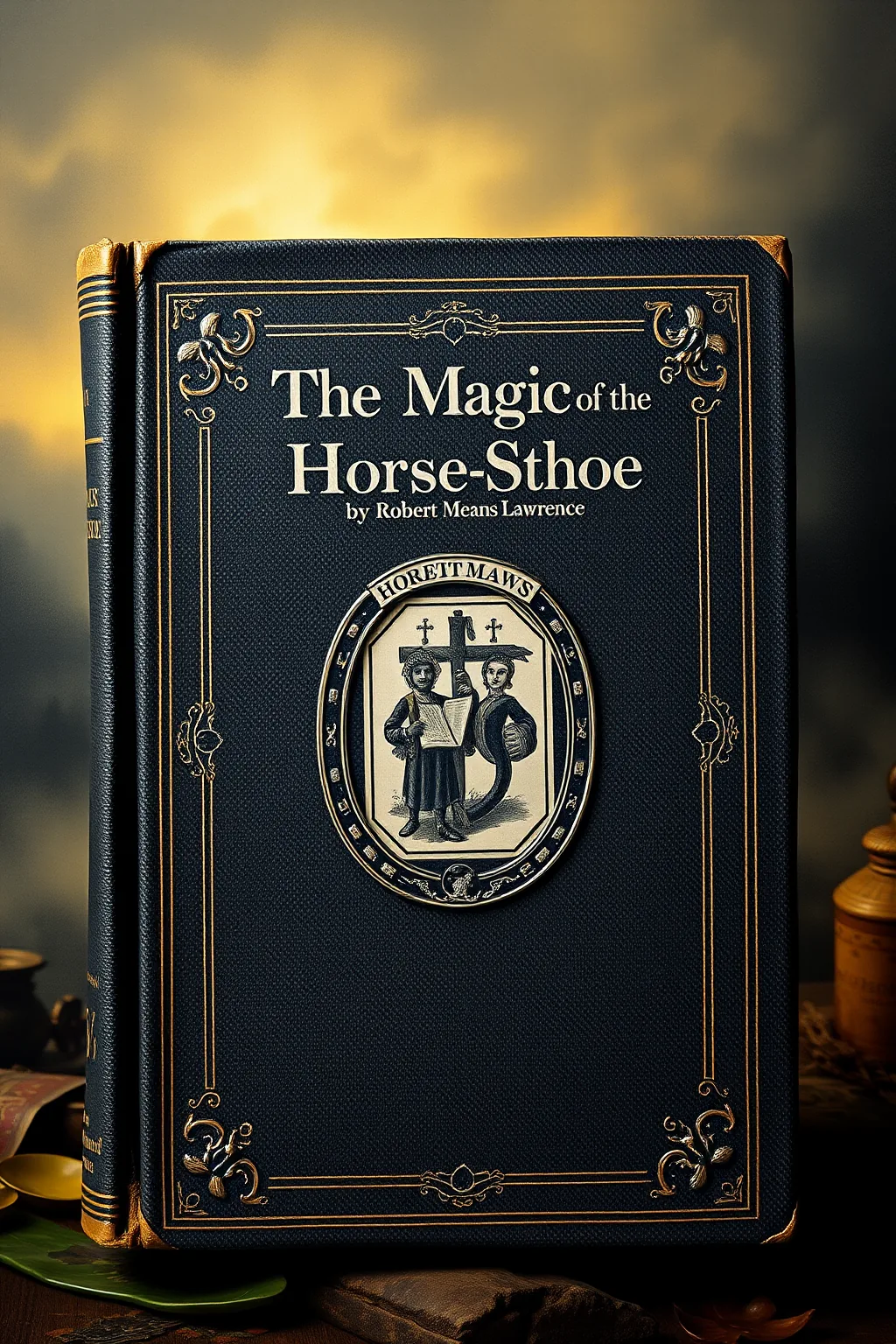
The Magic of the Horse-Shoe
 80
80

The Magic of the Horse-Shoe



Aurelia Blackwood (Occult Philosophy Critic) — Robert Means Lawrence’s 'The Magic of the Horseshoe' remains an indispensable cornerstone for anyone exploring the vernacular magic and ancient protective symbols. Lawrence masterfully navigates the labyrinthine paths of folklore, revealing the profound esoteric currents that have flowed through this seemingly mundane object for millennia. His synthesis of comparative mythology and historical accounts offers invaluable insights into the deep psychological roots of superstition and the enduring human reliance on talismans. This work is a treasure for occult scholars, folklorists, and practitioners seeking to understand the foundational principles of apotropaic magic and the sacred geometry embedded within everyday artifacts. A truly illuminating study.
📝 Description
80
Robert Means Lawrence published 'The Magic of the Horseshoe' in 1898, examining its ancient superstitions.
Robert Means Lawrence's 1898 book, 'The Magic of the Horseshoe,' investigates the widespread folklore and superstitions associated with this common object. Lawrence traces the horseshoe's history, showing how it transformed from a blacksmith's product into a symbol of protection and good luck across various cultures. The text details ancient beliefs about the protective qualities of iron, crescent shapes, and fire, drawing connections through comparative folklore and historical accounts.
It examines the human desire to ward off evil and attract good fortune, explaining how the horseshoe became a focus for deeply held superstitions and magical practices. The book reveals the underlying meanings found in everyday objects and the rituals people perform. Lawrence's work offers insight into the collective human psyche and the persistence of sympathetic magic.
Published near the end of the 19th century, 'The Magic of the Horseshoe' belongs to a tradition of folkloric and antiquarian studies that emerged during a period of intense interest in the occult and forgotten beliefs. Authors like Lawrence sought to document and understand the origins of superstitions and magical practices, often connecting them to broader patterns in human psychology and ancient religious systems. This work fits within a larger movement to collect and analyze beliefs that modern society was beginning to dismiss, seeing them as remnants of older, more mysterious worldviews.
✍️ Author

Robert Means Lawrence
Robert Lawrence Kuhn (born November 6, 1944) is an American public intellectual and investment banker. He is also an author, television producer, columnist and commentator, especially on topics related to China.
💡 Why Read This Book?
Uncover the hidden, potent symbolism of the horseshoe, a universal talisman. Explore ancient beliefs about iron's protective qualities and the origins of good luck charms. This book is essential for seekers of esoteric knowledge, folklorists, historians, and practitioners interested in the deep roots of sympathetic magic and protective rituals. Discover the enchanting history behind a common object.
⭐ Reader Reviews
Honest opinions from readers who have explored this book.
❓ Frequently Asked Questions
What is the primary focus of 'The Magic of the Horseshoe'?
The book's primary focus is the extensive folklore, superstitions, and symbolic uses associated with the horseshoe across various cultures and throughout history, exploring its role as a powerful talisman.
What historical periods does the book cover?
The book surveys beliefs and practices spanning from ancient times through to the late 19th century, when it was originally published.
What types of protective emblems are discussed alongside the horseshoe?
Lawrence examines other protective emblems such as iron, crescents, horns, and fire, drawing parallels and connections to the horseshoe's symbolism.
Who is Robert Means Lawrence?
Robert Means Lawrence was an author known for his scholarly explorations into folklore, mythology, and esoteric subjects, with 'The Magic of the Horseshoe' being one of his notable works.
Is 'The Magic of the Horseshoe' suitable for beginners?
Yes, while learned, the book's engaging narrative and broad scope make it accessible and fascinating for beginners interested in folklore and the origins of superstition.
🔮 Key Themes & Symbolism
The Horseshoe as a Universal Talisman
This theme explores the horseshoe's ubiquitous presence across diverse cultures and eras as a potent symbol of protection and good fortune. It explores how this simple forged object transcended its utilitarian purpose to become a deeply ingrained emblem in human consciousness, warding off malevolent spirits and attracting auspicious energies. Lawrence meticulously traces its symbolic journey, highlighting its role in folk magic, ritual, and personal belief systems, revealing the universal human desire for safeguarding and prosperity.
Iron's Ancient Protective Properties
A significant thread woven throughout the book is the ancient belief in the inherent protective qualities of iron. This theme examines why iron, a material associated with the forge, fire, and often considered a 'cold' metal, was so widely employed in apotropaic practices. Lawrence connects this to early metallurgy, shamanic traditions, and the perceived ability of iron to disrupt or repel supernatural forces, offering a compelling exploration of primal fears and the material world's perceived magical resistance.
Crescents, Horns, and Sympathetic Magic
This theme expands beyond the horseshoe itself to explore related curvilinear forms and the underlying principles of sympathetic magic. Lawrence investigates the symbolic resonance of crescents, horns, and other curved or pointed shapes, often found in protective amulets. It illuminates how these forms, mirroring natural phenomena or celestial bodies, were believed to channel specific energies, thereby influencing events or offering spiritual defense. The interconnectedness of these symbols reveals a sophisticated ancient understanding of the cosmos and its influence on human life.
💬 Memorable Quotes
Direct passages from the work, attributed to the author.
“The horseshoe, in its simple perfection, has been a clear source of hope.”
— This highlights the horseshoe's enduring role as a symbol of optimism and protection against adversity, a constant in human experience.
“Iron's strength was not merely physical, but spiritual.”
— This points to the ancient perception of iron possessing intrinsic metaphysical power, capable of repelling unseen negative forces.
“The crescent moon whispers secrets of protection.”
— This evokes the mystical connection between lunar phases, the crescent shape, and its perceived ability to offer safeguarding from harm.
“From forge to fortune, its journey is a evidence of belief.”
— This succinctly captures the horseshoe's evolution from a practical tool to a powerful symbol, emphasizing the role of human belief in its magical efficacy.
“Superstition is the echo of forgotten wisdom.”
— This profound statement suggests that seemingly irrational beliefs often stem from ancient, lost knowledge or primal understandings of the world.
🌙 Esoteric Significance
Tradition
This work draws heavily from folk magic, comparative mythology, and ancient animistic beliefs. It speaks to the universal tradition of apotropaic magic, the practice of warding off evil or misfortune through charms, amulets, and rituals. The book also touches upon early forms of sympathetic magic, where objects are believed to influence events or beings through a perceived connection.
Symbolism
The horseshoe itself is a potent symbol, often representing protection, good luck, and the divine feminine (due to its crescent shape). Iron is associated with strength, grounding, and the power to dispel spirits. Crescents evoke lunar cycles, intuition, and feminine power, while horns can symbolize fertility, strength, and divine authority. The book explores how these elements combine to create a powerful protective nexus.
Modern Relevance
In an age often perceived as overly rational, 'The Magic of the Horseshoe' reminds us of the enduring power of symbolism and the human need for protective rituals. Its insights into folk beliefs and the psychology of superstition remain relevant for understanding cultural practices and the subconscious drivers behind our choices. The book encourages a deeper appreciation for the 'enchanted' aspects of life and the subtle energies that may still influence our world.
👥 Who Should Read This Book
This meticulously researched volume is a valuable collection for several distinct audiences. **Scholars and Researchers** will find it an invaluable primary source for comparative folklore, ancient mythology, and the history of magic. **Occult Practitioners and Enthusiasts** will gain useful insights into the origins and symbolism of protective talismans, enriching their understanding of apotropaic practices. **Seekers of Esoteric Knowledge** will begin a fascinating journey into the human psyche's relationship with superstition and the sacred. Even **Casual Readers** with an interest in history and the curious origins of everyday beliefs will find its engaging narratives and wide-ranging scope utterly captivating.
📜 Historical Context
Published in 1898, 'The Magic of the Horseshoe' emerged during a period of burgeoning interest in folklore, anthropology, and the comparative study of religions. The late Victorian era was characterized by a fascination with the 'primitive,' the ancient, and the esoteric, often viewed through the lens of evolutionary theory or romanticized nostalgia. Scholars and enthusiasts alike were examining the roots of cultural practices, seeking to understand the origins of myths, rituals, and superstitions. Lawrence's work fits perfectly within this intellectual climate, meticulously gathering and analyzing beliefs from across the globe, demonstrating a scholarly approach to the seemingly irrational, and presenting it as a vital part of human history and psychology. The book reflects a growing awareness of the interconnectedness of human experience through shared symbolic language, even in the face of modernization.
📔 Journal Prompts
Reflect on a personal object that you consider lucky or protective. What are its origins and symbolism for you?
How does the idea of iron's protective power resonate with you in a modern context?
Consider the crescent moon's symbolism. What personal or spiritual meanings does it hold for you?
What ancient wisdom might be encoded within common superstitions we hold today?
Imagine you are creating a modern talisman for protection. What elements would you incorporate and why?
🗂️ Glossary
Apotropaic Magic
A form of magic intended to turn away or protect against evil, harm, or ill fortune, often through the use of charms or rituals.
Talisman
An object believed to possess magical properties, typically used to ward off evil or bring good luck.
Folklore
The traditions, customs, beliefs, and stories of a community, passed down through generations.
Sympathetic Magic
A type of magic based on the belief that like affects like, or that a resemblance between two things implies a connection between them.
Esoteric
Intended for or likely to be understood by only a small number of people with a specialized knowledge or interest; secret, mysterious.
This book appears in 1 collection
🔮 Readers Also Liked
Browse all →








More by Robert Means Lawrence
All books →
From the “Transcendental Meditation” Collection
View all →





More Free Esoteric History & Biography Books
View all →