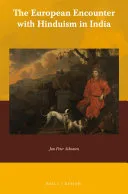
The European Encounter with Hinduism in India
 78
78

The European Encounter with Hinduism in India
Jan Peter Schouten’s "The European Encounter with Hinduism in India" offers a sober, scholarly account of how Westerners perceived Hinduism from medieval times through the colonial period. The strength lies in its diligent compilation of primary source material, revealing the evolving, often contradictory, European viewpoints. A notable passage details early Jesuit missionary attempts to reconcile Christian doctrine with Hindu philosophy, showcasing a complex intellectual struggle. However, the work occasionally suffers from a dry narrative, prioritizing comprehensive cataloging over deep interpretative analysis of the spiritual dimensions. While the factual grounding is impeccable, a more robust engagement with the *hermeneutic* challenges faced by Europeans—beyond mere description of their interpretations—would have elevated its esoteric value. It serves as a vital, if sometimes uninspired, reference for the history of religious perception.
📝 Description
78
Jan Peter Schouten's 1995 book details European encounters with Hinduism starting in the 13th century.
Jan Peter Schouten's work meticulously documents the historical interactions between Europeans and the diverse traditions of Hinduism. The engagement is traced from its beginnings in the 13th century, through periods of trade and missionary work, and into the colonial era. European traders, diplomats, and missionaries ventured into India from the 13th century onwards, encountering religious practices and philosophies vastly different from their own. Their accounts, shaped by existing biases and genuine curiosity, formed early Western perceptions of Hindu practices and thought.
The book examines how European observers interpreted concepts such as polytheism, caste systems, and the pantheon of Hindu deities. It analyzes the methodologies and interpretations used by these early chroniclers, noting a gradual shift from anecdotal observation to more structured, though often prejudiced, analysis of Hindu thought and practice. This historical context predates systematic Indological studies but establishes crucial groundwork for later Western engagement with Hinduism.
While not strictly an esoteric text itself, this book illuminates the historical reception of Hindu traditions by Europeans, many of whom approached them through esoteric or occult lenses. It details how early European interactions, often driven by a search for hidden wisdom or universal truths, shaped the initial Western understanding of Hindu philosophies and practices. The work provides context for the later development of Western esotericism's engagement with Eastern religions, showing the roots of how concepts like yoga, Vedanta, and Tantra were first perceived and transmitted.
💡 Why Read This Book?
• Gain insight into the specific challenges faced by 17th-century Jesuit missionaries like Roberto de Nobili in understanding and engaging with Hindu philosophical concepts, as detailed in the book's early chapters. • Understand the historical context of colonial administration's involvement in studying Hinduism, particularly the shift in approach by officials during the British Raj, offering a unique perspective on power dynamics. • Explore the documented evolution of European terminology and categorization of Hindu deities and practices, from early, often bewildered, descriptions to more systematic (though still biased) classifications.
⭐ Reader Reviews
Honest opinions from readers who have explored this book.
❓ Frequently Asked Questions
What time period does "The European Encounter with Hinduism in India" primarily cover?
The book spans from the 13th century, with early traders and missionaries, through to the colonial era, detailing how European knowledge and evaluation of Hinduism developed over these centuries.
Who were some of the earliest European groups to encounter Hinduism?
The earliest European groups to encounter Hinduism discussed in the book include traders and missionaries from various European nations beginning in the 13th century.
How did European views of Hinduism change over time according to the book?
The work illustrates a gradual increase in European knowledge, moving from initial encounters and often superficial evaluations to more systematic, though frequently biased, studies by colonial officials and scholars.
Does the book focus on specific regions of India?
While not exclusively focused on one region, the accounts within the book inherently reflect the diverse areas of India where Europeans established trade routes or colonial presence.
What types of European sources does Jan Peter Schouten utilize?
Schouten draws upon various European travel reports, missionary correspondence, and administrative documents that chronicle their experiences and observations of Hindu religion and society.
Is this book suitable for someone new to the study of Hinduism?
Yes, it provides a historical overview of how Hinduism was perceived by outsiders, offering context for understanding Western scholarship on the subject, though it assumes some familiarity with religious studies.
🔮 Key Themes & Symbolism
Evolving Perceptions of the Divine
This theme tracks the Western interpretation of Hindu deities and cosmology. Early accounts often viewed the pantheon through a lens of demonology or simplistic polytheism, struggling to reconcile it with monotheistic frameworks. The work highlights how, over centuries, some Europeans began to engage with concepts of Brahman, avatars, and the philosophical underpinnings of Hindu theologies, albeit filtered through their own cultural and religious biases. It shows a progression from outright rejection or fear to attempts at rationalization or even admiration.
Methodologies of Observation
The book dissects the varied approaches Europeans took to understanding Hinduism. Initially, observation was anecdotal, driven by curiosity or the need to navigate social customs for trade. Missionaries sought doctrinal understanding for proselytization, leading to more focused study but also inherent bias. Later, colonial administrators employed more systematic, ethnographic methods, often for control and governance. Schouten examines the limitations and strengths of each approach, revealing how the observer's intent shaped the resulting 'knowledge'.
Cultural and Religious Syncretism
Schouten explores instances where European travelers and scholars attempted to bridge the gap between their own belief systems and Hindu practices. This includes early attempts by figures like Roberto de Nobili to adopt Hindu customs or reinterpret Christian doctrines in a Hindu context, and later scholarly efforts to find parallels between Hindu philosophy and Western thought, such as Neoplatonism or Gnosticism. The theme addresses both the superficial comparisons and the more profound, albeit often contentious, dialogues that emerged.
The Role of Travelogues
Travel literature serves as a primary vehicle for disseminating European understanding of Hinduism. The work emphasizes how personal narratives, journals, and published accounts influenced broader perceptions back in Europe. These texts range from sensationalized exoticism to detailed ethnography, shaping popular imagination and scholarly discourse alike. Schouten analyzes the reliability and biases inherent in these firsthand reports, showing how they constructed and reinforced specific images of India and its religious traditions.
💬 Memorable Quotes
Direct passages from the work, attributed to the author.
“European travellers encountered the exotic world of Hindus and Hinduism.”
— This phrase captures the initial sense of wonder and strangeness that characterized early European encounters with Indian culture and religion, highlighting the vast perceptual distance.
“Their travel reports reveal how Europeans gradually increased their knowledge of Hinduism.”
— This points to the cumulative nature of European understanding, suggesting a slow but steady process of information gathering and assimilation over centuries, albeit through biased lenses.
“Later, officials of the colonial administration also studied the [Hindu religion].”
— This indicates a shift in who was studying Hinduism and for what purpose, moving from religious or commercial motivations to administrative and political ones during the colonial period.
“Europeans evaluated this foreign religion.”
— This highlights the subjective and often judgmental nature of early European engagement, where Hinduism was not merely observed but actively assessed against Western norms and values.
💡 Key Ideas
Editorial paraphrase of the work's core concepts — not direct quotes.
The accounts document how Europeans grappled with the concept of multiple deities.
This paraphrased concept refers to the intellectual and theological difficulties Europeans, often coming from monotheistic backgrounds, faced when trying to comprehend the Hindu pantheon.
🌙 Esoteric Significance
Tradition
While not strictly an esoteric text itself, the book functions as a vital historical resource for understanding how esoteric traditions, particularly those influenced by Eastern thought (like Theosophy or later New Age movements), were shaped by Western interpretations of Hinduism. It fits within the Hermetic tradition's interest in comparative mysticism and the historical transmission of spiritual knowledge, charting the channels through which Eastern ideas entered Western esoteric discourse.
Symbolism
The work implicitly touches upon the European struggle to interpret Hindu symbolism, such as the multi-headed deities (e.g., Brahma, Vishnu, Shiva) or abstract concepts like Maya. Early European accounts often reduced these to mere 'idolatry' or 'superstition,' failing to grasp their symbolic representation of divine attributes, cosmic cycles, or philosophical truths. Schouten's analysis reveals the hermeneutic gap in understanding these potent symbols.
Modern Relevance
Contemporary esoteric practitioners and scholars interested in the roots of modern Yoga, Vedanta's influence in the West, or the historical development of comparative mysticism find this work invaluable. Thinkers exploring the cross-pollination of ideas between East and West, and the evolution of concepts like 'spirituality' itself, draw upon the historical record Schouten meticulously compiles. It provides crucial context for understanding contemporary Western engagement with Hindu traditions.
👥 Who Should Read This Book
• Scholars of religious history and comparative religion seeking a factual overview of Western perceptions of Hinduism across centuries. • Students of colonialism and its impact on cultural and religious understanding, particularly concerning the British Raj and earlier European interactions. • Individuals interested in the historical reception of Eastern philosophies and religions in the West, tracing the origins of modern spiritual trends.
📜 Historical Context
Jan Peter Schouten's work emerges from a long tradition of scholarship on the history of religions and European encounters with the East. Written in 2020, it engages with the fields of Indology, post-colonial studies, and the history of missions. The era it covers, from the 13th century onward, saw profound shifts in European global presence, from early maritime exploration spurred by trade routes to the establishment of vast colonial empires. Key contemporaries in the study of religious encounters include scholars like Richard Eaton, whose work explores similar themes of cultural interaction in South Asia. Schouten’s book implicitly responds to earlier Orientalist scholarship, aiming for a more nuanced account of how European perspectives were formed. While not a work facing direct censorship, its reception contributes to ongoing academic discourse about the ethics and methodologies of cross-cultural religious study.
📔 Journal Prompts
The initial European classification of Hindu deities and practices.
How early European biases shaped their understanding of Dharma.
The shift in European analytical methods from the 13th century to the colonial era.
The interpretation of concepts like Karma by early European visitors.
Instances of attempted reconciliation between Christian and Hindu theological frameworks.
🗂️ Glossary
Brahman
The ultimate reality in Hinduism, often understood as the supreme cosmic spirit or consciousness from which all existence emanates. Early European accounts struggled with its abstract, impersonal nature.
Avatars
Divine incarnations, most famously associated with Vishnu (e.g., Rama, Krishna). European observers often interpreted these figures through the lens of Christian messianic expectations or simply as mythological heroes.
Caste System (Varna/Jati)
The hierarchical social structure prevalent in Hindu society. European accounts frequently focused on its rigidities and inequalities, often viewing it as a primary indicator of Indian backwardness.
Polytheism
The belief in or worship of multiple gods. This was a common, though often inaccurate, categorization by Europeans for the diverse Hindu pantheon and practices.
Maya
A concept in Hindu philosophy referring to illusion or the phenomenal world that conceals the true nature of reality (Brahman). European interpretations varied from seeing it as nihilistic to a sophisticated metaphysical idea.
Vedanta
One of the six orthodox schools of Hindu philosophy, focusing on the Upanishads. Its complex metaphysical doctrines were often simplified or misunderstood by early European scholars.
Upanishads
Ancient Sanskrit texts that contain some of the philosophical concepts and ideas of Hinduism. They were among the first Hindu scriptures to be translated into European languages.