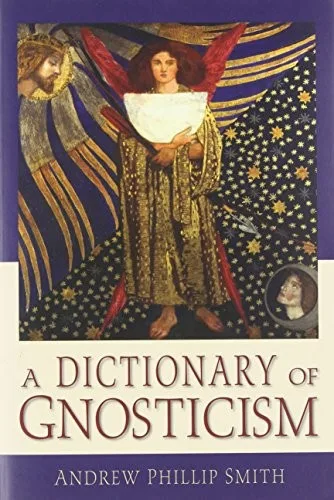
A Dictionary of Gnosticism
 73
73

A Dictionary of Gnosticism
Andrew Phillip Smith’s A Dictionary of Gnosticism is an impressive feat of compilation. Its sheer scope, detailing nearly 1700 entries, makes it an invaluable resource for anyone serious about the subject. The entries are generally concise yet informative, offering clarity on terms that can be notoriously opaque. For instance, the explanation of the aeons within the Gnostic cosmology is particularly well-handled. However, the work's academic rigor, while a strength, can occasionally make it feel less like a narrative and more like a reference manual, which is perhaps its intended purpose. A minor quibble might be the lack of deeper engagement with the psychological interpretations of Gnostic myth, a popular lens in contemporary esoteric circles. Nevertheless, for a factual and comprehensive grounding in Gnosticism, this dictionary is an essential acquisition.
📝 Description
73
Andrew Phillip Smith's 2014 dictionary provides nearly 1700 entries on Gnosticism.
This dictionary by Andrew Phillip Smith offers a systematic compilation of terms, figures, and texts significant to Gnosticism. It defines nearly 1700 entries, starting with the angel Aachiaram and concluding with the third-century text Zostrianos. The work gives detailed explanations of esoteric concepts within this spiritual tradition.
It is a useful reference for academics studying ancient religions, students of esoteric philosophy, and individuals interested in the historical and theological foundations of Gnostic thought. The book provides exact definitions and historical background for figures like Valentinus or concepts such as Sophia. Anyone studying the Nag Hammadi library will find this a helpful resource.
Published in 2014, the dictionary addresses a period of increased scholarly and public interest in Gnosticism, a Western religion predating Christianity. The mid-20th century discovery and translation of the Nag Hammadi texts altered perceptions of early Christian and Jewish mysticism. Smith's work places Gnostic texts within this continuing academic discussion, giving a structured view of a tradition known for its varied and often conflicting interpretations.
Gnosticism emerged in the first centuries CE, offering salvation through knowledge (gnosis). Its adherents often saw the material world as flawed, created by a lesser deity, and sought escape through divine revelation. Key figures like Valentinus developed complex mythologies and cosmologies. The discovery of the Nag Hammadi library in 1945 provided direct access to many Gnostic texts, illuminating a tradition previously known mainly through the writings of its opponents. This dictionary situates Smith's work within the ongoing study of these early esoteric movements.
💡 Why Read This Book?
• Gain precise definitions for key Gnostic terms like 'Aeons' and 'Archons,' essential for understanding complex cosmologies, as detailed in the dictionary's extensive entries. • Understand the historical placement of Gnosticism by referencing specific figures like Valentinus and texts such as the 'Secret Book of John,' provided with context within the book. • Navigate the complexities of Gnostic scripture and mythology with a reliable reference that covers the foundational elements of this pre-Christian Western religion, aiding focused study.
⭐ Reader Reviews
Honest opinions from readers who have explored this book.
❓ Frequently Asked Questions
What is the primary purpose of 'A Dictionary of Gnosticism'?
The primary purpose is to serve as a scholarly yet accessible reference guide to Gnosticism, defining its people, mythology, movements, scripture, and technical terms with nearly 1700 entries.
Who is the author of 'A Dictionary of Gnosticism'?
The author is Andrew Phillip Smith, with the first publication date listed as March 17, 2014.
What kind of texts does this dictionary cover?
It covers Gnostic texts, including references to the Nag Hammadi library and specific works like the 'Secret Book of John' and 'Zostrianos'.
How extensive is the coverage in this dictionary?
The dictionary contains close to 1700 entries, offering a broad and detailed overview of Gnostic subjects.
Is 'A Dictionary of Gnosticism' suitable for beginners?
Yes, it is described as scholarly yet accessible, making it suitable for both academic study and for individuals new to the subject matter.
What historical period does the Gnosticism discussed in the book relate to?
The book covers Gnosticism as a pre-Christian Western religion, with entries referencing figures and texts from antiquity, such as the third-century Gnostic text 'Zostrianos'.
🔮 Key Themes & Symbolism
Gnostic Cosmogony
The dictionary meticulously defines the complex Gnostic understanding of the cosmos, including the divine Pleroma, the emanations known as Aeons, and the fall of Sophia. It clarifies the roles of the Demiurge and Archons, often depicted as malevolent or ignorant rulers of the material world. Understanding these concepts is crucial for grasping the Gnostic worldview, which posits a flawed creation distinct from the true, transcendent God. Entries like 'Aeon' and 'Demiurge' provide foundational knowledge for this esoteric cosmology.
Gnostic Scripture and Texts
A significant portion of the dictionary is dedicated to defining and contextualizing the various scriptures and texts associated with Gnosticism. This includes canonical and non-canonical works, with particular attention paid to the Nag Hammadi library. Entries on texts like the 'Gospel of Thomas,' 'Apocryphon of John,' and 'Zostrianos' offer concise summaries and identify key figures and themes within them. This focus is vital for scholars and practitioners engaging directly with Gnostic literature.
Key Gnostic Figures and Movements
The dictionary provides biographical and theological sketches of key figures in Gnostic history, such as Valentinus, Marcion, and Basilides. It also outlines the characteristics of various Gnostic schools and movements that flourished in the early centuries CE. Understanding these personalities and their theological divergences is essential for appreciating the diversity within Gnosticism. Entries define their specific contributions and the contexts in which they operated.
Salvation and the Divine Spark
Central to Gnostic thought is the concept of the divine spark or spirit trapped within the material body and world. The dictionary explains the Gnostic path to salvation, which involves acquiring gnosis (knowledge) of one's divine origin and the true nature of reality. Entries on terms like 'Gnosis,' 'Pneuma' (spirit), and 'Anthropos' (the divine human) illuminate the Gnostic understanding of human potential and the means of liberation from the material prison.
💬 Memorable Quotes
Direct passages from the work, attributed to the author.
“The concept of Sophia, or Wisdom, plays an important role in many Gnostic myths, often involving a fall from the divine realm.”
— This entry points to a fundamental mythological figure in Gnosticism. Sophia's story typically involves her desire to know the unknowable, leading to a disruption in the divine order and the subsequent creation of the material world.
“Archons are often described as rulers of the lower heavens or the material world, seeking to prevent souls from ascending.”
— This highlights a key antagonistic force in Gnostic cosmology. The Archons represent the limitations and illusions of the material existence, acting as obstacles on the soul's journey back to the divine.
“Gnosis, or saving knowledge, is the ultimate goal for the Gnostic, leading to liberation from the cycle of reincarnation.”
— This defines the core pursuit of Gnosticism. It's not faith or ritual alone, but direct, experiential knowledge of the divine that offers release from the material world's constraints.
“Valentinus was a significant early Gnostic teacher whose teachings influenced many subsequent Gnostic schools.”
— This acknowledges a major historical figure. Valentinus's complex theological system, detailed in the dictionary, formed a major branch of Gnosticism and influenced its development for centuries.
💡 Key Ideas
Editorial paraphrase of the work's core concepts — not direct quotes.
A vast array of Gnostic texts, including those found at Nag Hammadi, offer diverse perspectives on creation, humanity, and salvation.
This paraphrased concept highlights the sheer volume and variety of Gnostic literature available. It underscores that Gnosticism wasn't a monolithic belief system but a spectrum of ideas concerning humanity's place in the cosmos and the path to spiritual liberation.
🌙 Esoteric Significance
Tradition
This work is firmly rooted in the Gnostic tradition, a complex and diverse set of religious and philosophical movements prominent in the early centuries CE. While often categorized alongside Hermeticism and early Christian mysticism, Gnosticism presents a distinct worldview centered on liberation through esoteric knowledge (gnosis). Smith's dictionary provides a systematic overview of this tradition, acting as a gateway for those exploring its unique cosmology, anthropology, and soteriology, differentiating it from more mainstream religious paths.
Symbolism
Central to Gnostic symbolism is the concept of the Pleroma, the divine fullness from which emanations (Aeons) originate, often depicted as a area of light. The fall of Sophia, a key Gnostic figure often associated with wisdom, leads to the creation of the flawed material world and its rulers, the Archons. These symbols represent the Gnostic understanding of spiritual origin, cosmic imperfection, and the entrapment of the divine spark within matter.
Modern Relevance
Contemporary esoteric thinkers and practitioners often draw upon Gnostic mythology and concepts for psychological and spiritual interpretation. Schools exploring archetypal psychology, certain branches of Western esotericism, and even some contemporary art and literature reference Gnostic themes. The dictionary provides the foundational knowledge necessary to understand these modern engagements with figures like Sophia or concepts such as the Demiurge, offering a direct link to the historical source material.
👥 Who Should Read This Book
• Scholars of comparative religion and ancient philosophy seeking a comprehensive reference for Gnostic terminology and figures. • Students of Western Esotericism interested in the historical roots and foundational texts of Gnostic traditions. • Practitioners of mystical or occult paths who wish to deepen their understanding of Gnostic cosmology and its symbolic language.
📜 Historical Context
Andrew Phillip Smith's A Dictionary of Gnosticism (2014) enters a field significantly revitalized by the 1945 discovery of the Nag Hammadi library. This collection of early Christian and Gnostic texts provided direct access to a tradition previously known primarily through the condemnations of Church Fathers like Irenaeus. Smith's work engages with the ongoing scholarly debate surrounding the origins and nature of Gnosticism, particularly its relationship to early Judaism and nascent Christianity. It provides a structured reference point for researchers grappling with the diverse interpretations of texts like the 'Gospel of Thomas' and the 'Apocryphon of John.' The dictionary serves as a crucial tool for navigating this complex landscape, offering definitions for figures and concepts that might otherwise remain obscure to those studying this pre-Christian Western religion.
📔 Journal Prompts
The concept of Sophia's fall: explore its implications for understanding creation.
Define the role of the Archons in relation to the material world.
Compare and contrast two Gnostic texts mentioned in the dictionary.
Reflect on the meaning of 'Gnosis' within the context of personal spiritual seeking.
Consider the significance of the Pleroma in Gnostic cosmology.
🗂️ Glossary
Aeons
Emanations or divine beings that issue forth from the supreme God in Gnostic cosmology, forming the Pleroma (divine fullness).
Archons
Rulers of the material world or lower heavens in Gnostic belief, often seen as creations of the Demiurge, who seek to prevent souls from ascending.
Demiurge
A creator deity, often identified with the God of the Old Testament, who fashioned the material world, typically seen as flawed or ignorant in Gnosticism.
Gnosis
Esoteric or saving knowledge, the direct, intuitive understanding of spiritual truths central to Gnostic salvation and liberation.
Nag Hammadi Library
A collection of early Christian and Gnostic texts discovered in Egypt in 1945, providing invaluable primary source material for understanding Gnosticism.
Pleroma
The totality of divine powers and fullness emanating from the supreme God in Gnostic theology.
Sophia
A key Gnostic figure, often translated as 'Wisdom,' whose actions, typically a fall from the divine realm, are central to many Gnostic myths of creation.