The Secret Doctrine Volume 1
 73
73

The Secret Doctrine Volume 1
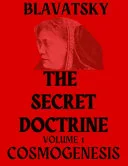
Helena Blavatsky's "The Secret Doctrine, Volume I: Cosmogenesis" is an ambitious undertaking, presenting a sweeping cosmology derived from purportedly ancient Eastern texts. Its strength lies in its sheer audaciousness, attempting to synthesize occult philosophy with then-emerging scientific paradigms. The sheer volume of information and the intricate, multi-layered explanations can be daunting. For instance, the detailed exposition on the 'Rounds' and 'Root Races' requires significant intellectual stamina and a willingness to suspend conventional understanding of evolution. While the work offers a unique perspective on universal origins, its reliance on obscure sources and Blavatsky's own interpretations can make verification challenging for the uninitiated reader. The book is a significant, albeit dense, historical artifact of esoteric thought in the late Victorian era.
📝 Description
73
Helena Blavatsky's The Secret Doctrine, Volume I, published in 1888, details her interpretation of universal origins.
This volume, Cosmogenesis, begins Blavatsky's ambitious work on the nature of the cosmos. She bases her cosmology on the 'Stanzas of Dzyan,' which she claims are older than any known religious texts. The book attempts to bridge scientific ideas of the late 19th century with ancient mystical teachings. Blavatsky proposes a creation process that unfolds in stages over vast cycles, differing from a single, linear event.
Cosmogenesis argues against explanations of existence that rely solely on material processes. It introduces the idea that evolution is guided by intelligent forces and spiritual beings. The visible world, in this view, is only a part of a much larger, hidden reality. The book outlines a detailed cosmology, covering the formation of planets, the development of life, and the spiritual laws that govern these processes. It seeks to establish a model for understanding humanity's position within a vast, ordered, and interconnected universe.
The Secret Doctrine positions itself within a revival of interest in esoteric traditions in the late 19th century. Blavatsky drew from a wide range of sources, including Hinduism, Buddhism, and Hermeticism, to construct her philosophical system. She aimed to present a coherent, universalist view of religion and cosmology, distinct from both orthodox science and conventional theology. The work is a significant text in the development of modern Western esotericism, influencing later movements like Anthroposophy.
💡 Why Read This Book?
• Gain an alternative perspective on cosmic origins by studying the "Stanzas of Dzyan," a central, esoteric source Blavatsky uses to explain universal creation. • Understand the Theosophical movement's early cosmological framework, which influenced spiritual thought in the late 19th century and beyond. • Explore the book's engagement with scientific ideas of the 1880s, such as early evolutionary theories, as presented through an occult lens.
⭐ Reader Reviews
Honest opinions from readers who have explored this book.
❓ Frequently Asked Questions
What is the origin of the 'Stanzas of Dzyan' mentioned in The Secret Doctrine Volume 1?
Helena Blavatsky claimed the 'Stanzas of Dzyan' are an ancient text predating all known human scriptures, originating from a lost esoteric tradition. The exact source remains a subject of debate and interpretation among scholars and practitioners.
How does Cosmogenesis relate to modern scientific theories of the universe?
Cosmogenesis presents an esoteric, cyclical view of creation that differs significantly from linear, Big Bang cosmology. It offers a spiritual framework that seeks to complement, rather than replace, scientific understanding, focusing on underlying principles.
Is The Secret Doctrine Volume 1 a difficult book to read?
Yes, the work is known for its dense prose, complex philosophical arguments, and extensive use of esoteric terminology. It requires focused study and often benefits from supplementary readings or guidance.
What is the role of 'Root Races' in Cosmogenesis?
The concept of 'Root Races' describes a hierarchical, evolutionary progression of humanity across vast cosmic cycles. Blavatsky outlines seven such races, detailing their supposed physical and spiritual development throughout Earth's history.
Who was Helena Blavatsky and why is she important?
Helena Blavatsky (1831-1891) was a Russian occultist and theosophist who co-founded the Theosophical Society in 1875. She is considered a pivotal figure in the development of modern Western esotericism and alternative spiritual movements.
What is the relationship between Volume 1 (Cosmogenesis) and Volume 2 (Anthropogenesis) of The Secret Doctrine?
Volume 1, Cosmogenesis, focuses on the origin and evolution of the universe and celestial bodies. Volume 2, Anthropogenesis, transitions to the evolution of humanity, its spiritual and physical development, and the history of our planet.
🔮 Key Themes & Symbolism
Cosmic Evolution Cycles
The work posits that the universe undergoes vast cycles of formation and dissolution, far exceeding human comprehension. These cycles are not random but follow inherent laws, detailed through concepts like 'Manvantaras' (periods of activity) and 'Pralayas' (periods of rest). Blavatsky draws on ancient cosmological diagrams and narratives to illustrate this continuous, unfolding process of existence, suggesting that our current universe is but one manifestation within an eternal rhythm.
The Seven Planes of Existence
Beyond the physical realm, Blavatsky introduces a multi-layered cosmology. The Secret Doctrine describes seven distinct planes of existence, each with its own laws and forms of consciousness. This framework aims to explain phenomena not readily accounted for by material science, positing that physical reality is supported and permeated by subtler, higher dimensions of being.
Spiritual Monads and Hierarchies
The text presents a complex system of spiritual intelligences and evolutionary units, termed 'Monads.' These are not individual souls in the Western sense but fundamental sparks of consciousness undergoing development across cosmic epochs. Blavatsky details various 'Hierarchies' of beings—from elemental spirits to planetary spirits—that guide and participate in the evolutionary process.
The 'Stanzas of Dzyan'
Central to Cosmogenesis are Blavatsky's interpretations of the 'Stanzas of Dzyan.' These are presented as the oldest known record of cosmic creation, a cryptic text that she allegedly accessed through esoteric means. The Stanzas serve as the primary source for her cosmological model, outlining the initial impulse of creation and the subsequent unfolding of the universe.
💬 Memorable Quotes
Direct passages from the work, attributed to the author.
“The "Secret Doctrine" is not a book, but a compilation of teachings, gathered from the oral traditions of remote antiquity.”
— This statement emphasizes Blavatsky's claim that the work is not an original invention but a transmission of ancient, orally transmitted wisdom, positioning it as a conduit for pre-existing esoteric knowledge.
“Creation is not a beginning, but a manifestation.”
— This concept challenges the idea of a singular, absolute beginning to the universe. Instead, it suggests a continuous process of unfolding and emergence from an eternal, unmanifest source.
“The universe is the periodical manifestation of a boundless, eternal, and unknown essence.”
— This reflects the cyclical view of existence, positing that the cosmos appears and disappears within an infinite, unchanging divine principle that remains beyond human grasp.
“Spirit is the first of the seven states of consciousness.”
— This highlights the spiritual-pervading nature of existence in Blavatsky's cosmology, placing consciousness and spirit as fundamental and primary, preceding the material aspects of reality.
“The Law of Cycles is the most fundamental of all laws.”
— This interpretation underscores the cyclical nature of all phenomena within Blavatsky's system, from the smallest atom to the grandest cosmic processes, emphasizing rhythm and periodicity.
🌙 Esoteric Significance
Tradition
The Secret Doctrine is a cornerstone text of the Theosophical tradition, which Blavatsky co-founded. It draws heavily from Eastern esoteric philosophies, particularly Hinduism (Vedas, Upanishads) and Buddhism, alongside elements of Hermeticism, Kabbalah, and Neoplatonism, reinterpreting them within a unique, syncretic framework aimed at revealing a universal 'Wisdom Religion.'
Symbolism
Key symbols include the 'Circle,' representing the unmanifest and eternal unity from which all arises; the 'Point,' symbolizing the first manifestation or divine idea; and the 'Triangle,' often representing the Trimurti or divine trinity in various traditions, signifying the interplay of spirit, consciousness, and matter in creation.
Modern Relevance
Contemporary esoteric practitioners, occult researchers, and students of comparative religion continue to engage with Blavatsky's cosmological models. Her ideas on subtle energies, evolutionary cycles, and the interconnectedness of all life have influenced New Age thought, contemporary occultism, and alternative spiritual philosophies.
👥 Who Should Read This Book
['Students of Theosophy seeking to understand the foundational cosmological principles laid out by Helena Blavatsky.', 'Comparative religion scholars interested in late 19th-century attempts to synthesize Eastern philosophies with Western scientific and occult thought.', 'Readers exploring alternative cosmologies and esoteric interpretations of universal origins beyond mainstream scientific or religious narratives.']
📜 Historical Context
Published in 1888, "The Secret Doctrine, Volume I: Cosmogenesis" emerged during a vibrant period of spiritual and intellectual ferment in the late Victorian era. Helena Blavatsky's work sought to provide an esoteric framework that could potentially reconcile the discoveries of modern science, particularly evolutionary theory championed by figures like Charles Darwin, with ancient religious and philosophical traditions. It appeared amidst a growing interest in spiritualism, Theosophy, and Eastern religions in the West. Blavatsky's synthesis directly engaged with and challenged prevailing materialistic and scientific orthodoxies. The work was critically received by some, with scholars questioning its sources and claims, while simultaneously inspiring a dedicated following and significantly influencing the trajectory of Western esoteric movements throughout the 20th century.
📔 Journal Prompts
The concept of 'Manvantaras' and 'Pralayas' as cosmic cycles.
Reflection on the 'Seven Planes of Existence' and their potential implications.
The role of 'Spiritual Monads' in universal evolution.
Interpreting the cryptic 'Stanzas of Dzyan' within the context of creation myths.
The relationship between 'Spirit' and 'Matter' as described in Cosmogenesis.
🗂️ Glossary
Manvantara
A Sanskrit term denoting a period of cosmic activity or a 'day of Brahma,' representing a cycle of manifestation and existence within the larger cosmic rhythm.
Pralaya
A Sanskrit term signifying a period of cosmic dissolution or rest, a 'night of Brahma,' during which the universe withdraws into an unmanifest state before a new cycle begins.
Monad
In Theosophy, a fundamental, indivisible spark of divine consciousness that undergoes a long evolutionary journey through various forms and planes of existence across cosmic cycles.
Root Race
A major stage in the evolutionary unfolding of humanity, characterized by distinct physical and spiritual development across vast geological and cosmic epochs, as outlined in The Secret Doctrine.
Anupadaka
A Sanskrit term referring to a 'parentless' or 'unborn' entity, often associated with higher spiritual beings or principles that exist without direct physical procreation.
Fohat
An esoteric term representing the active, dynamic force or energy that bridges spirit and matter, often described as the primordial energy or cosmic electricity that animates the universe.
Chakras
Energy centers within the subtle body, described in various Indian traditions and adopted by Theosophy, that correspond to different levels of consciousness and physiological functions.