Plotinus
 78
78

Plotinus
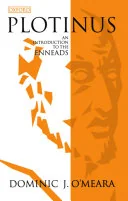
O'Meara’s "Plotinus" functions effectively as an introductory guide, managing to distill a notoriously dense philosophical system into digestible prose. Its strength lies in its direct engagement with Plotinus's own writings, avoiding excessive secondary interpretation and instead focusing on clarifying the philosopher's arguments. The author’s skill in connecting Plotinus’s ideas to modern concerns is commendable, particularly in sections discussing the nature of consciousness and the relationship between the transcendent and immanent. However, the book’s utility for those already familiar with ancient philosophy might be limited; it deliberately sidesteps some of the more intricate scholarly debates surrounding the chronology of Plotinus's works or specific textual ambiguities. A significant passage that illustrates the book's clarity is its explanation of the procession from the One, detailing how multiplicity arises without diminishing the absolute unity of the source. While accessible, the book occasionally feels more like a meticulously organized lecture than a piece of critical analysis. Ultimately, it serves its stated purpose as a clear, student-focused primer on Plotinus.
📝 Description
78
Dominic J. O'Meara's "Plotinus" clarifies the 3rd-century philosopher's system for a new audience.
Dominic J. O'Meara's "Plotinus" serves as an accessible introduction to the thought of the 3rd-century AD philosopher. The book explains the central ideas of Neoplatonism, making them understandable for readers who have not studied ancient Greek philosophy or Plotinus's original writings. O'Meara focuses on clear explanations of complex metaphysical concepts, maintaining scholarly accuracy.
This study is particularly suited for students encountering Plotinus for the first time. It provides a basic understanding of his philosophy, especially its relevance to modern philosophical conversations. Those interested in the history of Western metaphysics, spiritual philosophy, or the intellectual climate of late antiquity will find this work useful. It is not designed for established scholars looking for new interpretations.
Plotinus, writing around 204-270 AD, was central to Neoplatonism, a philosophical system that deeply shaped Western and Middle Eastern thought. His ideas developed during a time of significant intellectual and spiritual change, connecting classical Greek philosophy with developing Gnostic and mystical currents. O'Meara places Plotinus's work within this active environment, detailing its links to earlier Platonic thought and its influence on later thinkers like Porphyry.
💡 Why Read This Book?
• Gain a foundational understanding of the Neoplatonic concept of the One, as presented in O'Meara's clear exposition, enabling you to grasp a central pillar of Western metaphysical thought. • Learn about the Neoplatonic doctrine of procession and return, a core idea crucial for understanding Plotinus's cosmology and spiritual path, as detailed in the text. • Explore the ethical implications of Plotinus's metaphysics, understanding how contemplation of higher realities informs practical virtue, a key takeaway from O'Meara's accessible analysis.
⭐ Reader Reviews
Honest opinions from readers who have explored this book.
❓ Frequently Asked Questions
What is Neoplatonism and how does Plotinus relate to it?
Neoplatonism is a philosophical system developed by Plotinus in the 3rd century AD. It builds upon Plato's ideas, emphasizing a hierarchical structure of reality emanating from an ultimate, ineffable principle called the One.
When did Plotinus live and where did he teach?
Plotinus lived approximately from 204/205 to 270 AD. He taught in Rome, where he established a prominent school of philosophy.
What are the main texts of Plotinus?
The primary texts of Plotinus are compiled in the Enneads, edited and published posthumously by his student Porphyry.
How does Plotinus's philosophy differ from Plato's?
While heavily influenced by Plato, Plotinus systematized and elaborated on Plato's ideas, introducing concepts like the hypostases of the One, Intellect, and Soul in a more structured, hierarchical manner.
What is the concept of 'the One' in Plotinus?
The One is Plotinus's term for the ultimate, transcendent principle of reality. It is beyond being, thought, and description, the absolute source from which all existence emanates.
What is the role of the soul in Plotinus's philosophy?
For Plotinus, the Soul is an intermediate principle between Intellect and the material world. It receives its form from Intellect and is responsible for animating and structuring the physical cosmos.
🔮 Key Themes & Symbolism
The Emanation from the One
The book details Plotinus's concept of emanation, where reality flows necessarily from the absolutely transcendent One. This is not a creation but a radiation, like light from the sun. Intellect (Nous) arises first, containing the Platonic Forms, followed by Soul, which bridges the spiritual and material realms. This hierarchical procession explains the existence of multiplicity and the sensible world without compromising the absolute simplicity and unity of the One, a foundational idea in Neoplatonic metaphysics.
The Ascent of the Soul
Central to Plotinus's thought is the soul's journey back to its divine source. O'Meara explains how individuals can achieve this by turning inward, cultivating intellectual virtues, and engaging in philosophical contemplation. This ascent involves purifying the soul from its entanglement with the material world and re-orienting it towards the higher hypostases. The ultimate goal is a mystical union or ecstatic apprehension of the One, a state beyond rational discourse.
The Nature of the Material World
Plotinus viewed the material world not as inherently evil, but as the furthest and most diminished expression of the One. O'Meara clarifies how the sensible realm is understood as a reflection, albeit a faint one, of the higher realities. The presence of beauty and order in nature is seen as evidence of the divine intellect at work. This perspective offers a metaphysical grounding for appreciating the physical world while still prioritizing the spiritual.
Virtue and Contemplation
The book explores Plotinus's ethical framework, which is intrinsically linked to his metaphysics. O'Meara highlights that true virtue is not merely social conformity but a purification of the soul aimed at facilitating its return to the One. This involves both practical virtues (civic, purifying) and the higher intellectual virtues that prepare the soul for philosophical contemplation, the highest human activity.
💬 Memorable Quotes
Direct passages from the work, attributed to the author.
“The One is beyond all affirmation and negation.”
— This highlights the ineffable nature of the ultimate reality in Plotinus's system. Because the One is the source of all categories and distinctions, it cannot be described using any terms that imply limitation or definition.
“The Soul is a word spoken by Intellect.”
— This statement captures the hierarchical relationship in Neoplatonism, where the Soul emanates from and is dependent upon the higher hypostasis of Intellect (Nous), which itself emanates from the One.
“All things are turned towards the One.”
— This signifies the inherent orientation of all existence towards its ultimate source. Even the lowest levels of reality retain a passive connection or desire for the Good that emanates from the One.
“The material world is the furthest point from the One.”
— This describes the Neoplatonic cosmology, where the sensible, physical realm represents the greatest distance and dilution of the divine principle, yet still contains a trace of its origin.
“To see is the aim of the soul.”
— This points to the contemplative nature of the soul's function and its ultimate purpose: to apprehend the intelligible realities and, ultimately, the One through spiritual vision.
🌙 Esoteric Significance
Tradition
Plotinus is foundational to Western Esotericism, particularly within the Neoplatonic tradition itself. While not Gnostic in the conventional sense, his philosophy shares with Gnosticism an emphasis on transcendence, the illusory nature of the material world, and the soul's journey towards a divine source. His work became a crucial bridge, influencing later Hermeticism, Kabbalah, Christian mysticism, and Islamic philosophy, providing a metaphysical framework for understanding spiritual ascent and the hidden realities behind appearance.
Symbolism
Key symbols in Plotinus include the **One**, representing absolute unity and the ineffable source of all; **Intellect (Nous)**, symbolizing the field of perfect Forms and divine thought; and the **Soul**, acting as the intermediary principle connecting the spiritual and material worlds. The concept of **light** (emanating from the One) and **darkness** (the absence of divine presence in the material) are also recurrent motifs used to illustrate the hierarchical structure of reality and the soul's journey.
Modern Relevance
Contemporary thinkers and practitioners in fields ranging from comparative religion and metaphysics to depth psychology and contemplative spirituality draw heavily on Plotinus. His ideas on consciousness, the nature of reality, and the path of inner transformation continue to inform existential philosophy, mystical theology, and various forms of esoteric practice. Movements exploring altered states of consciousness and the pursuit of transcendent experience often find resonance with Plotinus's emphasis on ecstatic union with the divine.
👥 Who Should Read This Book
• Students of ancient philosophy grappling with the transition from classical Platonism to later metaphysical systems seeking a structured introduction to Neoplatonism. • Individuals interested in the history of Western mysticism and contemplative traditions looking to understand the philosophical underpinnings of spiritual ascent. • Comparative religion scholars examining the development of ideas about transcendence and the divine across different philosophical and religious cultures.
📜 Historical Context
Plotinus (c. 204/5 – 270 AD) emerged during a period when Roman society was experiencing significant intellectual and spiritual shifts, often termed the 'Third Century Crisis'. Neoplatonism, as articulated by Plotinus, represented a sophisticated synthesis of Platonic philosophy with elements from Aristotelianism, Stoicism, and mystical traditions, including Pythagoreanism and Gnosticism. His teachings in Rome, meticulously recorded by his student Porphyry in the Enneads, offered a comprehensive metaphysical and ethical system that sought to provide order and meaning amidst societal upheaval. Plotinus's work engaged with and offered an alternative to contemporary philosophical schools, including various forms of Gnosticism which presented different cosmological narratives and paths to salvation. His intellectual lineage can be traced back through Ammonius Saccas, considered the founder of Neoplatonism, and ultimately to Plato himself, but Plotinus systematized and expanded upon these traditions significantly.
📔 Journal Prompts
The procession of Intellect from the One: How does this concept challenge conventional ideas of causality?
Plotinus's view of the material world: Reflect on its perceived limitations and its connection to higher realities.
The soul's ascent: Identify one modern practice or belief that echoes Plotinus's path of turning inward.
The nature of the One: Consider the implications of a reality that is beyond all description or categorization.
Virtue and contemplation: How might cultivating inner focus enhance ethical action in daily life?
🗂️ Glossary
The One
The ultimate, transcendent principle in Plotinus's philosophy, considered the absolute source of all reality. It is beyond being, thought, and all categories, characterized by absolute simplicity and unity.
Nous (Intellect)
The second hypostasis in Plotinus's system, emanating from the One. It is the field of eternal Forms or Ideas, the intelligible world, and the locus of divine thought.
Soul
The third hypostasis, emanating from Nous. It bridges the intelligible and sensible worlds, possessing both a higher, intellectual aspect and a lower, animating aspect concerned with the physical realm.
Emanation
The process by which reality flows from the One through successive hypostases (Nous, Soul). Unlike creation, it is a necessary outpouring of divine fullness, not involving change or diminution of the source.
Contemplation
The highest form of intellectual activity in Plotinus, involving direct apprehension of the intelligible realities (Forms) and, ultimately, a mystical union with the One.
Hypostasis
A fundamental level or principle of reality in Neoplatonism; often translated as 'substance' or 'person', referring to the distinct yet interconnected levels of the One, Intellect, and Soul.
Enneads
The collection of Plotinus's writings, compiled and edited by his student Porphyry. The title refers to the nine treatises within each of the six books, totaling 54 essays.
This book appears in 1 collection
🔮 Readers Also Liked
Browse all →









From the “Neoplatonism” Collection
View all →





More Free Occult Philosophy Books
View all →