Happy to Be Me
 81
81

Happy to Be Me
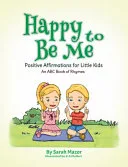
Sarah Mazor and K. S. Mallari's "Happy to Be Me" offers a straightforward, alphabet-based approach to childhood self-esteem. Its strength lies in the simplicity of its rhyming affirmations, making them easy for young children to grasp. The illustrations, as described in the blurb, are intended to be a significant draw, enhancing engagement. A concrete passage like 'C is for Caring, I share my heart' exemplifies the book's directness. However, the reliance on the alphabet as a structure, while practical for learning, can occasionally lead to affirmations that feel slightly forced to fit the rhyme or letter. The book's primary limitation is its narrow focus on positive self-talk without delving into the nuances of emotional regulation or acknowledging that negative feelings are also a part of life. Ultimately, "Happy to Be Me" serves as a pleasant, if basic, primer on self-appreciation for early readers.
📝 Description
81
Published in 2019, Happy to Be Me uses the alphabet to teach young boys positive self-talk.
Happy to Be Me is a 2019 children's book by Sarah Mazor and K. S. Mallari that pairs rhyming affirmations with illustrations. The book presents 26 positive statements, one for each letter of the alphabet, designed to build self-acceptance and confidence in boys aged preschool to early elementary. Each affirmation is a short, rhyming verse, like 'A is for Awesome, I am great!' or 'B is for Brave, I face my fate.' The book's creators intended it as an early introduction to the practice of positive self-talk, making abstract concepts concrete through accessible language and engaging visuals.
This book is intended for parents, guardians, and educators who want to encourage a healthy self-image in young boys. Its gentle rhymes and positive messages make it suitable for bedtime reading or as a tool for discussing feelings of self-worth. The book also aligns with developing literacy skills as children learn their letters. Its release in 2019 coincided with growing interest in children's mental health and the role of affirmations in personal development.
The practice of using affirmations, central to Happy to Be Me, has roots in New Thought movements from the late 19th and early 20th centuries. Figures like Louise Hay popularized these ideas in the later 20th century. This book adapts those principles, which focus on the power of positive statements to shape one's reality, for a very young audience. By framing affirmations through the alphabet, it makes these concepts accessible and memorable for children, fostering a sense of inner power and positive self-regard from an early age.
💡 Why Read This Book?
• Gain a foundational tool for fostering early self-esteem in young boys, using the unique alphabetical structure introduced in 2019, which offers a novel way to integrate literacy with positive psychology. • Experience the charm of rhyming affirmations, similar to the style found in early 20th-century children's verse, making abstract concepts of self-worth tangible and memorable. • Utilize a specific, age-appropriate resource that directly addresses positive self-talk, providing parents and educators with concrete verses derived from the 26-letter framework to share.
⭐ Reader Reviews
Honest opinions from readers who have explored this book.
❓ Frequently Asked Questions
What is the primary age group for the book "Happy to Be Me"?
The book "Happy to Be Me" is primarily designed for young boys, typically within the preschool to early elementary age range, who are beginning to learn their letters and develop a sense of self.
How does "Happy to Be Me" use the alphabet?
It utilizes each of the 26 letters of the alphabet to introduce a distinct positive affirmation, presented in rhyming verse to enhance memorability and engagement for young children.
Who are the authors of "Happy to Be Me"?
The authors are Sarah Mazor and K. S. Mallari. The book was first published on September 14, 2019.
What is the main goal of the affirmations in the book?
The main goal is to instill positive self-talk, confidence, and self-acceptance in young boys by associating each letter of the alphabet with an encouraging message about themselves.
Are the affirmations in "Happy to Be Me" presented in a specific format?
Yes, each affirmation is expressed in rhyming verse and is accompanied by an illustration, making the content accessible and appealing to children.
What is the underlying philosophy behind "Happy to Be Me"?
The book is based on the principle of positive affirmation, a concept that gained traction in psychological and self-help circles throughout the 20th century, adapted here for early childhood development.
🔮 Key Themes & Symbolism
Alphabetical Affirmations
The core of "Happy to Be Me" is its innovative use of the 26-letter alphabet as a framework for positive affirmations. Each letter, from A to Z, introduces a unique self-affirming statement designed for young boys. This structure not only aids in letter recognition but also embeds the concept of positive self-talk directly into early learning. For instance, 'D is for Determined, I do my best' links a character trait with a proactive stance, reinforced by the alphabetical sequence. The integration of rhyme ensures these messages are not only heard but also easily recalled, making the learning process enjoyable and impactful.
Childhood Self-Esteem
This book directly addresses the critical development of self-esteem in young boys. By providing consistent, positive messages, it aims to counteract potential negative self-perceptions before they take root. Affirmations like 'G is for Gentle, I have a kind heart' encourage the expression of empathy and emotional intelligence. The book operates on the premise that early childhood is a formative period where external validation, presented constructively, can profoundly shape internal self-worth. The rhyming format enhances the emotional resonance of these messages.
Visual Learning and Rhyme
Happy to Be Me employs two key pedagogical tools: rhyme and illustration. The rhyming couplets make the affirmations memorable and engaging, turning simple statements into catchy phrases. For example, 'I is for Imaginative, I explore and I dream' uses rhythm to amplify the message. Simultaneously, the accompanying illustrations are designed to delight children and visually reinforce the meaning of each affirmation. This multi-sensory approach caters to different learning styles and enhances the overall impact of the book's positive messaging.
Early Literacy Integration
Beyond its self-help aims, the book functions as an early literacy resource. Each letter of the alphabet is presented, providing children with exposure to letter shapes and sounds. The affirmations themselves often contain simple vocabulary relevant to a child's world. By connecting letters with positive concepts like 'K is for Kind, I'm helpful to find,' the book encourages a positive association with learning and language. This dual purpose makes "Happy to Be Me" a valuable addition to a child's early educational journey.
💬 Memorable Quotes
Direct passages from the work, attributed to the author.
“A is for Awesome, I am great!”
— This opening affirmation immediately establishes a tone of high self-regard and confidence, setting the stage for the subsequent messages of self-acceptance and empowerment throughout the book.
“B is for Brave, I face my fate.”
— This verse introduces the concept of courage and resilience. It suggests that facing challenges, or 'fate,' is an act of bravery, encouraging children to approach difficulties with a determined spirit.
“C is for Caring, I share my heart.”
— Here, the focus shifts to emotional expression and empathy. The affirmation promotes kindness and generosity, linking the act of caring with an open and giving emotional nature.
“D is for Determined, I do my best.”
— This affirmation highlights perseverance and effort. It encourages children to commit to tasks and strive for their personal best, emphasizing the value of trying.
💡 Key Ideas
Editorial paraphrase of the work's core concepts — not direct quotes.
E is for Excited, I pass the test.
This quote connects enthusiasm with achievement. It suggests that approaching tasks with excitement can lead to successful outcomes, reinforcing a positive mindset towards challenges.
🌙 Esoteric Significance
Tradition
While not explicitly aligned with a single esoteric lineage, "Happy to Be Me" draws upon principles resonant with New Thought and modern positive psychology, which themselves have absorbed elements from older esoteric traditions concerning the power of the mind. The emphasis on affirming desired states and beliefs reflects the 'like attracts like' principle found in many metaphysical systems. It operates on the idea that internal states of being can manifest external realities, a concept explored in Hermeticism's "As Above, So Below" and various forms of mental magic or visualization practices.
Symbolism
The primary symbolic structure is the alphabet itself, representing order, completeness, and the building blocks of communication and thought. Each letter acts as a sigil or anchor for a positive concept. For example, 'Brave' linked to 'B' symbolizes the courage inherent in the very foundation of expression. The accompanying illustrations, though child-oriented, can be seen as visual talismans reinforcing the affirmations, transforming abstract ideas into tangible, relatable imagery for the young mind.
Modern Relevance
The work's principles are highly relevant to contemporary self-help, positive psychology, and mindfulness practices. Therapists and educators working with children often employ similar affirmation techniques. Contemporary thinkers in personal development and even some modern interpretations of spiritual disciplines continue to explore the power of focused intention and positive self-talk, making the core message of "Happy to Be Me" a persistent theme in wellness culture.
👥 Who Should Read This Book
• Parents and caregivers seeking tools to build resilience and self-worth in young boys, utilizing a structured, alphabet-based approach. • Early childhood educators looking for supplementary materials to integrate positive psychology concepts into literacy lessons and classroom routines. • Individuals interested in the historical application of New Thought principles for personal development, specifically how they are adapted for very young audiences.
📜 Historical Context
Published in 2019, "Happy to Be Me" arrived amidst a growing global discourse on child psychology and the importance of early intervention in mental well-being. The practice of positive affirmations, while popularized by figures like Louise Hay in the late 20th century, has roots tracing back to New Thought movements of the late 19th century. These movements, often associated with Christian Science and figures like Phineas Quimby, emphasized the power of thought to influence reality. In the contemporary range of 2019, the self-help and wellness industry was booming, and therapeutic concepts were increasingly being adapted for younger audiences. While "Happy to Be Me" does not directly engage with specific intellectual currents like Gnosticism or Hermeticism, its underlying principle of self-generated positive belief aligns with broader trends in positive psychology, which gained significant academic traction throughout the 2000s and 2010s. The book's accessible format distinguished it from more academic psychological texts, aiming for direct parental and child engagement rather than scholarly debate.
📔 Journal Prompts
Reflect on the affirmation 'A is for Awesome, I am great!' and identify one personal quality that makes you feel awesome.
Consider the concept of 'B is for Brave, I face my fate.' How can you apply this bravery in a small, everyday situation?
Explore the meaning of 'C is for Caring, I share my heart' by thinking of a time you showed care to someone else.
Analyze the affirmation 'D is for Determined, I do my best.' What does 'doing your best' look like for you today?
Connect the idea of 'E is for Excited, I pass the test' with a task you recently completed.
🗂️ Glossary
Affirmation
A positive statement designed to challenge or overcome self-limiting beliefs and negative patterns of thought. In "Happy to Be Me," these are presented in rhyming verse for children.
Positive Self-Talk
The practice of speaking kindly and encouragingly to oneself. This book aims to cultivate this habit from an early age through its structured affirmations.
Rhyming Verse
A style of poetry characterized by lines that end with words that sound alike, used in this book to make affirmations more memorable and engaging for children.
Self-Esteem
Confidence in one's own worth or abilities; self-respect. The book's core purpose is to foster healthy self-esteem in young boys.
Alphabetical Framework
The organizational structure of the book, where each letter of the alphabet (A-Z) corresponds to a specific affirmation, aiding in both literacy and concept learning.
Illustration
Pictures used in the book to complement the text. These are intended to delight children and visually reinforce the meaning of each affirmation.
New Thought
A spiritual movement that emerged in the United States in the 19th century, emphasizing the power of thought and belief to shape reality and promote well-being.