Merlin's destiny

 73
73

Merlin's destiny
Sigmund Brouwer's exploration of Merlin in "Merlin's Destiny" offers a refreshing departure from purely historical or folkloric accounts. The book’s strength lies in its persistent focus on Merlin as an archetypal force, a symbolic nexus within Western esoteric thought. Brouwer skillfully connects the legendary wizard to broader currents of Gnosticism and Hermeticism, illuminating the enduring appeal of such figures. However, the work occasionally suffers from a tendency to over-interpret, sometimes presenting speculative connections as definitive pronouncements. A particular passage that stands out is the discussion of Merlin’s relationship with the Lady of the Lake, which Brouwer frames not as a simple narrative device but as a representation of the anima archetype and its interaction with the developing Magus. This elevates the analysis beyond mere storytelling. Despite its occasional interpretive leaps, "Merlin's Destiny" provides a compelling esoteric perspective on a foundational mythical character.
📝 Description
73
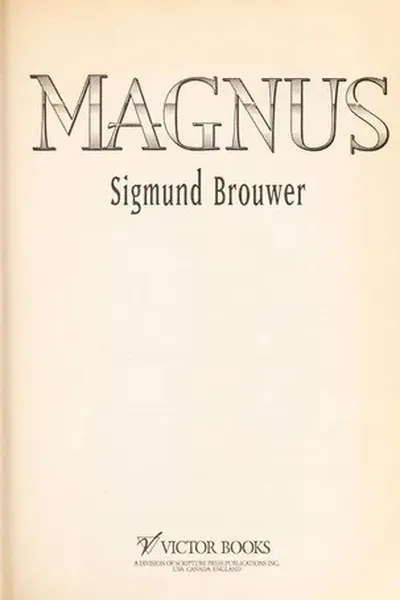
Sigmund Brouwer's 1993 book, Merlin's Destiny, examines the Arthurian sorcerer through esoteric philosophy.
Merlin's Destiny, published in 1993, moves beyond a simple retelling of Arthurian legend. Sigmund Brouwer analyzes the figure of Merlin from the perspective of esoteric philosophy and Western mysticism. The book traces the Merlin archetype's roots and symbolic meaning, connecting it to broader occult traditions rather than just medieval stories.
Brouwer presents Merlin as a powerful symbol representing wisdom, prophecy, and the boundary between the ordinary and the magical. This work is for readers who see mythology and folklore as more than just historical accounts. It offers insights into deeper psychological and spiritual truths. Those interested in comparative mythology, the history of occult thought, and the symbolic language of ancient traditions will find this book valuable. It also appeals to students of Jungian psychology and Hermeticism, as well as anyone interested in the persistent power of archetypes in human consciousness.
Published in 1993, Merlin's Destiny arrived during a time of increased interest in mythology and esoteric studies, influenced by thinkers like Jung and Campbell. Brouwer's work fits into this context by focusing on Merlin as a specific occult archetype. This analysis builds upon established scholarship regarding the significance of myth and ritual in understanding human societies, applying it to a central figure within Western esoteric thought.
💡 Why Read This Book?
• Gain an esoteric interpretation of Merlin, understanding him not just as a character but as a symbol of hidden knowledge and prophecy, drawing from the book's exploration of the Magus archetype. • Discover how the 1993 publication placed this analysis within a broader resurgence of interest in mythology and esoteric thought, offering context for contemporary spiritual seekers. • Uncover the symbolic meaning of Merlin's connection to the Lady of the Lake, as presented in the book, which offers insights into the interplay of anima and the developing spiritual practitioner.
⭐ Reader Reviews
Honest opinions from readers who have explored this book.
❓ Frequently Asked Questions
What is the primary esoteric tradition explored in Merlin's Destiny?
The book primarily examines Merlin through the lens of Western esoteric traditions, including elements of Hermeticism and Gnosticism. It focuses on Merlin as an archetype of wisdom and prophecy within these mystical lineages, rather than a purely historical figure.
When was Merlin's Destiny first published?
Merlin's Destiny was first published in 1993. This places its analysis within a broader intellectual climate of renewed interest in mythology and esoteric philosophy.
Does the book offer historical facts about the real Merlin?
No, the book does not focus on historical factual accounts of a real Merlin. Instead, it delves into the symbolic and archetypal significance of the Merlin myth within esoteric traditions.
What kind of symbolic interpretations does the book provide for Merlin?
The book interprets Merlin as a liminal figure, a Magus embodying deep knowledge, and a symbol of heightened intuition often associated with prophecy and the connection to primal forces.
Who would benefit most from reading Merlin's Destiny?
Readers interested in comparative mythology, occult philosophy, Jungian psychology, and the symbolic interpretation of Arthurian legends from an esoteric perspective would find this book particularly valuable.
Are there specific concepts from Western mysticism discussed in relation to Merlin?
Yes, the book relates Merlin to concepts such as the archetype of the Magus, liminality, and prophecy understood as an awareness of potential futures, drawing parallels to Hermetic and Gnostic thought.
🔮 Key Themes & Symbolism
The Archetypal Magus
Merlin is presented not as a mere enchanter, but as the quintessential Magus figure. This theme explores Merlin's embodiment of profound knowledge, prophetic insight, and the power to influence destiny. Brouwer connects this to ancient traditions where the Magus was an intermediary between the divine and human realms, a keeper of hidden lore. The book examines how Merlin's wisdom transcends simple spellcasting, representing a deep understanding of cosmic principles and the forces that shape reality, aligning with Hermetic ideals of correspondence and occult science.
Liminality and Transcendent Vision
A central concept is Merlin's position as a liminal figure, existing between worlds – the mortal and immortal, the past and future, the mundane and the magical. This allows him a unique perspective, a transcendent vision not bound by linear time or conventional reality. The book interprets Merlin's 'madness' or wildness not as a deficiency, but as a sign of his deep connection to primal forces and altered states of consciousness, essential for true prophecy. This theme appeals to esoteric notions of initiation and achieving higher perception.
Prophecy as Potentiality
Merlin's destiny is explored through the esoteric understanding of prophecy. Rather than a fixed, predetermined future, the book suggests Merlin perceives potential trajectories, understanding the intricate web of cause and effect. This aligns with occult philosophies that view destiny not as immutable, but as a field of probabilities influenced by cosmic laws and human action. His foresight is presented as an awareness of these potentials, allowing for guidance and subtle intervention, a concept central to many mystical paths.
The Lady of the Lake and the Anima
The relationship between Merlin and the Lady of the Lake is analyzed through a psychological and esoteric lens, particularly as a representation of the anima. This theme explores the integration of the feminine principle, intuition, and the subconscious within the Magus figure. The Lady bestows upon Merlin his magical abilities and his connection to the mystical realm, symbolizing the vital role of the unconscious and the feminine divine in unlocking spiritual power and wisdom.
💬 Memorable Quotes
Direct passages from the work, attributed to the author.
“His prophetic sight understands destiny not as fate, but as unfolding potential.”
— This interpretation suggests Merlin's foresight is less about immutable predestination and more about recognizing the myriad possibilities and causal chains that shape future events, a nuanced view of divine knowledge.
“The Magus is defined by his profound knowledge and influence over the forces of existence.”
— This interpretation emphasizes that the archetype of the Magus, as embodied by Merlin, is characterized by both deep intellectual and spiritual understanding and the capacity to affect the fundamental energies of the cosmos.
“His perceived madness is a sign of his connection to primal, untamed wisdom.”
— This concept interprets Merlin's eccentricities or wildness not as illness, but as evidence of his access to a raw, intuitive form of knowledge that bypasses conventional societal structures and rational thought.
💡 Key Ideas
Editorial paraphrase of the work's core concepts — not direct quotes.
Merlin embodies the bridge between the seen and unseen realms.
This paraphrased concept highlights Merlin's role as a conduit, a figure who can access and manipulate energies and knowledge that lie beyond ordinary human perception, a common theme in esoteric literature.
The Lady of the Lake bestows the secrets of magic and the subconscious.
This paraphrase points to the symbolic union of external magical power, represented by the Lady, with internal psychic landscapes, indicating that true mastery involves integrating both outer and inner realms.
🌙 Esoteric Significance
Tradition
Merlin's Destiny engages with the Western esoteric tradition, particularly drawing parallels to Hermeticism and Gnosticism. It positions Merlin as an embodiment of the Magus archetype, a figure central to these lineages who possesses profound knowledge of cosmic laws and the ability to influence reality. The work interprets Merlin's abilities and prophetic insight through the lens of occult philosophy, suggesting he operates with an understanding of hidden principles and spiritual forces that govern existence. This aligns with the esoteric belief that certain individuals can access higher wisdom and wield spiritual power.
Symbolism
Key symbols explored include Merlin himself as the liminal figure, bridging the mortal and divine, the conscious and unconscious. The Lady of the Lake serves as a potent symbol of the anima, the feminine principle, intuition, and the subconscious, bestowing magical knowledge. Merlin's perceived 'madness' or wildness is interpreted as a symbol of connection to primal, untamed wisdom and direct experience of spiritual forces, representing a state of heightened awareness beyond societal norms.
Modern Relevance
Contemporary thinkers and practitioners in fields like Jungian psychology, archetypal studies, and modern Paganism continue to find value in Brouwer's analysis. The book's exploration of Merlin as a symbol of integrated wisdom, prophecy, and the liminal state appeals to those seeking to understand the enduring power of myth in personal and collective consciousness. It speaks to a modern desire to connect with ancient archetypes for guidance and self-understanding, particularly within traditions that draw upon Arthurian lore or seek to understand the role of the 'wise elder' or 'magician' archetype.
👥 Who Should Read This Book
• Students of comparative mythology and folklore seeking an esoteric interpretation of Arthurian legends, moving beyond historical or literary analysis. • Practitioners and scholars of Western esoteric traditions (Hermeticism, Gnosticism) interested in how figures like Merlin function as archetypes of wisdom and spiritual power. • Individuals exploring Jungian psychology and archetypal theory who wish to see how ancient myths can illuminate the human psyche and its deeper patterns.
📜 Historical Context
Published in 1993, Sigmund Brouwer's "Merlin's Destiny" arrived during a period marked by significant popular and academic engagement with mythology, archetypal psychology, and esoteric thought. The intellectual climate was influenced by figures like Carl Jung, whose work on archetypes provided a framework for reinterpreting ancient figures, and Joseph Campbell, whose explorations of the hero's journey brought mythic narratives to a wider audience. Brouwer's focus on Merlin as an occult archetype fits within this trend of viewing mythic characters as symbolic representations of deeper psychological and spiritual processes. At this time, contemporary scholars of Western esotericism, such as Frances Yates, had already laid groundwork for understanding figures like Merlin within historical occult traditions, though Brouwer offers a more focused, symbolic interpretation. The book emerged in a landscape where comparative religion and mythology were increasingly seen not just as historical studies, but as pathways to understanding the human psyche and spiritual impulses.
📔 Journal Prompts
Reflect on Merlin's role as a liminal figure and its implications for personal transition.
Consider the archetype of the Magus: what aspects of profound knowledge does it represent for you?
Analyze the symbolism of the Lady of the Lake in relation to your own understanding of intuition.
How might Merlin's 'unfolding potential' view of prophecy inform your approach to future planning?
Explore the connection between primal wisdom and societal norms as depicted through Merlin.
🗂️ Glossary
Magus
In esoteric traditions, a Magus is a wise person, often a sorcerer or astrologer, possessing profound knowledge of hidden principles and the ability to influence cosmic forces. Merlin is presented as the archetype of the Magus in Western lore.
Liminal Figure
A figure who exists on the threshold or boundary between different states, realms, or concepts (e.g., life and death, human and divine, past and future). Merlin's position embodies this concept, granting him unique perspective.
Anima
In Jungian psychology, the anima is the unconscious feminine aspect of a man's psyche. In the context of Merlin's Destiny, the Lady of the Lake symbolizes this principle, representing intuition and the subconscious.
Archetype
A universal, inherited pattern of thought or imagery derived from the experience of the race and present in the individual unconscious. Merlin functions as an archetype of wisdom and prophecy.
Esotericism
Beliefs and practices that are not public or common knowledge, often involving hidden meanings, mystical experiences, and specialized knowledge of spiritual or occult matters.
Prophecy
Foretelling future events, often viewed in esoteric contexts not as a fixed decree, but as an understanding of potentials and influences that shape outcomes.
Hermeticism
A philosophical and religious tradition based on the purported teachings of Hermes Trismegistus, emphasizing divine knowledge, cosmic principles, and the interconnectedness of all things.
🔮 Readers Also Liked
Browse all →








More by Sigmund Brouwer
All books →

More Free Occult Philosophy Books
View all →