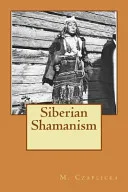
Siberian Shamanism
 84
84

Siberian Shamanism
Czaplicka's "Siberian Shamanism" offers a rigorous, if somewhat dated, anthropological account of a complex spiritual tradition. The strength lies in its comprehensive cataloging of practices and beliefs across diverse Siberian groups, providing a valuable historical baseline. The author's careful distinction between different scholarly interpretations, such as those of Mikhailovsky versus Jochelson, grounds the work in its academic context. However, the text's original publication date means it lacks contemporary theoretical frameworks and often adopts a detached, observational tone that can feel distant to a modern reader seeking a more experiential understanding. A notable section details the shaman's initiation rites, describing the arduous and often perilous journey to spiritual power. While valuable for its factual density, the book occasionally struggles to convey the lived reality of shamanic experience. "Siberian Shamanism" remains a significant scholarly resource, but one best approached with an awareness of its historical perspective.
📝 Description
84
M. Czaplicka's 1914 study offers a detailed ethnographic survey of Siberian shamanic practices.
First published in 1914, M. Czaplicka's "Siberian Shamanism" provides a thorough ethnographic examination of shamanic traditions across northern Asia. The book meticulously records the beliefs, ceremonies, and social positions of shamans within various indigenous Siberian groups. Czaplicka presents shamanism not simply as a basic religion, but as a complex system tied to the daily lives and spiritual views of those who practice it.
The work systematically examines shamanism's diverse forms. It discusses the shaman's function as an intermediary between the human and spirit realms, the methods used to enter trance states, the specific deities and spirits called upon, and the societal roles of shamanism, including healing, divination, and social order.
This study engages with the academic discussions of its time, contrasting viewpoints on shamanism as a primary religious form or a specific cultic practice within a larger spiritual framework. It situates Czaplicka's research within the anthropological currents of the early 20th century.
This book stands as a significant early academic account of shamanism, a practice central to many indigenous spiritual traditions. It documents the methods and beliefs associated with shamans, who act as intermediaries between the physical and spiritual worlds. Czaplicka's research maps out the complex systems of belief and ritual that have been part of human spiritual expression for centuries, offering a historical perspective on practices often considered esoteric.
💡 Why Read This Book?
• Gain a foundational understanding of Siberian shamanic practices, including the specific roles of mediators and spirit helpers, as detailed in Czaplicka's ethnographic survey. • Grasp the historical academic debates surrounding shamanism circa 1914, referencing scholars like Jochelson and Bogoras, to contextualize the study of religious phenomena. • Explore the intricate relationship between shamanism and the daily lives of Siberian indigenous peoples, moving beyond simplistic notions of 'primitive religion'.
⭐ Reader Reviews
Honest opinions from readers who have explored this book.
❓ Frequently Asked Questions
What is the primary focus of M. Czaplicka's "Siberian Shamanism"?
The book provides a detailed ethnographic survey of shamanic beliefs, rituals, and social roles among indigenous peoples of northern Asia, originally published in 1914.
Which historical figures are discussed in relation to shamanism in the book?
The work references prominent scholars of the time such as Mikhailovsky, Kharuzin, Jochelson, and Bogoras, contrasting their differing theories on the nature and function of shamanism.
What are some key concepts explored within "Siberian Shamanism"?
Key concepts include the shaman's role as a spirit mediator, trance induction techniques, the invocation of spirit helpers, and the societal functions of shamanic practices like healing and divination.
When was M. Czaplicka's "Siberian Shamanism" first published?
The original publication date for M. Czaplicka's "Siberian Shamanism" was 1914.
Is "Siberian Shamanism" suitable for beginners in shamanic studies?
While foundational, the book is a scholarly ethnographic text from 1914 and may be dense for absolute beginners. It is excellent for those with some background in anthropology or comparative religion.
What distinguishes Czaplicka's approach from earlier or contemporary views on shamanism?
Czaplicka's work engages with specific academic debates of its time, moving beyond purely 'primitive' or 'magic' labels to explore shamanism as a complex socio-spiritual system, referencing scholars like Jochelson.
🔮 Key Themes & Symbolism
The Shamanic Cosmos
Czaplicka meticulously details the Siberian shaman's perception of the universe, characterized by distinct spirit realms, celestial beings, and subterranean powers. The work explores how shamans navigate these planes to commune with spirits, seeking knowledge, healing, or intervention for their communities. It emphasizes the shaman as a crucial mediator, bridging the gap between the mundane and the sacred, a concept central to understanding animistic and shamanic worldviews across cultures.
Ritual and Trance
Central to the book is the exploration of shamanic rituals and the techniques employed to induce altered states of consciousness. Czaplicka describes the use of drumming, chanting, and specific psychoactive substances (where applicable) to facilitate the shaman's journey into trance. These practices are presented not as mere performance, but as essential mechanisms for accessing spiritual power and communicating with entities, forming the experiential core of Siberian shamanism.
Spirit Helpers and Guides
The work highlights the critical role of spirit helpers, often depicted as animal or ancestral spirits, who guide and empower the shaman. These allies are essential for the shaman's efficacy in the spirit world. Czaplicka details how shamans form relationships with these entities, often through arduous initiation processes, and how these relationships dictate the scope of their spiritual authority and capabilities within their community.
Societal Integration
Beyond its spiritual dimensions, "Siberian Shamanism" illustrates how shamanic practices were deeply embedded within the social and political fabric of Siberian societies. Shamans served vital roles as healers, diviners, spiritual leaders, and sometimes even political advisors. The book demonstrates that shamanism was not an isolated cult but an integral system supporting community well-being and order, responding to the specific needs of nomadic and settled groups.
💬 Memorable Quotes
Direct passages from the work, attributed to the author.
“Others hold that Shamanism was only one form of expression of the religious cult of northern Asia, practised in order to avert the evil spirits.”
— This represents an alternative scholarly viewpoint from the early 20th century, suggesting shamanism was a specific cultic function, primarily defensive against malevolent forces, rather than a comprehensive religious system.
“Initiation rites often involve perilous journeys and trials for the aspiring shaman.”
— This interpretation reflects the book's descriptions of the arduous processes individuals undergo to become recognized shamans, emphasizing the transformative and often dangerous nature of their spiritual ascent.
“The shaman's spirit helpers are crucial for their power and effectiveness.”
— This captures the essence of the shaman-spirit ally dynamic discussed extensively, underscoring that the shaman's abilities are largely dependent on their established relationships with spiritual entities.
💡 Key Ideas
Editorial paraphrase of the work's core concepts — not direct quotes.
Shamanism is understood by some people to be a primitive form of religion or religio-magic.
This quote highlights the early, often reductionist, Western academic views on shamanism, framing it as a rudimentary spiritual practice or magical act, a perspective Czaplicka aims to expand upon.
The shaman is a mediator between the world of men and the world of spirits.
This paraphrased concept captures the fundamental role of the shaman as described throughout the text – an essential intermediary facilitating communication and exchange between the earthly and spiritual planes.
🌙 Esoteric Significance
Tradition
While not strictly part of a formalized Western esoteric tradition like Hermeticism or Kabbalah, "Siberian Shamanism" provides foundational ethnographic material for understanding primal forms of spiritual practice. It speaks to traditions interested in animism, nature-based spirituality, and the direct experience of altered states. The book's value lies in documenting a lineage of direct spiritual engagement with the natural and unseen worlds, predating and existing independently of organized Western occult systems.
Symbolism
Key symbols explored include the World Tree or Cosmic Pillar, often depicted as a connection between the underworld, earth, and sky, mirroring the shaman's journey. Animal spirits, such as the bear, wolf, or raven, serve as potent totemic figures and guides, embodying specific powers and attributes the shaman can channel. Drums, often described as the shaman's 'horse,' are not merely instruments but symbolic vehicles for traversing spiritual landscapes.
Modern Relevance
Contemporary neo-shamanic movements, influenced by figures like Michael Harner, often draw on aggregated ethnographic data like that presented by Czaplicka. Practitioners seeking to understand core shamanic techniques, spirit flight, and the role of the ecstatic state often reference such historical accounts. The work remains relevant for those exploring animistic psychologies, comparative spirituality, and the enduring human impulse to connect with non-ordinary reality.
👥 Who Should Read This Book
• Anthropologists and ethnographers studying Siberian cultures or comparative religious practices, seeking detailed historical accounts of indigenous spiritual systems. • Students of comparative mythology and folklore, interested in understanding the archetypal roles and narratives present in shamanic traditions. • Esoteric practitioners and scholars exploring the roots of ecstatic religion and altered states of consciousness, looking for primary source material on ancient spiritual methodologies.
📜 Historical Context
Published in 1914, M. Czaplicka's "Siberian Shamanism" emerged during a central era for ethnography and the study of religion. The early 20th century saw intense scholarly debate regarding the origins and nature of religious phenomena, with figures like Sir James Frazer popularizing evolutionary models of human culture. Czaplicka's work directly engaged with contemporary Russian and European anthropologists, notably contrasting the views of Nikolai Mikhailovsky and Vladimir Bogoraz. While Mikhailovsky saw shamanism as a universal stage of religious development, Jochelson and Vladimir Germanovich Bogoraz, whose own fieldwork in Siberia was contemporaneous, presented more nuanced perspectives, often viewing shamanism as a specific manifestation within broader cultural contexts. Czaplicka's detailed ethnographic compilations provided crucial data for these ongoing discussions, offering a comprehensive overview that challenged purely simplistic or evolutionary interpretations, even while reflecting the observational distance common in the scholarship of the period.
📔 Journal Prompts
The shaman's journey between worlds: Map the perceived spiritual topography described in the text.
Spirit helpers: Identify the common animal or ancestral spirits mentioned and their associated powers.
Ritual paraphernalia: List the key objects used in Siberian shamanic ceremonies and their symbolic functions.
Social role of the shaman: Analyze how shamanic activities addressed community needs beyond the purely spiritual.
Comparative beliefs: Contrast the views of Mikhailovsky and Jochelson regarding shamanism's function as presented by Czaplicka.
🗂️ Glossary
Shaman
An individual believed to have the ability to contact and influence the spirit world, often through ecstatic trance states, serving as a mediator between the human and spirit realms.
Spirit Helper
An entity, often an animal or ancestral spirit, that assists the shaman in their spiritual endeavors, providing guidance, power, and protection during journeys to other realms.
Trance
An altered state of consciousness characterized by dissociation from ordinary reality, often induced through rhythmic stimuli like drumming or chanting, enabling communication with the spirit world.
Animism
The belief that natural objects, phenomena, and the universe itself possess souls or consciousness, a worldview often underpinning shamanic practices.
Divination
The practice of seeking knowledge about the future or the unknown through supernatural means, often performed by shamans using various techniques and spirit communication.
Initiation
A ritual process through which an individual is formally admitted into a group or status, in this context, the arduous and transformative journey to becoming a recognized shaman.
Religio-magic
A term used in early anthropology to describe belief systems that blend religious devotion with magical practices, often applied to shamanism.