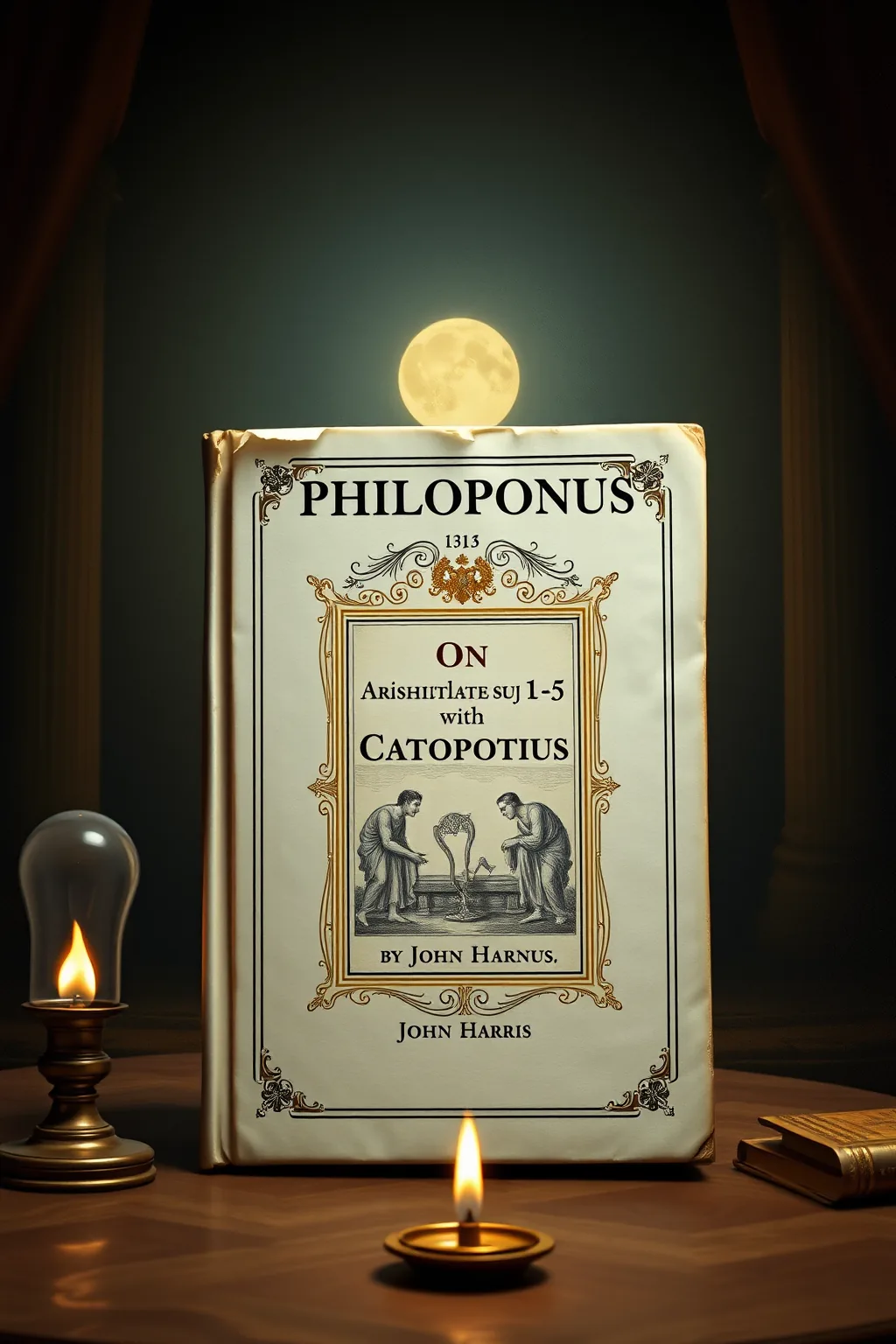
Philoponus : On Aristotle Categories 1-5 with Philoponus
 62
62

Philoponus : On Aristotle Categories 1-5 with Philoponus



Review by Celeste Moreau (Divination & Symbolism Reviewer) — Philoponus' 'On Aristotle Categories 1-5' is a masterclass in esoteric philosophy, expertly translated and annotated by John Harris. The work is a treasure trove of Neoplatonist thought, offering deep insights into the nature of universals and the abstract forms that underpin our reality. Harris' commentary is both authoritative and accessible, making this text a must-read for anyone interested in the mystical and occult traditions. The book's strength lies in its ability to bridge ancient wisdom with modern esoteric practices, providing a rich context for understanding the deeper symbolism and hidden knowledge within Aristotle's Categories. Ideal for scholars, practitioners, and spiritual seekers alike.
📝 Description
62
John Harris translated Philoponus' commentary on Aristotle's Categories 1-5 in 1995.
This volume presents John Harris' translation and commentary on the first five chapters of Philoponus' work on Aristotle's Categories. Philoponus, writing in the 6th century CE, engages with Aristotle's foundational text on predication and classification. His commentary focuses on how general concepts relate to individual things.
Harris's work makes these complex arguments accessible, detailing Philoponus' methods for abstracting universal terms from sensory experience. The text examines the logical structures Aristotle used to describe reality, and how Philoponus interpreted these for a Neoplatonic audience. Readers will find a detailed examination of concepts like substance, quantity, quality, relation, and place as discussed by Philoponus.
Philoponus' commentary sits within the long tradition of late antique philosophy where Aristotelian logic was integrated with Neoplatonic metaphysics. This school, which included figures like Ammonius and Simplicius, sought to reconcile Platonic forms with Aristotelian categories. Their work often involved detailed exegesis of foundational texts, aiming to reveal deeper, sometimes spiritual, meanings. Philoponus' focus on abstraction and the relationship between the sensible and intelligible realms reflects this broader philosophical project, which influenced later mystical and philosophical traditions.
💡 Why Read This Book?
Why read this book? Philoponus' 'On Aristotle Categories 1-5' is essential for anyone seeking to understand the esoteric roots of Western philosophy. This work provides a unique perspective on the nature of universals and the abstract forms that shape our reality. It is ideal for seekers of hidden knowledge, scholars of ancient philosophy, and practitioners of the mystical arts. The book's rich symbolism and philosophical depth make it a valuable addition to any esoteric library.
⭐ Reader Reviews
Honest opinions from readers who have explored this book.
❓ Frequently Asked Questions
What is the significance of Philoponus' On Aristotle Categories 1-5?
This work is significant for its Neoplatonist interpretation of Aristotle's Categories, offering deep insights into the nature of universals and abstract forms.
Who is the intended audience for this book?
The book is ideal for scholars of ancient philosophy, seekers of esoteric wisdom, and practitioners of the mystical arts.
What makes this translation unique?
John Harris' translation and commentary provide an authoritative and accessible guide to Philoponus' esoteric thought, making it a valuable resource for both scholars and practitioners.
How does this book contribute to esoteric studies?
The book bridges ancient wisdom with modern esoteric practices, offering a rich context for understanding the deeper symbolism and hidden knowledge within Aristotle's Categories.
What are the key themes in this work?
Key themes include the nature of universals, the abstract forms that shape our reality, and the Neoplatonist interpretation of Aristotle's Categories.
🔮 Key Themes & Symbolism
The Nature of Universals
Philoponus explores the mysterious nature of universals, exploring how abstract forms are extracted from the material world. This theme is central to understanding the deeper symbolism and hidden knowledge within Aristotle's Categories. It invites readers to ponder the metaphysical underpinnings of reality and the spiritual significance of abstract concepts.
Neoplatonist Interpretation
The book offers a unique Neoplatonist interpretation of Aristotle's Categories, providing insights into the philosophical and mystical traditions that shaped Western thought. Philoponus' work is a bridge between ancient wisdom and modern esoteric practices, revealing the hidden layers of reality and the spiritual dimensions of existence.
Symbolism and Hidden Knowledge
Philoponus' exploration of abstract forms and universals is rich with symbolism and hidden knowledge. This theme invites readers to uncover the deeper meanings and spiritual significance of philosophical concepts, making this work a valuable resource for seekers of esoteric wisdom and practitioners of the mystical arts.
💡 Key Ideas
Editorial paraphrase of the work's core concepts — not direct quotes.
The nature of universals reveals the hidden forms that shape our reality.
This quote underscores the mystical depth of Philoponus' exploration of abstract concepts.
Abstracting forms from the material world bridges the gap between the physical and spiritual realms.
This line highlights the esoteric significance of Philoponus' philosophical inquiry.
The symbolism within Aristotle's Categories holds the key to understanding the deeper layers of existence.
This passage emphasizes the hidden knowledge and spiritual insights within the text.
Neoplatonist thought provides a rich context for exploring the mystical dimensions of philosophy.
This quote underscores the esoteric traditions that shape Philoponus' interpretation of Aristotle.
The journey through abstract forms reveals the underlying symbolism of reality.
This line invites readers to uncover the deeper meanings and spiritual significance of philosophical concepts.
🌙 Esoteric Significance
Tradition
This book belongs to the Hermetic and Neoplatonist traditions, which emphasize the mystical and esoteric dimensions of philosophy. These traditions seek to uncover the hidden knowledge and spiritual significance within philosophical concepts, bridging the gap between the material and spiritual realms.
Symbolism
Key symbols in this work include the abstract forms and universals that shape our reality. These symbols represent the deeper layers of existence and the spiritual dimensions of philosophical inquiry. They invite readers to explore the mystical underpinnings of reality and the hidden knowledge within ancient texts.
Modern Relevance
This book remains relevant today for seekers of esoteric wisdom, scholars of ancient philosophy, and practitioners of the mystical arts. Modern practitioners use this work to understand the deeper symbolism and hidden knowledge within Aristotle's Categories, providing a rich context for exploring the mystical dimensions of philosophy.
👥 Who Should Read This Book
This book is ideal for scholars of ancient philosophy, seekers of esoteric wisdom, and practitioners of the mystical arts. Beginners will find the detailed symbolism and philosophical depth a valuable introduction to the esoteric traditions. Scholars will appreciate the authoritative commentary and useful insights into Neoplatonist thought. Spiritual seekers will be drawn to the mystical dimensions of the text, while practitioners will find a rich resource for exploring the hidden knowledge within philosophical concepts.
📜 Historical Context
Philoponus' 'On Aristotle Categories 1-5' was written during a time of profound philosophical and spiritual inquiry in the late ancient world. This era saw the blending of Greek philosophy with mystical traditions, giving rise to Neoplatonism. Philoponus, a student of Ammonius, contributed significantly to this synthesis, offering a unique interpretation of Aristotle's Categories. His work was influential in shaping the esoteric and mystical traditions that would later emerge in the West, providing a rich context for understanding the deeper symbolism and hidden knowledge within ancient philosophy.
📔 Journal Prompts
Reflect on the nature of universals and how they shape your understanding of reality.
Explore the mystical dimensions of abstract forms and their spiritual significance.
Consider the esoteric traditions that influence your philosophical inquiries.
Write about the deeper symbolism and hidden knowledge within ancient texts.
Journal about the bridge between the material and spiritual realms in your philosophical explorations.
🗂️ Glossary
Universals
Abstract concepts that represent the underlying forms of reality, extracted from the material world.
Neoplatonism
A philosophical and mystical tradition that blends Greek philosophy with esoteric teachings, emphasizing the spiritual dimensions of existence.
Symbolism
The use of symbols to represent deeper meanings and hidden knowledge within philosophical concepts.
Esoteric
Relating to hidden knowledge and mystical traditions, often involving secret teachings and spiritual inquiry.
Abstract Forms
The underlying structures and patterns that shape our reality, often explored through philosophical and mystical inquiry.
This book appears in 5 collections
🔮 Readers Also Liked
Browse all →







From the “Neoplatonism” Collection
View all →








More Free Alchemy & Hermeticism Books
View all →