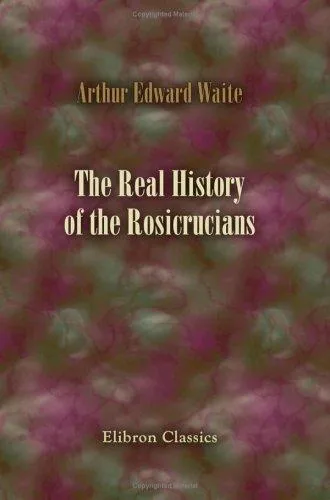
The Real History of the Rosicrucians
 63
63

The Real History of the Rosicrucians



Review by Evander Ashcroft (Alchemy & Hermeticism Editor) — Arthur Edward Waite's 'The Real History of the Rosicrucians' stands as a beacon of esoteric insight, illuminating the shadowy paths of the Rosicrucian tradition. Waite's meticulous research and deep understanding of Hermetic philosophy make this book a treasure trove for those seeking to uncover the hidden knowledge of the mystics. The strengths of this work lie in its ability to bridge the gap between historical fact and mystical speculation, providing readers with a comprehensive and compelling narrative. Intended for scholars, practitioners, and spiritual seekers, this book is a must-read for anyone serious about delving into the esoteric.
📝 Description
63
Arthur Edward Waite’s 1924 book investigates the Rosicrucian movement's historical claims and esoteric underpinnings.
Arthur Edward Waite’s 'The Real History of the Rosicrucians,' published in 1924, examines the historical assertions and symbolic content associated with the Rosicrucian brotherhood. Waite scrutinizes the origins and development of this secretive tradition, tracing its connections to alchemy, Hermetic philosophy, and Kabbalistic thought. He also addresses the figures and texts that contributed to the Rosicrucian mythos over the centuries. The author approaches the subject with a critical eye, aiming to separate historical fact from later embellishment.
This work is suitable for those interested in the historical formation of esoteric societies. It presents Waite's understanding of the secret doctrines and mystical practices attributed to Rosicrucian adepts. The book’s detailed examination makes it a useful resource for understanding the intellectual currents that shaped Western esotericism, particularly during the late 19th and early 20th centuries when such societies garnered significant attention.
This book sits within the study of Western esotericism, a field that examines mystical and occult traditions outside mainstream religious and philosophical discourse. Waite, a prominent figure in this area, engages directly with the historical claims and symbolic systems that defined groups like the Rosicrucians. His work contributes to understanding how traditions of magic, alchemy, and Kabbalah were interpreted and sometimes synthesized into new movements during the modern period. It reflects a scholarly yet deeply engaged approach to these subjects, characteristic of the esoteric revival of the late Victorian and Edwardian eras.
💡 Why Read This Book?
Read 'The Real History of the Rosicrucians' to gain a profound understanding of the Rosicrucian mysteries and their impact on Western esotericism. This book is ideal for seekers of hidden knowledge, scholars of occult history, and practitioners of Hermetic arts. Waite's insights into alchemical symbolism and theosophical traditions offer a rich, immersive experience that will deepen your appreciation for the mystical and the arcane.
⭐ Reader Reviews
Honest opinions from readers who have explored this book.
❓ Frequently Asked Questions
What is the significance of the Rosicrucians in esoteric history?
The Rosicrucians represent a crucial link between ancient mystical traditions and modern esoteric practices, embodying the fusion of alchemy, Hermeticism, and Kabbalistic thought.
Who should read this book?
This book is ideal for scholars of esoteric history, spiritual seekers, and practitioners of Hermetic arts who wish to deepen their understanding of the Rosicrucian mysteries.
What are some key themes in 'The Real History of the Rosicrucians'?
Key themes include the secret theosophy of the Middle Ages, the influence of Neo-Platonic philosophy, and the enduring legacy of alchemical and Hermetic symbolism.
How does this book contribute to the study of occult history?
Waite's work provides a detailed and authoritative account of the Rosicrucian tradition, offering valuable insights into the mystical and occult practices of the past.
What makes Arthur Edward Waite's approach unique?
Waite's deep knowledge of Hermetic philosophy and his ability to weave historical fact with mystical speculation make his approach both scholarly and spiritually enlightening.
🔮 Key Themes & Symbolism
Secret Theosophy
Waite looks at the secret theosophy of the Middle Ages, revealing how Neo-Platonic philosophy and alchemical practices were preserved and perpetuated through the centuries. This theme highlights the hidden knowledge that has been passed down through generations of mystics and adepts.
Alchemical Symbolism
The book explores the detailed symbolism of alchemy, offering insights into the mystical and esoteric meanings behind alchemical practices. This theme is crucial for understanding the deeper layers of Hermetic philosophy and its influence on Western esotericism.
Hermetic Legacy
Waite's work examines the enduring legacy of Hermeticism, tracing its influence from ancient times to the present day. This theme underscores the importance of Hermetic thought in shaping modern esoteric traditions and practices.
💬 Memorable Quotes
Direct passages from the work, attributed to the author.
“The traditions of the Neo-Platonic philosophy...were perpetuated through the whole period of the Middle Ages.”
— Waite emphasizes the continuity of mystical knowledge through the ages, highlighting the enduring influence of ancient philosophies.
“Borrowing, directly or indirectly, from this prolific fountain of exalted mysticism.”
— Waite's words highlight the rich, mystical heritage that has inspired generations of seekers and scholars.
“The secret theosophy of the magician, the Kabbalist, and the alchemical adept.”
— Waite's focus on the secret knowledge of mystics and adepts underscores the esoteric nature of his work.
💡 Key Ideas
Editorial paraphrase of the work's core concepts — not direct quotes.
We find the secret theosophy of the magician, the Kabbalist, and the alchemical adept.
This quote underscores the hidden, esoteric practices that have been preserved and transmitted by mystics and adepts.
The elaborate theurgical system of the Neo-Platonists.
This quote points to the complex and profound mystical practices that have been passed down through the centuries.
🌙 Esoteric Significance
Tradition
This book belongs to the Hermetic tradition, which encompasses a wide range of esoteric practices and beliefs, including alchemy, Kabbalah, and theosophy. Waite's work is a evidence of the enduring relevance of these mystical traditions in the modern world.
Symbolism
Key symbols in this work include the alchemical symbols of transformation, the Hermetic principles of correspondence and vibration, and the Kabbalistic tree of life. These symbols represent the deeper, esoteric meanings that underlie the Rosicrucian mysteries.
Modern Relevance
Today, 'The Real History of the Rosicrucians' remains a vital resource for modern practitioners of Hermetic arts, offering insights into the ancient practices that continue to inspire and guide seekers of hidden knowledge. Its influence can be seen in various esoteric traditions and spiritual movements around the world.
👥 Who Should Read This Book
This book is ideal for beginners seeking an introduction to the Rosicrucian mysteries, as well as scholars and spiritual seekers looking to deepen their understanding of esoteric traditions. Practitioners of Hermetic arts will find valuable insights into the alchemical and Kabbalistic practices that form the foundation of their spiritual path. Additionally, anyone interested in the history and symbolism of Western esotericism will benefit from Waite's comprehensive and authoritative exploration of the Rosicrucian tradition.
📜 Historical Context
Published in the early 20th century, 'The Real History of the Rosicrucians' emerged during a time of renewed interest in occult and esoteric studies. Waite's work was crucial in shedding light on the Rosicrucian mysteries, which had long been shrouded in secrecy. His detailed exploration of the Rosicrucian tradition helped to clarify these ancient practices and brought them into the forefront of scholarly and spiritual inquiry. The book's influence can still be felt today, as it continues to inspire seekers of hidden knowledge and practitioners of Hermetic arts.
📔 Journal Prompts
How does the secret theosophy of the Middle Ages influence modern esoteric practices?
In what ways does alchemical symbolism reflect the deeper layers of Hermetic philosophy?
How has the legacy of Hermeticism shaped contemporary spiritual movements?
What role do mystics and adepts play in preserving and transmitting hidden knowledge?
How can understanding the Rosicrucian mysteries enhance your spiritual journey?
🗂️ Glossary
Neo-Platonic Philosophy
A philosophical tradition that combines the ideas of Plato with later mystical and theosophical elements, emphasizing the spiritual and divine aspects of reality.
Theurgical System
A system of rituals and practices aimed at invoking divine intervention and spiritual transformation.
Kabbalist
A practitioner of Kabbalah, a mystical tradition within Judaism that seeks to understand the divine through symbolic interpretation and esoteric knowledge.
Alchemical Adept
An individual who has mastered the art of alchemy, a mystical and philosophical tradition focused on the transformation of matter and the pursuit of spiritual enlightenment.
Hermetic Tradition
A broad range of esoteric beliefs and practices derived from the teachings attributed to Hermes Trismegistus, emphasizing the unity of all things and the pursuit of spiritual knowledge.
This book appears in 1 collection
🔮 Readers Also Liked
Browse all →







More by Arthur Edward Waite
All books →
From the “Alchemy” Collection
View all →







More Free Alchemy & Hermeticism Books
View all →