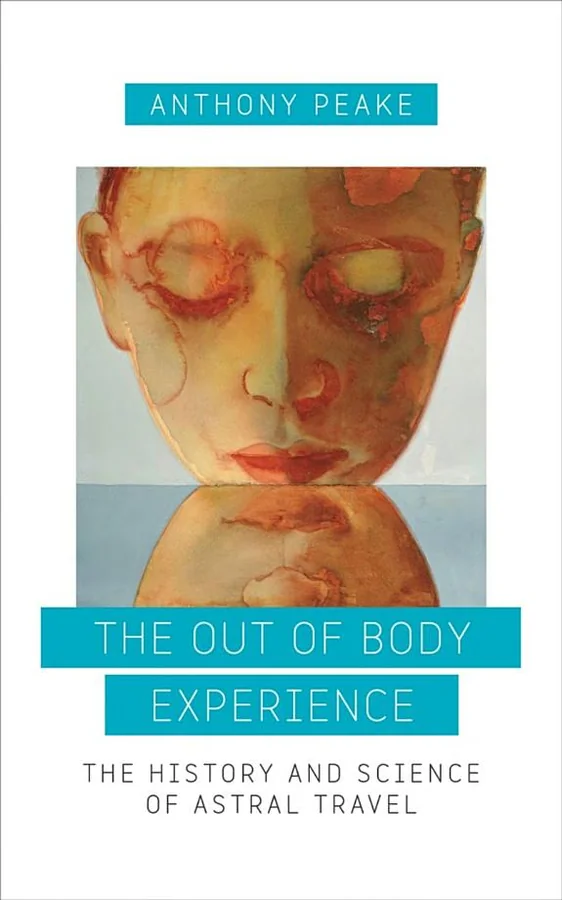
The Out of Body Experience
 72
72

The Out of Body Experience
Anthony Peake’s "The Out of Body Experience" attempts a rather ambitious synthesis, starting with a personal account of astral travel induced by the "Lucid Light Stimulator" in Switzerland. While the initial chapters offer a broad, if somewhat uncritical, survey of historical OBE narratives, the work finds its footing when it pivots to contemporary science. The second half, which engages with neurochemistry and psychology, presents a more grounded perspective, though it occasionally struggles to fully reconcile the subjective intensity of these states with empirical data. One notable strength is Peake's willingness to tackle a phenomenon often relegated to the fringes, bringing it into the light of academic discussion. However, the historical sections sometimes feel like an aggregation rather than a deep analysis, and the transitions between anecdotal, historical, and scientific can be abrupt. The discussion on neurochemistry, while relevant, could benefit from a deeper exploration of the specific neurotransmitters involved and their precise roles in inducing dissociative states. Ultimately, the book serves as a comprehensive, albeit uneven, primer on a complex subject, bridging the experiential and the empirical with mixed success.
📝 Description
72
Anthony Peake's 2010 book details his first experience with the Lucid Light Stimulator.
Anthony Peake's "The Out of Body Experience" begins with his personal encounter with the Lucid Light Stimulator in Switzerland, an event that led to his first astral travel. This personal origin story frames a broader investigation into out-of-body experiences (OBEs) across historical, theological, and mystical traditions. Peake examines the varied forms of OBEs, referencing ancient scriptures, esoteric texts, and personal accounts.
The book then turns to the scientific aspects of these experiences. Peake connects contemporary research in psychology, neurology, and neurochemistry with spiritual narratives, aiming to link subjective accounts with biological and cognitive processes. He seeks to give a complete view, acknowledging both spiritual aspects and the physical basis of altered consciousness and feelings of disembodiment. The work combines historical observations and modern scientific study of OBEs, serving as a resource for understanding consciousness beyond the physical body.
This work sits within the Western esoteric tradition's long engagement with altered states of consciousness and non-physical realities. It connects to traditions that explore astral projection, visionary experiences, and the nature of the soul or consciousness separate from the physical body. Peake bridges historical spiritual accounts with contemporary scientific inquiry, a common approach in modern esoteric studies seeking to validate or understand phenomena through both subjective experience and objective observation.
💡 Why Read This Book?
• Gain insight into the historical documentation of out-of-body experiences, tracing accounts from ancient mystics to documented cases, which provides a unique perspective absent in purely scientific texts. • Understand the scientific research into OBEs, including the work on psychology, neurology, and neuro-chemistry, offering a tangible framework for exploring consciousness beyond typical states. • Explore the direct impact of devices like the "Lucid Light Stimulator" on inducing altered states, providing a concrete example of how technology can interface with subjective consciousness.
⭐ Reader Reviews
Honest opinions from readers who have explored this book.
❓ Frequently Asked Questions
What is the 'Lucid Light Stimulator' mentioned in Anthony Peake's book?
The 'Lucid Light Stimulator' is a device Anthony Peake encountered in Switzerland that reportedly induced his first experience of astral travel. It represents a technological approach to altering consciousness and facilitating out-of-body experiences.
Does the book discuss the scientific basis of out-of-body experiences?
Yes, the second half of 'The Out of Body Experience' reviews current research in psychology, neurology, and neuro-chemistry to explore the scientific underpinnings of OBEs.
What historical periods or traditions does the book cover regarding OBEs?
The book covers a historical, theological, and mystical journey through the history of the out-of-body experience, referencing various forms and traditions.
Is Anthony Peake's book suitable for beginners in esoteric studies?
Given its comprehensive approach, blending personal experience with historical and scientific perspectives, the book is suitable for those new to the study of out-of-body experiences and esoteric philosophy.
What is the primary focus of 'The Out of Body Experience'?
The primary focus is a comprehensive examination of the out-of-body experience, integrating the author's personal journey, a historical survey of the phenomenon, and contemporary scientific research.
When was 'The Out of Body Experience' first published?
'The Out of Body Experience' by Anthony Peake was first published on September 13, 2016.
🔮 Key Themes & Symbolism
The Lucid Light Stimulator
The book begins with Peake's direct encounter with the Lucid Light Stimulator, an experimental device used in Switzerland. This apparatus serves as a tangible point of entry into the discussion of altered states of consciousness and the induction of out-of-body experiences. It represents a technological gateway, bridging the gap between the physical world and the potential for non-corporeal perception, prompting questions about the role of external stimuli in accessing subjective realities and the nature of consciousness itself.
Historical and Theological Perspectives
Peake traces the phenomenon of out-of-body experiences through a vast historical and theological landscape. This exploration encompasses ancient myths, religious doctrines, and the writings of mystics across various cultures and epochs. The objective is to illustrate how humanity has historically grappled with and interpreted experiences of consciousness transcending the physical body, presenting a body of belief systems and spiritual interpretations that have evolved over millennia.
Scientific Investigation of OBEs
The latter half of the book engages with contemporary scientific research aimed at understanding the mechanisms behind out-of-body experiences. Peake reviews findings from psychology, neurology, and neurochemistry, seeking to correlate subjective reports with objective biological and cognitive processes. This scientific inquiry aims to clarify the phenomenon by exploring potential neurological correlates and the chemical basis for altered states of consciousness, offering a rational framework for understanding these profound experiences.
Astral Travel and Consciousness
Fundamentally, the book is an investigation into astral travel and the broader nature of consciousness. Peake explores the subjective reality of leaving one's body, the perceived journeys undertaken, and the implications for our understanding of mind-matter relationships. By synthesizing personal accounts, historical records, and scientific data, the work seeks to illuminate the potential for consciousness to exist and operate independently of the physical brain, challenging conventional materialistic paradigms.
💬 Memorable Quotes
Direct passages from the work, attributed to the author.
“My first experience of 'Astral Travel' was precipitated by the 'Lucid Light Stimulator' in Switzerland.”
— This opening statement establishes the book's personal genesis and introduces a key technological element. It immediately grounds the esoteric discussion in a specific, verifiable event and device, setting a tone of experiential inquiry.
“The second half of the book discusses the science behind the experience, reviewing research in psychology, neurology and neuro-chemistry.”
— This points to the book's dual approach, acknowledging the scientific dimension of OBEs. It suggests a rigorous attempt to integrate empirical findings with subjective accounts, appealing to readers interested in the biological and psychological underpinnings.
“The book explores the varieties and forms of the out-of-body experience.”
— This interpretation underscores the diversity of phenomena covered, suggesting that the book will not present a monolithic view of OBEs but will acknowledge their varied manifestations across different individuals and contexts.
💡 Key Ideas
Editorial paraphrase of the work's core concepts — not direct quotes.
The work presents a historical, theological and mystical journey through the history of the 'out of body experience' in all its varieties and forms.
This paraphrase highlights the book's comprehensive scope, emphasizing its engagement with diverse traditions and historical interpretations of OBEs, signaling its intent to provide a broad overview rather than a narrow focus.
The author's journey begins with a specific device, leading to a broad exploration of consciousness.
This paraphrased concept emphasizes the transition from a concrete, technological trigger to a wide-ranging philosophical and scientific inquiry into the nature of consciousness and its potential beyond the physical body.
🌙 Esoteric Significance
Tradition
This work fits within the broader Western Esoteric tradition, particularly its modern iterations that seek to reconcile spiritual or experiential claims with scientific inquiry. It draws from the lineage of consciousness exploration found in Theosophy and later New Age thought, while attempting a more grounded, neuro-scientific approach. Peake's exploration of astral travel and altered states aligns with Hermetic principles concerning the mind's power and its potential to traverse different planes of existence, though he anchors it in empirical observation and research rather than purely mystical dogma.
Symbolism
While the book's primary focus is on the experience itself rather than overt symbolism, the 'Lucid Light Stimulator' can be seen as a modern symbol for technology's role in accessing altered states, akin to ancient shamanic tools. The 'Astral Travel' itself symbolizes the soul's journey or consciousness's independence from the physical form, a recurring motif in Gnostic and Neoplatonic thought, representing liberation from material constraints and exploration of non-physical realities.
Modern Relevance
Peake's work is relevant to contemporary discussions in transpersonal psychology and consciousness studies, influencing researchers and practitioners interested in non-ordinary states of consciousness. Thinkers exploring the neuroscience of spirituality, or the potential for consciousness to exist independently of brain function, find common ground with his synthesis. Practices involving lucid dreaming, meditation, and even regulated psychedelic use echo the experiential explorations detailed in the book, making it a reference for modern explorers of the mind.
👥 Who Should Read This Book
• Individuals interested in the scientific investigation of consciousness and altered states, seeking to understand the neurological and psychological correlates of out-of-body experiences. • Students of comparative religion and esoteric history, who wish to explore how the phenomenon of astral travel has been interpreted across diverse cultures and belief systems throughout time. • Practitioners of lucid dreaming, meditation, or other consciousness-altering techniques, looking for a comprehensive overview that bridges subjective experience with empirical research and historical context.
📜 Historical Context
Published in 2016, Anthony Peake's "The Out of Body Experience" emerged during a period of renewed interest in consciousness studies, psychedelics, and fringe scientific exploration. The intellectual climate was influenced by figures like Graham Hancock and Ervin Laszlo, who explored unconventional theories of consciousness and history. Peake's work arrived in a landscape where comparative religion scholars and parapsychologists had long debated phenomena like astral projection, with figures like J.W. Dunne and his theories on serialism in time also informing earlier discussions on consciousness beyond linear experience. While not directly engaging with specific contemporaries in its blurb, the book implicitly aligns with a broader esoteric and speculative scientific movement. Its reception likely resonated with readers familiar with the works of Stanislav Grof or the broader New Age movement's interest in altered states, positioning it as a contemporary contribution to understanding experiences previously relegated to anecdotal evidence or spiritual dogma.
📔 Journal Prompts
The Lucid Light Stimulator's role in initiating astral travel.
Historical accounts of out-of-body experiences across cultures.
The scientific findings on neurochemistry and OBEs.
Personal reflections on consciousness beyond the physical body.
The relationship between technology and altered states of awareness.
🗂️ Glossary
Out-of-Body Experience (OBE)
A subjective experience in which a person feels their consciousness has temporarily separated from their physical body, often perceiving themselves from a vantage point outside their physical form.
Astral Travel
A term often used synonymously with OBE, referring to the belief that consciousness can travel to other planes of existence or locations while the physical body remains inert.
Lucid Light Stimulator
A specific device mentioned by the author that reportedly induced his first experience of astral travel, serving as a technological means to explore altered states of consciousness.
Neuro-chemistry
The branch of science concerned with the physiological processes of the nervous system and the chemical compounds and pathways involved in neural activity and consciousness.
Psychology
The scientific study of the mind and behavior, including conscious and unconscious phenomena, and the study of subjective experiences like altered states of consciousness.
Neurology
The branch of medicine concerned with the study and treatment of disorders of the nervous system, including the brain, spinal cord, and nerves, relevant to understanding consciousness.
Altered State of Consciousness (ASC)
Any mental state that deviates from normal waking consciousness, often induced by physiological or psychological means, such as meditation, hypnosis, or certain substances.
This book appears in 1 collection
🔮 Readers Also Liked
Browse all →








From the “Out-of-Body Experience” Collection
View all →






More Free Occult Philosophy Books
View all →