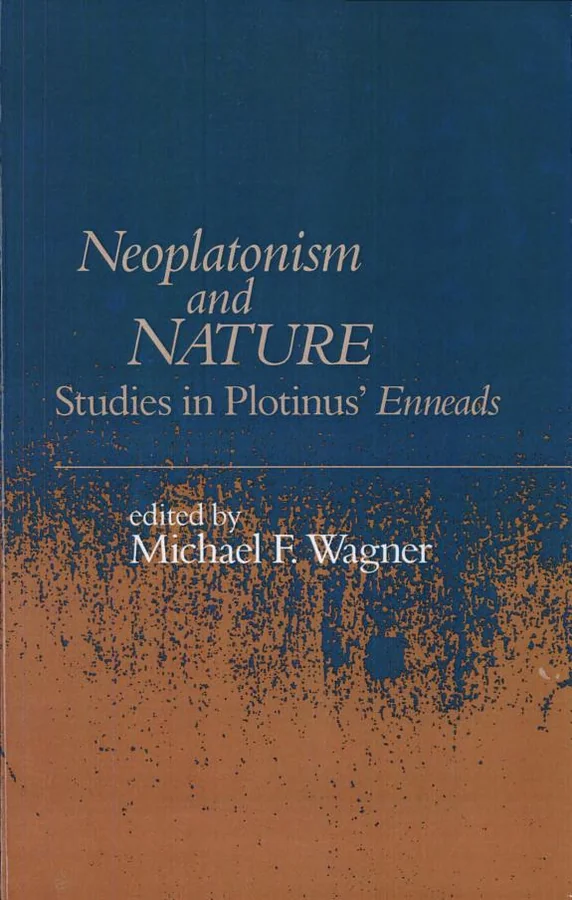
Neoplatonism and Nature
 82
82

Neoplatonism and Nature
Michael F. Wagner's "Neoplatonism and Nature" offers a scholarly dissection of how Plotinus and his followers conceived of the physical world. The collection succeeds admirably in presenting diverse scholarly perspectives on a subject often overshadowed by Neoplatonism's more ascetic or mystical aspects. A particular strength lies in the detailed analysis of the emanational cosmology, demonstrating how the material realm, far from being mere illusion, was understood as a necessary, albeit lower, reflection of higher principles. However, the book's dense academic prose, while precise, can make certain arguments inaccessible to the lay reader. The section exploring the World Soul's relationship to individual souls, while intellectually rigorous, feels somewhat detached from a practical, lived understanding of nature. Ultimately, this is a valuable resource for dedicated students of ancient philosophy seeking a comprehensive exploration of its ecological and cosmological dimensions.
📝 Description
82
Michael F. Wagner's 2002 collection examines Neoplatonism's view of the natural world.
This 2002 volume gathers original essays that investigate how Neoplatonic philosophers understood nature. The collection moves past purely metaphysical or ethical discussions to focus on the implications of this ancient school of thought for comprehending the physical universe. It examines the Neoplatonic perception of the cosmos, the material world, and humanity's place within it.
The essays consider specific Neoplatonic concepts like the Divine Intellect (Nous), the World Soul (Psyche), and the emanation of the cosmos from the One. They pay close attention to the Neoplatonic ideas on the generation and structure of the physical universe, the function of Forms in nature, and the potential for divine experience through contemplating the natural world.
Published during a period of renewed scholarly interest in esoteric philosophy, the book engages with the ideas of Plotinus and his contemporaries. It situates these within Hellenistic philosophy, contrasting them with Stoic and Aristotelian perspectives on the natural order.
Neoplatonism, originating with Plotinus in the 3rd century CE, offers a philosophical framework that profoundly influenced Western esotericism. Its hierarchical view of reality, emanating from a transcendent One, provided a basis for understanding the cosmos as imbued with divine presence. The tradition's emphasis on spiritual ascent and the possibility of union with the divine through intellectual and contemplative practices resonated with later occult traditions. Wagner's collection specifically addresses how this philosophical system interpreted the material world, placing it within a lineage that sought divine order in nature.
💡 Why Read This Book?
• Gain a nuanced understanding of the Neoplatonic view of the cosmos, learning how figures like Plotinus saw nature not as separate from the divine but as its outermost manifestation, a concept explored in essays discussing the World Soul. • Discover specific Neoplatonic concepts like 'Nous' (Divine Intellect) and 'Psyche' (World Soul) and their roles in structuring the material universe, providing a philosophical framework for contemplating natural phenomena beyond empirical observation. • Appreciate the historical context of Neoplatonism's engagement with nature, understanding its divergence from earlier Greek philosophies and its influence on subsequent esoteric traditions, as detailed in the historical and contextual sections.
⭐ Reader Reviews
Honest opinions from readers who have explored this book.
❓ Frequently Asked Questions
What is Neoplatonism's core idea about nature?
Neoplatonism views nature as an emanation from the ultimate divine principle, the One. It is seen as a reflection or image of higher, intelligible realities, animated by the World Soul, and accessible through philosophical contemplation.
Who was Plotinus and why is he central to this book?
Plotinus, a 3rd-century CE philosopher, founded Neoplatonism. His writings, compiled by his student Porphyry, form the bedrock of this school of thought, particularly his discussions on emanation, the One, and the structure of reality.
How does Neoplatonism differ from modern scientific views of nature?
Unlike modern science's focus on empirical observation and material causality, Neoplatonism integrates the natural world into a hierarchical spiritual cosmology, emphasizing its divine origins and symbolic significance.
What is the 'World Soul' in Neoplatonic philosophy?
The World Soul (Psyche) is the animating principle of the cosmos in Neoplatonism, acting as an intermediary between the intelligible realm of Forms and the physical universe, imparting order and life.
Are there practical applications of Neoplatonism for understanding nature?
Yes, the book explores how Neoplatonic thought encourages a contemplative approach to nature, seeing it as a path to understanding higher realities and the divine, rather than just an object of study.
When was 'Neoplatonism and Nature' first published?
The book 'Neoplatonism and Nature' was first published in 2002, collecting essays that analyze the philosophical concepts of this ancient school of thought.
🔮 Key Themes & Symbolism
Cosmic Emanation
The collection extensively discusses the Neoplatonic doctrine of emanation, where the material universe is understood as a cascading outflow from the ultimate, transcendent principle known as 'the One'. This process is not seen as a creation ex nihilo but as a continuous spiritual generation. The essays explore how this hierarchical structure, originating from the One, through Intellect (Nous) and then the World Soul (Psyche), gives rise to the multiplicity and diversity of the natural world, imbuing it with a divine order and beauty.
The World Soul (Psyche)
Central to understanding Neoplatonism's view of nature is the concept of the World Soul. The book examines how this principle acts as the animating force of the cosmos, responsible for its order, life, and intelligibility. It is depicted as a bridge between the pure intellect and the material realm, shaping and sustaining all physical existence. Scholars analyze its role in generating phenomena and its connection to individual human souls.
Nature as Divine Image
Contrary to viewing the material world as inherently flawed or evil, Neoplatonism, as presented in these essays, sees nature as a necessary and beautiful reflection of higher spiritual realities. The physical cosmos is an image or copy of the eternal Forms. Contemplating the order, beauty, and intricate workings of nature is thus presented as a path towards apprehending the divine intellect and ultimately the One.
Theurgy and Natural Contemplation
While primarily philosophical, the essays touch upon the practical implications of Neoplatonic thought for interacting with nature. This includes the idea that through rituals (theurgy) or deep philosophical contemplation of natural phenomena, individuals can achieve a closer connection to the divine principles that govern the universe, transcending the limitations of ordinary sensory experience.
💬 Memorable Quotes
Direct passages from the work, attributed to the author.
“The World Soul orders the cosmos from the intelligible realm.”
— This signifies the role of Psyche as the active principle that translates the perfect forms of the divine intellect into the structured reality of the physical universe, providing life and coherence.
“Contemplation of natural beauty leads to apprehension of higher truths.”
— This interpretation captures the Neoplatonic idea that observing the inherent order and beauty in the natural world can serve as a gateway to understanding the divine Forms and the ultimate reality of the One.
“The material realm is an image of the eternal Forms.”
— This expresses the Neoplatonic understanding of the physical world as a derivative reality, a reflection or copy that, while imperfect, still participates in and points towards the perfect, unchanging essences of the intelligible realm.
💡 Key Ideas
Editorial paraphrase of the work's core concepts — not direct quotes.
Nature is the outermost manifestation of the divine.
This paraphrased concept highlights the Neoplatonic view that the physical world is not separate from the spiritual but is its furthest, most diffused expression, still bearing the imprint of its divine source.
Plotinus' philosophy emphasizes the interconnectedness of all existence through emanation.
This paraphrased concept stresses that for Plotinus, every level of reality, from the highest spiritual principle to the material world, is linked through the process of emanation, creating a unified, hierarchical cosmos.
🌙 Esoteric Significance
Tradition
This work sits within the broader Western Esoteric Tradition, specifically drawing from Neoplatonism, a foundational philosophical system for many later occult and mystical movements. While Neoplatonism itself originated as a philosophical school, its emphasis on hierarchy, emanation, theurgy, and the ascent of the soul made it a fertile ground for esoteric interpretation. This book explores the metaphysical framework that informed later Hermetic, Gnostic, and Renaissance magical practices.
Symbolism
Key symbols explored include the 'One' as the ultimate, ineffable source; 'Nous' (Intellect) as the area of Forms; and 'Psyche' (Soul) as the animating principle of the cosmos. Nature itself functions as a symbol, a divine image reflecting the perfection of the intelligible world. The structure of the cosmos, often depicted hierarchically, symbolizes the relationship between spirit and matter, with the material world being the furthest, yet still connected, expression of the divine.
Modern Relevance
Contemporary thinkers and practitioners in fields like ecopsychology, deep ecology, and comparative spirituality often find resonance in Neoplatonism's integrated view of the cosmos. Modern occultists and philosophical explorers of consciousness draw upon its concepts of emanation and the World Soul to develop cosmologies that emphasize the spiritual dimension of nature and the interconnectedness of all beings, seeing it as an alternative to purely materialistic worldviews.
👥 Who Should Read This Book
• Students of classical philosophy: Those seeking a deeper understanding of Plotinus and his contemporaries beyond standard introductions, focusing specifically on their cosmological and natural philosophies. • Practitioners of Western Esotericism: Individuals interested in the philosophical origins of traditions like Hermeticism, Renaissance magic, and modern occultism, particularly how they conceptualize the divine presence in nature. • Comparative Religion scholars: Researchers looking to analyze the philosophical underpinnings of nature-based spiritualities and understand the historical development of ideas about the cosmos and humanity's place within it.
📜 Historical Context
Published in 2002, "Neoplatonism and Nature" arrives decades after the initial academic rehabilitation of Neoplatonism, which gained significant traction in the mid-20th century. Scholars like E.R. Dodds and Pierre Hadot had already illuminated Plotinus's complex thought. This 2002 collection engages with the specific domain of his philosophy of nature, a subject often less emphasized than his metaphysics or ethics. It situates Plotinus and his school, including figures like Porphyry, within the broader Hellenistic philosophical landscape, implicitly contrasting their integrated view of spirit and matter with the dualistic tendencies emerging in early Christianity or the more empirical focus of Aristotelianism. The book addresses a scholarly community increasingly interested in the historical roots of Western esoteric traditions and the philosophical underpinnings of ecological thought.
📔 Journal Prompts
The Neoplatonic concept of 'Nous' and its role in shaping natural phenomena.
Reflecting on the World Soul's animating influence in a specific natural setting.
The material world as a divine image: personal interpretations.
Plotinus's view on the generation of the physical universe and its implications.
How does the concept of emanation offer a different perspective on ecological interconnectedness?
🗂️ Glossary
The One
The ultimate, transcendent, and ineffable principle in Neoplatonism from which all reality emanates. It is beyond being and comprehension, the absolute source of all existence.
Nous (Intellect)
The second hypostasis in Neoplatonism, emanating from the One. It is the area of the eternal Forms or Ideas, the intelligible world that contains the perfect archetypes of all things.
Psyche (World Soul)
The third hypostasis, emanating from Nous. It is the animating principle of the entire cosmos, responsible for the order, life, and intelligibility of the physical universe.
Emanation
The Neoplatonic doctrine describing how reality flows or proceeds from the One in a hierarchical manner, without diminishing the source. It is a process of spiritual generation, not creation.
Forms/Ideas
The archetypal patterns or essences of all things, residing in the Nous. They are perfect, eternal, and unchanging blueprints for the sensible world.
Theurgy
A practice in some Neoplatonic schools involving rituals and invocations aimed at facilitating a connection between the human soul and the divine, often through symbolic actions related to nature or the cosmos.
Hypostasis
A fundamental level of reality or being in Neoplatonic metaphysics, such as the One, Nous, and Psyche, representing distinct but interconnected stages of existence.
This book appears in 1 collection
🔮 Readers Also Liked
Browse all →









From the “Neoplatonism” Collection
View all →







More Free Occult Philosophy Books
View all →