Tai Chi Ch'uan
 72
72

Tai Chi Ch'uan
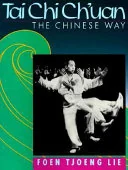
Foen Tjoeng Lie’s "Tai Chi Ch'uan" from 1988 is a work that prioritizes clarity and foundational understanding. The book’s strength lies in its methodical breakdown of movements and principles, supported by a generous number of black and white illustrations that, while dated, effectively demonstrate the forms. Lie’s approach is particularly valuable for its emphasis on the integration of breath and intention, moving beyond mere choreography to the cultivation of internal energy. A notable passage discusses the transition between postures, highlighting the necessity of continuous flow and the dissipation of muscular tension, a concept often overlooked in simpler introductions. However, the text’s 1988 publication date means its contextualization within broader contemporary esoteric thought might feel somewhat limited compared to modern scholarship. Despite this, the book serves as a solid, practical manual for those entering the discipline. "Tai Chi Ch'uan" offers a valuable, grounded entry point into the practice.
📝 Description
72
Foen Tjoeng Lie's "Tai Chi Ch'uan," published in 1988, details the ancient Chinese practice beyond mere exercise.
First published in 1988, Foen Tjoeng Lie's "Tai Chi Ch'uan" examines this ancient Chinese practice not simply as physical training, but as a complete discipline. The book explains how Tai Chi integrates movement, breath, and mental focus to improve well-being. It draws connections between the flow of its forms and the regulation of internal energy, known as 'Qi.' This text acts as a guide to the principles behind the martial art and its uses for health.
This work is for individuals serious about grasping Tai Chi's depth, moving past superficial aspects. It will interest practitioners who wish to understand the philosophy and mechanics more fully, as well as those drawn to the health benefits of mindful movement and controlled breathing. Students of traditional Chinese medicine, martial arts history, and meditative practices will find specific instruction and relevant context. It addresses the 'why' behind Tai Chi's methods.
Published in 1988, this book arrived as global interest in Eastern philosophies grew. "Tai Chi Ch'uan" provided a thorough introduction to concepts like Qi and mindfulness for a Western audience. It emerged during a time when health and wellness movements gained traction, making Tai Chi a subject for those seeking alternative paths to physical and mental health. The book's detailed illustrations and clear explanations made it a key resource for understanding these principles.
💡 Why Read This Book?
• Learn the foundational "Eight Energies" of Tai Chi (Peng, Lu, Ji, An, Cai, Lie, Zhou, Kao) as detailed in Foen Tjoeng Lie's comprehensive guide, moving beyond superficial form to grasp core principles. • Understand the critical role of diaphragmatic breathing and its connection to Qi cultivation, a central tenet explained throughout the book's instruction. • Gain insight into the philosophical underpinnings of Tai Chi, exploring how concepts like Yin and Yang are embodied in the specific movements presented in the 1988 edition.
⭐ Reader Reviews
Honest opinions from readers who have explored this book.
❓ Frequently Asked Questions
What is the historical significance of Foen Tjoeng Lie's "Tai Chi Ch'uan"?
Published in 1988, the book emerged as a key resource during a period of growing Western interest in Eastern practices, offering a clear, illustrated introduction to Tai Chi's principles and forms.
How does "Tai Chi Ch'uan" by Foen Tjoeng Lie explain the connection between movement and breath?
The book emphasizes synchronized diaphragmatic breathing with each movement, positing that this integration is crucial for cultivating and circulating internal energy (Qi).
Are the illustrations in "Tai Chi Ch'uan" helpful for learning?
Yes, the 227 black and white illustrations are a significant feature, providing visual guidance for executing the postures and understanding the flow of movements.
What are the "Eight Energies" mentioned in the book?
The "Eight Energies" are fundamental principles of Tai Chi movement: Peng, Lu, Ji, An, Cai, Lie, Zhou, and Kao, representing different types of force and intention.
Is this book suitable for absolute beginners in Tai Chi?
Yes, with its clear explanations and numerous illustrations, it serves as a strong foundational text for those new to Tai Chi who wish to understand its core concepts.
What is the role of mental concentration in the practice as described by Foen Tjoeng Lie?
Lie stresses mental concentration as integral, guiding the practitioner to focus intention with each movement and breath, thereby enhancing the energetic and meditative aspects of Tai Chi.
🔮 Key Themes & Symbolism
Qi Cultivation Through Movement
The work meticulously details how the slow, deliberate movements of Tai Chi Ch'uan are designed to harmonize and cultivate the body's vital energy, Qi. Foen Tjoeng Lie explains that each posture and transition is not merely physical but a means to direct and circulate this internal force. The book illustrates how the practitioner’s intent, coupled with precise breathing and relaxed posture, becomes the vehicle for this energetic cultivation, aligning the physical form with subtle energetic pathways often discussed in Taoist traditions.
The Eight Energies Explained
Central to Lie's exposition are the 'Eight Energies' (Peng, Lu, Ji, An, Cai, Lie, Zhou, Kao), which are presented as the fundamental building blocks of Tai Chi's martial and energetic applications. These are not brute forces but nuanced expressions of yielding, adhering, pushing, and deflecting, rooted in principles of balance and dynamic interaction. The book provides detailed descriptions and visual aids to help readers understand how these energies manifest in practice, offering a framework for developing sensitivity and responsiveness.
Mind-Body Integration for Well-being
"Tai Chi Ch'uan" posits that the practice is a potent method for achieving profound mind-body integration. By linking conscious breath control with flowing physical movements and focused mental attention, the discipline aims to dissolve mental and physical blockages. This holistic approach is presented as a pathway to not only physical health, such as improved balance and circulation, but also mental clarity and emotional equilibrium, reflecting the Taoist emphasis on living in harmony with natural principles.
Taoist Principles Embodied
The text implicitly and explicitly draws from Taoist philosophy, translating abstract concepts into tangible practice. The principles of Yin and Yang, for instance, are shown to govern the interplay of opposing forces within movements—flexibility and strength, stillness and motion. The emphasis on naturalness, effortless action (Wu Wei), and rooting oneself in the present moment are woven throughout the instruction, presenting Tai Chi as a living embodiment of Taoist wisdom for daily life.
💬 Memorable Quotes
Direct passages from the work, attributed to the author.
“Breathing is the mother of all movements.”
— This statement highlights the primacy of breath in Tai Chi, positioning it not as an accompaniment but as the fundamental generative force that initiates and guides every physical action.
“The body moves like flowing water.”
— This interpretation captures the essence of Tai Chi's characteristic fluidity, suggesting that movements should be continuous, adaptable, and free from abruptness, mirroring the natural flow of a stream.
“Each movement contains the essence of the preceding and succeeding ones.”
— This interpretation points to the seamless continuity required in Tai Chi, where the end of one posture naturally flows into the beginning of the next, creating an unbroken chain of motion.
💡 Key Ideas
Editorial paraphrase of the work's core concepts — not direct quotes.
Relaxation is the foundation of internal strength.
This paraphrased concept emphasizes that true power in Tai Chi arises not from muscular tension, but from a state of profound physical and mental ease that allows energy to flow freely.
Concentration directs the Qi.
This paraphrased concept underscores the active role of the mind in Tai Chi practice, indicating that focused mental attention is essential for guiding and manipulating the body's vital energy.
🌙 Esoteric Significance
Tradition
The work aligns with the Taoist tradition, presenting Tai Chi Ch'uan as a practical embodiment of Taoist principles such as Yin and Yang, the cultivation of Qi, and the concept of Wu Wei (effortless action). It bridges the gap between philosophical Taoism and its physical manifestation, offering a method for achieving internal harmony and balance through disciplined practice. This approach distinguishes it from purely martial interpretations, emphasizing its role in spiritual and physical well-being rooted in ancient Chinese cosmology.
Symbolism
Key symbolism includes the concept of Qi, the vital life force that flows through all things and is consciously cultivated in Tai Chi. The movements themselves symbolize the dynamic interplay of Yin (yielding, receptive) and Yang (active, firm) energies, representing the fundamental duality and balance within the universe. The Dantian, often visualized as a center of energy in the lower abdomen, serves as a symbolic and energetic locus for the practitioner's focus and power.
Modern Relevance
Contemporary somatic practices, mindfulness-based stress reduction (MBSR) programs, and even physical therapy modalities often incorporate principles that echo Tai Chi's emphasis on gentle movement, breath awareness, and mind-body connection. Thinkers and practitioners exploring integrated approaches to health and consciousness continue to find value in Lie's foundational explanations of Qi cultivation and energetic principles, seeing them as precursors to modern explorations of bioenergetics and embodied cognition.
👥 Who Should Read This Book
• Beginning Tai Chi practitioners seeking a comprehensive introduction to the fundamental principles, movements, and underlying philosophy of the art. • Students of traditional Chinese medicine or Taoist philosophy interested in understanding how these concepts are practically applied through physical discipline. • Health and wellness enthusiasts looking for a gentle, low-impact exercise that promotes balance, relaxation, and internal energy cultivation.
📜 Historical Context
Published in 1988, Foen Tjoeng Lie's "Tai Chi Ch'uan" arrived during a burgeoning period of Western engagement with Eastern contemplative and martial arts. The late 20th century saw a growing dissatisfaction with purely mechanistic views of health, leading many to explore practices like Tai Chi, which offered a holistic approach. This era was also marked by increasing academic and popular interest in Taoism and traditional Chinese medicine, making Lie’s work particularly timely. While other martial arts focused heavily on external force, Tai Chi, as presented in this book, offered a distinct path emphasizing internal cultivation. Contemporary authors like Benjamin Hoff, with "The Tao of Pooh" (1982), were popularizing Taoist concepts in accessible ways, creating a receptive audience for deeper dives into Taoist-rooted practices like Tai Chi. The book's detailed approach contributed to clarifying the practice for a Western readership unfamiliar with its philosophical depth.
📔 Journal Prompts
The concept of the 'Eight Energies' and their application.
Foen Tjoeng Lie's perspective on breathing as the 'mother of all movements'.
The symbolic representation of Yin and Yang within Tai Chi postures.
How the principle of relaxation contributes to developing internal strength.
The integration of mental concentration with physical form in practice.
🗂️ Glossary
Tai Chi Ch'uan
Literally 'Supreme Ultimate Fist,' a Chinese martial art practiced for both its defense training and its health benefits, emphasizing slow, flowing movements and internal energy cultivation.
Qi (Chi)
The vital life force or energy believed to flow through all living beings and the universe, central to traditional Chinese medicine and martial arts like Tai Chi.
Dantian
A concept in Taoism and Chinese medicine referring to a point in the lower abdomen, considered a center for Qi and vital energy within the body.
Yin and Yang
Fundamental Taoist concepts representing complementary, interconnected opposites (e.g., passive/active, dark/light, feminine/masculine) whose balance is crucial for harmony.
Peng
One of the 'Eight Energies' of Tai Chi, often translated as 'ward off' or 'expand,' representing an upward, outward buoyant force.
Wu Wei
A Taoist concept meaning 'non-action' or 'effortless action,' signifying action that is in harmony with the natural flow of the universe, without strain or resistance.
Eight Energies
The foundational principles of Tai Chi movement: Peng, Lu, Ji, An, Cai, Lie, Zhou, and Kao, representing various applications of force, intention, and yielding.
This book appears in 1 collection
🔮 Readers Also Liked
Browse all →









From the “Tai Chi” Collection
View all →






More Free Occult Philosophy Books
View all →




![Vedanta Philosophy Self-knowledge [atma-jnana]](/img/thumb/vedanta-philosophy-self-knowledge-atma-jnana-swami-abhedananda-114980.webp)