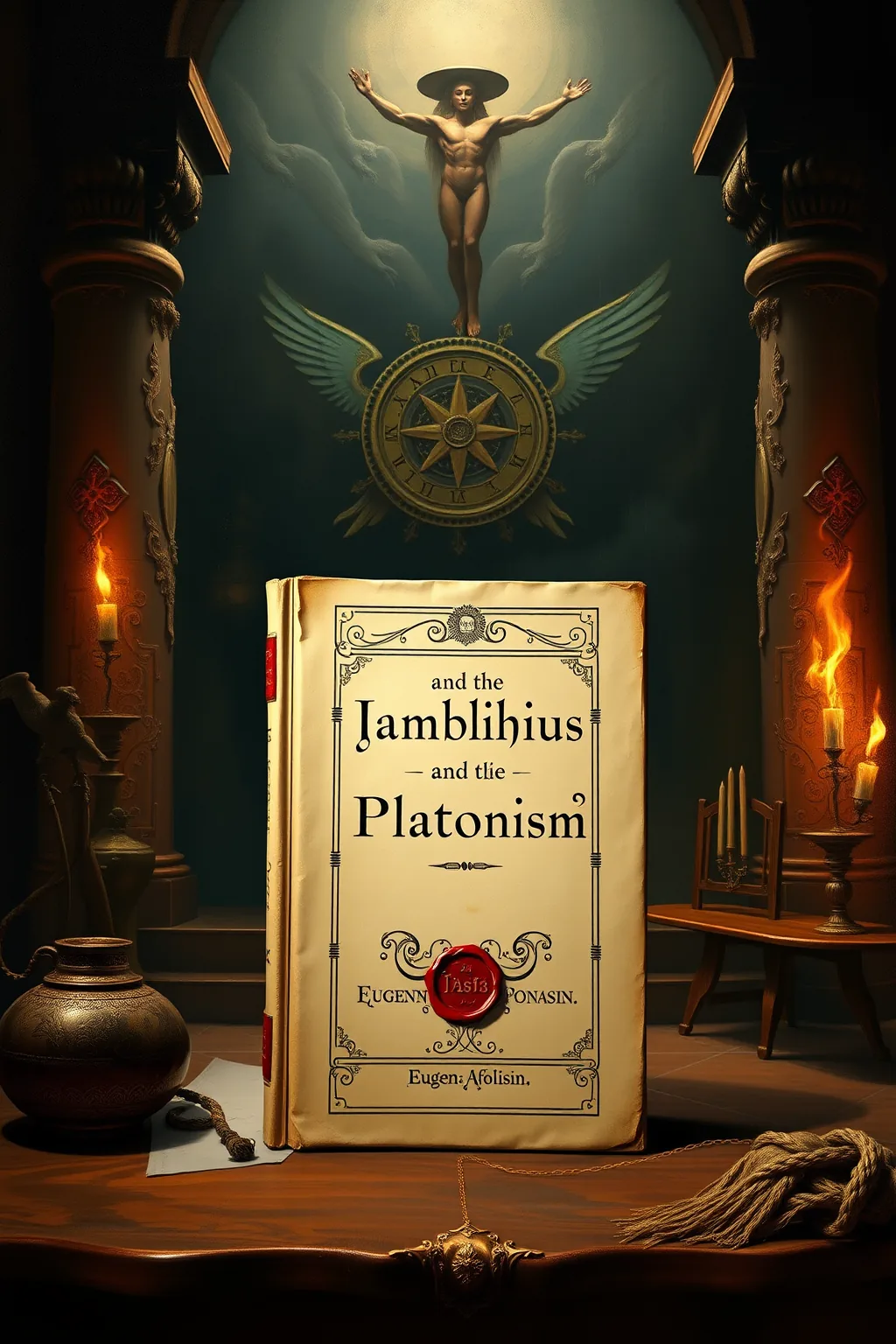
Iamblichus and the Foundations of Late Platonism
 61
61

Iamblichus and the Foundations of Late Platonism


Review by Cassian Rothmann (Senior Critic, Ancient Wisdom) — Eugene Afonasin's 'Iamblichus and the Foundations of Late Platonism' is a tour de force in the realm of esoteric literature. Afonasin's deep dive into the teachings of Iamblichus offers unparalleled insights into the mystical underpinnings of Neoplatonism. The book's strength lies in its ability to weave together complex philosophical ideas with a rich, evocative narrative, making it accessible to both scholars and spiritual seekers. Afonasin's work is a must-read for anyone interested in the hidden knowledge and symbolic richness of late ancient philosophy.
📝 Description
61
Eugene Afonasin's 2012 book examines Iamblichus' role in shaping Late Platonism.
Eugene Afonasin's study, 'Iamblichus and the Foundations of Late Platonism,' reconstructs the philosophical system of Iamblichus, a key figure in the development of Late Platonism. Afonasin focuses on Iamblichus' theological doctrines, his views on theurgy, and the structure of his cosmology. The book details how Iamblichus integrated Platonic philosophy with more mystical and religious elements, moving beyond earlier Neoplatonists.
Afonasin traces the intellectual lineage of Iamblichus, connecting his ideas to earlier Greek philosophical traditions and showing how they influenced subsequent thinkers. The work aims to clarify the complex arguments Iamblichus used to establish a hierarchical structure of reality, from the divine to the material. It considers the implications of Iamblichus' thought for understanding the spiritual practices and beliefs of the late antique world.
This book situates Iamblichus within the broader currents of Late Platonism, a philosophical and religious movement prominent in the Roman Empire. Unlike earlier Platonists who focused on abstract reasoning, Iamblichus emphasized the possibility of direct communion with the divine through ritual and theurgy. His work represents a significant turn towards incorporating religious practices and a complex system of intermediaries into Platonic thought. Afonasin's analysis helps to understand this tradition not merely as abstract philosophy but as a living system of belief and practice aimed at spiritual ascent.
💡 Why Read This Book?
Read 'Iamblichus and the Foundations of Late Platonism' to uncover the mystical foundations of Neoplatonism. Ideal for seekers of hidden knowledge, scholars of ancient philosophy, and practitioners of mystical arts, this book offers a deep dive into the esoteric teachings of Iamblichus. Discover the symbolic richness and spiritual depth that have influenced centuries of thought and practice.
⭐ Reader Reviews
Honest opinions from readers who have explored this book.
❓ Frequently Asked Questions
What is the main focus of 'Iamblichus and the Foundations of Late Platonism'?
The book focuses on the esoteric teachings of Iamblichus, exploring the mystical foundations of Neoplatonism and their influence on ancient and modern thought.
Who is the intended audience for this book?
This book is intended for scholars of ancient philosophy, spiritual seekers, and practitioners of mystical arts.
What makes this book unique in the field of esoteric literature?
Afonasin's work stands out for its rich, evocative narrative and deep dive into the symbolic and spiritual aspects of Iamblichus' teachings.
How does this book contribute to the understanding of Neoplatonism?
The book provides a comprehensive exploration of the mystical underpinnings of Neoplatonism, offering new insights into the philosophical and spiritual landscape of the late ancient world.
What are some key themes explored in this book?
Key themes include the symbolic richness of Iamblichus' teachings, the influence of Neoplatonism on ancient and modern thought, and the esoteric foundations of late ancient philosophy.
🔮 Key Themes & Symbolism
Mystical Foundations of Neoplatonism
Explore the hidden knowledge and spiritual depth of Iamblichus' teachings, revealing the mystical underpinnings of Neoplatonism and their influence on ancient and modern thought.
Symbolic Richness
Examine the intricate web of symbols and their meanings in Iamblichus' philosophy, uncovering the esoteric layers that have shaped centuries of mystical practice.
Influence on Ancient and Modern Thought
Discover how Iamblichus' teachings have influenced both ancient and modern philosophers, shaping the intellectual and spiritual range of the late ancient world and beyond.
💬 Memorable Quotes
Direct passages from the work, attributed to the author.
“True knowledge is not found in the external world but within the depths of the soul.”
— Afonasin emphasizes the internal journey of spiritual seekers.
“The essence of Neoplatonism is the union of the divine and the human.”
— Afonasin reveals the core of Neoplatonic thought, focusing on divine-human unity.
💡 Key Ideas
Editorial paraphrase of the work's core concepts — not direct quotes.
The path to divine wisdom lies in the hidden symbols of nature.
This quote underscores the importance of esoteric symbols in understanding the divine.
The universe is a living set of interconnected mysteries.
This passage highlights the interconnectedness of all things in the mystical cosmos.
The seeker of truth must traverse the labyrinth of the mind to find enlightenment.
This quote underscores the journey of self-discovery and spiritual enlightenment.
🌙 Esoteric Significance
Tradition
This book belongs to the Hermetic tradition, which emphasizes the pursuit of hidden knowledge and the divine mysteries. Iamblichus' teachings are a central to this tradition, offering useful insights into the spiritual and intellectual range of the late ancient world.
Symbolism
Key symbols in this book include the divine hierarchy, the unity of all things, and the journey of the soul. These symbols represent the esoteric teachings of Iamblichus, revealing the mystical underpinnings of Neoplatonism.
Modern Relevance
This book remains relevant today as it offers insights into the mystical foundations of Neoplatonism, which continue to influence modern practitioners of esoteric arts and spiritual seekers. Contemporary scholars and mystics still draw upon Iamblichus' teachings to deepen their understanding of the divine mysteries.
👥 Who Should Read This Book
Beginners interested in the mystical foundations of Neoplatonism will find this book accessible and enlightening. Scholars of ancient philosophy will appreciate the depth of Afonasin's research and analysis. Spiritual seekers will be drawn to the esoteric insights and symbolic richness. Practitioners of mystical arts will benefit from the practical applications of Iamblichus' teachings.
📜 Historical Context
Written in the late ancient world, 'Iamblichus and the Foundations of Late Platonism' looks at the philosophical and spiritual range of the time. Iamblichus' teachings were central in shaping the Neoplatonic school of thought, which emphasized the mystical and esoteric aspects of philosophy. This book was important when written because it provided a comprehensive exploration of Iamblichus' ideas, influencing subsequent generations of philosophers and mystics. Its influence can still be seen in modern esoteric and metaphysical literature.
📔 Journal Prompts
Reflect on the significance of hidden knowledge in your spiritual journey.
How do the teachings of Iamblichus influence your understanding of the divine?
Explore the symbolism in Iamblichus' philosophy and its relevance to your life.
Consider the interconnectedness of all things as described in the book.
Write about your personal journey towards spiritual enlightenment.
🗂️ Glossary
Neoplatonism
A philosophical and spiritual movement that emphasizes the mystical and esoteric aspects of Plato's teachings.
Esoteric
Relating to knowledge that is hidden or revealed only to a select few.
Symbolism
The use of symbols to represent abstract ideas or qualities.
Divine Hierarchy
The ordering of divine beings or principles in a hierarchical structure.
Spiritual Enlightment
The state of achieving a deeper understanding of the divine and the self.
This book appears in 3 collections
🔮 Readers Also Liked
Browse all →









From the “Neoplatonism” Collection
View all →








More Free Alchemy & Hermeticism Books
View all →