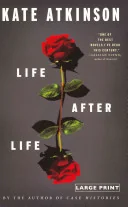
Life After Life
 75
75

Life After Life
Atkinson's "Life After Life" offers a genuinely novel approach to exploring the life of Ursula Todd. The strength of the novel lies in its intricate plotting, managing to make each repeated life feel distinct yet connected, highlighting subtle shifts in character and circumstance. The sheer ambition of its narrative structure, constantly resetting the clock on Ursula's existence, is its most striking feature. However, this very ambition can sometimes lead to a sense of narrative fatigue; the constant rewinding, while thematically potent, occasionally risks obscuring the emotional core of Ursula's individual experiences. A particularly potent passage involves Ursula's attempts to avert personal tragedies, only to find new ones emerging in their stead. The novel ultimately succeeds in posing profound questions about destiny and the human condition, even if its structural gymnastics occasionally overshadow its emotional resonance.
📝 Description
75
Kate Atkinson's 2013 novel, Life After Life, begins with Ursula Todd dying on her first birthday.
Kate Atkinson's "Life After Life" was published in 2013. The novel follows Ursula Todd, who is born on a snowy night in 1910. Her life does not unfold in a single sequence; instead, Ursula lives through many different versions of her existence. Each time Ursula dies, she is reborn and has another chance to live her life differently. These repeated lives allow her to change her fate and, potentially, the course of larger events.
The narrative structure itself is experimental, moving away from a standard chronological progression. It invites readers to consider how different choices might alter a person's path and the world around them. The book examines the impact of small decisions on personal relationships and significant historical moments, including the period leading up to World War II. It is a story about possibility and the way time might be perceived.
This novel is suited for readers interested in philosophical questions about free will, causality, and the nature of existence. Those who enjoy stories that play with narrative form and focus on character development will find much to consider within its pages. It is a work that looks at the broad scope of what a single life can contain.
The novel engages with concepts of cyclical existence and the potential for multiple lives, a theme found in various esoteric traditions, including reincarnation beliefs within Hinduism and Buddhism, as well as spiritualist ideas of soul progression. Atkinson's exploration touches on the notion that a soul might learn or evolve through repeated experiences, questioning a strictly linear understanding of time and fate. The idea that individual choices can affect not only one's own life but also collective destiny resonates with certain mystical philosophies concerned with interconnectedness and spiritual development.
💡 Why Read This Book?
• Gain a unique perspective on causality and consequence by experiencing Ursula Todd's multiple lives, particularly her attempts to navigate the pre-World War II era in England. • Explore the philosophical concept of the eternal recurrence and its potential implications for personal growth and understanding, as depicted through Ursula's recurring birthdates and deaths. • Understand how narrative form itself can embody philosophical ideas, as Atkinson uses structural repetition to question the linearity of time and fate, referencing the year 1910 as Ursula's initial birth.
⭐ Reader Reviews
Honest opinions from readers who have explored this book.
❓ Frequently Asked Questions
What is the central premise of Kate Atkinson's 'Life After Life'?
The novel follows Ursula Todd, born in 1910, who repeatedly dies and is reborn into the same life. Each reincarnation allows her to live through the same historical events but with opportunities to make different choices and alter outcomes.
Does 'Life After Life' involve actual reincarnation or is it metaphorical?
The novel presents Ursula's repeated lives as a narrative device to explore themes of fate, free will, and the impact of choices. Whether it's literal reincarnation or a psychological exploration is left open to interpretation by the reader.
What historical periods does Ursula Todd experience in 'Life After Life'?
Ursula's lives span from her birth in 1910 through periods including the Spanish Flu pandemic, the interwar years, and leading up to and during World War II, offering a view of 20th-century history through different personal lenses.
How does the narrative structure of 'Life After Life' work?
The book employs a fragmented, cyclical narrative. Key moments and decades are revisited from different angles as Ursula lives through them multiple times, with subtle changes occurring based on her altered decisions or circumstances.
Is 'Life After Life' a sequel to another book?
No, 'Life After Life' is a standalone novel. However, it shares characters and settings with Atkinson's later novel 'Gods and Beasts,' though it can be read and understood independently.
What are the main philosophical themes explored in 'Life After Life'?
The novel delves into themes of determinism versus free will, the nature of time, causality, the impact of individual choices on a larger scale, and the possibility of learning from past experiences, even across different lives.
🔮 Key Themes & Symbolism
The Infinite Loop
The central conceit of Ursula Todd's repeated lives functions as a potent metaphor for the concept of eternal recurrence, a philosophical idea explored by thinkers like Nietzsche. Each birth on that snowy night in 1910 becomes a new opportunity to test different paths, to learn from past mistakes, or to simply observe the ripple effects of altered decisions. This cyclical narrative suggests that time might not be a linear progression but a series of interconnected moments, offering a unique lens through which to examine fate and free will. The novel invites readers to consider if true change is possible within such a framework or if certain destinies are immutable.
Causality and Choice
Atkinson masterfully explores the intricate web of cause and effect. Ursula's attempts to avert personal tragedies, from childhood illnesses to the looming threat of World War II, highlight how interconnected events are. A seemingly minor alteration in one life can lead to vastly different, and sometimes unforeseen, consequences in the next. This iterative process forces both Ursula and the reader to question the nature of agency. Are we truly free to choose, or are our lives merely permutations of a predetermined pattern? The novel's structure itself becomes an experiment in causality, demonstrating how subtle shifts can fundamentally alter a life's trajectory.
The Nature of Self
Through Ursula's myriad existences, the novel probes the persistence of identity. Despite living through the same historical periods and often facing similar challenges, Ursula retains a core sense of self, albeit one shaped by the cumulative memories and experiences of her various lives. This raises questions about what constitutes the 'self': is it our memories, our choices, our relationships, or something more ineffable that transcends individual lifetimes? The recurring elements in Ursula's life, such as her relationships with her family, become anchors in the shifting currents of her existence, illustrating the enduring aspects of personality and connection.
Historical Echoes
Ursula's lives are deeply embedded in the historical context of 20th-century England, from the early 1900s through World War II. The novel uses her recurring experiences to reflect on how major historical events impact individual lives and families. By replaying critical junctures, such as the anxieties preceding the war or the impact of societal changes, Atkinson offers a unique perspective on history. It's not just a backdrop but an active force that shapes and reshapes Ursula's reality, demonstrating how collective human experiences resonate through personal narratives, generation after generation, or in Ursula's case, life after life.
💬 Memorable Quotes
Direct passages from the work, attributed to the author.
“The snow was falling, as it had been for days, and the world was quiet and muffled and clean.”
— This evocative description marks Ursula's recurring birth. The pristine, silent snow symbolizes a fresh start, a clean slate offered with each new life, yet the persistent falling suggests an ongoing, perhaps overwhelming, force shaping her destiny.
“How could she have known that the world was about to change?”
— This rhetorical question points to the limitations of individual knowledge and foresight, especially in the face of momentous historical shifts like the onset of World War II. It reflects Ursula's recurring struggle to comprehend and read through the larger forces impacting her life.
“Life is too short to be lived by the book.”
— This sentiment, likely reflecting Ursula's own evolving perspective, suggests a rebellion against rigid adherence to pre-ordained paths or societal expectations. It implies a desire to live authentically, embracing the messiness and unpredictability of existence, even across multiple lives.
💡 Key Ideas
Editorial paraphrase of the work's core concepts — not direct quotes.
Ursula wakes up in the hospital, the doctor telling her she's lucky to be alive. She dies again, and wakes up in the hospital, the doctor telling her she's lucky to be alive.
This quote captures the novel's central mechanism: the repeated death and rebirth of Ursula. It highlights the cyclical nature of her existence and the immediate return to similar circumstances, emphasizing the recurring challenges and the seemingly inescapable patterns she must navigate.
She had been born in 1910, and she had died, and she had been born again, and she had died, and she had been born again.
A direct statement of the novel's premise, this line underscores the relentless repetition of Ursula's life. It conveys a sense of weariness and the extraordinary nature of her existence, where birth and death are not endpoints but cyclical occurrences.
🌙 Esoteric Significance
Tradition
While not explicitly aligned with a single esoteric tradition, "Life After Life" engages with concepts that echo Gnostic ideas of cyclical existence and the soul's journey through multiple lives, as well as Neoplatonic notions of fate and the interconnectedness of all things. It bypasses the rigid dogma of many traditions, offering a more personal and philosophical exploration of reincarnation and karmic patterns. The narrative can be seen as a literary interpretation of the soul's learning process, where repeated experiences serve as lessons until a certain understanding or equilibrium is achieved.
Symbolism
The recurring motif of the snowy birth night in 1910 serves as a powerful symbol of renewal and potential, a pristine starting point that is constantly revisited. The act of dying and being reborn itself is a potent symbol of transformation and the potential for redemption or correction. Furthermore, the recurring presence of specific historical moments, particularly the lead-up to World War II, acts as a symbolic crucible, testing Ursula's ability to alter fate and demonstrating the weight of collective human action.
Modern Relevance
The novel's exploration of causality, interconnectedness, and the impact of individual choices resonates strongly with contemporary discussions in systems thinking and complexity theory. Modern spiritual seekers and philosophers often draw upon such literary explorations to understand personal growth and societal change. Its thematic engagement with the idea that 'history repeats itself' and the potential for individual agency within larger patterns connects with current interests in mindfulness, personal responsibility, and understanding the long-term consequences of actions in an increasingly complex world.
👥 Who Should Read This Book
• Readers interested in philosophical fiction who enjoy exploring concepts of fate, free will, and the nature of time through narrative experimentation. • Students of 20th-century history who appreciate seeing central events like World War II refracted through the lens of individual, recurring lives. • Those drawn to literary explorations of reincarnation and the idea of learning or growth across multiple existences, seeking a nuanced fictional perspective.
📜 Historical Context
Kate Atkinson's "Life After Life" arrived in 2013, a period marked by widespread reflection on the centenary of World War I and a continued fascination with the psychological impact of the 20th century's major conflicts. The novel's experimental structure, exploring multiple timelines for a single protagonist, resonated with a literary tradition that included authors like Vladimir Nabokov and Julian Barnes, who had previously played with narrative form and memory. Atkinson's exploration of fate and individual agency within the grand sweep of history, particularly the looming threat of World War II, offered a fresh perspective on familiar events. While not directly engaging with a specific intellectual movement, the novel taps into ongoing philosophical debates about determinism and free will, concepts that have been central to existentialist thought since the mid-20th century, and its reception was largely positive, praised for its ingenuity and emotional depth.
📔 Journal Prompts
Ursula's repeated births in 1910 represent recurring opportunities. Reflect on a personal 'recurring opportunity' you've encountered.
The consequences of Ursula's altered choices, even minor ones, are central. Consider a small decision you made and its unforeseen ripple effects.
The novel presents history as a force impacting personal lives. How do major historical events, like the Spanish Flu pandemic, shape individual choices?
Ursula's journey is one of repeated learning. What is a lesson you feel you have had to learn multiple times in different ways?
The concept of 'saving the world' emerges through Ursula's lives. What does 'making a difference' mean within the context of your own life's iterations?
🗂️ Glossary
Eternal Recurrence
A philosophical concept, most famously associated with Friedrich Nietzsche, suggesting that all events in the universe have happened before and will happen again, infinitely. In the novel, Ursula's repeated lives embody this idea.
Causality
The principle that every event is necessitated or brought about by antecedent events and conditions. The novel explores how altering causes can lead to different effects in Ursula's repeated lives.
Determinism
The philosophical position that every event, including human cognition, decision, and action, is causally determined by an unbroken chain of prior occurrences. The novel questions the extent of determinism in Ursula's life.
Free Will
The capacity of agents to choose between different possible courses of action unimpeded. Ursula's repeated lives offer her opportunities to exercise free will, though the outcome is uncertain.
Existentialism
A philosophical movement emphasizing individual existence, freedom, and choice. The novel touches on existential themes through Ursula's subjective experience and her search for meaning.
Narrative Fragmentation
A literary technique where the story is presented in a non-linear, broken, or disjointed manner. Atkinson uses this to mirror Ursula's fragmented experiences across multiple lives.
Alternate History
A genre of speculative fiction that intentionally alters history from known events. While not strictly alternate history, the novel explores 'what if' scenarios within a known historical framework.
This book appears in 1 collection
🔮 Readers Also Liked
Browse all →








From the “Reincarnation” Collection
View all →



More Free Occult Philosophy Books
View all →