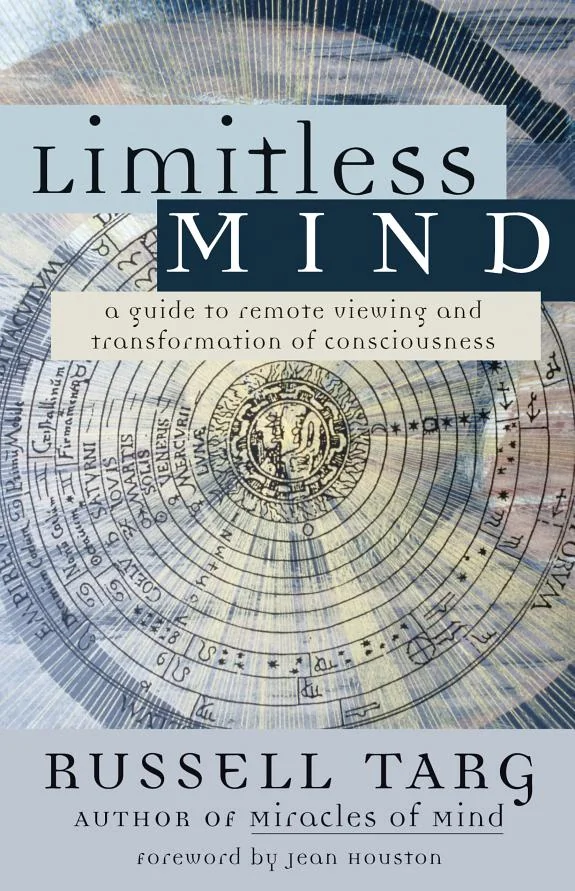
Limitless Mind
 81
81

Limitless Mind
Russell Targ’s *Limitless Mind* offers a compelling case for the existence and cultivability of psychic abilities, grounded in his decades of research. Targ’s strength lies in his clear, accessible explanation of remote viewing, a technique he helped pioneer. He effectively demystifies the process, presenting it as a learnable skill rather than an innate gift. The book’s synthesis of empirical data with spiritual traditions is commendable, particularly in its attempt to reconcile scientific methodology with subjective experience. However, the breadth of topics covered—from remote viewing to intuitive healing—sometimes feels less integrated than it could be, potentially overwhelming readers less familiar with parapsychology. A particularly striking section details experiments where subjects accurately described hidden targets, illustrating the core tenets of remote viewing. Despite its ambition, the work occasionally leans into a hopeful interpretation of data that some critics might find less than conclusive. Nonetheless, *Limitless Mind* serves as a valuable primer on psychic phenomena from a seasoned researcher.
📝 Description
81
Russell Targ published Limitless Mind in 2004, detailing his research into psychic potential and remote viewing.
Physicist Russell Targ's 2004 book, Limitless Mind, examines human psychic abilities, with a specific focus on remote viewing. Targ contends that mental chatter hinders these latent capacities. He shares details from his research and experiments, showing how individuals can reduce internal noise to access information beyond ordinary senses, across distances and even time.
The book is for people curious about consciousness and precognition, especially those interested in empirical study of psychic phenomena. It offers practical ways to improve intuition and explore awareness that is not tied to location. Readers familiar with parapsychology research will find Targ's analysis of data particularly useful. Targ's work connects scientific investigation with subjective experience.
First published in 2004, Limitless Mind appeared when parapsychological research, though still unconventional, had some academic acceptance. Targ, who worked on early government remote viewing projects like Project GRILLFLAME at SRI starting in the 1970s, brought a scientific approach to the topic. His work often related to that of researchers like Hal Puthoff and contemporaries studying consciousness, such as Dean Radin.
Limitless Mind fits within traditions that explore the mind's capacity beyond the physical senses. It draws on parapsychology, a field that investigates psychic phenomena through scientific methods, aligning with researchers who seek empirical evidence for consciousness's broader capabilities. Targ's work connects with concepts of non-duality and the interconnectedness of information, suggesting that awareness is not strictly limited by physical space or time. This approach echoes ideas found in various contemplative traditions that posit access to hidden knowledge through altered states of consciousness or focused intention.
💡 Why Read This Book?
• You will learn practical techniques for quieting conscious mental noise, a core principle discussed in Chapter 3, enabling a more receptive state for intuitive information. • You will gain an understanding of the scientific methodology Russell Targ employed at Stanford Research Institute starting in the 1970s to investigate psychic phenomena like remote viewing. • You will explore the concept of 'associative remote viewing' as detailed in the book, offering a specific application of remote viewing for generating predictive information.
⭐ Reader Reviews
Honest opinions from readers who have explored this book.
❓ Frequently Asked Questions
What is remote viewing as explained in Russell Targ's Limitless Mind?
Remote viewing, as detailed in Limitless Mind, is a mental process allowing individuals to perceive information about distant or unseen targets using their intuition, bypassing normal sensory channels. Targ presents it as a trainable skill.
When was Russell Targ's Limitless Mind first published?
Limitless Mind by Russell Targ was first published in 2004, building upon decades of his research into psychic phenomena.
What role did Stanford Research Institute play in the development of concepts in Limitless Mind?
Stanford Research Institute (SRI) was where Russell Targ conducted significant early research into remote viewing and other psi phenomena, beginning in the 1970s, providing much of the empirical data discussed in the book.
Does Limitless Mind offer practical exercises for developing psychic abilities?
Yes, the book provides guidance and conceptual frameworks for developing psychic abilities, particularly focusing on techniques to quiet the conscious mind and enhance remote viewing skills.
What other psychic phenomena does Russell Targ discuss besides remote viewing?
Beyond remote viewing, Targ explores intuitive medical diagnosis and distant healing, framing them as potential expressions of expanded consciousness and non-local awareness.
Is Limitless Mind based on scientific research?
Yes, Russell Targ, a physicist, bases much of Limitless Mind on his extensive empirical research and experimental data gathered over decades, particularly from his work at SRI.
🔮 Key Themes & Symbolism
Remote Viewing Technique
The book's central theme is remote viewing, a method Russell Targ helped develop to access information about targets independent of conventional senses. Targ details the protocols and experimental setups used to train and test individuals, emphasizing the importance of reducing conscious interference. He presents evidence suggesting that focused intention and specific mental states can facilitate accurate perception of distant locations, objects, or events, effectively demonstrating a non-local aspect of consciousness.
Consciousness and Information
Targ posits that the human mind is not confined by the physical body and can access a vast field of information. He argues that our ordinary, analytical consciousness acts as a filter, obscuring these subtler perceptions. By learning to quiet the 'clatter' of everyday thought, individuals can tap into this broader informational matrix, suggesting a fundamental interconnectedness of all things through consciousness itself.
Intuition in Healing
The book extends the discussion of psychic abilities to include intuitive medical diagnosis and distant healing. Targ suggests that these phenomena are not separate from remote viewing but rather manifestations of the same underlying principles of extended awareness. He presents anecdotal evidence and research findings that imply a capacity for perceiving health-related information and influencing well-being across distances, challenging conventional biomedical models.
Empirical Approach to Psi
A significant aspect of Limitless Mind is Targ's commitment to an empirical and scientific approach. As a physicist, he grounds his claims in experimental data, statistical analysis, and rigorous methodology, particularly from his work at Stanford Research Institute. This focus aims to legitimize the study of psychic phenomena within a scientific framework, bridging the gap between subjective experience and objective investigation.
💬 Memorable Quotes
Direct passages from the work, attributed to the author.
“The psychic abilities of most humans are dampened by the clatter of our conscious minds.”
— This highlights Targ's core thesis: that the constant stream of analytical thought and internal dialogue acts as a barrier to accessing deeper, intuitive knowledge and psychic perception.
“We can see into the far reaches of time and space through remote viewing.”
— This statement emphasizes the expansive nature of the psychic abilities Targ explores, indicating that they are not limited by conventional spatial or temporal boundaries.
“Intuitive medical diagnosis and distant healing are phenomena rooted in expanded consciousness.”
— This interpretation connects physical and energetic well-being to the broader capabilities of the mind, suggesting that healing can be understood through the lens of non-local awareness.
“Research provides empirical data for psychic phenomena.”
— This underscores Targ's approach, asserting that subjective experiences of psi are supported by verifiable experimental results, aiming to lend scientific credibility to the field.
💡 Key Ideas
Editorial paraphrase of the work's core concepts — not direct quotes.
Quieting the mind is the key to unlocking psychic potential.
This summarizes the practical instruction offered in the book, suggesting that meditative or focused relaxation techniques are foundational for developing abilities like remote viewing.
🌙 Esoteric Significance
Tradition
Targ's work engages with the broader Hermetic and Gnostic traditions that posit an inherent, non-physical aspect of consciousness capable of transcending material limitations. While not explicitly aligning with a single esoteric school, his emphasis on inner perception, the potential of the human mind, and the interconnectedness of all things echoes ancient wisdom. He bridges these concepts with modern scientific inquiry, presenting psi phenomena as natural extensions of consciousness rather than purely supernatural occurrences.
Symbolism
While *Limitless Mind* is less focused on overt symbolism than traditional esoteric texts, the concept of 'noise' versus 'signal' functions metaphorically. The 'clatter of the conscious mind' represents the ego-bound, analytical self, while the 'quiet mind' symbolizes a state of expanded awareness akin to the Gnostic 'higher self' or the Hermetic 'mind of the All.' Remote viewing itself can be seen as a modern manifestation of the Hermetic principle of 'As Above, So Below,' where inner perception mirrors outer reality.
Modern Relevance
Targ's research, particularly on remote viewing, continues to influence contemporary practices in intuition development, consciousness studies, and even fields like investigative journalism and intelligence analysis. Thinkers exploring lucid dreaming, biofield research, and quantum consciousness theories often reference the empirical data generated by Targ and his colleagues. His work provides a foundational, scientifically-informed perspective for those seeking to understand and cultivate latent human potentials beyond conventional scientific paradigms.
👥 Who Should Read This Book
• Aspiring practitioners of remote viewing seeking a foundational understanding grounded in experimental research and practical guidance. • Students of consciousness and parapsychology interested in empirical data and the history of psi research from a physicist's perspective. • Skeptics curious about the scientific arguments and evidence presented for psychic phenomena, particularly those who appreciate a rigorous, data-driven approach.
📜 Historical Context
Published in 2004, Russell Targ’s *Limitless Mind* emerged from a rich, albeit often controversial, history of parapsychological research. Targ himself was a key figure at the Stanford Research Institute (SRI) during the 1970s and 1980s, participating in government-funded projects like SCANATE and GRILLFLAME that investigated psychic abilities, particularly remote viewing. This era saw parallel explorations into consciousness by figures like psychologist Stanislav Grof and researcher Dean Radin, who also sought to quantify and understand psi phenomena. Targ’s work at SRI, alongside colleagues like Hal Puthoff and Edwin May, aimed to establish a scientific basis for precognition and telepathy, often facing skepticism from mainstream science and philosophical opposition from materialist viewpoints. The book synthesized decades of this experimental work, presenting findings that challenged established notions of mind-body separation and information transfer.
📔 Journal Prompts
The 'clatter of our conscious minds' as an obstacle to psychic perception.
Remote viewing protocols and their effectiveness in filtering sensory data.
The connection between focused intention and intuitive accuracy.
Applications of intuitive medical diagnosis or distant healing.
The role of empirical data in validating non-local consciousness.
🗂️ Glossary
Remote Viewing
A psychic functioning technique developed to perceive information about a distant or unseen target using mental faculties, bypassing conventional sensory channels. It involves a viewer describing aspects of a target location or event.
Associative Remote Viewing (ARV)
A specific application of remote viewing where viewers describe targets that are associated with binary outcomes (e.g., yes/no, win/lose), often used for prediction.
Psi Phenomena
A general term encompassing psychic abilities or paranormal events, including telepathy, clairvoyance, precognition, and psychokinesis, studied within parapsychology.
Non-local Awareness
The concept that consciousness or information transfer is not bound by distance or physical proximity, suggesting a connection that transcends space and time.
Intuitive Medical Diagnosis
The process of perceiving information about a person's health status or medical condition through psychic means, rather than conventional diagnostic tools.
Distant Healing
The practice of attempting to influence the well-being of another person from a distance, often through focused intention or psychic means.
SRI International
Stanford Research Institute (now SRI International), where Russell Targ conducted significant early research into psychic phenomena funded by government and private sources starting in the 1970s.
This book appears in 1 collection
🔮 Readers Also Liked
Browse all →








From the “Remote Viewing” Collection
View all →





More Free Occult Philosophy Books
View all →