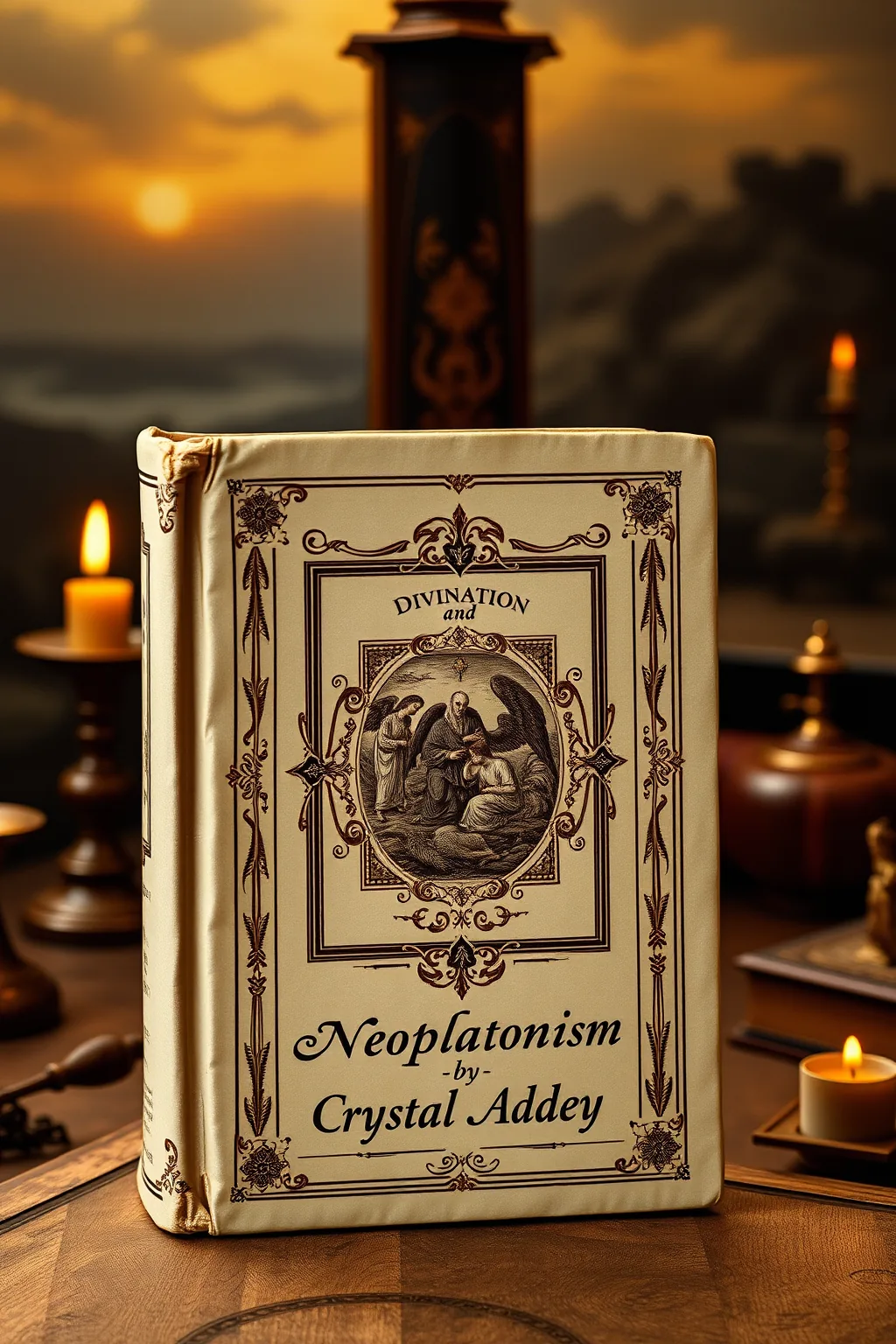
Divination and Theurgy in Neoplatonism
 63
63

Divination and Theurgy in Neoplatonism



Review by Lorelei Sage (Contemplative Literature Editor) — Crystal Addey's 'Divination and Theurgy in Neoplatonism' stands as a beacon of esoteric insight, guiding readers through the labyrinthine paths of ancient mystical practices. Addey's work is a testament to her deep understanding of Neoplatonic philosophy and its relevance to contemporary spiritual seekers. The book's strength lies in its ability to bridge the gap between historical scholarship and practical theurgy, making it an invaluable resource for both academics and spiritual practitioners. Addey's meticulous research and evocative prose create an atmosphere of sacred mystery, inviting readers to explore the hidden knowledge that has been passed down through the ages.
📝 Description
63
Crystal Addey's 2021 book examines divination and theurgy in Neoplatonism.
Crystal Addey's "Divination and Theurgy in Neoplatonism" investigates ancient Greek and Roman philosophical traditions. The book focuses on how Neoplatonists understood divine communication and the practice of theurgy. Addey looks at the philosophical arguments and ritual practices that connected the human and divine realms.
This work details specific methods of divination and explains the theoretical basis for theurgy within Neoplatonism. It considers how thinkers like Iamblichus and Porphyry viewed these practices. Addey also addresses the role of these traditions in the broader history of Western esotericism.
This book sits within the study of Western esotericism, specifically focusing on the philosophical and ritualistic aspects of Neoplatonism. Neoplatonism, originating in the 3rd century CE with Plotinus, developed into a complex philosophical system that greatly influenced later mystical traditions. Addey's work highlights how Neoplatonists integrated practices like divination and theurgy, which aimed at divine communion and spiritual ascent, into their philosophical framework. This places the book in dialogue with scholarship on ancient magic, philosophy, and the history of religious experience.
💡 Why Read This Book?
Why read this book? Crystal Addey's 'Divination and Theurgy in Neoplatonism' is a must-read for anyone interested in the mystical and esoteric traditions of the ancient world. Whether you are a scholar seeking to deepen your understanding of Neoplatonic philosophy, a spiritual seeker looking to engage with ancient rituals, or a practitioner of the occult arts, this book offers a wealth of knowledge and inspiration. Addey's work provides a comprehensive exploration of divination and theurgy, revealing the profound wisdom that lies at the heart of these practices.
⭐ Reader Reviews
Honest opinions from readers who have explored this book.
❓ Frequently Asked Questions
What is the primary focus of 'Divination and Theurgy in Neoplatonism'?
The primary focus is the exploration of ancient Neoplatonic practices of divination and theurgy, their philosophical foundations, and their relevance to modern spirituality.
Who would benefit most from reading this book?
Scholars of Neoplatonism, spiritual seekers, and practitioners of the occult arts will find this book particularly enriching.
Does the book include practical guidance for theurgy?
Yes, the book provides both historical context and practical insights into theurgy, making it a valuable resource for those interested in engaging with these ancient practices.
How does Addey's work differ from other studies on Neoplatonism?
Addey's work stands out for its blend of academic rigor and spiritual depth, offering a unique perspective on Neoplatonic thought and its practical applications.
Is 'Divination and Theurgy in Neoplatonism' suitable for beginners?
While it is accessible to beginners, those with some prior knowledge of Neoplatonic philosophy and esoteric traditions will find it particularly enriching.
🔮 Key Themes & Symbolism
Divination
Addey looks at the ancient art of divination, revealing how Neoplatonic philosophers used prophecies and oracles to gain insight into the divine. This theme explores the rituals, symbols, and philosophical underpinnings of divination, offering readers a deep understanding of its mystical significance.
Theurgy
Theurgy, or the practice of ritual magic to communicate with the divine, is a central theme in this book. Addey examines the historical context and practical applications of theurgy, providing readers with a comprehensive guide to these sacred rituals.
Neoplatonic Philosophy
Addey's work is grounded in a deep exploration of Neoplatonic philosophy, revealing the profound wisdom that lies at the heart of these ancient teachings. This theme looks at the philosophical foundations of divination and theurgy, offering readers a rich and evocative journey into the mystical world of Neoplatonism.
💬 Memorable Quotes
Direct passages from the work, attributed to the author.
“The divine speaks through symbols and signs.”
— Addey emphasizes the importance of symbolic communication in divination and theurgy.
“Neoplatonic thought reveals the hidden unity of all things.”
— Addey highlights the mystical vision of unity that lies at the heart of Neoplatonic philosophy.
“The seeker of divine knowledge must journey inward.”
— Addey's work encourages readers to engage in personal spiritual exploration.
💡 Key Ideas
Editorial paraphrase of the work's core concepts — not direct quotes.
Theurgy is the bridge between the human and the divine.
This quote underscores the transformative power of theurgical practices.
Prophecy is the voice of the gods.
This quote emphasizes the sacred nature of divination and its role in ancient religious practices.
🌙 Esoteric Significance
Tradition
This book belongs to the Hermetic tradition, which emphasizes the pursuit of hidden knowledge and the union of the human soul with the divine. Neoplatonism, with its focus on theurgy and divination, is a key branch of this tradition, offering practitioners a path to spiritual enlightenment and divine communion.
Symbolism
Key symbols in Neoplatonic thought include the One, the Intellect, and the Soul, which represent the hierarchy of being and the journey of the soul towards union with the divine. Addey's work explores these symbols and their mystical significance, revealing the profound wisdom that lies at the heart of Neoplatonic philosophy.
Modern Relevance
Today, the practices of divination and theurgy continue to inspire seekers and practitioners of the occult arts. Addey's work provides a valuable resource for those looking to engage with these ancient traditions, offering insights into their historical context and practical applications.
👥 Who Should Read This Book
Beginners will find 'Divination and Theurgy in Neoplatonism' an accessible introduction to the mystical traditions of Neoplatonism, while scholars will appreciate its deep exploration of philosophical and historical context. Spiritual seekers will be inspired by the book's focus on divine communication and the pursuit of hidden knowledge. Practitioners of the occult arts will find practical guidance and insights into theurgy and divination. Overall, this book is a valuable resource for anyone interested in the esoteric and mystical traditions of the ancient world.
📜 Historical Context
Written during a time of profound intellectual and spiritual ferment, 'Divination and Theurgy in Neoplatonism' reflects the rich cultural and philosophical range of late antiquity. The Neoplatonic school, founded by Plotinus in the 3rd century CE, sought to reconcile Plato's philosophy with the mystical traditions of the East, creating a synthesis that would influence Western thought for centuries to come. Addey's work provides a comprehensive overview of this era, highlighting the key figures and ideas that shaped Neoplatonic thought and its enduring legacy.
📔 Journal Prompts
Reflect on your understanding of divination and how it has evolved after reading this book.
Consider the role of symbolism in Neoplatonic philosophy and its significance in your own spiritual journey.
Explore the concept of theurgy and its potential for personal transformation.
Write about a historical figure from the Neoplatonic tradition who inspires you and why.
Reflect on the unity of all things as described in Neoplatonic thought and its implications for modern spirituality.
🗂️ Glossary
Divination
The practice of seeking knowledge of the future or the hidden by supernatural means.
Theurgy
The practice of rituals, sometimes seen as magical in nature, performed to invoke the action or presence of one or more gods, especially with the goal of uniting with the divine, achieving henosis, and perfecting oneself.
Neoplatonism
A school of Hellenistic philosophy that emerged in the 3rd century CE, founded by Plotinus. It is considered the final phase of ancient Platonism.
Oracles
A person or agency considered to communicate the will of a god to mortals.
Hermetic Tradition
A set of philosophical and spiritual teachings based primarily upon writings attributed to Hermes Trismegistus.
This book appears in 7 collections
🔮 Readers Also Liked
Browse all →








From the “Precognition” Collection
View all →





More Free Alchemy & Hermeticism Books
View all →