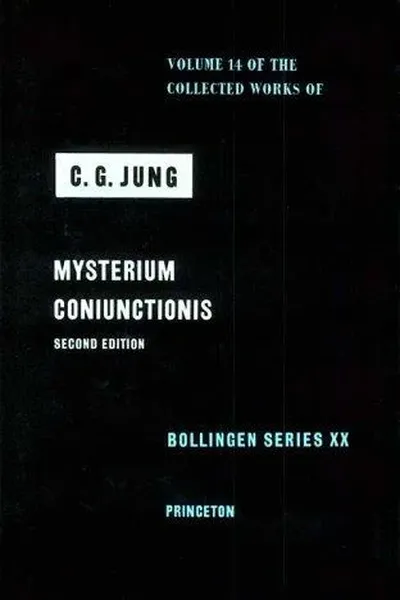
Mysterium coniunctionis

 71
71

Mysterium coniunctionis
Jung's final magnum opus, Mysterium Coniunctionis, presents a formidable challenge, even for seasoned readers of his work. The sheer density of alchemical lore and Jung's intricate psychological interpretations can be overwhelming. However, the reward for persistent engagement is immense. The section detailing the "coniunctio" through the symbolism of the hierosgamos, for instance, offers a remarkable lens through which to view the integration of psychic opposites. While the book is undeniably demanding, its limitation lies perhaps in its accessibility; it is not a starting point for those new to Jungian thought. Its strength, conversely, is its unparalleled depth in connecting the ancient alchemical quest with the modern psychological imperative for wholeness. It remains a cornerstone for understanding the symbolic unconscious.
📝 Description
71
Carl Gustav Jung published Mysterium Coniunctionis, his final major work, in 1955.
Mysterium Coniunctionis, published in 1955, is Carl Gustav Jung's final major work. It examines the alchemical concept of the "chemical wedding," a union of opposites. Jung presents this not just as a historical alchemical process but as a fundamental psychological dynamic. He meticulously analyzes ancient texts and symbols, drawing parallels between the alchemical quest for the Philosopher's Stone and the individuation process, the journey toward psychological wholeness. The book interprets alchemy's symbolic language and obscure imagery as representations of the unconscious mind.
This text is for serious students of analytical psychology, comparative religion, and Western esotericism. It assumes a prior understanding of Jungian concepts like archetypes and the anima/animus. Those interested in the historical development of psychology, especially its intersection with pre-scientific philosophies, will find substantial material. It also speaks to individuals engaged in their own psychological integration, seeking to understand transformation through alchemical symbolism.
Published in the mid-20th century, Mysterium Coniunctionis arrived as academic study of alchemy began to grow. Jung's work provided a psychological framework for these ancient practices, differentiating his approach from purely historical or chemical analyses. This built upon his earlier alchemical studies in works like "Psychology and Alchemy." The book offered a novel interpretation of a complex symbolic field, contributing to the understanding of Western esotericism.
💡 Why Read This Book?
• Gain a profound understanding of the "coniunctio" as a psychological process of integrating opposites, a concept central to Jung's individuation theory, explained through alchemical symbolism. • Explore the historical alchemical "opus" and its intricate symbolic language, as detailed in Jung's analysis of texts from the medieval period, offering a unique perspective on transformation. • Grasp the concept of the "unus mundus" as the underlying reality, providing a philosophical framework for the interconnectedness of psyche and matter, as interpreted through alchemical cosmology.
⭐ Reader Reviews
Honest opinions from readers who have explored this book.
❓ Frequently Asked Questions
What is the central theme of Mysterium Coniunctionis?
The central theme is the "chemical wedding" or "coniunctio," representing the psychological union of opposites. Jung interprets alchemical symbolism as a map of the individuation process, the journey toward psychic wholeness and integration.
When was Mysterium Coniunctionis first published?
Mysterium Coniunctionis was first published in 1955, representing Carl Gustav Jung's final major contribution to the field of analytical psychology.
What alchemical symbol is key to understanding the book?
The "Rebis," a hermaphroditic or bisexual divine being, is a key symbol. It represents the successful union of opposites and the achievement of psychological completeness in the alchemical "opus."
How does this book relate to Jung's other works?
It builds upon and culminates Jung's earlier explorations of alchemy, particularly "Psychology and Alchemy." Mysterium Coniunctionis offers a more comprehensive psychological interpretation of the alchemical tradition.
Is Mysterium Coniunctionis suitable for beginners in psychology?
No, the book is highly specialized and assumes familiarity with Jung's core concepts like archetypes, projection, and the individuation process. It is best suited for advanced students and scholars.
What is the 'unus mundus' concept in the book?
The "unus mundus" refers to the primordial, unified world or substrate from which all psychic and physical phenomena arise. Jung uses this concept to suggest an underlying reality that connects the subjective experience of alchemy with objective existence.
🔮 Key Themes & Symbolism
The Alchemical Coniunctio
The central theme is the "coniunctio," or conjunction, representing the sacred marriage of opposites. Jung interprets this alchemical process as a symbolic depiction of the individuation journey, where the conscious and unconscious, masculine and feminine principles are integrated into a unified whole. This union is often symbolized by figures like the Rebis or the divine hierosgamos, signifying the achievement of psychological completeness and the reconciliation of inner conflicts.
Symbolism of the Unus Mundus
Jung posits the "unus mundus" as a foundational concept, referring to an underlying, unified reality from which both psyche and matter emerge. The alchemical "opus" is seen as an attempt to access and manifest this primordial unity. The book explores how alchemical symbols and processes are not merely material transformations but expressions of this deep-seated connection between the inner world of the psyche and the outer world of creation.
The Individuation Process
Mysterium Coniunctionis offers a profound symbolic parallel to the process of individuation, Jung's term for the lifelong psychological journey toward becoming a whole, integrated self. The alchemist's quest for the Philosopher's Stone mirrors the individual's struggle to confront and integrate unconscious contents, overcome psychic divisions, and achieve a state of self-realization. The complex alchemical stages described are mapped onto psychological developmental phases.
Alchemy as Psychological Projection
Jung argues that alchemical texts and practices, while historically grounded in material pursuits, served as a projection screen for unconscious psychological processes. The transformations described by alchemists—from lead to gold, from base matter to the Philosopher's Stone—are interpreted as metaphors for the inner work of transforming the personality, purifying the psyche, and achieving spiritual and psychological maturity.
💬 Memorable Quotes
Direct passages from the work, attributed to the author.
“The alchemist's work is a projection of the unconscious.”
— This statement expresses Jung's core thesis: that the complex symbolism and processes described in alchemy are not just historical chemical experiments but externalized manifestations of the inner workings of the human psyche and its drive towards wholeness.
“The coniunctio signifies the union of opposites.”
— This refers to the alchemical marriage, a central motif that Jung equates with the psychological process of integrating conflicting psychic elements, such as anima and animus, conscious and unconscious, leading to psychic balance and individuation.
“Alchemy reflects the process of individuation.”
— This interpretation highlights the book's main argument: the stages and goals of the alchemical "opus" serve as a symbolic blueprint for the individual's journey towards psychological completeness and self-realization.
“The Rebis symbolizes the achieved wholeness.”
— The Rebis, often depicted as a bisexual figure, represents the successful integration of dualities within the psyche, a key milestone in the alchemical process and, by extension, in the attainment of psychological maturity.
“The unus mundus is the primordial unity.”
— This concept suggests an underlying, undifferentiated reality from which all manifest phenomena, both psychic and material, originate. Alchemical work is seen as an attempt to reconnect with this fundamental oneness.
🌙 Esoteric Significance
Tradition
This work is firmly rooted in the Western esoteric tradition, specifically Hermeticism and Alchemy. Jung positions alchemy not as a precursor to modern chemistry but as a sophisticated psychological system. He interprets its complex symbolism and processes as direct expressions of the unconscious mind and the individuation journey, thereby recontextualizing a centuries-old practice within the framework of analytical psychology.
Symbolism
Key symbols extensively analyzed include the "coniunctio" (sacred marriage), representing the union of psychic opposites (anima/animus, conscious/unconscious), and the "Rebis," a hermaphroditic figure symbolizing achieved wholeness. The "Philosopher's Stone" itself is interpreted as the ultimate goal of psychological integration, the realization of the Self. The "unus mundus" represents the primordial, undifferentiated reality from which all existence stems.
Modern Relevance
Contemporary depth psychology, transpersonal psychology, and various neo-Jungian schools continue to draw heavily on Mysterium Coniunctionis. Its interpretations of alchemical symbolism remain influential for therapists and individuals exploring the symbolic dimensions of the unconscious. Furthermore, scholars of comparative religion and mythology find its comparative approach important for understanding cross-cultural symbolic expressions of transformation and integration.
👥 Who Should Read This Book
• Advanced students of analytical psychology: Those familiar with Jung's core concepts (archetypes, shadow, individuation) will find this book offers his most detailed psychological interpretation of alchemical symbolism. • Scholars of Western Esotericism and Comparative Religion: Researchers interested in the historical and symbolic dimensions of alchemy will benefit from Jung's unique psychological lens, offering a new perspective on ancient texts. • Individuals engaged in deep self-exploration: Those on a personal journey of psychological integration may find resonance in the alchemical "opus" as a metaphor for their own transformative processes, provided they have a foundational understanding of Jungian psychology.
📜 Historical Context
Published in 1955, Mysterium Coniunctionis was Carl Gustav Jung's last major theoretical work, representing the culmination of his lifelong engagement with alchemy. The mid-20th century saw a growing academic interest in esoteric traditions, partly fueled by the rediscovery of historical texts and figures like the French alchemist Nicolas Flamel. Jung's work provided a novel psychological framework, distinguishing itself sharply from the purely historical or chemical interpretations prevalent at the time. His approach offered a means to understand alchemy not as primitive science but as a complex symbolic language of the psyche. This era also saw intellectual currents influenced by philosophers like Martin Heidegger, exploring Being and existence, though Jung's focus remained distinctly psychological. While not widely censored, Jung's unorthodox interpretations often met with skepticism from mainstream scientific and religious communities, yet his work found a receptive audience among scholars of comparative religion and depth psychology.
📔 Journal Prompts
The symbolism of the Rebis and its representation of integrated opposites.
Jung's interpretation of the alchemical "opus" as a parallel to the individuation process.
The concept of the "unus mundus" and its implications for understanding reality.
Reflections on the "coniunctio" as a psychological dynamic in personal relationships.
Mapping personal psychological challenges onto alchemical stages of transformation.
🗂️ Glossary
Coniunctio
Latin for "conjunction" or "union." In alchemy and Jungian psychology, it refers to the sacred marriage or union of opposites, symbolizing psychic integration and the individuation process.
Rebis
An alchemical symbol, often depicted as a hermaphroditic or bisexual figure, representing the successful union of opposites and the achievement of wholeness in the alchemical "opus."
Unus Mundus
Latin for "one world." A concept suggesting a primordial, unified reality underlying all psychic and physical phenomena, from which duality emerges and to which the alchemical process aims to return.
Opus
Latin for "work." Refers to the alchemical process itself, the "Great Work" of transforming base metals into gold, which Jung interprets as the psychological process of individuation.
Prima Materia
The "first matter" or fundamental substance from which all things are created. In alchemy and Jungian psychology, it symbolizes the unconscious, the raw, undifferentiated psychic material that is the starting point for transformation.
Hierosgamos
Greek for "sacred marriage." Similar to the coniunctio, it denotes a divine or mystical union, often between masculine and feminine divine principles, symbolizing cosmic order and psychic integration.
Individuation
Jung's central concept referring to the lifelong psychological process of integrating the conscious and unconscious aspects of the personality to become a whole, unique individual, realizing the Self.
🔮 Readers Also Liked
Browse all →









More by Carl Gustav Jung
All books →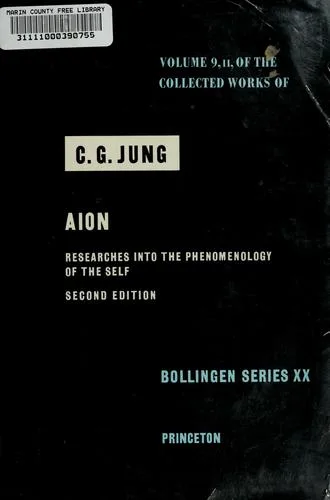

More Free Alchemy & Hermeticism Books
View all →