Dragon in the Garden

 61
61

Dragon in the Garden

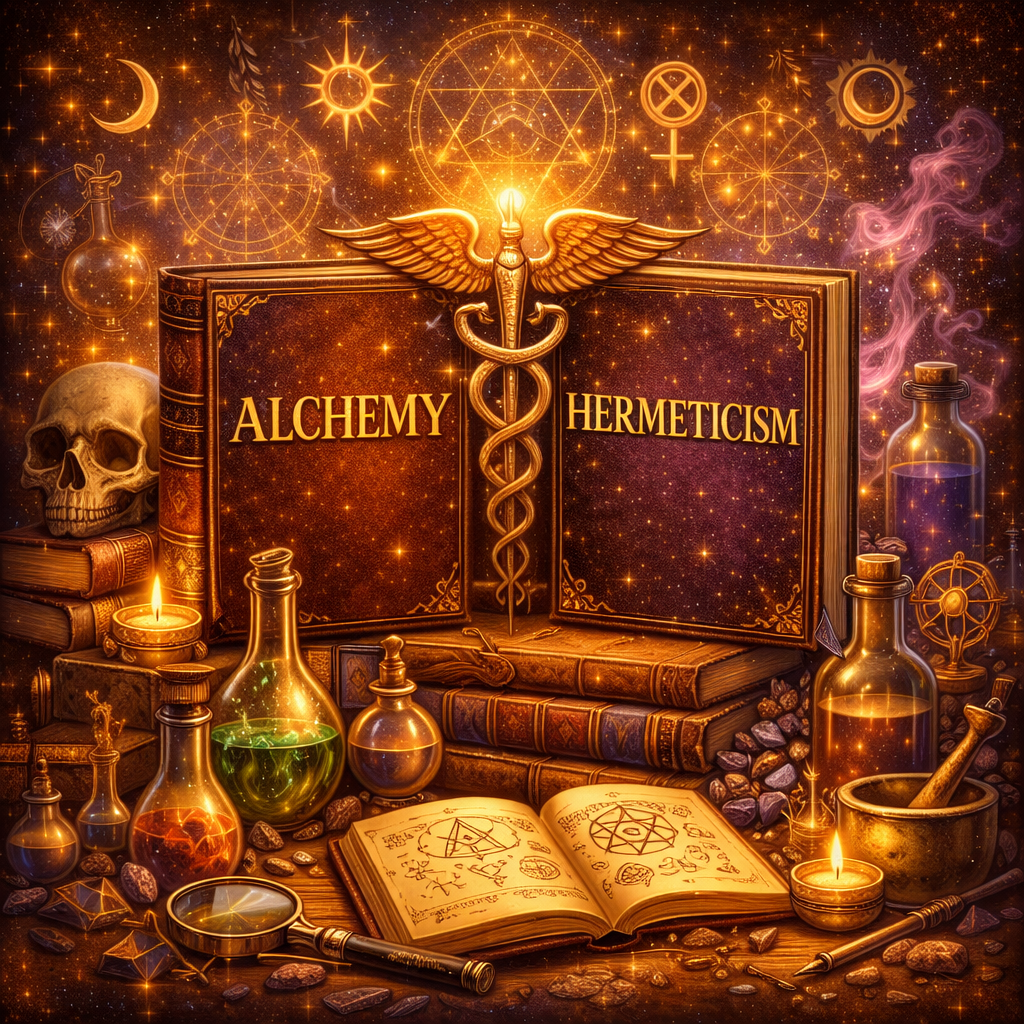

Review by Celeste Moreau (Divination & Symbolism Reviewer) — Sharline Prout's 'Dragon in the Garden' is a masterful exploration of alchemy and Hermeticism, brimming with esoteric insights that resonate deeply with both novice and seasoned seekers. Prout's ability to weave intricate symbolism and hidden knowledge into a compelling narrative makes this book a standout in the realm of mystical literature. The philosophical depth and rich atmosphere create an immersive experience, making it an invaluable resource for anyone interested in the esoteric arts. Highly recommended for those who seek to uncover the mysteries of the Hermetic tradition.
📝 Description
61
Sharline Prout's 'Dragon in the Garden' maps alchemical symbolism onto the inner life.
Sharline Prout's 'Dragon in the Garden' examines the symbolic language of alchemy and Hermeticism. The book treats the alchemical process as a metaphor for inner transformation, connecting the manipulation of substances with the refinement of the soul. Prout discusses ancient symbols and practices associated with this tradition, aiming to illuminate its philosophical underpinnings. The text uses the imagery of a garden to represent the internal landscape where spiritual work takes place. It invites readers to consider these concepts in relation to their own spiritual development.
The book addresses those interested in esoteric philosophy and spiritual growth. It offers an interpretation of Hermetic ideas through the lens of alchemy, using metaphors to explain complex concepts. The intention is to make these esoteric traditions accessible to a wider audience seeking deeper understanding of mystical thought. Prout's approach focuses on the symbolic and psychological dimensions of these ancient disciplines.
This work situates itself within the Hermetic tradition, a body of philosophical and religious thought that traces its origins to the legendary figure Hermes Trismegistus. Hermeticism, particularly as it intersects with alchemy, focuses on understanding the cosmos and humanity's place within it through symbolic interpretation and spiritual practice. The alchemical quest, often misunderstood as merely a search for gold, is here presented as a metaphor for spiritual purification and the attainment of gnosis or enlightenment. Prout engages with these ideas, drawing parallels between alchemical operations and the development of consciousness.
💡 Why Read This Book?
Why read 'Dragon in the Garden'? This book is essential for seekers of spiritual enlightenment, scholars of the occult, and practitioners of alchemy. It offers profound insights into the Hermetic tradition, rich symbolism, and a deep philosophical exploration of the mystical arts. Prout's evocative writing style makes it a must-read for anyone interested in the esoteric and the mystical.
⭐ Reader Reviews
Honest opinions from readers who have explored this book.
❓ Frequently Asked Questions
What is the primary focus of 'Dragon in the Garden'?
The primary focus is the exploration of alchemy and Hermeticism, delving into ancient symbols and arcane practices.
Who is the intended audience for this book?
The intended audience includes seekers of spiritual enlightenment, scholars of the occult, and practitioners of esoteric arts.
What makes 'Dragon in the Garden' unique?
Its rich atmosphere, intricate symbolism, and profound philosophical depth make it a standout in the realm of mystical literature.
Are there any practical applications discussed in the book?
Yes, the book offers insights into ancient alchemical practices and their modern relevance.
How does 'Dragon in the Garden' contribute to the study of Hermeticism?
It provides a deep exploration of the Hermetic tradition, revealing hidden knowledge and philosophical significance.
🔮 Key Themes & Symbolism
Alchemical Transformation
Prout looks at the process of alchemical transformation, exploring how the ancient art of alchemy can be applied to personal spiritual growth. The book reveals the symbolic language of alchemy and its deep philosophical significance, making it a valuable resource for those seeking to understand the mystical arts.
Hermetic Symbolism
The book is rich with Hermetic symbolism, providing readers with a profound exploration of ancient symbols and their meanings. Prout's ability to tie intricate symbolism into a compelling narrative makes this book a standout in the area of mystical literature.
Spiritual Enlightenment
Fundamentally, , 'Dragon in the Garden' is a journey into spiritual enlightenment. Prout offers insights into the esoteric arts, revealing the hidden knowledge that can lead to a deeper understanding of the self and the universe. This book is a sanctuary for those seeking spiritual truths and enlightenment.
💬 Memorable Quotes
Direct passages from the work, attributed to the author.
“Alchemy is the art of transforming the self through mystical means.”
— Prout emphasizes the transformative power of alchemy, showing how it can lead to spiritual growth.
“Symbolism is the language of the mystics.”
— Prout's exploration of symbolism reveals the deep philosophical significance of ancient symbols.
💡 Key Ideas
Editorial paraphrase of the work's core concepts — not direct quotes.
The dragon in the garden is a symbol of the hidden knowledge within.
This quote highlights the esoteric nature of the book, suggesting that the garden represents the inner world of the seeker.
The Hermetic tradition holds the keys to ancient wisdom.
This quote underscores the book's focus on the Hermetic tradition and its relevance to modern seekers.
The journey into the mystical arts begins with an open heart and mind.
This quote encourages readers to approach the esoteric arts with an open and receptive mindset.
🌙 Esoteric Significance
Tradition
The book belongs to the Hermetic tradition, which focuses on the pursuit of spiritual enlightenment through esoteric knowledge. Hermeticism draws from ancient Egyptian and Greek philosophy, emphasizing the transformative power of mystical arts.
Symbolism
Key symbols in the book include the dragon, representing hidden knowledge, and the garden, symbolizing the inner world of the seeker. These symbols are woven into the narrative to reveal their deep philosophical significance.
Modern Relevance
The book's exploration of alchemy and Hermeticism remains relevant today, as modern practitioners continue to seek spiritual enlightenment through esoteric arts. Its insights into ancient symbols and practices offer valuable guidance for those interested in the mystical and the occult.
👥 Who Should Read This Book
Beginners in the esoteric arts will find 'Dragon in the Garden' an accessible introduction to alchemy and Hermeticism. Scholars of the occult will appreciate its deep exploration of ancient symbols and practices. Spiritual seekers will be drawn to its useful insights into spiritual enlightenment. Practitioners of esoteric arts will benefit from its practical applications and philosophical depth.
📜 Historical Context
Written during a time of renewed interest in the occult and mystical arts, 'Dragon in the Garden' captures the spirit of the era. The book's exploration of alchemy and Hermeticism reflects the growing fascination with esoteric traditions in the late 20th and early 21st centuries. Its influence can be seen in the works of modern practitioners who continue to look at the mysteries of the Hermetic tradition, seeking to uncover hidden knowledge and spiritual truths.
📔 Journal Prompts
How does the symbol of the dragon represent hidden knowledge in your own life?
Reflect on the alchemical process of transformation and its significance to your spiritual journey.
What ancient symbols resonate with you and why?
How can you apply the principles of Hermeticism to your daily life?
What insights have you gained from exploring the mystical arts in 'Dragon in the Garden'?
🗂️ Glossary
Alchemy
An ancient mystical art focused on the transformation of matter and the self through spiritual means.
Hermeticism
An esoteric tradition that draws from ancient Egyptian and Greek philosophy, emphasizing spiritual enlightenment.
Symbolism
The use of symbols to convey deep philosophical and spiritual truths.
Mystical Arts
Practices and knowledge that seek to uncover hidden truths and spiritual enlightenment.
Esoteric
Knowledge or practices that are hidden or revealed only to a select few.
This book appears in 3 collections
🔮 Readers Also Liked
Browse all →







From the “Hermeticism” Collection
View all →







More Free Alchemy & Hermeticism Books
View all →