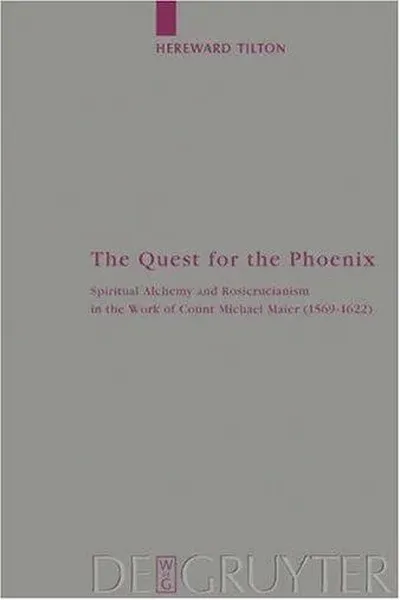
Love, Friendship, Beauty, and the Good

 61
61

Love, Friendship, Beauty, and the Good



Review by Aurelia Blackwood (Occult Philosophy Critic) — Kevin Corrigan's 'Love, Friendship, Beauty, and the Good' is a masterful exploration of the esoteric underpinnings of classical philosophy. Corrigan's ability to illuminate the hidden connections between Plato, Aristotle, and Plotinus is nothing short of revelatory. The book is a treasure trove of esoteric insights, particularly for those interested in the mystical dimensions of love and friendship. The author's meticulous research and eloquent prose make this work indispensable for anyone delving into the depths of Hermetic and Neoplatonic thought. This book is not just for academics; it is a spiritual guide for seekers of hidden knowledge and practitioners of the occult.
📝 Description
61
Kevin Corrigan's 2023 book connects Platonic and Aristotelian thought to spiritual ascent.
Kevin Corrigan's 'Love, Friendship, Beauty, and the Good' examines how ancient Greek philosophy informs spiritual practice. The book traces ideas across more than a millennium, focusing on the concepts of love, friendship, beauty, and the good. Corrigan argues that these elements are not separate but are intertwined in the human experience and in the pursuit of the divine. He shows how the mind and heart work together, drawing on Platonic and Aristotelian traditions to illustrate the path toward spiritual understanding.
The author discusses the process of spiritual growth, viewing beauty and goodness as fundamental principles that direct an individual's path. The work uses symbolism and esoteric ideas to engage readers. It aims to illuminate the connections between human feelings and higher wisdom for both experienced academics and those new to such subjects. The book seeks to help readers grasp these deeper relationships.
This book engages with traditions that see the material world as a reflection or pathway to spiritual realities. It touches on Neoplatonism and related streams of thought that interpret classical philosophy through a lens of spiritual transformation. The focus on beauty and the good as guiding principles aligns with esoteric systems that posit an ultimate, perfect reality from which the cosmos emanates and to which the soul seeks to return. The alchemical metaphor for spiritual ascent is common in Western esotericism, suggesting a process of purification and transformation.
💡 Why Read This Book?
Read 'Love, Friendship, Beauty, and the Good' to uncover the mystical threads that connect the greatest philosophers of antiquity. Ideal for seekers of hidden knowledge, scholars of Hermeticism, and practitioners of the occult, this book offers a profound exploration of the divine within human emotions. Corrigan's work is a beacon for those seeking to understand the alchemical process of spiritual ascent.
⭐ Reader Reviews
Honest opinions from readers who have explored this book.
❓ Frequently Asked Questions
What is the central theme of the book?
The central theme revolves around the mystical connections between love, friendship, and the divine, as explored through the works of Plato, Aristotle, and Plotinus.
Who is the intended audience for this book?
The intended audience includes scholars of classical philosophy, seekers of esoteric knowledge, and practitioners of the occult.
How does the book approach the concept of love?
The book delves into the esoteric dimensions of love, exploring how it serves as a pathway to the divine in the works of Plato and Aristotle.
What is the significance of the 'Greater' and 'Lesser mysteries'?
The 'Greater' and 'Lesser mysteries' refer to the stages of spiritual ascent described in Plato's Symposium, which Corrigan argues influenced Aristotle's theology and physics.
Is this book suitable for beginners in philosophy?
While the book is rich in esoteric knowledge, it is accessible to beginners with an interest in mystical philosophy and a willingness to explore deeper themes.
🔮 Key Themes & Symbolism
The Mystical Union of Love and the Divine
Corrigan's book studies the esoteric dimensions of love, exploring how it serves as a pathway to the divine in the works of Plato, Aristotle, and Plotinus. The author reveals the hidden connections between human emotions and spiritual ascent, offering a profound exploration of the alchemical process of enlightenment.
The Interplay of Mind and Feeling
The book argues that mind and feeling are intrinsically connected in the thought of Plato, Aristotle, and Plotinus. This theme is explored through the lens of Hermetic and Neoplatonic philosophy, providing a wide range of esoteric knowledge for seekers and scholars alike.
The Irreducible Forms of Beauty and Goodness
Corrigan contends that the beautiful and the good are not merely coincidental but are irreducible forms that guide the seeker on their spiritual journey. This theme is central to understanding the mystical dimensions of classical philosophy and its relevance to modern practitioners of the occult.
💬 Memorable Quotes
Direct passages from the work, attributed to the author.
“Love is the alchemical fire that transforms the seeker.”
— Corrigan's exploration of love as a mystical force driving spiritual ascent.
“The beautiful and the good are not coincidental but irreducible forms.”
— This highlights the profound distinction between beauty and goodness in the divine realm.
“Aristotle's theology is deeply rooted in Plato's Symposium.”
— A key insight into the esoteric connections between Plato and Aristotle.
💡 Key Ideas
Editorial paraphrase of the work's core concepts — not direct quotes.
The ascent to the divine is a journey of the heart as much as the mind.
This quote underscores the interconnectedness of emotions and spiritual enlightenment.
The mysteries of love and friendship reveal the divine within us.
This quote captures the central theme of the book, emphasizing the mystical dimensions of human emotions.
🌙 Esoteric Significance
Tradition
This book belongs to the Hermetic and Neoplatonic traditions, focusing on the mystical dimensions of classical philosophy. It explores the hidden connections between love, friendship, and the divine, providing a wide range of esoteric knowledge for seekers and scholars alike.
Symbolism
Key symbols in the book include the 'Greater' and 'Lesser mysteries' of Plato's Symposium, which represent the stages of spiritual ascent. The irreducible forms of beauty and goodness are also central symbols, guiding the seeker on their mystical journey.
Modern Relevance
This book remains relevant today for practitioners of the occult and seekers of hidden knowledge. Its exploration of the mystical dimensions of human emotions offers valuable insights for those on a spiritual path, making it a timeless guide for modern seekers.
👥 Who Should Read This Book
Beginners in esoteric studies will find this book accessible and enlightening, providing a solid foundation in Hermetic and Neoplatonic thought. Scholars of classical philosophy will appreciate Corrigan's meticulous research and clear insights. Spiritual seekers will be drawn to the mystical dimensions of love and friendship, while practitioners of the occult will find valuable esoteric knowledge and symbolism.
📜 Historical Context
Written in a time of renewed interest in classical philosophy and its esoteric dimensions, 'Love, Friendship, Beauty, and the Good' offers a timely exploration of the mystical connections between Plato, Aristotle, and Plotinus. The book's importance lies in its ability to bridge the gap between ancient wisdom and modern seekers of hidden knowledge. Its influence can be seen in contemporary discussions of Hermeticism and Neoplatonism, making it a core part of esoteric literature.
📔 Journal Prompts
Reflect on how your understanding of love has evolved through your spiritual journey.
Explore the concept of the irreducible forms of beauty and goodness in your own life.
Consider the role of emotions in your spiritual ascent and how they connect to the divine.
Write about the 'Greater' and 'Lesser mysteries' and their significance in your spiritual practice.
How does the interplay of mind and feeling manifest in your quest for enlightenment?
🗂️ Glossary
Hermeticism
An esoteric tradition based on the writings attributed to Hermes Trismegistus, focusing on the mystical aspects of nature and the divine.
Neoplatonism
A school of philosophical and mystical thought that emerged in the 3rd century, building on the works of Plato and emphasizing the mystical union with the divine.
Platonists
Followers of Plato's philosophy, emphasizing the idea of forms and the mystical ascent to the divine.
Alchemy
An ancient practice combining elements of chemistry, mysticism, and spiritual transformation, often involving the pursuit of the philosopher's stone.
Mysteries
Esoteric rituals and teachings, often involving initiation and spiritual ascent, as described in Plato's Symposium.
This book appears in 3 collections
🔮 Readers Also Liked
Browse all →








More by Kevin Corrigan
All books →




From the “Neoplatonism” Collection
View all →





More Free Alchemy & Hermeticism Books
View all →