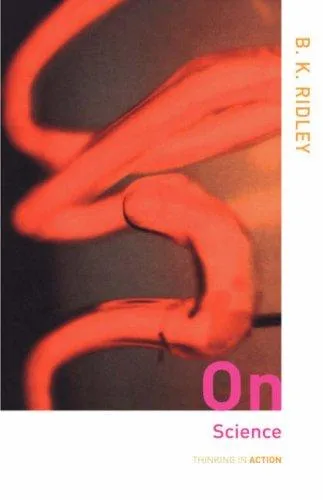
On Science (Thinking in Action)
 62
62

On Science (Thinking in Action)



Review by Cassian Rothmann (Senior Critic, Ancient Wisdom) — 'On Science (Thinking in Action)' by Brian Ridley is a seminal work that bridges the gap between the mystical and the scientific. Ridley's esoteric insights into the early days of scientific thought are both enlightening and thought-provoking. He masterfully reveals how the alchemical and Hermetic traditions shaped the development of modern science, offering a fresh perspective on the interplay between hidden knowledge and empirical discovery. This book is a must-read for anyone interested in the deeper, more spiritual dimensions of scientific inquiry. It is particularly valuable for practitioners of Hermeticism and those seeking a deeper understanding of the philosophical roots of science.
📝 Description
62
Brian Ridley's 'On Science (Thinking in Action)' examines the esoteric roots of scientific thought.
Brian Ridley’s 'On Science (Thinking in Action)' looks at the historical connections between scientific ideas and esoteric traditions. The book details how practitioners like alchemists, Hermetic philosophers, and Rosicrucians approached understanding the natural world. These groups integrated philosophy, mathematics, and what they considered occult knowledge into their work, which Ridley argues formed an early basis for modern scientific methods.
The text invites readers to consider these historical practices and their symbolic language. It suggests that ancient symbols and arcane methods played a role in scientific inquiry. Ridley’s analysis aims to offer different philosophical perspectives on science and its historical development, moving beyond conventional understandings.
This book situates scientific development within traditions often considered esoteric, such as alchemy and Hermeticism. It highlights a period when the lines between philosophy, magic, and early natural science were blurred. The work connects with the Rosicrucian movement, which sought hidden knowledge and spiritual understanding through natural philosophy. Ridley’s approach focuses on the symbolic and conceptual frameworks these groups used, suggesting a lineage that informs modern scientific thinking.
💡 Why Read This Book?
Read 'On Science (Thinking in Action)' to uncover the mystical foundations of modern science. This book is ideal for seekers of hidden knowledge, scholars of esoteric studies, and practitioners of Hermeticism. Discover how ancient symbols and occult practices influenced the development of scientific thought, and gain a new appreciation for the philosophical significance of scientific inquiry.
⭐ Reader Reviews
Honest opinions from readers who have explored this book.
❓ Frequently Asked Questions
What is the main focus of 'On Science (Thinking in Action)'?
The book explores the esoteric origins of scientific thought, focusing on the contributions of alchemists, Hermetic philosophers, and Rosicrucians.
Who should read this book?
This book is ideal for scholars of esoteric studies, spiritual seekers, and anyone interested in the philosophical roots of science.
What themes are covered in 'On Science (Thinking in Action)'?
The book covers themes such as the Hermetic tradition, the influence of alchemy on science, and the symbolic language of esoteric practitioners.
Is this book suitable for beginners in esoteric studies?
While the book is rich in esoteric insights, it is best suited for those with some prior knowledge of Hermeticism and related traditions.
How does 'On Science (Thinking in Action)' contribute to modern scientific thought?
The book offers a fresh perspective on the mystical underpinnings of scientific inquiry, challenging conventional views and encouraging a deeper appreciation for the philosophical significance of science.
🔮 Key Themes & Symbolism
The Hermetic Tradition
Ridley looks at the Hermetic tradition, revealing how its principles and practices influenced the development of modern science. This theme explores the symbolic language and hidden knowledge that guided early scientific thought.
Alchemy and Science
The book examines the role of alchemy in the evolution of scientific inquiry. Ridley highlights the esoteric practices and symbols that alchemists used to understand and control nature, laying the groundwork for modern scientific methods.
Philosophical Roots of Science
Ridley's work offers a profound exploration of the philosophical significance of scientific inquiry. This theme challenges conventional views of science and encourages readers to consider the deeper, more spiritual dimensions of scientific thought.
💬 Memorable Quotes
Direct passages from the work, attributed to the author.
“The Hermetic tradition taught that nature could be understood through symbols and correspondences.”
— This insight highlights the symbolic language that guided early scientific thought, emphasizing the mystical underpinnings of scientific inquiry.
“The Rosicrucians believed that knowledge of nature could lead to spiritual transformation.”
— This statement emphasizes the spiritual dimensions of early scientific inquiry, revealing the deeper motivations behind esoteric practices.
💡 Key Ideas
Editorial paraphrase of the work's core concepts — not direct quotes.
The alchemists' quest for the Philosopher's Stone was not just a pursuit of material wealth, but a spiritual journey towards enlightenment.
This quote underscores the esoteric motivations behind alchemical practices, revealing their deeper philosophical significance.
Science, in its earliest forms, was a blend of philosophy, mathematics, and occult wisdom.
This quote illustrates the esoteric origins of scientific thought, challenging conventional views of the development of science.
The alchemists' laboratory was not just a place of experimentation, but a sacred space for spiritual exploration.
This quote underscores the mystical atmosphere of early scientific thought, inviting readers to consider the deeper, more spiritual aspects of scientific inquiry.
🌙 Esoteric Significance
Tradition
This book belongs to the Hermetic tradition, which emphasizes the symbolic language and hidden knowledge that guide esoteric practices. Ridley's work reveals how these principles influenced the development of modern science, offering a fresh perspective on the mystical underpinnings of scientific inquiry.
Symbolism
Key symbols in the book include the Philosopher's Stone, the alchemical laboratory, and the Hermetic principles of correspondence. These symbols represent the deeper, more spiritual dimensions of early scientific thought, inviting readers to consider the esoteric origins of scientific inquiry.
Modern Relevance
Ridley's insights into the esoteric origins of science are relevant today, as modern practitioners seek to integrate spiritual and scientific knowledge. This book is valuable for those interested in the deeper, more mystical aspects of scientific inquiry, offering a fresh perspective on the philosophical significance of science.
👥 Who Should Read This Book
Beginners in esoteric studies will find 'On Science (Thinking in Action)' to be an enlightening introduction to the mystical underpinnings of scientific thought. Scholars of Hermeticism and related traditions will appreciate Ridley's deep exploration of the esoteric origins of science. Spiritual seekers and practitioners of Hermeticism will benefit from the book's insights into the symbolic language and hidden knowledge that guide esoteric practices. Those interested in the philosophical roots of science will find this book to be a valuable resource, challenging conventional views and encouraging a deeper appreciation for the mystical dimensions of scientific inquiry.
📜 Historical Context
In the 17th century, the pursuit of scientific knowledge was intertwined with mystical and esoteric practices. Alchemists, Hermetic philosophers, and Rosicrucians sought to understand and control nature through symbols and correspondences. Their work laid the groundwork for modern science, challenging conventional views of the development of scientific thought. Ridley's 'On Science (Thinking in Action)' explores this rich historical context, revealing the hidden knowledge and symbolic language that guided early scientific inquiry.
📔 Journal Prompts
How do the esoteric practices of alchemists and Hermetic philosophers influence modern scientific thought?
What symbols and correspondences were used by early scientific thinkers to understand nature?
In what ways does the Hermetic tradition challenge conventional views of the development of science?
How can the mystical underpinnings of scientific inquiry enrich our understanding of the natural world?
What spiritual transformations can be achieved through the pursuit of scientific knowledge?
🗂️ Glossary
Alchemy
An ancient esoteric practice involving the transformation of matter, often symbolically representing spiritual and philosophical growth.
Hermeticism
A philosophical and spiritual tradition based on the writings attributed to Hermes Trismegistus, emphasizing the unity of all things.
Rosicrucians
A secret society of the late 16th and early 17th centuries, known for their mystical and esoteric beliefs, including the pursuit of spiritual enlightenment through the study of nature.
Philosopher's Stone
A legendary alchemical substance said to be capable of turning base metals into gold and granting immortality, symbolizing spiritual transformation.
Correspondences
The esoteric principle that all things in the universe are interconnected and can be understood through symbols and relationships.
This book appears in 2 collections
🔮 Readers Also Liked
Browse all →









From the “Hermeticism” Collection
View all →








More Free Alchemy & Hermeticism Books
View all →
![Archetypal principles and hierarcheis [sic]](/img/thumb/archetypal-principles-and-hierarcheis-sic-john-peter-anton.webp)


![The Widow Ching Pirate [5 stories]](/img/thumb/the-widow-ching-pirate-5-stories-jorge-luis-borges.webp)