Hermetic Philosophy and Alchemy

 82
82

Hermetic Philosophy and Alchemy
Atwood's contribution is commendable for its structured approach to a notoriously labyrinthine subject. The section detailing the symbolic transformation inherent in the alchemical process, particularly the discussion of the *coniunctio oppositorum*, provides a clear window into the psychological underpinnings often ascribed to the Great Work. However, the work occasionally leans towards a more academic tone, which, while precise, might present a barrier for those entirely new to alchemical literature. A more direct engagement with the practical aspects, even as allegory, could have enhanced its accessibility. Despite this, Atwood's meticulous research and clear exposition of complex theories make "Hermetic Philosophy and Alchemy" a valuable reference. It serves as a solid academic survey of a rich field.
📝 Description
82
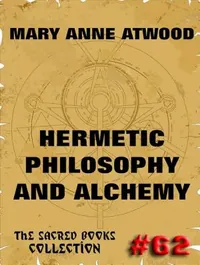
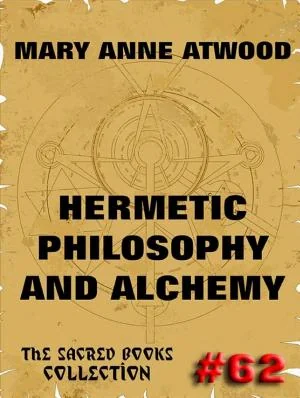
First published in 2012, Mary Anne Atwood's book examines foundational Hermetic and alchemical texts.
Mary Anne Atwood's "Hermetic Philosophy and Alchemy" is a detailed study of key texts and ideas within the Western esoteric tradition. The book argues that alchemy was more than a precursor to chemistry; it was a sophisticated philosophical and spiritual system. Atwood places alchemical thought within the sweep of European intellectual history, showing its connections from ancient Greek philosophy through the Renaissance and into later periods.
The work covers central alchemical concepts like the prima materia, the philosopher's stone, and the Magnum Opus. It also discusses the symbolic language alchemists used and the spiritual and psychological interpretations often linked to their practices. This book is designed for students of esotericism who want to understand the historical development and theoretical basis of Hermeticism and alchemy.
This book is situated within the Hermetic tradition, a philosophical and spiritual system that draws from ancient Greek, Egyptian, and Jewish sources. Hermeticism emphasizes divine knowledge, the unity of all things, and the potential for human spiritual transformation. Alchemy, as explored by Atwood, is presented as a practical and theoretical manifestation of these Hermetic principles, concerned with both material transmutation and inner purification. The work connects these ideas to broader currents in Western esotericism.
💡 Why Read This Book?
• Gain a nuanced understanding of alchemical symbolism beyond simple metallurgy, specifically through Atwood's analysis of the *coniunctio oppositorum* as a spiritual union. • Grasp the historical lineage of Hermetic thought, tracing its influence from ancient Greek Hermetic texts through key Renaissance figures. • Explore the philosophical underpinnings of the Great Work, learning how concepts like the *prima materia* represent not just physical substance but profound existential states.
⭐ Reader Reviews
Honest opinions from readers who have explored this book.
❓ Frequently Asked Questions
What is the primary focus of Mary Anne Atwood's "Hermetic Philosophy and Alchemy"?
The book primarily focuses on the philosophical and spiritual dimensions of alchemy and Hermeticism, examining foundational texts and concepts within this esoteric tradition.
When was "Hermetic Philosophy and Alchemy" first published?
The work was first published in 2012, offering a modern scholarly perspective on historical esoteric subjects.
Does the book discuss the practical aspects of alchemy?
While the book emphasizes the philosophical and symbolic, it acknowledges the historical context of alchemical practice and its theoretical framework, rather than focusing on laboratory procedures.
Who would benefit most from reading this book?
Students of Western esotericism, comparative religion, and intellectual history, particularly those interested in Hermeticism and alchemy, will find this book particularly beneficial.
What are some key alchemical concepts explored in the text?
The book explores concepts such as the *prima materia*, the philosopher's stone, the Great Work (*Magnum Opus*), and the symbolic language of alchemists.
Is "Hermetic Philosophy and Alchemy" suitable for beginners?
It is suitable for beginners with a serious interest in the subject, but its scholarly tone may be more challenging than introductory guides. It provides a solid foundation for further study.
🔮 Key Themes & Symbolism
The Great Work
Atwood examines the *Main work*, or Great Work, not just as a quest for the philosopher's stone but as a comprehensive process of spiritual and psychological transformation. The text details the stages and symbolic representations involved, linking the alchemical laboratory to an inner crucible of the soul. This concept is central to understanding alchemy's purpose beyond material transmutation, as explored through historical texts and philosophical interpretations.
Hermetic Philosophy
The book studies the core tenets of Hermetic philosophy, originating from figures like Hermes Trismegistus. It explores the principle of 'As Above, So Below' and its implications for understanding the correspondence between the macrocosm and microcosm. Atwood situates Hermetic thought within the broader context of Western esotericism, highlighting its influence on subsequent mystical and philosophical movements throughout history.
Alchemical Symbolism
A significant portion of the work is dedicated to deciphering the rich symbolic language of alchemy. Atwood analyzes common motifs such as the dragon, the phoenix, and various metallic and planetary correspondences. These symbols are presented as keys to understanding alchemical processes, allegorizing stages of purification, integration, and spiritual enlightenment that are central to the tradition.
Prima Materia and the Philosopher's Stone
The text investigates the concept of the *prima materia*, the fundamental substance from which all things are made, and the philosopher's stone, the legendary agent of transmutation. Atwood discusses the dual nature of these concepts—both material and spiritual—explaining how alchemists sought to uncover and perfect this primordial essence through their operations, reflecting a deep engagement with creation and transformation.
💬 Memorable Quotes
Direct passages from the work, attributed to the author.
“The alchemical process is a mirror to the soul's own transformation.”
— This interpretation highlights the central thesis that alchemical operations were often viewed as symbolic representations of inner, spiritual development rather than purely physical experiments.
“Hermeticism posits a universe of interconnected sympathies and correspondences.”
— This captures the core Hermetic principle of universal interconnectedness, suggesting that events and elements in different realms (celestial, terrestrial, human) are linked and reflect one another.
“Alchemy's language is one of allegorical transformation.”
— This highlights that alchemical texts often employed metaphors and allegories to describe complex processes of change, making direct, literal interpretation insufficient.
“The quest for the *prima materia* is a search for the fundamental essence of existence.”
— This interpretation frames the search for the primary matter not just as a material pursuit but as a philosophical inquiry into the foundational principles of reality itself.
💡 Key Ideas
Editorial paraphrase of the work's core concepts — not direct quotes.
The philosopher's stone represents the perfected state of matter and spirit.
This paraphrase emphasizes the ultimate goal of the alchemist's Great Work: the creation of a substance or state that embodies the highest potential of both the physical and spiritual realms.
🌙 Esoteric Significance
Tradition
This work firmly belongs to the study of Western Esotericism, specifically focusing on the Hermetic and Alchemical traditions. It engages with a lineage that claims descent from Hermes Trismegistus, bridging ancient Hellenistic philosophy with medieval and Renaissance European speculative thought. Atwood's approach aligns with modern scholarly interpretations that view these traditions not as mere historical curiosities but as coherent systems of understanding reality and the human condition.
Symbolism
Key symbols explored include the *prima materia*, representing primordial, undifferentiated substance, and the philosopher's stone, symbolizing perfection, spiritual enlightenment, and the culmination of the Great Work. The *coniunctio oppositorum* (union of opposites) is also central, representing the integration of dualistic forces within the alchemist and the cosmos, a recurring motif in Hermetic philosophy.
Modern Relevance
Contemporary practitioners and theorists of Western Esotericism, including those in Hermetic Orders and psychological alchemy circles (influenced by Carl Jung's work), draw upon the foundational concepts presented in Atwood's analysis. Her structured exposition of alchemical philosophy provides a valuable resource for understanding the symbolic language that continues to inform modern spiritual and psychological exploration of transformation.
👥 Who Should Read This Book
• Students of Western Esotericism: Those seeking a scholarly yet accessible introduction to the philosophical underpinnings of Hermeticism and alchemy will find this book invaluable. • Comparative Religion Scholars: Researchers interested in the historical development of mystical and spiritual traditions will benefit from its contextualization of alchemy within broader philosophical currents. • Aspiring Alchemists (Philosophical): Individuals drawn to the spiritual and psychological dimensions of alchemy, rather than its material processes, will gain a deep understanding of the theoretical framework and symbolic language.
📜 Historical Context
Published in 2012, Mary Anne Atwood's "Hermetic Philosophy and Alchemy" arrives in an era where esoteric studies have seen a resurgence in academic and popular interest. The book addresses a field rich with historical figures and movements, from the Renaissance alchemists like Paracelsus to later occult revivalists. Its publication follows decades of scholarship building on the work of figures like Frances Yates, who extensively documented the Hermetic tradition's influence on Renaissance thought. The intellectual climate surrounding its release allowed for a more integrated view of alchemy, moving beyond mere pseudoscience to be recognized as a complex philosophical and spiritual system. While contemporary authors like Antoine Faivre had already established frameworks for studying Western esotericism, Atwood's work provides a focused examination of alchemy's specific philosophical currents.
📔 Journal Prompts
The concept of the *prima materia* as a starting point for transformation.
Reflect on the principle of 'As Above, So Below' in relation to the *Main work*.
Analyze the symbolic meaning of the *coniunctio oppositorum* in your own understanding.
Consider the alchemical journey as a metaphor for personal growth in the 21st century.
Explore the relationship between Hermetic philosophy and modern scientific inquiry.
🗂️ Glossary
Prima Materia
The fundamental, undifferentiated substance from which all things are believed to originate in alchemical theory. It represents potentiality and the raw material of creation.
Philosopher's Stone
A legendary alchemical substance said to be capable of transmuting base metals into gold or silver, and often associated with the elixir of life or spiritual perfection.
Main work
Latin for 'Great Work,' referring to the entire alchemical process, from the preparation of the *prima materia* to the creation of the philosopher's stone. It often symbolizes spiritual transformation.
Coniunctio Oppositorum
Latin for 'union of opposites.' In alchemy and Hermeticism, this refers to the integration of dualistic forces (e.g., masculine/feminine, spirit/matter) into a harmonious whole.
Hermes Trismegistus
A legendary, syncretic figure combining the Greek god Hermes and the Egyptian god Thoth. He is considered the legendary author of the Hermetic Corpus, a collection of philosophical and religious texts.
As Above, So Below
A fundamental Hermetic principle stating that the microcosm (human) is a reflection of the macrocosm (universe), and vice versa, implying a universal interconnectedness.
Transmutation
In alchemy, the process of changing one element or substance into another, most famously the transformation of base metals into gold. It also carries a spiritual meaning of transforming the imperfect into the perfect.
🔮 Readers Also Liked
Browse all →









More by Mary Anne Atwood
All books →



More Free Alchemy & Hermeticism Books
View all →