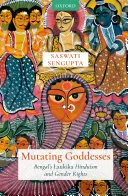
Mutating Goddesses
 81
81

Mutating Goddesses
Saswati Sengupta's "Mutating Goddesses" offers a rigorous examination of the historical fluidity of Hindu goddesses, specifically focusing on Manasa, Candi, Sasthi, and Laksmi within the Bengali tradition. The book's signal strength lies in its detailed tracing of how sectarian interests, particularly from the 15th century onwards, actively shaped the iconography and worship of these deities, demonstrating a clear link between religious evolution and socio-political power. Sengupta compellingly argues that these transformations directly impacted the construction of female subjectivities, entwining gender, caste, and class in divine narratives. A notable limitation, however, is the dense academic prose, which, while precise, can occasionally obscure the narrative flow for readers less familiar with post-structuralist theoretical frameworks. The discussion of Laksmi's shifting patronage, from royal courts to merchant classes, vividly illustrates the book's core thesis. Ultimately, "Mutating Goddesses" provides a vital, critical perspective on the agency and malleability of divine feminine forms in South Asian religious history.
📝 Description
81
Saswati Sengupta analyzes how four Bengali goddesses transformed from the 15th century onward.
Saswati Sengupta's "Mutating Goddesses" traces the historical shifts in the forms and functions of four prominent Hindu goddesses: Manasa, Candi, Sasthi, and Laksmi, from the 15th century to the present. The book focuses on goddess traditions in Bengal, arguing that these divinities underwent significant changes, influenced by evolving sectarian agendas. Sengupta examines how gender, caste, and class shaped female subjectivities through the very construction of these goddesses.
The veneration and depiction of these goddesses were not static; they dynamically responded to socio-political and economic forces. By studying the evolution of Manasa, the serpent goddess; Candi, the warrior deity; Sasthi, the protector of children; and Laksmi, the goddess of fortune, Sengupta shows how their mythologies and cults adapted to serve specific community interests. This approach reveals how divine feminine archetypes could be used to challenge or reinforce dominant narratives.
Central to the argument is the link between these deities' historical fortunes and the rise and fall of various sectarian groups with particular theological or political aims. Sengupta uses critical feminist theory and historical analysis to understand how the sanctioning of female power, as embodied by these goddesses, was negotiated within patriarchal structures. Their representations offer a lens into broader patterns of religious and social change in South Asia.
This work engages with the esoteric tradition of studying South Asian religious history through the lens of divine feminine power. It moves beyond purely theological interpretations to examine how the perceived mutable nature of goddesses reflects and shapes social, political, and gendered realities. By focusing on specific regional traditions and historical periods, it situates the evolving iconography and cultic practices of these deities within the broader currents of religious change and the negotiation of power in South Asia.
💡 Why Read This Book?
• Understand the dynamic evolution of Hindu goddesses like Manasa and Laksmi from the 15th century onwards, learning how their cults were shaped by specific historical forces and sectarian interests. • Gain insight into the intricate correlation between gender, caste, and class in the formation of female divine subjectivities, as explored through the Bengali Hindu tradition. • Analyze how religious traditions are not static but actively negotiated, with the changing fortunes of deities like Candi reflecting broader societal shifts and power structures.
⭐ Reader Reviews
Honest opinions from readers who have explored this book.
❓ Frequently Asked Questions
What specific Hindu goddesses are analyzed in "Mutating Goddesses"?
The book focuses on four key Hindu goddesses: Manasa, the serpent deity; Candi, a powerful warrior goddess; Sasthi, protector of children; and Laksmi, the goddess of wealth and fortune. Their transformations are traced from the 15th century to the present.
What is the geographical focus of Saswati Sengupta's study?
The primary geographical focus is Bengal, examining the goddess-invested traditions of Hinduism within this region. The analysis highlights the specific cultural and religious landscape of Bengal in understanding the evolution of these deities.
How does the book connect gender and divinity?
"Mutating Goddesses" explores how the very formation and sanctioning of female subjectivities are intertwined with the representation and worship of goddesses. It argues that the evolution of these divine figures reflects and sometimes challenges societal norms regarding gender.
What role do caste and class play in the book's argument?
The book contends that caste and class interests significantly influenced the historical evolution and devolution of these Hindu goddesses. These social stratifications played a crucial role in shaping the narratives and cultic practices associated with Manasa, Candi, Sasthi, and Laksmi.
What is the chronological scope of the research presented?
The study covers a significant historical period, tracing the shifting fortunes of the four selected goddesses from the 15th century up to the contemporary era. This long-term perspective allows for an analysis of gradual and sometimes dramatic changes.
What theoretical framework does Saswati Sengupta employ?
The author utilizes critical feminist theory alongside historical analysis to examine the formation of goddess cults and their relationship to social power structures. This interdisciplinary approach informs the interpretation of divine narratives.
🔮 Key Themes & Symbolism
Divine Feminine as Social Construct
This work posits that goddesses are not static entities but are actively constructed and reconstructed through social, political, and sectarian forces. The transformations of Manasa, Candi, Sasthi, and Laksmi from the 15th century onward illustrate how their divine attributes and cultic importance were negotiated within specific historical contexts. Sengupta demonstrates that the very concept of the female divine is deeply embedded in, and often reflects, prevailing societal structures related to gender, caste, and class, serving as a lens through which to understand evolving power dynamics.
Sectarianism and Religious Evolution
A core argument of "Mutating Goddesses" is that the fortunes of specific Hindu deities are inextricably linked to the rise and influence of various sectarian groups. The book meticulously details how different religious factions, particularly in Bengal, manipulated or emphasized certain aspects of goddesses like Laksmi or Candi to further their own interests. This perspective challenges notions of purely organic religious development, highlighting instead the role of human agency and institutional power in shaping divine narratives and practices over time.
Gender, Caste, and Class Interplay
The study offers a critical analysis of how gender, caste, and class intersect in the formation and sanctioning of female subjectivities, using goddesses as case studies. Sengupta reveals how the veneration of deities like Sasthi, associated with child protection, or Manasa, the serpent goddess, could be influenced by, and in turn influence, the social standing and agency of women within different social strata. The book illuminates how divine representations often mirrored, reinforced, or sometimes subtly critiqued existing social hierarchies.
The Malleability of Divinity
"Mutating Goddesses" fundamentally argues for the malleability of divinity, particularly the divine feminine. By tracing the historical trajectory of four key Bengali goddesses, Saswati Sengupta shows that their identities, powers, and the very nature of their worship were subject to change, evolution, and even devolution. This perspective underscores that religious traditions are dynamic and responsive, shaped by the historical circumstances and the evolving needs and interests of their devotees and institutional sponsors.
💬 Memorable Quotes
Direct passages from the work, attributed to the author.
“The goddess-invested tradition of Bengal's Hinduism argues for a historical evolution/devolution of divinities in tandem with sectarian interests.”
— This statement captures the book's central thesis: that the development of goddesses like Manasa and Candi was not an independent religious phenomenon but was actively steered by the agendas of various religious groups over centuries.
“Illuminates in the process the knotted correlation of gender, caste and class in the sanctioning of female subjectivities through goddess formation.”
— This highlights the book's critical feminist approach, emphasizing how the very creation and acceptance of divine female figures were shaped by complex social stratifications, impacting how female agency and identity were understood.
“The shifting fortunes of four specific Hindu deities—Manasa, Candi, Sasthi and Laksmi—from the fifteenth century to the present time.”
— This specifies the core subjects and chronological scope of the research, indicating a historical deep-dive into how these particular goddesses have been perceived and worshipped across a significant span of South Asian history.
“The critical studies of Hin”
— This appears to be an incomplete fragment from the original blurb, suggesting that the book engages in critical scholarship concerning Hindu traditions, likely examining their historical development and socio-cultural implications.
“The work focuses on the goddess-invested tradition of Bengal's Hinduism.”
— This pinpoints the specific regional and religious context of the study, emphasizing Bengal's unique cultural milieu in the evolution and worship of Hindu goddesses.
🌙 Esoteric Significance
Tradition
While "Mutating Goddesses" is primarily a work of historical and sociological analysis of Hindu traditions, its focus on the dynamic nature of divine feminine archetypes and their socio-cultural construction offers resonance within broader esoteric inquiries into goddess spirituality. It departs from traditional esoteric lineages by grounding its analysis in empirical historical data and critical theory rather than direct mystical experience or established occult doctrines. However, it aligns with esoteric traditions that explore the manifest power and evolving symbolism of the feminine divine across cultures and epochs.
Symbolism
The goddesses Manasa, Candi, Sasthi, and Laksmi themselves serve as potent symbols within the book's framework. Manasa, the serpent goddess, symbolizes transformation, fertility, and often, potent, dangerous feminine power associated with the earth and underworld. Candi embodies fierce, protective energy, representing the destructive aspect necessary for creation and order, often linked to cosmic battles. Sasthi symbolizes nurturing and the protection of vulnerable life, particularly children, connecting to maternal instincts and life-giving forces. Laksmi represents abundance, prosperity, and auspiciousness, embodying material and spiritual well-being.
Modern Relevance
Contemporary movements focused on ecofeminism, goddess spirituality, and critical engagement with patriarchal religious structures find significant relevance in "Mutating Goddesses." Thinkers and practitioners exploring the reclamation of marginalized divine feminine figures and the deconstruction of static religious dogma can draw upon Sengupta's historical analysis. The book's examination of how social hierarchies influence religious representation provides a valuable lens for understanding modern debates about inclusivity and power within spiritual communities.
👥 Who Should Read This Book
• Scholars of South Asian religions and history: Readers interested in the specific evolution of Hindu traditions in Bengal and the socio-historical forces shaping divinity. • Students of gender studies and feminist theory: Individuals seeking to understand the intersection of gender, power, and religious representation through concrete case studies. • Practitioners of goddess spirituality: Those interested in the historical construction and diverse manifestations of the divine feminine across different cultural contexts.
📜 Historical Context
Saswati Sengupta's "Mutating Goddesses" emerged in 2020, a period marked by increasing academic interest in feminist interpretations of religion and post-colonial studies of South Asian traditions. The book engages with scholarly debates surrounding the historical agency of women and the social construction of religious beliefs. It situates itself within the field of South Asian religious history, particularly focusing on the dynamic and localized manifestations of Hinduism in Bengal. The work implicitly engages with scholars who analyze the evolution of Hindu deities and their cults, such as those who have studied the Puranic corpus or regional devotional movements. While not explicitly detailing a specific reception event, the book’s contribution lies in its nuanced application of feminist theory to historical religious transformations, offering a counterpoint to purely textual or theological analyses of divinity prevalent in earlier scholarship.
📔 Journal Prompts
The evolution of Manasa from the fifteenth century: how do sectarian interests manifest in her changing attributes?
Candi's fierceness as a response to social needs: what does her historical trajectory reveal about power dynamics?
Sasthi's role as a protector: how have caste and class influenced the perception of her nurturing capabilities?
Laksmi's mutability: analyze the correlation between her iconography and economic shifts in Bengal.
The sanctioning of female subjectivities: how does the formation of these goddesses reflect or resist societal norms?
🗂️ Glossary
Manasa
A prominent Hindu goddess, primarily worshipped in Bengal, associated with snakes, fertility, and poison. Her cult is often linked to folk traditions and shamanic practices.
Candi
A fierce form of the Hindu Goddess Durga, often depicted as a warrior deity. She represents cosmic power, destruction of evil, and the fierce aspect of the divine feminine.
Sasthi
A folk goddess in Hinduism, particularly revered in Bengal, who is considered the protector of children and the giver of offspring. Worship often involves rituals related to childbirth and child-rearing.
Laksmi
The Hindu goddess of wealth, fortune, power, beauty, prosperity, and abundance. She is often depicted in association with lotuses and elephants and is widely worshipped.
Sectarian interests
The beliefs, goals, and advantages pursued by specific religious groups or factions within a larger religious tradition, often influencing the development and interpretation of doctrines and practices.
Female subjectivities
The ways in which individuals identify and experience themselves as female, shaped by cultural, social, historical, and personal factors, including religious representations.
Goddess formation
The process through which goddesses are conceived, depicted, worshipped, and evolve within a religious and cultural system, reflecting societal values, power structures, and theological developments.