Srimad Bhagavad Gita
 79
79

Srimad Bhagavad Gita
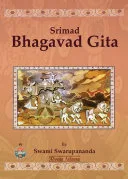
Swami Swarupananda's presentation of the Srimad Bhagavad Gita, especially the 2016 Advaita Ashrama edition, offers a remarkably clear pathway into a text often perceived as daunting. The inclusion of Devanagari script alongside a precise word-for-word translation is invaluable, allowing readers to trace the linguistic roots of the verses. The running translation, deeply informed by Shankaracharya's Advaita Vedanta commentary, successfully distills complex philosophical arguments into comprehensible prose. A notable strength lies in its accessibility for beginners, avoiding overly academic jargon. However, for seasoned practitioners familiar with other commentaries, the focus on Shankaracharya's specific interpretation might feel limiting, lacking the comparative breadth found in other scholarly editions. The explanation of Krishna's instruction to Arjuna regarding duty (Dharma) on the battlefield of Kurukshetra is particularly well-rendered, clarifying the ethical and spiritual dimensions of action. This edition serves as an excellent, albeit singular, lens through which to view this foundational scripture.
📝 Description
79
Swami Swarupananda's 2016 Advaita Ashrama edition presents the Srimad Bhagavad Gita with Sanskrit and word-for-word translation.
This edition of the Srimad Bhagavad Gita, published by Advaita Ashrama in 2016, offers an accessible entry point to a major Indian spiritual text. It begins with the original Sanskrit in Devanagari script, followed by a word-for-word English translation designed to help Western readers understand the verses. The translation and extensive notes are drawn from Adi Shankaracharya's commentary, aiming to make the philosophical ideas clear for those new to Hindu thought. It is structured for individuals encountering the Gita for the first time, providing a scholarly yet understandable introduction to its practical philosophy.
The Gita itself is an ancient scripture, part of the Mahabharata, composed between the 5th and 2nd centuries BCE. Its teachings have shaped Indian religious thought for millennia, serving as a core text for schools like Advaita Vedanta. This edition focuses on the dialogue between Prince Arjuna and Lord Krishna, addressing topics such as duty, action, devotion, and knowledge. Krishna's advice to Arjuna concerns performing one's responsibilities without attachment to outcomes, promoting a balanced approach to spiritual life.
The Srimad Bhagavad Gita is a central text in Hindu traditions, particularly within the Advaita Vedanta school, which emphasizes the non-dual nature of reality. Its teachings on the self, the divine, and the path to liberation are interpreted through various philosophical lenses. This edition, grounded in Shankaracharya's commentary, aligns with Advaita's focus on realizing the identity of the individual soul (Atman) with the universal consciousness (Brahman). The dialogue between Krishna and Arjuna addresses the practical application of these metaphysical concepts in the context of worldly action and spiritual discipline.
💡 Why Read This Book?
• Gain a foundational understanding of Dharma, as explained through Krishna's counsel to Arjuna before the battle of Kurukshetra, clarifying the ethical imperative of duty. • Comprehend the concept of Karma Yoga, learning how to perform actions without attachment to their outcomes, as detailed in the Bhagavad Gita's teachings. • Access the philosophical underpinnings of Advaita Vedanta through Shankaracharya's commentary, understanding the nature of Brahman and the self.
⭐ Reader Reviews
Honest opinions from readers who have explored this book.
❓ Frequently Asked Questions
What is the original language of the Srimad Bhagavad Gita?
The original language of the Srimad Bhagavad Gita is Sanskrit. This edition includes the original text in the Devanagari script, which is the standard writing system for Sanskrit.
Who is Swami Swarupananda in relation to this Gita translation?
Swami Swarupananda is the editor and translator of this specific edition published by Advaita Ashrama. His work aims to make the Gita accessible, particularly for those new to its study.
What commentary is used as the basis for the notes?
The notes in this edition are based on the influential commentary by the 8th-century philosopher Adi Shankaracharya, a key proponent of the Advaita Vedanta school of Hindu philosophy.
When was this specific edition of the Srimad Bhagavad Gita first published?
This edition, published by Advaita Ashrama, was first published on May 16, 2016. It is part of Advaita Ashrama's efforts to disseminate spiritual literature.
Is this book suitable for someone who has never read the Bhagavad Gita before?
Yes, this book is explicitly designed for first-time readers. It provides the original text, word-for-word translations, a running translation, and explanatory notes to aid comprehension.
What is Advaita Ashrama and its role?
Advaita Ashrama is a publication house of the Ramakrishna Math, based in Belur Math, India. It is dedicated to publishing spiritual and philosophical literature, including works on Vedanta.
🔮 Key Themes & Symbolism
Dharma and Duty
The text centers on the concept of Dharma, particularly Arjuna's struggle with his duty as a warrior. Krishna's discourse elucidates that Dharma is not merely social convention but an individual's inherent nature and prescribed role, which must be fulfilled without attachment to personal desires or fear of consequences. This theme is crucial for understanding the ethical framework presented in the Gita, guiding individuals toward righteous action even in difficult circumstances.
The Nature of the Self (Atman)
A core tenet explored is the distinction between the ephemeral physical body and the eternal, unchanging soul (Atman). The commentary, drawing from Shankaracharya's Advaita Vedanta, emphasizes that the Atman is identical with Brahman, the ultimate reality. Understanding this non-dual nature of existence is presented as key to overcoming suffering and attachment, fostering a sense of detachment from worldly impermanence.
Paths to Liberation (Moksha)
The Bhagavad Gita outlines multiple paths toward spiritual liberation (Moksha). This edition highlights the integration of Karma Yoga (the yoga of action), Bhakti Yoga (the yoga of devotion), and Jnana Yoga (the yoga of knowledge). Krishna's teachings suggest that these paths are not mutually exclusive but can be harmonized, offering a comprehensive approach to spiritual realization that aligns with one's inherent disposition.
The Divine and the Material World
The relationship between the divine (Krishna, as the Supreme Being) and the material world is a central exploration. The text addresses the illusory nature of the material world (Maya) and how it can obscure the perception of ultimate reality. Krishna reveals his divine form, illustrating his omnipresence and role as the sustainer of creation, while also guiding Arjuna to transcend material attachments.
💬 Memorable Quotes
Direct passages from the work, attributed to the author.
“Action is better than inaction.”
— This principle, central to Karma Yoga, suggests that purposeful activity, aligned with one's Dharma, is spiritually superior to passive inaction or idleness. It emphasizes fulfilling one's responsibilities as a means of spiritual growth.
“Whatever action a great man performs, common men follow. Whatever standards he sets, the world adopts.”
— This highlights the influence of exemplary individuals (like Krishna in the narrative) on society. Their actions and principles serve as a guide, demonstrating the power of leadership and the importance of righteous conduct.
“He who sees inaction in action, and action in inaction, he is intelligent among men; he is complete in all work.”
— This profound statement describes the liberated individual who acts without attachment and remains mentally detached even when inactive. It signifies a state of perfect balance and equanimity in all circumstances.
“The mind is restless and difficult to restrain, but by practice and detachment, O son of Kunti, it can be controlled.”
— This acknowledges the challenge of controlling the mind, a common human experience. It offers the practical solutions of 'practice' (abhyasa) and 'non-attachment' (vairagya) as the means to achieve mental discipline and inner peace.
💡 Key Ideas
Editorial paraphrase of the work's core concepts — not direct quotes.
The soul is never born and never dies, nor does it exist after having come into being; it is unborn, eternal, permanent, and primeval. The soul is not slain when the body is slain.
This passage articulates the concept of the eternal nature of the soul (Atman), distinct from the perishable physical body. It serves to alleviate fear of death and underscore the spiritual reality that transcends physical existence.
🌙 Esoteric Significance
Tradition
While rooted in the Vedic and Upanishadic traditions of India, the Bhagavad Gita is foundational to numerous esoteric lineages within Hinduism, particularly Advaita Vedanta. Its teachings on the oneness of the Self (Atman) with the Absolute (Brahman) align with non-dualistic mystical paths. The dialogue between Krishna and Arjuna also functions as an allegory for the soul's journey toward divine realization, a theme present in many esoteric traditions worldwide, including Gnosticism and Hermeticism, though its specific philosophical framework remains distinctly Indic.
Symbolism
The battlefield of Kurukshetra serves as a potent symbol for the human condition, representing the inner struggle between higher and lower natures, duty, and desire. Lord Krishna, as the divine charioteer, symbolizes the guiding principle of divine wisdom or the Higher Self, steering the individual soul (Arjuna) through the conflicts of life. Arjuna's chariot itself can represent the body, with its senses as the horses that must be controlled by the intellect and guided by divine will.
Modern Relevance
Contemporary esoteric practitioners and thinkers often draw upon the Bhagavad Gita for its integrated approach to spiritual development. Schools focusing on mindfulness, conscious action, and the pursuit of inner knowledge find resonance in its principles. The Gita's emphasis on harmonizing spiritual practice with worldly responsibilities makes it particularly relevant for modern individuals seeking a balanced life, influencing fields from integral psychology to applied philosophy and meditation practices.
👥 Who Should Read This Book
• Aspiring students of Eastern philosophy seeking a primary source text with clear explanatory notes on complex concepts like Dharma and Karma. • Individuals interested in comparative religion and mythology, looking to understand a central scripture of Hinduism and its philosophical underpinnings. • Practitioners of contemplative disciplines interested in the yogic paths of knowledge (Jnana Yoga) and action (Karma Yoga) as presented in a classical Indian context.
📜 Historical Context
The Srimad Bhagavad Gita, embedded within the epic Mahabharata, likely took shape between the 5th and 2nd centuries BCE, a period of significant intellectual and religious ferment in ancient India. It emerged during a time when various philosophical schools, including early forms of Vedanta, Samkhya, and Yoga, were being articulated and debated. The text's emphasis on Dharma, Karma, and the nature of the divine resonated deeply, becoming a starting point for the development of Hindu philosophy, particularly Advaita Vedanta, championed by Adi Shankaracharya in the 8th century CE. Shankaracharya’s commentary, which heavily influences this edition, provided a systematic interpretation that profoundly shaped subsequent theological discourse. The Gita's teachings offered a synthesized approach to spiritual life, integrating devotional, intellectual, and active paths, which proved adaptable across diverse sectarian traditions and philosophical orientations within Hinduism.
📔 Journal Prompts
Arjuna's dilemma on the battlefield of Kurukshetra.
The concept of detachment from the fruits of action.
Krishna's revelation of his divine form.
The distinction between the perishable body and the eternal Atman.
The integration of Karma Yoga and Bhakti Yoga.
🗂️ Glossary
Dharma
One's duty, righteousness, moral law, or essential nature. In the Bhagavad Gita, it refers to the specific duties and responsibilities one must fulfill according to their social role and spiritual path.
Karma
Action, deed, or work. In a spiritual context, it refers to the principle of cause and effect, where actions generate consequences that influence one's present and future lives.
Atman
The self, soul, or spirit. In Advaita Vedanta, the Atman is considered eternal, unchanging, and identical with Brahman, the ultimate reality.
Brahman
The ultimate, unchanging reality or absolute consciousness that underlies all existence. In Advaita Vedanta, Brahman is the sole reality, and the universe is seen as its manifestation.
Maya
Illusion or delusion. In Vedanta, Maya refers to the power that conceals the true nature of reality (Brahman) and makes the phenomenal world appear as real and separate.
Moksha
Liberation or release from the cycle of birth, death, and rebirth (samsara). It is the ultimate goal of spiritual practice in many Indian traditions.
Yoga
A spiritual discipline or path aimed at union with the divine or ultimate reality. The Bhagavad Gita discusses various forms, including Karma Yoga, Bhakti Yoga, and Jnana Yoga.