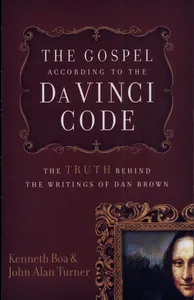
The status of women and Gnosticism in Irenaeus and Tertullian

 76
76

The status of women and Gnosticism in Irenaeus and Tertullian
Daniel L. Hoffman’s examination of women and Gnosticism in the works of Irenaeus and Tertullian offers a precise, if somewhat dry, dissection of patristic polemics. The strength lies in its meticulous focus on how these Church Fathers framed their opposition to Gnostic groups, particularly concerning their views on women, by analyzing specific passages in works like Irenaeus's *Against Heresies*. A notable limitation is the academic tone, which, while appropriate for the subject, can make for dense reading. Hoffman's interpretation of Tertullian's arguments against the female prophetess Quintilla, for instance, highlights the Father's anxiety about female spiritual authority. The book serves as a valuable resource for understanding the historical construction of gender within early Christian discourse, though it demands a reader well-versed in the theological intricacies of the period. Ultimately, it provides a clear, if unadorned, window into an ancient debate.
📝 Description
76
Daniel L. Hoffman's 2010 book examines women's status in Gnosticism through the eyes of Irenaeus and Tertullian.
This scholarly study analyzes the theological and social views of women within early Christian Gnosticism, as represented and refuted by Irenaeus of Lyons and Tertullian of Carthage. The author dissects their arguments against Gnostic groups, focusing on how these teachings conceptualized the role and status of women. Hoffman scrutinizes the polemical writings of these Church Fathers, extracting their interpretations of Gnostic cosmology and anthropology concerning gender.
The work is aimed at academics, theologians, and students of early Christian history, Gnosticism, and religious gender studies. It is particularly relevant for those interested in the patristic critique of heterodox movements and the historical construction of gender roles in antiquity. A basic understanding of early Christian debates and Gnostic thought is beneficial for readers.
The analysis is situated in the late 2nd and early 3rd centuries CE, a time of significant doctrinal formulation and conflict in nascent Christianity. Irenaeus, writing around 175-185 CE, was instrumental in defining orthodox doctrine against Gnostic heresy. Tertullian, active from the late 2nd century into the early 3rd century, was a noted Latin apologist. Both men engaged with a varied landscape of Christian thought, including Gnostic schools with their own cosmologies and social structures.
This book engages with the early centuries of Christianity when Gnosticism represented a significant, though often contentious, set of beliefs. Gnostic systems frequently posited complex cosmologies involving divine emanations and a spiritual hierarchy where gender could play a symbolic or literal role. The Church Fathers like Irenaeus and Tertullian sought to delineate orthodox Christian doctrine from these varied Gnostic interpretations, often by analyzing and critiquing their views on creation, humanity, and salvation, including specific notions about the feminine divine or women's spiritual capacity.
💡 Why Read This Book?
• Learn how Irenaeus, writing around 180 CE, framed his arguments against Gnostic groups concerning women, understanding his specific critiques of their cosmologies that challenged patriarchal norms. • Discover Tertullian's rhetorical strategies in the early 3rd century to counter Gnostic assertions of female spiritual leadership, offering a direct look at his polemical approach. • Gain insight into the historical context of early Christian doctrinal disputes, specifically how debates around gender roles in Gnosticism informed the development of orthodox Christian social structures.
⭐ Reader Reviews
Honest opinions from readers who have explored this book.
❓ Frequently Asked Questions
What specific Gnostic groups did Irenaeus and Tertullian critique regarding women's status?
The work focuses on Irenaeus's critique of groups like the Valentinians and Marcionites, and Tertullian's engagement with Montanism. These movements presented distinct theological frameworks that often differed significantly from emerging orthodox views on gender roles.
When was Daniel L. Hoffman's book first published?
The book 'The Status of Women and Gnosticism in Irenaeus and Tertullian' was first published in 1988, providing a scholarly analysis for its time.
What is the primary source material examined in this book?
The primary source material consists of the polemical writings of Irenaeus of Lyons (such as 'Against Heresies') and Tertullian of Carthage (including works like 'On the Flesh of Christ' and 'Against Marcion').
How did Gnosticism generally view the status of women compared to emerging Christianity?
Gnostic systems often offered more egalitarian or even prominent roles for women, sometimes featuring female divine figures or emphasizing spiritual equality. This contrasted with the increasingly patriarchal structures within developing orthodox Christianity.
What was the historical period of Irenaeus and Tertullian?
Irenaeus was active in the latter half of the 2nd century CE (fl. c. 175-185 CE), and Tertullian was prominent in the late 2nd and early 3rd centuries CE (fl. c. 197-220 CE), a crucial time for Christian doctrine formation.
Does this book offer a Gnostic perspective on women?
No, the book primarily analyzes the *critiques* of Gnostic views on women by Irenaeus and Tertullian. It examines how these Church Fathers interpreted and refuted Gnostic ideas, rather than presenting a direct Gnostic viewpoint.
🔮 Key Themes & Symbolism
Patristic Polemics Against Gnosticism
This theme explores the adversarial relationship between early Church Fathers like Irenaeus and Tertullian and various Gnostic movements. It focuses on how these Fathers, in their efforts to define orthodox Christianity, systematically critiqued Gnostic doctrines. The analysis highlights their use of polemic to discredit Gnostic teachings, often by framing them as deviations or heresies. The work examines specific arguments concerning Gnostic cosmology, salvation, and their implications for social structures, particularly concerning gender roles, as seen in Irenaeus's *Adversus Haereses*.
Gender Roles in Early Christian Discourse
The book dissects how the status of women became a point of contention in the formative period of Christianity. It investigates how Irenaeus and Tertullian, in their refutations of Gnosticism, articulated specific views on women's roles within religious communities and broader society. Their arguments often served to reinforce patriarchal structures within emerging orthodoxy, contrasting with potentially more egalitarian or different roles envisioned by some Gnostic groups. The analysis traces the theological justifications used to support these differing perspectives.
Theological Anthropology of Gnosticism
This theme studies the Gnostic understanding of humanity and its place in the cosmos, particularly as interpreted and attacked by Irenaeus and Tertullian. It examines how Gnostic anthropologies, which often posited a divine spark within individuals and sometimes featured female spiritual emanations, were perceived as threats by the Church Fathers. The work analyzes how these differing views on human nature and divine origins, especially concerning figures like Sophia, influenced perceptions of gender and spiritual authority.
Hermeneutics and Textual Interpretation
Central to the study is how Irenaeus and Tertullian interpreted Gnostic texts and traditions. The work explores their methods of exegesis and how they selectively quoted or misrepresented Gnostic scriptures and myths to support their arguments. This theme highlights the power dynamics involved in textual authority and the construction of religious narratives, showing how differing hermeneutical approaches led to vastly different conclusions about doctrine, cosmology, and the place of women.
💬 Memorable Quotes
Direct passages from the work, attributed to the author.
“Irenaeus's critique of Gnostic claims regarding creation and the divine.”
— This refers to Irenaeus's systematic refutation of Gnostic cosmogonies, which often posited a subordinate creator god (the Demiurge) and complex emanations from a supreme, unknowable God. His arguments aimed to establish the goodness of the Old Testament God and the unity of creation, directly opposing Gnostic dualism.
“Tertullian's arguments against female spiritual leadership.”
— This highlights Tertullian's polemical stance against women assuming authoritative roles in religious practice, particularly evident in his critiques of groups like Montanism, which featured female prophets. He often invoked Eve's transgression to argue for female subordination.
“The Gnostic concept of Sophia and its implications.”
— This points to the Gnostic myth of Sophia (Wisdom), an aeon whose desire or fall led to the creation of the material world. Interpretations vary, but often involved divine feminine principles, which Church Fathers like Irenaeus found heretical and indicative of disorder.
“The role of the Demiurge in Gnostic cosmology.”
— This refers to the Gnostic belief that the material universe was created by a lesser, often ignorant or malevolent, divine being, distinct from the true, supreme God. Irenaeus strongly contested this, asserting the single, benevolent creator God of Jewish scripture.
“The contrasting views on salvation and spiritual knowledge.”
— This contrasts Gnostic emphasis on secret knowledge (gnosis) for salvation with the orthodox Christian focus on faith, grace, and good works. The Fathers viewed Gnostic claims to exclusive knowledge as arrogant and divisive.
🌙 Esoteric Significance
Tradition
This work primarily engages with the historical context of early Gnosticism and its critique by nascent orthodox Christianity. While not a Gnostic text itself, it is crucial for understanding the historical Gnostic movements, which represent a significant, albeit often suppressed, lineage within esoteric thought. Its value lies in analyzing how these early Christian figures interpreted and debated concepts that would later resurface in various esoteric traditions, particularly those emphasizing divine feminine principles and alternative cosmologies.
Symbolism
The concept of Sophia (Wisdom) is a key symbol, representing a divine feminine principle whose actions, often interpreted as a fall or error, led to the creation of the material world and humanity's entrapment within it. The Demiurge, often depicted as an ignorant or flawed creator, symbolizes the flawed nature of the material realm and the limitations of conventional, unenlightened existence. These figures represent fundamental Gnostic ideas about divine emanations and the perceived imperfection of the created order.
Modern Relevance
Contemporary scholars of Gnosticism, feminist theologians, and those exploring alternative spiritualities draw upon the analysis of Irenaeus and Tertullian presented here. Understanding these historical critiques helps illuminate ongoing discussions about gender roles in religion, the interpretation of ancient texts, and the enduring influence of Gnostic ideas on modern esoteric thought and practices that seek to reclaim the divine feminine or challenge patriarchal religious structures.
👥 Who Should Read This Book
• Academic researchers in early Christian history and Gnosticism: Gain detailed insights into the polemical strategies of Irenaeus and Tertullian regarding Gnostic views on women, essential for understanding primary source debates. • Students of comparative religion and gender studies: Understand the historical construction of gender roles within early religious movements and how critiques shaped theological discourse. • Scholars of esoteric traditions: Explore the historical roots and early interpretations of Gnostic concepts like Sophia, which have influenced later esoteric lineages.
📜 Historical Context
The late 2nd and early 3rd centuries CE witnessed a fervent period of theological development and conflict within Christianity. This era saw the consolidation of core doctrines and the marginalization of diverse heterodox movements, including numerous Gnostic schools. Irenaeus of Lyons, writing around 175-185 CE, was instrumental in defining orthodoxy, particularly through his monumental work *Adversus Haereses*, which systematically cataloged and refuted Gnostic beliefs. He engaged directly with Valentinian Gnosticism, a prominent intellectual current. Contemporaneously, Tertullian of Carthage, a formidable Latin apologist active from roughly 197 CE onwards, continued this polemical tradition. He vehemently opposed various heresies, including Montanism, a prophetic movement with significant female participation, and Marcionism. Both Irenaeus and Tertullian were responding to a complex intellectual landscape where Christian ideas interacted with Hellenistic philosophy, Jewish traditions, and other mystery cults. Their writings, while foundational for Christian theology, also reveal intense debates about spiritual authority, cosmology, and crucially, the social order, including the status of women, in a way that reveals the intellectual currents of their time.
📔 Journal Prompts
Irenaeus's portrayal of Gnostic cosmology and its perceived threat.
Tertullian's specific arguments against female spiritual authority.
The Gnostic concept of Sophia and its implications for divine femininity.
How the Demiurge figure represents a rejection of material creation.
The hermeneutical strategies used by Church Fathers to interpret Gnostic texts.
🗂️ Glossary
Gnosticism
A diverse set of religious movements prominent in the 1st to 4th centuries CE, characterized by belief in salvation through secret knowledge (gnosis) and often featuring complex cosmologies with divine emanations and a distinction between a transcendent God and a flawed creator of the material world.
Church Fathers
Influential early Christian theologians and writers whose teachings played a significant role in the development of Christian doctrine and tradition. Key figures include Irenaeus and Tertullian.
Polemics
The art or practice of engaging in controversial debate or attack; aggressive or combative argumentation, often used by religious writers to refute opposing doctrines.
Demiurge
In Gnostic cosmology, a subordinate divine being, often identified with the God of the Old Testament, who is responsible for the creation of the material universe, which is seen as flawed or evil.
Sophia
Greek for 'Wisdom'; in Gnosticism, often depicted as a divine female emanation (aeon) whose desire or fall from the divine realm led to the creation of the material world and humanity's entrapment within it.
Orthodoxy
The adherence to established or traditionally accepted beliefs, particularly in religion; in early Christianity, the doctrines that became widely accepted and defined against heresies.
Aeon
In Gnostic cosmology, divine beings or emanations that exist in the spiritual realm (pleroma) alongside the supreme, transcendent God.
🔮 Readers Also Liked
Browse all →






More Free Sacred Texts & Gnosticism Books
View all →