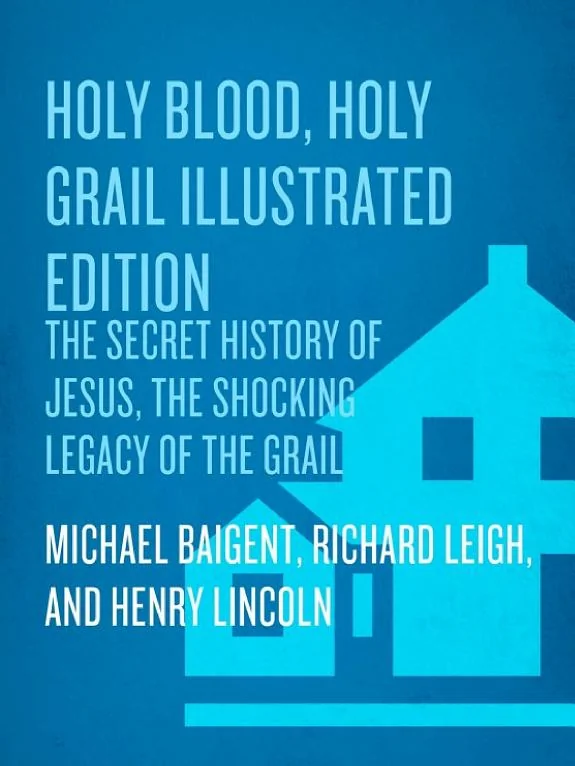
Holy Blood, Holy Grail Illustrated Edition
 80
80

Holy Blood, Holy Grail Illustrated Edition
The impact of *Holy Blood, Holy Grail* cannot be overstated; it fundamentally shifted popular discourse around the Jesus-Magdalene narrative. Baigent and Leigh present their case with a compelling, if sometimes speculative, accumulation of evidence, drawing connections between ancient texts, apocryphal gospels, and historical secret societies. The illustrated edition enhances the reading experience by visually grounding some of the more abstract arguments, offering a tangible element to the quest for historical verification. However, the book’s reliance on interpretation of symbolism and the purported existence of organizations like the Priory of Sion, which have faced considerable scholarly skepticism, remains its most debated aspect. For instance, the extensive discussion of the Rennes-le-Château mystery, while intriguing, hinges on a specific reading of its historical context. Ultimately, this work functions more as a powerful piece of speculative historical inquiry than definitive proof, yet its influence on popular esotericism is undeniable.
📝 Description
80
Published in 1982, Holy Blood, Holy Grail proposed Jesus had descendants.
This illustrated edition revisits a controversial 1982 thesis suggesting Jesus Christ survived crucifixion, married Mary Magdalene, and fathered a child. The book contends this lineage was then preserved through secret societies over centuries.
Its argument traces a Davidic bloodline from Jesus and Mary Magdalene, connecting it to the Merovingian dynasty. The narrative posits that the Holy Grail is not a physical object, but represents this sacred bloodline. The authors also detail the alleged role of the Priory of Sion in safeguarding this lineage and its associated mysteries.
Readers interested in alternative historical accounts, Christian mysticism, and Grail lore will find this work engaging. It appeals to those who question conventional religious history and seek to understand hidden traditions within Western spirituality.
This book emerged from a period of renewed interest in alternative histories and spiritual inquiry, particularly in the early 1980s. It tapped into existing esoteric traditions surrounding the bloodline of Christ and the mysteries of the Holy Grail, which have circulated in various forms for centuries. The work's connection to secret societies like the Priory of Sion also draws on a long history of occult and hermetic literature that explores hidden knowledge and ancient orders.
💡 Why Read This Book?
• Understand the specific genealogical claims made about Jesus Christ and Mary Magdalene, exploring how the authors connect them to the Merovingian dynasty and the concept of a sacred bloodline. • Examine the role attributed to the Priory of Sion and its alleged centuries-long mission to protect this bloodline, as detailed in the book's investigation of secret societies. • Appreciate the visual context provided by the exclusive new materials and photographs in this illustrated edition, which serve to illuminate the historical sites and symbols discussed throughout the text.
⭐ Reader Reviews
Honest opinions from readers who have explored this book.
❓ Frequently Asked Questions
What is the central argument of Holy Blood, Holy Grail?
The book's central thesis proposes that Jesus Christ survived the crucifixion, married Mary Magdalene, and fathered children, establishing a royal bloodline that has been secretly preserved throughout history by an organization called the Priory of Sion.
Who were the authors of Holy Blood, Holy Grail?
The authors are Michael Baigent, Richard Leigh, and Henry Lincoln. The first edition was published in 1982.
What is the significance of the Priory of Sion mentioned in the book?
The Priory of Sion is presented as a clandestine order allegedly founded in 1099. Its purported mission, according to the book, was to safeguard the lineage of Jesus Christ and the sacred mysteries associated with the Holy Grail.
How does the book connect the Holy Grail to Jesus's bloodline?
The authors interpret the Holy Grail not as a physical object like a chalice, but as a symbol representing the bloodline of Jesus Christ and Mary Magdalene, suggesting the 'Sangreal' refers to 'holy blood'.
What kind of new materials are included in the illustrated edition?
The illustrated edition features exclusive new material and dozens of photographs and drawings intended to visually support the book's controversial theories and explore the historical and symbolic landscape it describes.
Is the historical information in Holy Blood, Holy Grail widely accepted by scholars?
No, the book's central claims, particularly regarding the Priory of Sion and the survival of Jesus, are widely disputed and largely dismissed by mainstream historians and religious scholars.
🔮 Key Themes & Symbolism
The Davidic Bloodline
The core of the book posits that Jesus Christ was not only human but also married Mary Magdalene and fathered children, thus continuing the Davidic royal bloodline. This lineage, the authors argue, was crucial and secretly preserved through the centuries, influencing historical events and royal houses, most notably the Merovingian dynasty of France. The work meticulously traces alleged connections through historical documents, genealogies, and apocryphal texts to support this controversial assertion, suggesting a hidden continuity of sacred royalty.
The Priory of Sion
Central to the preservation narrative is the purported secret society known as the Priory of Sion. The book details its alleged origins in the 11th century and its long-term clandestine mission: to protect and promote the descendants of Jesus and Mary Magdalene. The authors present evidence, including alleged secret documents and genealogies, suggesting the Priory has manipulated European history from behind the scenes, influencing major religious and political developments.
The Holy Grail as Bloodline
Departing from the traditional interpretation of the Grail as a physical object (a chalice or platter), Baigent and Leigh propose that 'Grail' is a corruption of 'Sang Real' or 'Sang Royal,' meaning 'blood royal.' This reinterpretation shifts the focus from an artifact to the sacred bloodline itself, identifying Mary Magdalene as the vessel that carried and propagated this lineage. The book thus reframes the entire Grail quest as a search for, and protection of, this dynastic heritage.
Rennes-le-Château and Secret Knowledge
The small French village of Rennes-le-Château and its mysterious 19th-century parish priest, Bérenger Saunière, become a focal point in the book's investigation. The authors suggest that Saunière uncovered evidence of the hidden lineage and its associated secrets, linking the treasure found there to the Priory of Sion and the legacy of the Merovingians. This section explores the esoteric implications of hidden treasures and secret knowledge within historical sites.
💬 Memorable Quotes
Direct passages from the work, attributed to the author.
“The blood of Jesus Christ, the blood of the Merovingians, the blood of the Grail.”
— This phrase captures the book's central thesis, linking the supposed physical lineage of Jesus through Mary Magdalene to the Merovingian dynasty and the symbolic representation of the Holy Grail as 'Sang Real' (royal blood).
“The Priory of Sion has been responsible for the preservation of a secret tradition, a secret history, a secret bloodline.”
— This statement highlights the purported role of the Priory of Sion as the clandestine guardian of Jesus's lineage, suggesting its centuries-long influence on Western history and religious understanding.
“The Grail was not a cup, but a woman; not a relic, but a bloodline.”
— This reinterpretation of the Grail legend directly challenges traditional views, proposing that the object of the quest is the living lineage of Jesus and Mary Magdalene, rather than a physical artifact.
“The Merovingian dynasty was the embodiment of the Davidic line in Europe.”
— This assertion directly connects the Frankish Merovingian kings to the ancient Israelite royal house of David, proposing they were the direct, divinely sanctioned heirs through Jesus Christ.
💡 Key Ideas
Editorial paraphrase of the work's core concepts — not direct quotes.
Rennes-le-Château held the key to a secret that could shake the foundations of Christianity.
This quote points to the significance of the Rennes-le-Château mystery within the book's narrative, suggesting the hidden treasures or documents found there revealed the truth about Jesus's lineage and the suppressed history of the Church.
🌙 Esoteric Significance
Tradition
The work draws heavily on Gnostic and Cathar traditions, which often emphasize hidden knowledge and alternative interpretations of Christ's life and divinity. It also echoes themes found in Rosicrucianism and Freemasonry concerning secret societies and hidden lineages. While not strictly adhering to any single lineage, it synthesizes elements that challenge orthodox Christian eschatology, proposing a continuation of a sacred bloodline rather than a solely spiritual salvation.
Symbolism
The primary symbol is the Holy Grail itself, reinterpreted as 'Sang Real' – the royal bloodline descending from Jesus and Mary Magdalene. Another key symbol is the Merovingian dynasty, representing the earthly manifestation of this sacred lineage. The fleur-de-lis, often associated with French royalty, is also explored as a potential symbol linked to this bloodline's hidden history and its claimed connection to ancient Israelite symbols.
Modern Relevance
Contemporary interest in alternative histories, Gnostic Gospels, and the historical Jesus continues to draw readers to *Holy Blood, Holy Grail*. Modern esoteric groups and independent researchers exploring sacred geometry, lost traditions, and the intersection of spirituality and history often reference its theories. The book remains a touchstone for discussions about suppressed Christian narratives and the potential for a hidden spiritual lineage influencing human civilization.
👥 Who Should Read This Book
• Students of comparative religion and esoteric Christianity seeking to understand influential alternative theories about Jesus's life and legacy. • Enthusiasts of Grail legends and Arthurian mythology interested in a controversial, bloodline-focused interpretation of these ancient narratives. • Researchers of secret societies and Western esotericism curious about the purported role of organizations like the Priory of Sion in historical events.
📜 Historical Context
Published in 1982, *Holy Blood, Holy Grail* emerged during a period of increased public fascination with suppressed histories and alternative religious interpretations, fueled partly by the New Age movement and a growing distrust of established institutions. The intellectual climate was receptive to theories that challenged orthodox Christian narratives. The book's assertions, particularly its focus on the Priory of Sion and the Merovingian dynasty, tapped into existing esoteric traditions and conspiracy theories. While many scholars, including historian Norman Davies, have criticized the book's methodology and factual accuracy, its popular reception was immense. The work was cited by scholars in fields ranging from religious studies to literary criticism, though often to debunk its claims or analyze its cultural impact. It notably predates and arguably influenced Dan Brown's *The Da Vinci Code* (2003), which brought similar themes of Jesus's bloodline and secret societies to a global audience.
📔 Journal Prompts
The concept of the 'Sang Real' as a bloodline.
The alleged historical activities of the Priory of Sion.
Connections between the Merovingian dynasty and the Davidic line.
The reinterpretation of the Holy Grail symbol.
Evidence presented for Jesus and Mary Magdalene's descendants.
🗂️ Glossary
Sang Real
A term reinterpreted by the authors to mean 'royal blood' rather than 'Holy Grail,' suggesting the object of the quest is the bloodline of Jesus Christ and Mary Magdalene.
Priory of Sion
A purported secret society that the book claims was founded in 1099 and dedicated to protecting the lineage of Jesus Christ and Mary Magdalene.
Merovingian Dynasty
The first dynasty of Frankish kings, ruling parts of Western Europe from the 5th to the 8th century. The book posits they were descendants of Jesus and Mary Magdalene.
Gnosticism
A diverse set of religious beliefs and systems originating in the first century AD, emphasizing personal spiritual knowledge (gnosis) and often presenting alternative interpretations of Christian doctrine.
Cathars
A dualistic religious movement that flourished in medieval Europe, particularly in Southern France. They were persecuted by the Catholic Church and held beliefs that differed significantly from orthodox Christianity.
Rennes-le-Château
A small village in southern France famous for the mysterious wealth acquired by its 19th-century parish priest, Bérenger Saunière, which has led to numerous theories involving hidden treasures and secret societies.
Apocryphal Gospels
Texts related to the life of Jesus and his apostles that are not included in the canonical Christian scriptures, often containing narratives that differ from or supplement the canonical accounts.
This book appears in 1 collection
🔮 Readers Also Liked
Browse all →









From the “Holy Grail” Collection
View all →








More Free Sacred Texts & Gnosticism Books
View all →