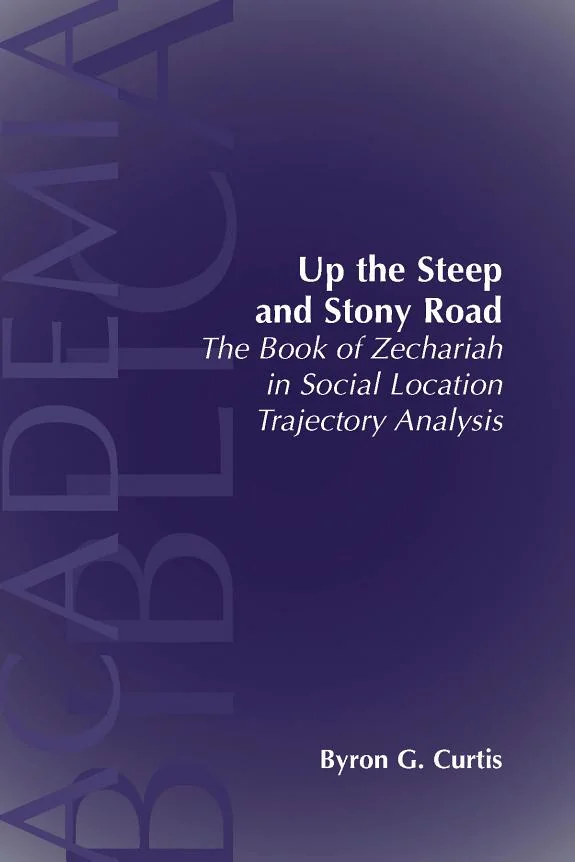
Up the Steep and Stony Road
 81
81

Up the Steep and Stony Road
Byron G. Curtis’s 2006 offering, 'Up the Steep and Stony Road,' presents a starkly unvarnished view of spiritual progress. Curtis avoids platitudes, instead detailing the sheer effort involved. The work’s strength lies in its unflinching portrayal of internal resistance. A passage discussing the 'tyranny of the familiar' compellingly illustrates how comfort zones become spiritual prisons. However, the abstract nature of its conceptual framework can make practical application feel distant for some readers; the 'stony road' remains largely metaphorical, lacking concrete exercises. The book’s value is in its psychological bracing, preparing the aspirant for an arduous undertaking.
Curtis’s 'Up the Steep and Stony Road' is a bracingly honest, if demanding, examination of spiritual effort.
📝 Description
81
Byron G. Curtis's 2006 book, 'Up the Steep and Stony Road,' details the internal struggles of spiritual growth.
'Up the Steep and Stony Road' is not a narrative but a philosophical examination of spiritual ascent. Published in 2006, the work outlines a framework for understanding the obstacles encountered on the path to higher consciousness. Curtis guides readers on confronting and overcoming these internal challenges.
The book is intended for serious practitioners of esoteric disciplines and those engaged in deep self-inquiry. It appeals to readers who seek rigorous concepts over simple answers and who are committed to personal transformation. Individuals interested in the psychology of spiritual growth will find this text especially valuable.
The central metaphor is the 'steep and stony road,' representing difficult, non-linear progress toward spiritual realization. Curtis identifies various impediments, often originating from the aspirant's psyche or conditioning. The text stresses the need for perseverance and inner fortitude when facing these difficulties.
Curtis's 2006 work appeared during a resurgence of interest in Western esotericism. It reflects a broader revival of Renaissance Hermeticism and occult philosophy. While drawing on diverse traditions, Curtis focuses on a specific, arduous spiritual path. The book's approach aligns with contemporary explorations of consciousness, though it maintains a distinct emphasis on demanding personal transformation.
💡 Why Read This Book?
• Gain a realistic understanding of the effort required for spiritual growth, moving beyond idealistic notions, as detailed in Curtis's concept of the 'steep and stony road' from 2006. • Learn to identify and confront internal 'impediments' to progress, recognizing how self-imposed limitations can hinder spiritual ascent. • Develop the mental fortitude necessary for sustained inner work, understanding that genuine advancement demands 'perseverance' through spiritual obstacles.
⭐ Reader Reviews
Honest opinions from readers who have explored this book.
❓ Frequently Asked Questions
What is the central metaphor in 'Up the Steep and Stony Road'?
The central metaphor is the 'steep and stony road,' representing the arduous and challenging path of spiritual development. It signifies that progress toward higher consciousness is not easy but requires significant effort and resilience.
When was 'Up the Steep and Stony Road' first published?
Byron G. Curtis's 'Up the Steep and Stony Road' was first published in 2006, reflecting a contemporary engagement with esoteric themes.
Does the book offer practical exercises for spiritual growth?
While the book provides a philosophical framework and identifies obstacles, it is less focused on prescriptive, step-by-step exercises. Its value lies more in conceptual clarity and psychological preparation for the spiritual journey.
Who is Byron G. Curtis?
Byron G. Curtis is the author of 'Up the Steep and Stony Road.' Information beyond his authorship of this work and its 2006 publication date is not widely available in standard biographical sources.
What kind of spiritual path does the book describe?
The book describes an internal, often solitary, spiritual path that emphasizes self-awareness, overcoming psychological hindrances, and sustained effort, rather than adherence to a specific religious doctrine or ritualistic practice.
Is 'Up the Steep and Stony Road' suitable for beginners?
The book's rigorous philosophical tone and focus on internal challenges may be more suited for individuals with some prior engagement with spiritual or philosophical inquiry, rather than absolute beginners.
🔮 Key Themes & Symbolism
The Arduous Ascent
Curtis frames spiritual development not as a gentle unfolding but as a deliberate, often painful, climb. The 'steep and stony road' metaphor underscores the inherent difficulties. This theme highlights that genuine progress requires confronting obstacles head-on, rather than seeking shortcuts or avoiding challenges. It speaks to the necessity of inner fortitude and a clear-eyed view of the effort involved in transcending ordinary consciousness, a concept central to the book's 2006 publication.
Internal Impediments
A significant focus is placed on the obstacles that arise from within the individual. These are not external forces but psychological barriers, ingrained habits, and limiting beliefs that obstruct spiritual advancement. Curtis details how the aspirant’s own conditioning and resistance can become the primary hindrances on the path, making self-observation and honest self-appraisal critical components of the journey.
Perseverance and Fortitude
The text emphasizes the vital importance of 'perseverance' and 'inner fortitude.' It suggests that the spiritual path is a long-term commitment that demands sustained effort, especially when faced with setbacks or periods of stagnation. This theme argues that true spiritual attainment is forged through enduring hardship and maintaining resolve, rather than through fleeting moments of insight or external validation.
Transmutation Over Acquisition
Curtis's work suggests that spiritual growth is primarily a process of internal 'transmutation' rather than the accumulation of knowledge or external spiritual 'acquisitions.' The focus is on changing one's inner state and perspective, transforming the self from the ground up. This contrasts with paths that emphasize gathering doctrines or performing rituals without corresponding inner change.
💬 Memorable Quotes
Direct passages from the work, attributed to the author.
“The path is steep and stony.”
— This core metaphor highlights the inherent difficulty and demanding nature of genuine spiritual progress. It suggests that ease and comfort are antithetical to true advancement.
“Obstacles often arise from within.”
— This concept points to the psychological and self-imposed nature of many spiritual hindrances. It emphasizes the need for introspection and self-awareness to identify internal barriers.
“Perseverance is the key.”
— This highlights the sustained effort required on the spiritual journey. It suggests that consistent dedication, even through difficulty, is more crucial than sporadic bursts of effort.
“True growth is internal transmutation.”
— This emphasizes that authentic spiritual development involves a fundamental inner change, rather than simply acquiring external knowledge or experiences.
“Confront the tyranny of the familiar.”
— This calls for actively challenging one's comfort zones and established routines, which can often stifle spiritual exploration and growth.
🌙 Esoteric Significance
Tradition
The work engages with the broad tradition of Western esoteric thought, particularly its emphasis on spiritual ascent and the overcoming of inner obstacles. It draws from philosophical stoicism and the psychological insights found within various mystical traditions that stress the arduous nature of the path. While not explicitly tied to a single lineage like Kabbalah or Hermeticism, it embodies a universalist approach to the challenges of self-realization common across these disciplines.
Symbolism
The primary symbol is the 'steep and stony road,' representing the difficult, non-linear journey of spiritual development. 'Obstacles' function symbolically as internal psychological barriers or conditioning that must be overcome. The concept of 'transmutation' itself acts as a symbol for the profound inner change required, moving from a lower state of consciousness to a higher one through dedicated effort.
Modern Relevance
Curtis's work continues to be relevant for contemporary practitioners and thinkers interested in the psychological underpinnings of spiritual growth. It informs modern discussions on mindfulness, self-awareness, and the challenges of maintaining spiritual discipline in a fast-paced world. Those exploring integral psychology or depth psychology approaches to spirituality find its unvarnished perspective valuable for understanding the sustained effort required.
👥 Who Should Read This Book
• Serious practitioners of Western esoteric traditions seeking a philosophical grounding for the challenges they face in their personal work. • Students of comparative religion and philosophy interested in the universal psychological obstacles encountered on the path to enlightenment. • Individuals undergoing significant personal transformation who require a realistic perspective on the effort and resilience needed for deep inner change.
📜 Historical Context
Published in 2006, 'Up the Steep and Stony Road' arrived during a period marked by a resurgence of interest in esoteric philosophy and comparative religion, building on the academic groundwork laid by scholars like Frances Yates in the late 20th century. While not directly aligned with the more public-facing New Age movements of earlier decades, Curtis’s work offered a rigorous, philosophical counterpoint. It emerged in a landscape where thinkers like Ken Wilber were developing integral theories of consciousness, and online communities were facilitating widespread discussion of diverse spiritual traditions. The book's stark presentation of spiritual effort implicitly contrasts with more facile approaches to self-help spirituality prevalent at the time, positioning itself as a serious examination of the internal rigors required for profound transformation.
📔 Journal Prompts
The concept of the 'steep and stony road' and its personal implications.
Reflecting on the nature of 'internal impediments' encountered.
Identifying personal 'obstacles' that block spiritual progress.
Assessing the level of 'perseverance' required for a current life goal.
Defining what 'transmutation' means in one's own spiritual context.
🗂️ Glossary
Steep and Stony Road
A central metaphor in the book representing the arduous, difficult, and non-linear path of spiritual development and self-realization.
Internal Impediments
Psychological barriers, ingrained habits, limiting beliefs, and self-imposed restrictions that hinder an individual's spiritual progress.
Perseverance
The quality of continuing to strive towards a goal despite difficulties, setbacks, or delays; a key virtue for spiritual advancement as described by Curtis.
Inner Fortitude
Mental and emotional strength required to face challenges and adversity, particularly those encountered during the process of spiritual growth.
Transmutation
The process of profound inner change and transformation of one's consciousness, character, or spiritual state.
Spiritual Ascent
The process of moving towards higher states of consciousness, greater self-awareness, and spiritual realization.
Obstacles
Hindrances or difficulties encountered on the spiritual path, often stemming from internal psychological states or conditioning.
This book appears in 1 collection
🔮 Readers Also Liked
Browse all →







![L'évangile selon Thomas : [traduction et commentaire]](/img/thumb/lévangile-selon-thomas-traduction-et-commentaire-jacques-é-ménard-042100.webp)
From the “Apocalyptic Literature” Collection
View all →








More Free Sacred Texts & Gnosticism Books
View all →