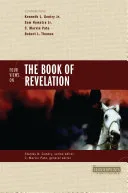
Four Views on the Book of Revelation
 81
81

Four Views on the Book of Revelation
The persistent allure of the Book of Revelation, often reduced to sensationalism, finds a more measured dissection in "Four Views." The strength of this collection lies in its clear demarcation of distinct hermeneutical approaches, allowing readers to grasp the divergence between, for instance, the futurist perspective championed by John F. Walvoord and the idealist readings. The treatment of Revelation's symbolic language, particularly its engagement with figures like the Antichrist and the beast, moves beyond simple identification with historical figures or modern technologies, instead exploring their function within the text's theological and rhetorical aims. A limitation, however, is the inherent constraint of presenting four views; it necessarily simplifies complex scholarly debates. The discussion around the "mark of the beast" exemplifies this, offering varying interpretations without necessarily resolving the deeper symbolic weight. Ultimately, "Four Views" serves as a valuable, albeit condensed, primer for understanding the interpretative landscape of this challenging biblical book.
📝 Description
81
"Four Views on the Book of Revelation" was published in 2010 to clarify differing interpretations.
This 2010 volume presents a scholarly examination of the Book of Revelation, moving beyond literal readings. It acknowledges the text's powerful imagery, such as the four horsemen and the beast, and their lasting cultural and religious impact. The book is for serious students of esotericism, biblical studies, and comparative religion who seek a deeper understanding beyond sensationalist interpretations. Readers interested in apocalyptic literature's function as prophecy, social commentary, or symbolic theology will find value. It appeals to those who appreciate rigorous academic approaches to mystical texts.
The book centers on four main interpretative lenses applied to Revelation: historicist, preterist, futurist, and idealist. It grapples with symbols like the "mark of the beast" and the number 666, exploring their historical and symbolic significance. The work engages with centuries of Revelation scholarship, situating itself within the text's long interpretive history that stretches back to its emergence around the late 1st century CE, a time of early Christian development and Roman pressure. Its reception has varied across history, from early Christian expectations to medieval mysticism and modern dispensationalist readings.
The Book of Revelation has long been a focal point for esoteric traditions, often interpreted not just as a prophecy of future events but as a symbolic map of spiritual realities and cosmic struggles. Its complex imagery and apocalyptic themes have been adopted and reinterpreted by various mystical and Gnostic groups throughout history, seeking hidden meanings and allegorical significance. This volume, by laying out distinct interpretative frameworks, allows readers to engage with these varied approaches, including those that view the text as a guide to inner transformation or as commentary on spiritual principles rather than solely historical or future prediction.
💡 Why Read This Book?
• Understand the contrasting methodologies for interpreting biblical prophecy, such as the futurist and idealist approaches, as detailed in the respective sections discussing Revelation's eschatological claims. • Gain insight into the historical context of Revelation's authorship and early reception, appreciating its initial purpose beyond modern sensationalism, as explored in the historical analysis. • Decipher key apocalyptic symbols like the "Four Horsemen" and "Armageddon" not as literal predictions but as potent metaphorical devices, as presented through the different interpretative lenses.
⭐ Reader Reviews
Honest opinions from readers who have explored this book.
❓ Frequently Asked Questions
What are the four main views on the Book of Revelation presented in this book?
The book outlines four primary interpretive frameworks: the historicist view (prophecy unfolding throughout history), the preterist view (events fulfilled in the past), the futurist view (events yet to come), and the idealist view (timeless spiritual truths).
Does "Four Views on the Book of Revelation" offer a definitive interpretation?
No, the book's purpose is to present and contrast different scholarly perspectives, not to endorse a single definitive interpretation. It aims to clarify the diverse ways the text has been understood.
Who are the authors contributing to the four different views?
While the publication is by Zondervan, the specific authors representing each view are typically scholars specializing in those particular interpretative frameworks, though their names aren't central to the book's premise.
When was "Four Views on the Book of Revelation" first published?
The book was first published on August 3, 2010, making it a relatively contemporary scholarly compilation on this ancient text.
How does this book address the "mark of the beast"?
The book addresses the "mark of the beast" by exploring its various interpretations across the four presented views, considering historical contexts, symbolic meanings, and potential future implications.
Is this book suitable for beginners in biblical studies?
Yes, it can be suitable for beginners who are seeking a structured introduction to complex interpretative debates surrounding Revelation, provided they have a basic understanding of biblical texts.
🔮 Key Themes & Symbolism
Apocalyptic Symbolism
The work meticulously examines the rich symbolic language of Revelation, moving beyond literalism. Symbols such as the "Four Horsemen," the "beast," and "Armageddon" are analyzed not merely as predictions but as potent metaphors employed within a specific theological and rhetorical framework. The text explores how these symbols function to convey spiritual truths, critique societal structures, and articulate hope or warning within their original context and subsequent interpretations.
Hermeneutical Frameworks
Central to the book is the exploration of distinct methodologies for interpreting biblical prophecy. The four core views—historicist, preterist, futurist, and idealist—represent different approaches to understanding the temporal and symbolic nature of Revelation's message. This thematic focus allows readers to appreciate the historical evolution of biblical interpretation and the philosophical underpinnings of each approach.
The Nature of Prophecy
The compilation grapples with the fundamental question of what constitutes biblical prophecy. Is it a literal blueprint for future events, a commentary on historical circumstances, or a symbolic representation of enduring spiritual realities? By presenting contrasting views, the book encourages critical engagement with the concept of prophecy itself and its function in religious discourse.
Theological and Social Critique
Beyond eschatological speculation, the book implicitly explores Revelation's role as a form of theological and social critique. The "beast" and its "mark" are often understood in relation to oppressive political powers or economic systems. The work invites reflection on how apocalyptic literature, in general, serves to challenge dominant narratives and offer alternative visions of divine justice and cosmic order.
💬 Memorable Quotes
Direct passages from the work, attributed to the author.
“Revelation's imagery has been variously interpreted as symbolizing everything from Hitler and Gorbachev to credit cards and the Internet.”
— This highlights the enduring tendency to map Revelation's symbols onto contemporary figures and technologies, showcasing the text's adaptability and the varied ways interpreters seek relevance.
“Is the book of Revelation a blueprint for the future? A book of powerful symbolic imagery with warnings and promises?”
— This question frames the central interpretative dilemma of Revelation: whether it functions as a predictive roadmap or a collection of symbolic truths conveying enduring spiritual messages.
“The "mark of the beast" is a concept that has generated considerable debate and varied interpretations.”
— This points to a specific, highly debated element within Revelation, underscoring the complexity and differing conclusions scholars reach when analyzing its potential meaning, both historically and symbolically.
“The "four grim horsemen" are among the most iconic images associated with the book.”
— This acknowledges the powerful, widely recognized imagery within Revelation and suggests its significant role in shaping popular perceptions and scholarly inquiry into the text's meaning.
“The ultimate battle at Armageddon.”
— This phrase captures the climactic, often sensationalized, aspect of Revelation, representing the culmination of conflict and divine intervention that forms a key interpretative focus.
🌙 Esoteric Significance
Tradition
While the Book of Revelation is canonical within Christian theology, its esoteric significance lies in its rich symbolic language and apocalyptic visions, which have been co-opted and reinterpreted by various esoteric traditions. Gnostic interpretations, for instance, might see the Demiurge or oppressive cosmic powers reflected in the 'beast' or 'false prophet,' viewing John's visions as revealing a hidden spiritual reality beyond the material world. It departs from purely orthodox interpretations by focusing on the text's potential for mystical insight and hidden knowledge.
Symbolism
Key symbols like the "Four Horsemen" are often interpreted esoterically as representing stages of spiritual descent or cosmic cycles, rather than literal historical events. The "New Jerusalem" can symbolize the perfected spiritual state or the attainment of divine consciousness. The "mark of the beast" might be seen as adherence to materialistic illusions or ignorance of spiritual truths, representing an internal state rather than an external sign.
Modern Relevance
Contemporary esoteric thinkers and practitioners, particularly within Western Esotericism and certain New Age circles, continue to draw upon Revelation's imagery. The book's themes of cosmic conflict, transformation, and the unveiling of hidden realities resonate with modern explorations of consciousness, spiritual awakening, and the critique of societal control systems. It provides a potent symbolic vocabulary for discussing existential and spiritual struggles.
👥 Who Should Read This Book
• Students of comparative religion and biblical eschatology seeking to understand the historical and theological diversity surrounding the Book of Revelation. • Practitioners of esoteric traditions interested in how apocalyptic texts are interpreted beyond their orthodox theological frameworks, focusing on symbolic and mystical meanings. • Scholars of cultural history and literature who analyze the enduring impact of Revelation's imagery on art, literature, and popular culture across different eras.
📜 Historical Context
Published in 2010, "Four Views on the Book of Revelation" enters a long and complex interpretive history that stretches back to the early centuries of Christianity. The Book of Revelation itself, attributed to John of Patmos, likely emerged in the late 1st century CE, a period of intense pressure and persecution for early Christian communities under the Roman Empire. Its reception has been remarkably diverse. Early Church Fathers like Irenaeus (c. 130-202 CE) engaged with its prophetic elements, while later medieval mystics found spiritual allegories within its visions. The Reformation saw figures like Martin Luther (1483-1546) grapple with its meaning, sometimes viewing the Papacy as the Antichrist, a stark contrast to the later dispensationalist futurism that gained prominence in the 19th and 20th centuries, championed by scholars like Cyrus I. Scofield. This 2010 publication positions itself within this ongoing dialogue, offering a curated selection of modern scholarly approaches to understand a text that has consistently challenged and inspired.
📔 Journal Prompts
The concept of the "Four Horsemen" and their symbolic representation.
Interpreting the "mark of the beast" across different historical and symbolic contexts.
The role of "Armageddon" as a symbolic culmination of conflict.
Contrasting the "preterist" and "futurist" approaches to Revelation's prophecies.
The "New Jerusalem" as a symbol of ultimate spiritual attainment.
🗂️ Glossary
Historicist Interpretation
A view that sees the prophecies of Revelation as unfolding throughout church history, from the 1st century to the present day, identifying specific historical events and figures with prophetic elements.
Preterist Interpretation
An approach that interprets most or all of Revelation's prophecies as having been fulfilled in the past, typically during the 1st century CE in relation to the destruction of Jerusalem or the Roman Empire.
Futurist Interpretation
A perspective that views Revelation's prophecies, particularly those concerning end times, as events yet to occur in the future, often focusing on a literal tribulation period and second coming.
Idealist Interpretation
This view understands Revelation not as predicting specific historical or future events, but as symbolic of timeless spiritual truths, the ongoing struggle between good and evil, and the ultimate triumph of God.
Apocalyptic Literature
A genre of literature characterized by visions, symbolism, and revelations concerning cosmic or historical conflicts, often involving divine intervention and the end of an era.
Armageddon
In Revelation, a symbolic location representing the site of a final, decisive battle between divine forces and the forces of evil, often interpreted literally or metaphorically.
The Beast
A symbolic figure in Revelation representing oppressive political or religious power antagonistic to God and his followers, often associated with the "mark of the beast."