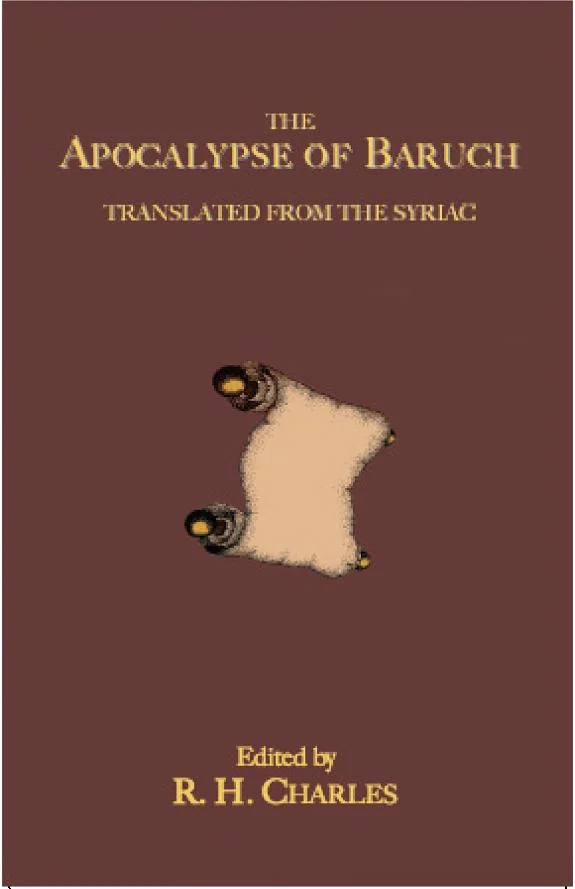
The Apocalypse of Baruch
 73
73

The Apocalypse of Baruch
R. H. Charles's presentation of The Apocalypse of Baruch offers a stark, unvarnished glimpse into a significant but often overlooked piece of ancient Jewish thought. The work’s primary strength lies in its direct, unmediated presentation of Baruch's alleged visions, providing a raw, early perspective on post-destruction eschatology. Charles’s scholarly apparatus, while valuable, sometimes intrudes on the text's visceral impact. A notable passage details Baruch’s ascent through heavenly spheres, encountering angels and cosmic structures that feel both alien and strangely familiar to other apocryphal texts. The limitation, however, is the sheer density of its prophetic pronouncements, which can feel repetitive without deep contextual knowledge. Despite this, the text offers a compelling, if challenging, window into a mind grappling with cataclysm and divine revelation. It is an essential, albeit demanding, study for serious researchers of early apocalypticism.
📝 Description
73
R. H. Charles published his critical edition of The Apocalypse of Baruch in 2006.
The Apocalypse of Baruch is a pseudepigraphal text attributed to Baruch, the scribe of Jeremiah. It recounts Baruch's own visions and heavenly journeys. The work likely originated between the first and second centuries CE, a period marked by significant theological change in Jewish communities after the Second Temple's destruction.
This text offers insight into the eschatological concerns of the era. It describes celestial visions, the condition of souls after death, and impending cosmic events. Key themes include divine justice, the plight of the righteous, and the unfolding of God's ultimate plan. Its survival and subsequent study reveal its importance for understanding ancient Jewish thought beyond the canonical scriptures.
This apocalyptic text belongs to the Jewish pseudepigrapha, a collection of religious writings from antiquity presented as written by biblical figures. It emerged during a time of intense speculation about the end times and divine intervention, particularly after the trauma of the Roman destruction of Jerusalem in 70 CE. Its focus on heavenly journeys and detailed eschatological scenarios places it alongside other early Jewish apocalyptic works that sought to interpret current crises through divine revelation.
💡 Why Read This Book?
• Gain insight into pre-Christian apocalyptic visions, specifically Baruch's celestial journeys, which predate similar motifs in canonical texts. • Understand the theological responses to the destruction of Jerusalem in 70 CE, a pivotal historical event reflected in the text's somber prophecies. • Explore early interpretations of divine justice and the afterlife, distinct from later theological developments, as presented in Baruch's post-destruction revelations.
⭐ Reader Reviews
Honest opinions from readers who have explored this book.
❓ Frequently Asked Questions
What is the historical period of The Apocalypse of Baruch?
The Apocalypse of Baruch is believed to have been written between the 1st and 2nd centuries CE, a period marked by significant upheaval in Judea, including the destruction of the Second Temple in 70 CE.
Who is Baruch in this text?
In this pseudepigraphal work, Baruch is presented as the biblical figure, the scribe and companion of the prophet Jeremiah, recounting his own divine visions and revelations.
Is The Apocalypse of Baruch part of the Bible?
No, The Apocalypse of Baruch is considered an apocryphal or pseudepigraphal text and was not included in the Jewish or Protestant biblical canons, though it holds significance for understanding early Jewish religious thought.
What kind of content does The Apocalypse of Baruch contain?
It contains apocalyptic visions, including ascents to heaven, encounters with angels, and prophecies concerning the future, the fate of Israel, and cosmic events.
What is the significance of R. H. Charles's edition?
R. H. Charles's edition, first published in 2006, provides a critical scholarly presentation of the text, making this ancient work accessible to modern readers and researchers.
Does this text offer predictions about modern history?
While the original blurb suggests surprising accuracy regarding modern history, the text primarily focuses on eschatological events within its ancient Jewish context. Scholarly interpretation varies on its predictive accuracy for later periods.
🔮 Key Themes & Symbolism
Celestial Visions
The work describes Baruch's journeys through multiple heavens, detailing angelic hierarchies, cosmic structures, and divine judgments. These visions are not mere descriptions but are presented as direct encounters with the divine order, offering a blueprint of the spiritual cosmos as understood by the author. The meticulous cataloging of celestial beings and realms reflects a developed angelology and cosmology within early Jewish thought, providing a framework for understanding God's overarching control despite earthly calamities.
Post-Cataclysmic Eschatology
A central theme is the theological response to disaster, specifically the destruction of Jerusalem and the Temple. Baruch's revelations address the suffering of the righteous and the seeming triumph of oppressors, offering solace and a future vindication. This perspective provides critical insight into how Jewish communities maintained faith and identity in the face of existential threats, framing historical events within a divine, redemptive narrative.
Divine Justice and Judgment
The text grapples intensely with the concept of divine justice, exploring how God’s righteousness is upheld even amidst the apparent chaos and injustice of earthly events. It details visions of judgment for both the wicked and the righteous, ultimately affirming God's ultimate plan and the eventual triumph of good. This exploration of judgment serves to reassure believers and reinforce adherence to divine law.
The Role of the Scribe
Attributed to Baruch, Jeremiah’s scribe, the work emphasizes the importance of divine revelation communicated through chosen individuals. Baruch acts as an intermediary, receiving and recording cosmic secrets. This elevates the role of the scribe and the written word as conduits for divine truth, highlighting the value placed on preserving and transmitting sacred knowledge within ancient Jewish traditions.
💬 Memorable Quotes
Direct passages from the work, attributed to the author.
“Baruch sees the destruction of Jerusalem and the subsequent fate of souls.”
— This reflects the text's core concern: processing historical trauma through a divine, prophetic lens, offering a framework for understanding catastrophe and divine oversight.
“Visions of celestial structures and angelic beings are meticulously described.”
— Illustrates the developed angelology and cosmology of the period, portraying a divinely ordered universe that continues to function even during earthly turmoil.
“The text reassures the righteous of future vindication.”
— This theme provides solace and hope to the intended audience, framing historical suffering within a larger narrative of divine justice and ultimate redemption.
“Baruch's ascent through the heavens.”
— A common motif in apocalyptic literature, signifying direct access to divine knowledge and a privileged perspective on cosmic and future events.
“The work contrasts the fate of the righteous with the wicked.”
— Highlights the text's engagement with theological questions of justice and retribution, reinforcing moral expectations and divine accountability.
🌙 Esoteric Significance
Tradition
This work is foundational to understanding early Jewish mysticism and apocalyptic traditions that predate many formalized esoteric schools. It shares common ground with Gnostic cosmology in its detailed celestial hierarchies and journeys, yet retains a distinctly Jewish framework focused on historical covenant and divine justice. It represents a bridge between prophetic literature and later mystical developments, offering insights into the experiential and visionary aspects of ancient Hebraic spirituality.
Symbolism
Key symbols include the celestial heavens, representing divine order and proximity to God, and the destruction of Jerusalem, symbolizing earthly chaos and divine judgment. Angels function as divine messengers and cosmic administrators, embodying aspects of God's power and will. The figure of Baruch himself symbolizes the receptive soul, capable of receiving profound cosmic truths amidst earthly turmoil.
Modern Relevance
Contemporary esoteric practitioners and scholars of comparative religion draw on The Apocalypse of Baruch to understand the roots of angelology, visionary techniques, and apocalyptic thought. Its detailed cosmology influences modern interpretations of spiritual realms and angelic interactions. Thinkers exploring the evolution of messianic and eschatological ideas find its perspective useful for tracing the lineage of these concepts within Western esotericism.
👥 Who Should Read This Book
• Students of early Jewish history and religion seeking primary source material on post-Temple Judaism. • Scholars of comparative literature and religious studies interested in the development of apocalyptic and pseudepigraphal genres. • Esoteric practitioners and historians of mysticism looking to trace the origins of visionary experiences and celestial cosmology in Western traditions.
📜 Historical Context
The Apocalypse of Baruch emerged from the fertile ground of 1st and 2nd-century CE Jewish apocalyptic thought, a period profoundly shaped by the traumatic destruction of Jerusalem and its Temple by the Romans in 70 CE. This event triggered intense theological reflection on divine justice, the meaning of suffering, and the future of Israel. Competing with nascent Rabbinic Judaism, which would eventually codify Jewish law and practice, apocalyptic literature like Baruch’s offered alternative frameworks for understanding God's plan amidst catastrophe. The text's pseudepigraphal nature, attributing revelations to an earlier biblical figure, was a common literary device used to lend authority to new prophetic pronouncements. Scholars like R. H. Charles have worked to reconstruct and interpret these texts, highlighting their an important role in preserving diverse strands of Jewish religious expression that might otherwise have been lost. The work's exploration of celestial realms and future judgments reflects broader Hellenistic influences on Jewish thought during this era.
📔 Journal Prompts
Baruch's ascent through the heavens and its symbolic meaning.
Reflections on divine justice as depicted in the post-destruction prophecies.
The role of angels and celestial beings in Baruch's visions.
Interpreting the lamentations over Jerusalem's destruction.
The concept of future vindication for the righteous.
🗂️ Glossary
Apocalypse
A genre of revelatory literature, typically featuring symbolic imagery, divine visions, and prophecies concerning cosmic or historical events, often with an eschatological focus.
Pseudepigrapha
Ancient religious writings attributed in whole or in part to someone other than the actual author, often a prominent biblical figure, to lend them authority.
Eschatology
The theological study of 'end things'—death, judgment, the afterlife, and the ultimate destiny of humanity and the cosmos.
Angelology
The branch of theology or religious studies concerned with the nature, role, and hierarchy of angels.
Celestial Spheres
In ancient and medieval cosmology, the imagined concentric spheres that carried the celestial bodies (Moon, Sun, planets, stars) in their orbits around the Earth.
Second Temple Period
The era of Jewish history from the rebuilding of the Second Temple in Jerusalem c. 516 BCE to its destruction by the Romans in 70 CE.
Vindication
The action of clearing someone of blame or suspicion; the state of being defended or proved right, particularly in a theological context of divine justice.
This book appears in 1 collection
🔮 Readers Also Liked
Browse all →





From the “Apocrypha” Collection
View all →




More Free Esoteric History & Biography Books
View all →