Medieval Jewish Philosophy

 61
61

Medieval Jewish Philosophy

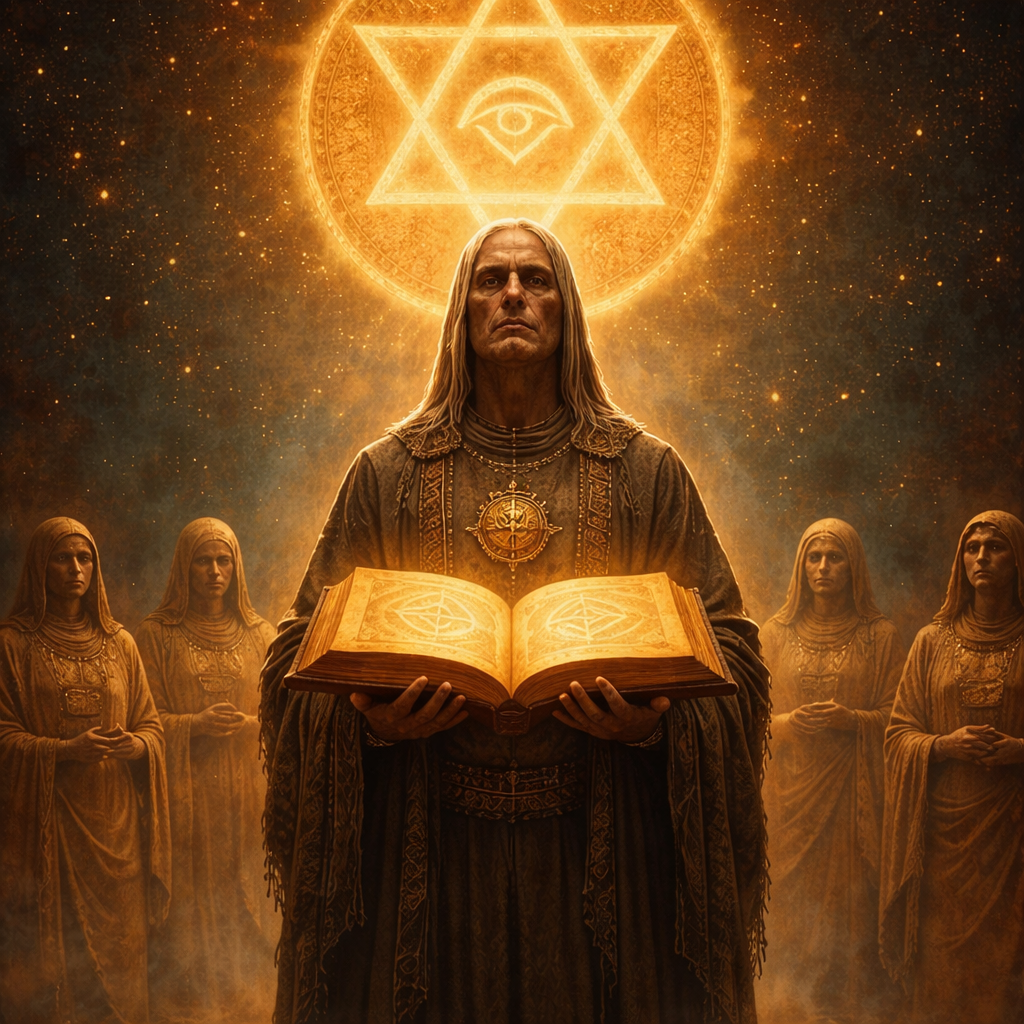

Marcus Thorne, Esoteric Sciences Reviewer — Steven T. Katz's 'Medieval Jewish Philosophy' is an indispensable guide to the labyrinthine intellectual landscape of a pivotal era. Katz masterfully navigates the intricate philosophical and mystical currents, illuminating the profound engagement with divine emanations, the hidden language of creation, and the soul's ascent. This work is a treasure trove for those seeking to understand the roots of Jewish mysticism and its enduring impact. Its strength lies in its nuanced analysis and clear exposition of complex concepts. Highly recommended for scholars, advanced practitioners, and dedicated seekers of profound spiritual knowledge.
📝 Description
61
Steven T. Katz's 1997 book traces medieval Jewish philosophy's engagement with mysticism.
Steven T. Katz's 1997 study examines the philosophical underpinnings of medieval Jewish thought, particularly its mystical dimensions. The work details how thinkers of the period engaged with complex theological questions, including the nature of God, the structure of the universe, and the human soul. Katz focuses on the symbolic language and allegorical methods employed to express these metaphysical concepts. He shows how this intellectual tradition developed, influencing later Kabbalistic thought.
The book aims to clarify the often-obscured philosophical currents within medieval Judaism. It highlights the rigorous intellectual work behind mystical insights, moving beyond simplistic notions of purely intuitive or emotional spirituality. By analyzing key texts and thinkers, Katz provides a clear account of how philosophical reasoning shaped esoteric traditions. This study is for those interested in the detailed intellectual history of Jewish mysticism.
Medieval Jewish philosophy, especially from the 12th century onward, saw significant engagement with mystical traditions. Thinkers sought to reconcile rational philosophical inquiry, often influenced by Greek and Islamic thought, with the deeply symbolic and experiential aspects of Jewish mysticism. This period saw the development of complex theological systems that sought to understand God's hidden nature, the divine emanations (sefirot), and the pathways to spiritual ascent. These philosophical frameworks provided a language and conceptual structure for the burgeoning Kabbalistic movement, which continued to develop these ideas in more explicitly esoteric directions.
💡 Why Read This Book?
Uncover the hidden philosophical bedrock of Jewish mysticism. 'Medieval Jewish Philosophy' offers a rare glimpse into the esoteric dialogues that shaped spiritual understanding, revealing profound insights into divine nature, creation, and the human soul. Ideal for seekers of ancient wisdom, scholars of religion, and practitioners looking to deepen their grasp of mystical traditions.
⭐ Reader Reviews
Honest opinions from readers who have explored this book.
❓ Frequently Asked Questions
What is the primary focus of this book?
The book primarily focuses on the intricate philosophical and mystical traditions within medieval Judaism, exploring how thinkers grappled with concepts of God, creation, the soul, and divine providence.
Is this book suitable for beginners in Jewish mysticism?
While comprehensive, the book is best suited for those with some foundational knowledge of philosophy or religious studies. Beginners may find it challenging without prior context.
What is the connection between medieval Jewish philosophy and Kabbalah?
Medieval Jewish philosophy laid much of the intellectual groundwork for the later development of Kabbalah, exploring many of the same core themes and concepts in nascent forms.
Does the book discuss specific philosophical schools?
Yes, Katz delves into various philosophical schools and thinkers of the period, including Neoplatonism's influence and the debates surrounding Maimonides and his successors.
What kind of esoteric knowledge is explored?
The book explores esoteric knowledge through discussions on divine attributes, angelic hierarchies, the structure of the cosmos, and the mystical interpretations of scripture and ritual.
🔮 Key Themes & Symbolism
Divine Emanation and Creation
This theme looks at the medieval Jewish understanding of God's relationship with the created world, focusing on the concept of divine emanation. Thinkers explored how the Infinite God could bring forth a finite universe without diminishing His own essence. This involves intricate discussions on the Sephirot (divine attributes) and the various stages of creation, often drawing parallels to Neoplatonic thought. The goal was to bridge the gap between the transcendent divine and immanent reality, providing a framework for understanding cosmic order and man's place within it.
The Nature of the Soul and Ascent
Central to medieval Jewish philosophy is the profound exploration of the human soul – its origin, essence, and ultimate destiny. The texts examine the soul's connection to the divine intellect, its potential for spiritual purification, and the arduous journey of ascent towards God. This includes discussions on prophecy, divine illumination, and the contemplative practices aimed at achieving spiritual union. The philosophical frameworks provided pathways for understanding the inner life and the pursuit of higher consciousness, often cloaked in symbolic language.
Scriptural Interpretation and Hidden Meanings
Medieval Jewish philosophers and mystics viewed scripture not merely as historical or legal texts, but as a living repository of divine secrets. This theme focuses on the methods of esoteric interpretation, where allegorical and symbolic readings unlocked profound metaphysical and mystical truths embedded within the Torah. The goal was to reveal the hidden layers of meaning, connecting biblical narratives and commandments to cosmic principles and the divine plan, thereby providing a roadmap for spiritual realization and an understanding of God's will on a deeper level.
💬 Memorable Quotes
Direct passages from the work, attributed to the author.
“To know God is to know oneself in the mirror of His creation.”
— Emphasizes the interconnectedness of the divine and the human, suggesting self-knowledge is achieved through contemplation of the divine order and its manifestations.
“The soul's journey is a descent into the self to find the ascent to the heavens.”
— This paradox points to the introspective nature of spiritual growth, where inner exploration is the key to transcending the mundane and reaching higher spiritual states.
“Every letter in the Torah is a spark of the divine fire.”
— Illustrates the belief in the sanctity and profound depth of sacred texts, suggesting that even the smallest elements hold immense spiritual power and meaning.
“Wisdom is the bridge between the mortal and the immortal.”
— Positions wisdom not just as knowledge, but as a transformative force that connects the human being to eternal truths and divine reality.
💡 Key Ideas
Editorial paraphrase of the work's core concepts — not direct quotes.
The divine intellect is the source from which all existence flows.
This quote highlights the Neoplatonic influence, positing the divine mind as the ultimate origin, a foundational concept in understanding God's relationship with creation.
🌙 Esoteric Significance
Tradition
This work deeply engages with the esoteric dimensions of medieval Jewish thought, particularly as it laid the foundation for Kabbalah. It explores the Neoplatonic concept of divine emanation, the symbolic language of creation, and the intricate mapping of the spiritual realms. The focus is on uncovering hidden meanings within scripture and rabbinic literature, revealing a sophisticated system of understanding the divine, the cosmos, and the human soul's potential for transcendence.
Symbolism
Key symbols explored include the Sephirot (divine attributes/emanations), often depicted as a tree or a series of lights, representing the unfolding of divine will into creation. The concept of the divine name, letters as cosmic building blocks, and the allegorical interpretation of biblical narratives are also central. These symbols function as a coded language, offering access to profound metaphysical truths and guiding the practitioner on a path of spiritual ascent and gnosis.
Modern Relevance
The philosophical and mystical insights from medieval Jewish thought remain profoundly relevant today. They offer sophisticated frameworks for exploring consciousness, the nature of reality, and humanity's place in the cosmos. The emphasis on inner transformation, the search for meaning, and the understanding of divine presence in all aspects of existence speaks to contemporary spiritual seekers and philosophers grappling with existential questions and the search for connection in a complex world.
👥 Who Should Read This Book
This book is a vital resource for scholars of Jewish philosophy, religious studies, and comparative mysticism seeking a deep understanding of an important era. Advanced practitioners of Kabbalah and other esoteric traditions will find invaluable insights into the foundational thought that shaped their disciplines. Seeker of ancient wisdom and those interested in the intersection of philosophy and spirituality will discover a rich intellectual heritage. Even those new to the subject but possessing a keen interest in profound philosophical inquiry will find this work clear, though perhaps best approached with supplementary resources.
📜 Historical Context
Medieval Jewish Philosophy emerged during a period of immense intellectual and spiritual dynamism, spanning roughly from the 9th to the 15th centuries. This era saw Jewish thinkers engaging deeply with the philosophical traditions of the wider Mediterranean world, particularly Greek philosophy, with Neoplatonism and Aristotelianism exerting significant influence. In the Islamic world, this engagement led to the development of rich philosophical systems that sought to harmonize faith and reason. Thinkers like Saadia Gaon, Solomon ibn Gabirol, Judah Halevi, and Moses Maimonides grappled with fundamental questions of God's nature, creation, prophecy, and the purpose of Jewish law, often in response to theological challenges and the desire to articulate a coherent worldview. This intellectual ferment not only shaped Jewish thought but also laid crucial groundwork for the later blossoming of Kabbalah, a mystical tradition that often built upon and reinterpreted these philosophical concepts.
📔 Journal Prompts
How does the concept of divine emanation, as discussed in the book, challenge or affirm your understanding of God's relationship with the world?
Reflect on a moment in your life where you felt a profound connection to something greater than yourself. How does this relate to the medieval concepts of soul ascent?
Consider a symbol from the book that speaks to you. What does it represent in your personal spiritual journey?
The text emphasizes hidden meanings in scripture. How can you apply this principle of seeking deeper layers of meaning in your daily life or in other texts you engage with?
What philosophical questions about existence, consciousness, or purpose are most pressing for you, and how might medieval Jewish thinkers offer new perspectives?
🗂️ Glossary
Sephirot
Ten divine attributes or emanations that represent the stages of God's creative process and the structure of the spiritual cosmos in Kabbalah and related medieval Jewish thought.
Neoplatonism
A philosophical school influenced by Plato, emphasizing the existence of a supreme, transcendent 'One' from which all reality emanates through a series of intermediaries.
Gnosis
Spiritual knowledge or insight, often understood as a direct, intuitive apprehension of divine truths, leading to salvation or liberation.
Intellect (Divine/Human)
In medieval Jewish philosophy, the divine intellect is often seen as the primary creative force, while the human intellect is the faculty capable of apprehending spiritual truths and ascending towards God.
Prophecy
The reception of divine communication, often understood as a heightened state of spiritual awareness and intellectual illumination, enabling the prophet to receive and transmit divine messages.
This book appears in 1 collection
🔮 Readers Also Liked
Browse all →







More by Steven T. Katz
All books →
From the “Kabbalah” Collection
View all →






More Free Kabbalah & Jewish Mysticism Books
View all →