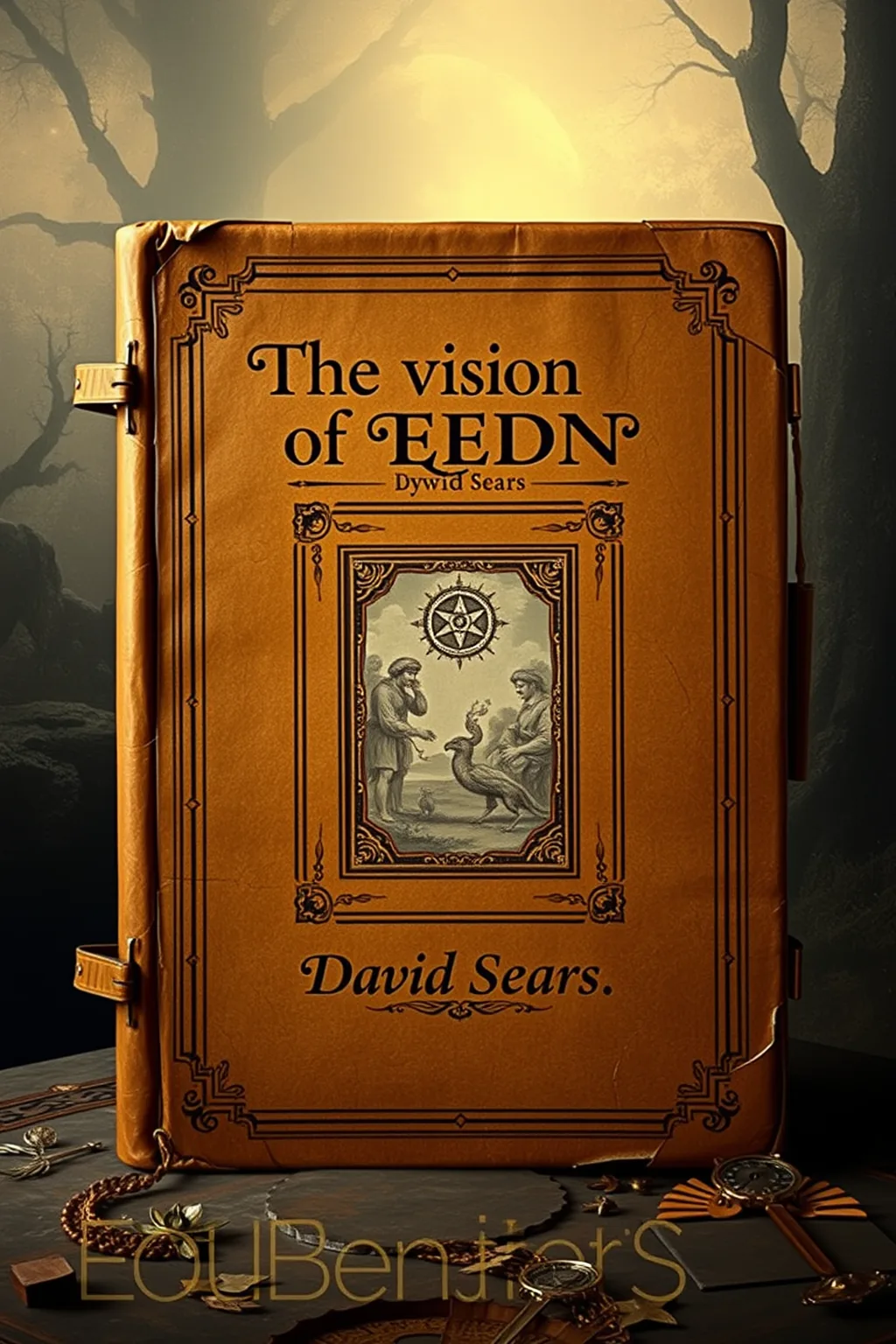
The vision of Eden
 61
61

The vision of Eden


Ophelia Vance, Mystical Literature Reviewer — David Sears’ 'The Vision of Eden' is a luminous exposition of Kabbalistic thought, illuminating the often-overlooked ethical dimensions within Jewish mysticism. Sears offers a profound reinterpretation of Eden, positioning animal welfare not merely as a moral imperative but as a fundamental aspect of divine order. His accessible yet deeply insightful prose unveils layers of esoteric meaning, making complex concepts readily digestible for the dedicated seeker. This book is an essential read for anyone interested in the spiritual roots of vegetarianism and the profound interconnectedness of all life as understood through the lens of ancient Jewish wisdom.
📝 Description
61
David Sears' 2002 book investigates the Kabbalistic roots of humanity's relationship with animals.
David Sears' 'The Vision of Eden' examines the Kabbalistic understanding of the relationship between humans and animals. The book focuses on the symbolism of the Garden of Eden as a state of primal harmony. Sears draws on Jewish mystical traditions to interpret the spiritual implications of human dominion over nature and the concept of compassion. He argues that this primal unity offers an ethical framework for understanding our place in the cosmos.
The work seeks to illuminate the hidden meanings within these ancient texts. It considers how this perspective can inform contemporary views on environmental stewardship and interconnectedness. Sears' analysis aims to provide a different way of seeing humanity's role in the natural world, grounded in esoteric interpretations of creation.
This book engages with the tradition of Kabbalah, a system of Jewish mysticism that explores the hidden nature of God and the universe. Specifically, Sears focuses on interpretations of the Genesis creation narrative and the Garden of Eden within this framework. Kabbalistic thought often uses symbolism and allegorical readings of scripture to uncover deeper spiritual truths. The book applies these methods to understand concepts like the divine spark in all creatures and the original state of harmony between humanity and the animal kingdom. It situates these ideas within the broader esoteric pursuit of understanding cosmic order and humanity's place within it.
💡 Why Read This Book?
Uncover the mystical roots of compassion and vegetarianism within Kabbalah. 'The Vision of Eden' offers a unique esoteric perspective on humanity's relationship with animals, revealing hidden spiritual laws. Ideal for seekers of deeper meaning, students of Jewish mysticism, and practitioners of ethical living who wish to integrate spiritual principles into their daily lives.
⭐ Reader Reviews
Honest opinions from readers who have explored this book.
❓ Frequently Asked Questions
What is the primary esoteric theme explored in 'The Vision of Eden'?
The book primarily explores the esoteric Kabbalistic understanding of humanity's initial harmonious relationship with the animal kingdom in the Garden of Eden and its spiritual implications for modern ethical living.
How does this book connect Kabbalah to animal welfare?
It reveals how ancient Kabbalistic texts embed principles of compassion and stewardship for animals as integral to divine order and spiritual development.
Is 'The Vision of Eden' suitable for beginners in Kabbalah?
Yes, while it delves into complex mystical concepts, David Sears presents them in an accessible manner, making it valuable for both seasoned practitioners and curious newcomers.
What is the philosophical significance of the Edenic vision presented?
The philosophical significance lies in understanding a state of primal unity and compassion as a blueprint for a more enlightened existence, challenging anthropocentric views.
Does the book offer practical guidance for ethical living?
Beyond theoretical exploration, the book implicitly guides readers towards a more compassionate and mindful way of living by revealing the spiritual imperative behind animal welfare.
🔮 Key Themes & Symbolism
The Edenic Covenant and Primal Harmony
This theme looks at the esoteric interpretation of the Garden of Eden as a state of profound spiritual equilibrium, where humanity and the animal kingdom existed in a divinely ordained harmony. It explores the symbolic representation of this initial covenant, suggesting that the separation and hierarchy later introduced represent a spiritual descent. The focus is on uncovering the hidden knowledge within Kabbalistic thought that posits a time of unity, challenging conventional understandings of dominion and emphasizing a universal interconnectedness that predates human societal constructs.
Kabbalistic Ethics and Animal Sentience
This theme examines the intricate ethical framework embedded within Kabbalah concerning the treatment of animals. It moves beyond simple injunctions to explore the deeper spiritual reasons for compassion, rooted in the belief that all living beings possess a divine spark. The book sheds light on how the mystical traditions of Judaism perceive animal sentience and the profound spiritual consequences of inflicting suffering, offering a sophisticated theological justification for animal welfare that speaks to contemporary ethical concerns.
The Spiritual Path of Vegetarianism
Drawing directly from Kabbalistic principles, this theme posits vegetarianism not merely as a dietary choice but as a spiritual discipline and a pathway towards higher consciousness. It explores how abstaining from animal flesh aligns with the pursuit of spiritual purity, the rectification of Edenic disharmony, and the embodiment of divine attributes like mercy. The book reveals the esoteric rationale within Jewish mysticism that connects a plant-based diet with spiritual elevation and a more profound connection to the divine.
💬 Memorable Quotes
Direct passages from the work, attributed to the author.
“The cry of the innocent beast echoes in the chambers of the soul.”
— Highlights the spiritual interconnectedness; the suffering of animals is not external but has a direct, resonant impact on human spiritual well-being and moral standing.
“To truly walk with God is to walk with all His creations.”
— This implies that genuine spiritual attainment is inseparable from demonstrating compassion and respect for every living being, reflecting the divine essence in all.
“The path back to Eden begins with the heart of a compassionate guardian.”
— Suggests that the spiritual journey towards restoration and harmony is initiated by adopting a role of loving stewardship and protection for all life.
“Silence the slaughter, and hear the whispers of the divine.”
— A powerful metaphor urging the cessation of harm to animals as a prerequisite for heightened spiritual perception and connection to higher truths.
💡 Key Ideas
Editorial paraphrase of the work's core concepts — not direct quotes.
Eden was not a garden of dominion, but a sanctuary of unity.
This quote captures the core esoteric message: shifting from a hierarchical view of human supremacy to one of interconnectedness and shared existence with all creatures.
🌙 Esoteric Significance
Tradition
This work is deeply rooted in the Kabbalistic tradition of Jewish mysticism. It draws upon the complex symbolic language, numerological insights (Gematria, Notarikon, Temurah), and allegorical interpretations characteristic of Kabbalistic texts, particularly those that explore the Sefirot (divine emanations) and the creation narrative. The book seeks to unveil the hidden spiritual architecture of existence as understood through this esoteric framework, focusing on its ethical implications for humanity's relationship with the natural world.
Symbolism
Key symbols explored include the Garden of Eden itself as a representation of primordial unity and divine perfection, the Tree of Life and Tree of Knowledge as pathways to spiritual understanding, and the various animals as embodiments of specific divine attributes or stages in the cosmic unfolding. The act of eating, the concept of dominion, and the transition from a state of innocence to one of awareness are all imbued with profound symbolic meaning related to spiritual growth and ethical responsibility within the Kabbalistic worldview.
Modern Relevance
In an era grappling with environmental crises and ethical dilemmas surrounding animal agriculture, 'The Vision of Eden' offers a profound, ancient perspective that is remarkably pertinent. It provides a spiritual and philosophical foundation for contemporary movements advocating for animal welfare and vegetarianism, grounding these concerns in timeless mystical wisdom. The book encourages a reevaluation of humanity's role on Earth, urging a return to principles of compassion and interconnectedness, thereby offering a path towards spiritual healing and a more sustainable future for all beings.
👥 Who Should Read This Book
This profound work is a treasure for a diverse audience. Scholars of Jewish mysticism and comparative religion will find a unique and insightful interpretation of Kabbalistic texts. Spiritual seekers yearning for a deeper understanding of compassion and interconnectedness will be illuminated by its esoteric revelations. Practitioners of ethical living, particularly those interested in vegetarianism and animal welfare, will discover a rich theological and mystical justification for their choices. Beginners to Kabbalah can approach this book with confidence, as David Sears guides readers through complex concepts with clarity and depth, making the wisdom of Eden accessible to all.
📜 Historical Context
David Sears' 'The Vision of Eden' emerges from a rich tradition of Jewish mystical thought, particularly flourishing in the post-Talmudic and medieval periods with the development of Kabbalistic literature like the Zohar. This era saw intense contemplation on the nature of creation, the divine, and humanity's role within the cosmic order. The book situates its arguments within this lineage, interpreting ancient texts and symbols not just as historical artifacts but as living conduits of esoteric knowledge. It speaks to a period where philosophical and spiritual inquiries often intertwined, seeking to understand the hidden mechanics of the universe and the ethical responsibilities derived from that understanding. The work speaks to the broader mystical quest across cultures to find deeper meaning in life and to establish a more harmonious relationship with the natural world.
📔 Journal Prompts
Reflect on your personal understanding of 'dominion' as presented in Genesis. How does the Kabbalistic interpretation offered in 'The Vision of Eden' challenge or deepen this understanding?
Consider the concept of the 'divine spark' in all living beings. How might acknowledging this spark influence your daily interactions with animals and the natural world?
If Eden represented a state of perfect harmony, what specific aspects of modern life represent a departure from this harmony, particularly in our relationship with animals?
Explore the spiritual implications of dietary choices. How might adopting a more compassionate diet align with your personal spiritual path or aspirations?
Meditate on a moment of profound connection you've experienced with an animal. What spiritual lessons or insights did that experience offer?
🗂️ Glossary
Kabbalah
A mystical tradition within Judaism that seeks to understand the nature of God, the universe, and humanity's place within it through esoteric interpretation of scripture and symbolic contemplation.
Sefirot
The ten divine emanations or attributes through which God is said to have created the universe and continues to interact with it, central to Kabbalistic cosmology.
Edenic Harmony
The esoteric concept of a primordial state of perfect balance and peaceful coexistence between humanity, animals, and the divine, as described in the Garden of Eden.
Tikkun Olam
A Hebrew phrase meaning 'repairing the world,' referring to the Jewish concept of social justice and the ethical responsibility to improve the world through acts of kindness and righteousness.
Shekhinah
The immanent presence of God, often depicted as feminine divine energy or wisdom, believed to dwell within the world and among people, particularly in times of suffering or exile.
This book appears in 1 collection
🔮 Readers Also Liked
Browse all →







From the “Kabbalah” Collection
View all →








More Free Kabbalah & Jewish Mysticism Books
View all →