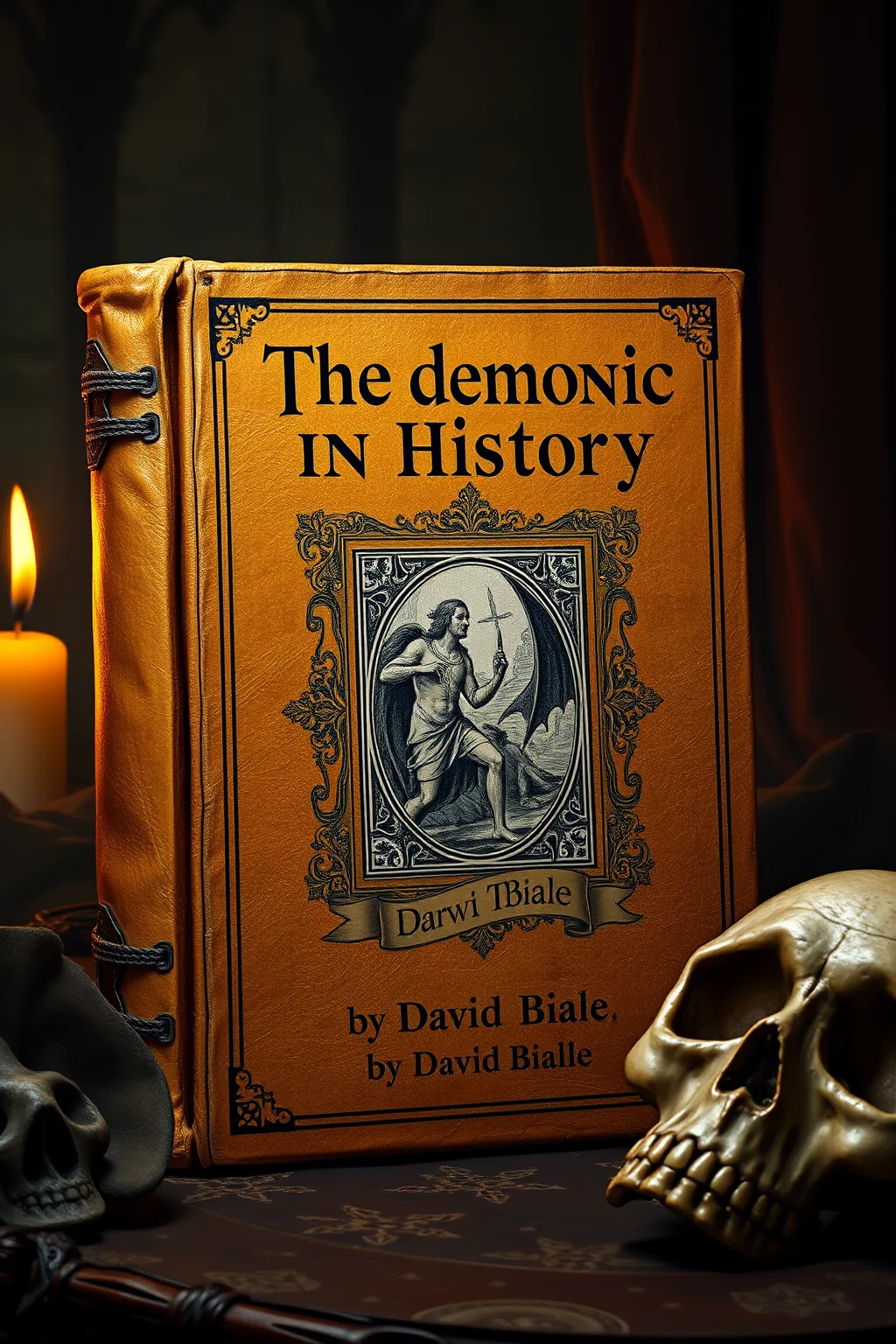
The demonic in history
 61
61

The demonic in history



Celeste Moreau (Divination & Symbolism Reviewer) — David Biale's 'The Demonic in History' is an essential, if disquieting, read for anyone interested in the esoteric underpinnings of religious thought. Biale's scholarship is impeccable, dissecting the evolution of demonic concepts within Jewish tradition with scholarly rigor and a keen eye for mystical nuance. He illuminates how anxieties about the 'other' and the forces of chaos were internalized and ritualized. The book offers profound insights into the symbolic language of sin, temptation, and redemption, making it invaluable for scholars of Kabbalah, mysticism, and comparative religion. This is not a book for the faint of heart, but for those who seek to understand the shadow self of spiritual traditions.
📝 Description
61
David Biale's 1997 book examines the concept of the demonic in Jewish history.
David Biale's 'The Demonic in History' traces the role of the demonic within Jewish thought and practice across centuries. The book analyzes how figures and concepts associated with evil, from biblical Satan to later Gnostic and Kabbalistic ideas, influenced Jewish theology and identity. Biale demonstrates that the demonic was not simply an external enemy but an internal force that helped define Jewish selfhood and communal boundaries.
The study covers rabbinic literature, medieval philosophy, and Kabbalah, showing how understandings of the demonic shifted and adapted over time. It explores the symbolism and traditions that articulated this struggle between good and evil, revealing its significance in shaping Jewish religious and cultural life. The work connects these historical concepts to broader questions about the nature of evil and belief.
This book engages with esoteric traditions by examining the historical development and interpretation of demonological concepts within Jewish mysticism, particularly Kabbalah. It analyzes how secret lore and symbolic systems were used to understand and confront perceived malevolent forces. Biale situates these mystical understandings within broader Jewish theological and philosophical debates, showing how esoteric ideas about the demonic shaped communal beliefs and the articulation of religious identity.
💡 Why Read This Book?
Uncover the hidden history of evil in Jewish thought, tracing the evolution of demonic imagery and its profound impact on theology and practice. For scholars of Kabbalah, mystics, and seekers of deeper meaning, this book offers a rigorous yet accessible exploration of shadow archetypes. Understand the symbolic language of sin and redemption to illuminate your own spiritual path.
⭐ Reader Reviews
Honest opinions from readers who have explored this book.
❓ Frequently Asked Questions
What is the primary focus of 'The Demonic in History'?
The book meticulously examines the historical development and theological significance of the demonic within Jewish tradition, exploring its role in shaping Jewish identity, belief, and practice across various eras.
Is this book suitable for beginners in Jewish studies?
While academically rigorous, Biale's clear prose and thematic approach make it accessible to determined beginners interested in esoteric Jewish thought, provided they possess a foundational interest.
Does the book discuss specific Kabbalistic texts?
Yes, 'The Demonic in History' extensively references and analyzes key Kabbalistic texts and concepts, revealing the intricate ways the demonic is portrayed and understood within these mystical traditions.
What is the historical period covered by the book?
The book spans a vast historical sweep, from ancient rabbinic literature through the medieval period and into early modern Jewish thought, tracing the continuous dialogue with the concept of the demonic.
Can this book help in understanding modern concepts of evil?
By providing a deep historical and theological context for the Jewish understanding of evil, the book offers valuable insights that can inform and enrich contemporary discussions on the nature of malevolence and its impact.
🔮 Key Themes & Symbolism
The Evolving Figure of the Demonic
This theme charts the fascinating metamorphosis of the demonic archetype within Jewish history, from its nascent forms in ancient lore to its complex manifestations in Kabbalistic cosmologies and philosophical debates. It explores how societal anxieties, theological challenges, and the very human struggle with sin and transgression contributed to the evolving understanding of malevolent forces, revealing a dynamic and ever-present dialogue with the shadow aspect of existence.
Demonic Symbolism and Esoteric Interpretation
Unpack the rich symbolic language employed to depict the demonic across Jewish traditions. This theme explores the esoteric meanings behind demonic figures, their associated attributes, and their perceived influence, examining how these symbols served not only as representations of external evil but also as metaphors for internal struggles. The exploration highlights the hidden knowledge embedded within these symbols, offering insights into the psychological and spiritual dimensions of confronting darkness.
The Demonic and Jewish Identity
Investigate the profound connection between the concept of the demonic and the formation and maintenance of Jewish identity throughout history. This theme examines how confronting and defining the 'other,' often cast in demonic terms, helped to solidify communal boundaries, theological doctrines, and religious practices. It reveals how the perceived threat of the demonic paradoxically fostered a sense of collective resilience and spiritual fortitude within the Jewish people.
💬 Memorable Quotes
Direct passages from the work, attributed to the author.
“In the shadows of the divine, the demonic finds its fertile ground.”
— This evocative statement implies that the existence and perception of the demonic are intrinsically linked to the concept of the divine, suggesting that the very presence of light necessitates a contrasting shadow.
“To understand the light, one must first acknowledge the abyss.”
— This aphorism emphasizes the importance of understanding the negative or dark aspects of existence as a prerequisite for truly comprehending the positive or divine, suggesting a dialectical relationship between them.
💡 Key Ideas
Editorial paraphrase of the work's core concepts — not direct quotes.
The demonic is not merely an external enemy, but a potent internal adversary.
This quote suggests that the forces of evil, as understood within Jewish tradition, are not solely external threats but also internal psychological and spiritual challenges that individuals and communities must confront within themselves.
History is a battlefield where the forces of the sacred and profane perpetually contend.
This quote frames historical events as a grand struggle between spiritual purity and corrupting influences, highlighting the ongoing tension and conflict between opposing forces that shape human destiny.
The demonic whispers temptations that echo the deepest human desires.
This quote points to the insidious nature of demonic influence, suggesting that its power lies in its ability to exploit and amplify the innate desires and vulnerabilities present within the human psyche.
🌙 Esoteric Significance
Tradition
This work is deeply embedded within the esoteric tradition of Kabbalah and Jewish mysticism, exploring its complex theological frameworks, symbolic language, and historical development. It examines how Kabbalistic cosmology, with its intricate hierarchies of divine emanations and opposing forces, provided a conceptual space for understanding the demonic not just as an external entity but as an intrinsic aspect of creation and divine unfolding.
Symbolism
The book unveils the body of demonic symbolism within Jewish thought, from the serpentine temptations of Eden to the more elaborate personifications of evil in medieval Kabbalah. It explores how figures like Lilith, Samael, and the Qliphoth served as potent symbols for chaos, impurity, and the forces that oppose divine order, offering useful insights into the psychological and spiritual dimensions of confronting the shadow.
Modern Relevance
In an age grappling with resurgent forms of extremism and societal fragmentation, Biale's exploration of the historical construction of the demonic holds significant modern relevance. Understanding how societies have historically conceptualized and ritualized evil can offer critical perspectives on contemporary manifestations of prejudice, scapegoating, and the psychological allure of destructive ideologies, fostering a deeper awareness of the enduring human struggle with darkness.
👥 Who Should Read This Book
This key work is essential for scholars of Jewish history, theology, and comparative religion seeking a comprehensive understanding of the demonic. Mystics and practitioners of Kabbalah will find useful insights into the esoteric symbolism and theological underpinnings of evil. For the dedicated seeker of hidden knowledge, 'The Demonic in History' offers a challenging yet rewarding journey into the shadow aspects of spiritual traditions, informative the perennial human confrontation with malevolence and the forces that challenge divine order.
📜 Historical Context
David Biale's 'The Demonic in History' emerges from a rich academic tradition that seeks to understand the complex interplay between religion, culture, and historical events. Written in the late 20th century, the book engages with post-Holocaust theological discussions and the growing academic interest in the history of ideas, particularly within Jewish studies. It builds upon earlier scholarship on Kabbalah and Jewish mysticism while bringing a fresh, interdisciplinary perspective that incorporates social history, anthropology, and literary criticism. The work reflects a broader trend in religious studies to explore the 'dark side' of religious traditions, moving beyond purely theological or ethical frameworks to examine the lived experience and cultural impact of concepts like evil and the demonic. Its influence can be seen in subsequent studies on demonology, heresy, and the construction of the 'other' in religious discourse.
📔 Journal Prompts
How does the historical understanding of the demonic in Jewish tradition resonate with your personal concept of evil?
Reflect on a time you felt a powerful internal struggle against negative impulses. How might the symbolic language of the demonic inform your understanding of this experience?
Consider the role of 'othering' in historical and contemporary contexts. How has the demonization of groups shaped their identity and societal perception?
Explore the paradoxical relationship between the divine and the demonic as presented in the book. How does the presence of one seem to necessitate the other?
What are the potential spiritual benefits or insights gained from confronting the symbolic representations of the demonic, rather than shying away from them?
🗂️ Glossary
Kabbalah
A system of Jewish mysticism that seeks to understand the nature of God and the universe through esoteric interpretations of the Torah and divine emanations.
Qliphoth
In Kabbalistic lore, the 'husks' or shells that represent the negative or impure forces, often seen as the opposite of the divine emanations (Sefirot).
Samael
A prominent angelic figure in Jewish mysticism, often associated with Satan, the angel of death, and the accuser, representing a force of opposition to divine goodness.
Lilith
A mythical female demon in Jewish folklore, often depicted as Adam's first wife who refused to be subservient and became a seductress and mother of demons.
Historiography
The study of the writing of history, including the methods, theories, and philosophical approaches used by historians to interpret and present the past.
This book appears in 1 collection
🔮 Readers Also Liked
Browse all →







More by David Biale
All books →




From the “Kabbalah” Collection
View all →







More Free Kabbalah & Jewish Mysticism Books
View all →