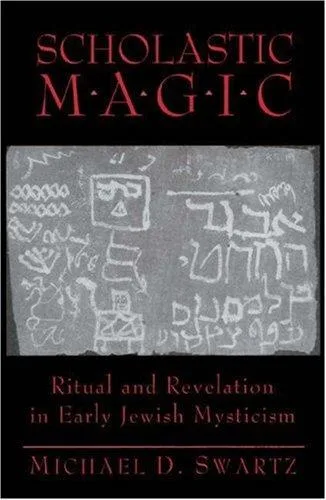
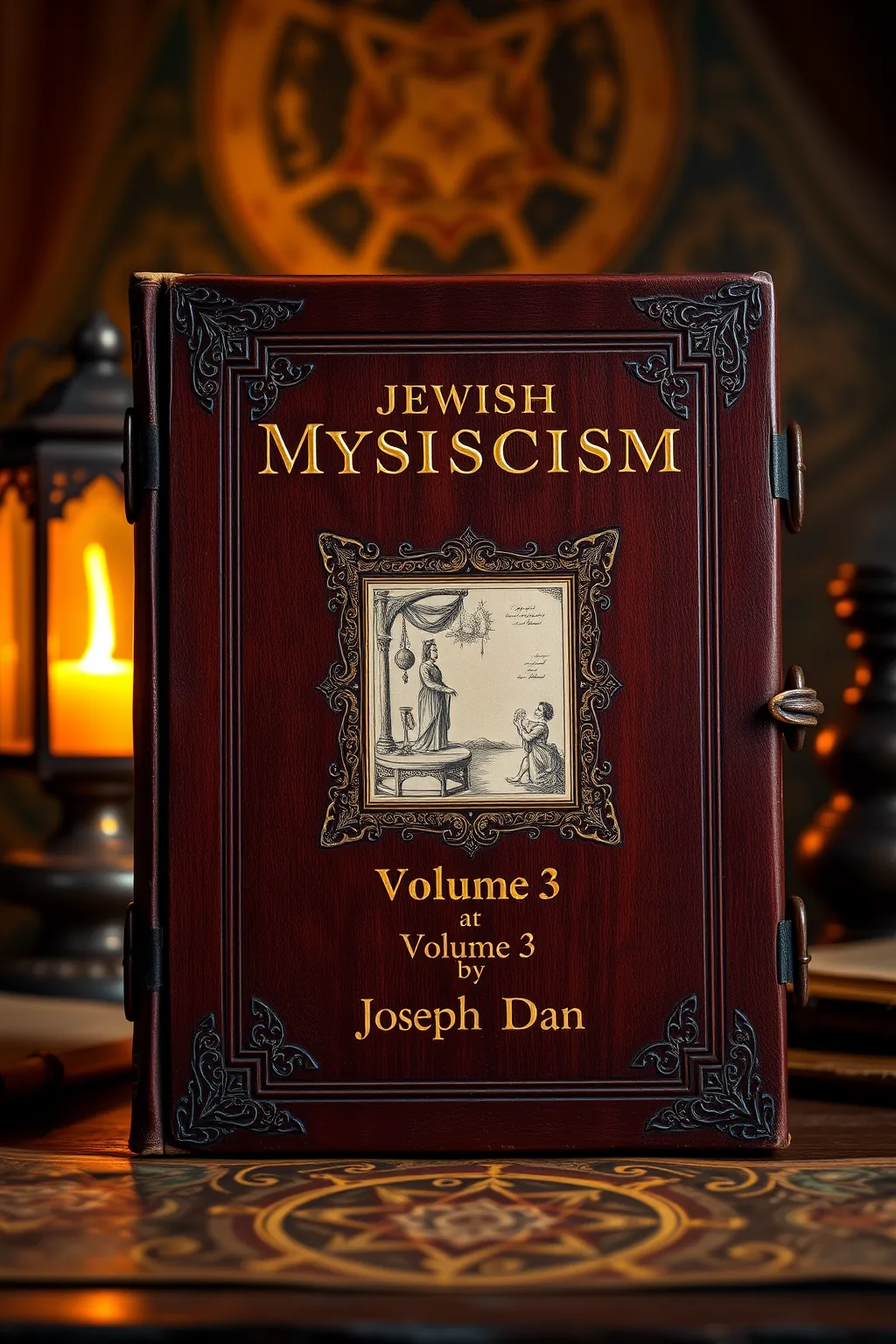
Jewish Mysticism: Volume 3
 61
61

Jewish Mysticism: Volume 3



Joseph Dan's 'Jewish Mysticism: Volume 3' is a monumental achievement, a testament to his unparalleled erudition in the field of Kabbalah. This volume continues his rigorous yet deeply insightful dissection of Jewish mystical thought, offering profound revelations on its complex symbolism and philosophical underpinnings. Dan's ability to articulate esoteric concepts with clarity and precision makes this work indispensable for scholars and serious practitioners alike. He guides the reader through intricate theological landscapes, revealing the perennial search for divine immanence and transcendence. This is not a casual read, but rather a deep dive into the soul of a mystical tradition, essential for anyone committed to understanding the esoteric heritage of Judaism.
📝 Description
61
Joseph Dan's Jewish Mysticism Volume 3 illuminates Kabbalistic concepts from the medieval period through the early modern era.
This third volume in Joseph Dan's series on Jewish mysticism examines key developments in Kabbalah. Dan focuses on specific mystical traditions and their intellectual underpinnings, moving beyond general surveys to analyze particular schools of thought and their textual evidence. The book addresses concepts related to divine consciousness and the structure of the cosmos as understood by various Kabbalistic circles.
Dan's approach unpacks the symbolic language used in these traditions. He shows how mystics interpreted ancient texts and developed their own esoteric frameworks. The work is suited for those who want a detailed look at the history and thought of Jewish mysticism, particularly as it evolved over centuries. It aims to clarify the philosophical and spiritual ideas central to these movements.
Jewish mysticism, or Kabbalah, is a tradition concerned with divine mysteries and esoteric interpretations of Jewish scripture and law. It has historically sought to understand God's relationship with creation, the nature of the divine, and the path to spiritual experience. This volume situates itself within that lineage, examining specific historical manifestations and intellectual currents that shaped Kabbalistic thought from its medieval foundations to its early modern expressions. It treats Kabbalah not as a monolithic entity but as a dynamic tradition with diverse schools and evolving doctrines.
💡 Why Read This Book?
Unravel the profound, hidden dimensions of Jewish mystical thought. 'Jewish Mysticism: Volume 3' is for the earnest seeker, the dedicated scholar, and the contemplative practitioner yearning for deeper understanding of Kabbalah's intricate symbolism and spiritual pathways. Engage with ancient wisdom that continues to illuminate the human quest for meaning and connection to the divine.
⭐ Reader Reviews
Honest opinions from readers who have explored this book.
❓ Frequently Asked Questions
What specific Kabbalistic concepts are explored in Volume 3?
Volume 3 delves into advanced concepts such as the nature of divine emanations (Sefirot), the mystical interpretation of the Torah, the role of angelic hierarchies, and the practice of contemplative prayer within the Kabbalistic framework.
Is prior knowledge of Kabbalah required to read this book?
While a foundational understanding of Jewish mysticism is beneficial, Joseph Dan's clear exposition makes Volume 3 accessible to dedicated readers willing to engage with complex ideas. However, familiarity with Volumes 1 and 2 will enhance the reading experience.
What is the primary focus of Joseph Dan's scholarship in this volume?
Dan's primary focus is on the historical development and philosophical interpretation of Jewish mystical traditions, emphasizing the core tenets, symbolic language, and practical applications of Kabbalah as a path to spiritual realization.
How does this volume contribute to the broader study of mysticism?
It offers a critical and nuanced perspective on a major Western esoteric tradition, providing insights into universal themes of consciousness, cosmology, and the human relationship with the sacred that resonate across diverse mystical paths.
Can this book be used for personal spiritual practice?
Yes, while academic in rigor, the insights into symbolism, meditation, and divine contemplation offered can certainly inform and deepen personal spiritual practices for those drawn to Kabbalistic paths.
🔮 Key Themes & Symbolism
The Divine Emanations (Sefirot)
This volume meticulously examines the Sefirot, the ten divine attributes that emanate from the Ein Sof (the Infinite). Dan illuminates their symbolic representation, their interconnectedness within the Kabbalistic Tree of Life, and their role in the ongoing process of creation and divine revelation. Understanding the Sefirot is crucial for comprehending the Kabbalistic cosmology and the pathways through which the divine manifests in the material world, offering a framework for understanding God's interaction with humanity.
Torah as a Mystical Text
Joseph Dan explores the profound concept of the Torah not merely as a legal and historical document, but as a living, breathing mystical text imbued with divine secrets. He explores the methods of esoteric interpretation, such as Gematria, Notarikon, and Temurah, revealing how hidden meanings and cosmic truths are concealed within its very letters and narratives. This theme highlights the Kabbalistic belief that the Torah is a blueprint for the universe, holding the keys to spiritual ascent and divine knowledge.
The Ascent of the Soul
Central to Jewish mysticism is the journey of the soul towards divine union. Volume 3 investigates the various stages and challenges of this spiritual ascent, detailing the practices and contemplative states required to transcend the limitations of the physical realm. Dan discusses the role of angelic guides, the purification of the self, and the ultimate goal of achieving *devekut* (cleaving to God), offering a profound look at the inner pilgrimage of the mystic.
💬 Memorable Quotes
Direct passages from the work, attributed to the author.
“Hidden within every letter, a universe unfolds.”
— Refers to the esoteric principle that sacred texts, particularly the Torah, are encoded with profound spiritual and cosmic knowledge, accessible through mystical interpretation.
“The path to God is an inward journey.”
— Emphasizes the core tenet of mysticism that true spiritual connection is achieved not through external means, but through introspection, contemplation, and the exploration of one's own consciousness.
“Silence is the echo of the Infinite.”
— Suggests that profound stillness and quietude are the most conducive states for experiencing the divine presence, as the overwhelming noise of the material world recedes.
“To know the divine is to become it.”
— Reflects the ultimate goal of mystical union, where the individual soul merges with the divine essence, transcending separateness and achieving complete spiritual integration.
💡 Key Ideas
Editorial paraphrase of the work's core concepts — not direct quotes.
The universe is a whisper of the divine.
This quote captures the Kabbalistic view of creation as an emanation or manifestation of God's presence, suggesting that even the smallest element of existence carries a trace of the Infinite.
🌙 Esoteric Significance
Tradition
This work is deeply rooted in the Kabbalistic tradition, a mystical interpretation of Judaism that seeks to understand the nature of God, the creation of the universe, and the human soul's relationship with the divine. It explores concepts like divine emanations (Sefirot), the hidden meanings of scripture, and the pathways to spiritual ecstasy and union with God, offering a profound esoteric framework for spiritual seekers within and beyond the Jewish faith.
Symbolism
Kabbalah is a tradition rich in symbolism, and Volume 3 meticulously unpacks its intricate visual and conceptual language. Key symbols include the Tree of Life, representing the divine emanations and cosmic structure; the Hebrew letters, seen as building blocks of creation; and various angelic and divine names, understood as conduits of spiritual power. Dan reveals how these symbols are not mere decorations but potent keys to unlocking deeper spiritual realities and divine mysteries.
Modern Relevance
In an age often characterized by materialism and spiritual searching, the esoteric insights of Jewish mysticism offer a powerful counterpoint. Volume 3 demonstrates the enduring relevance of Kabbalistic contemplation for understanding consciousness, the nature of reality, and the human yearning for transcendence. Its exploration of symbolic language and divine connection provides timeless wisdom applicable to personal growth, ethical living, and the pursuit of a more meaningful existence in the contemporary world.
👥 Who Should Read This Book
This volume is an indispensable resource for serious students of comparative religion, comparative mysticism, and specifically Kabbalah. Scholars will find Joseph Dan's scholarly rigor and insightful analysis important for their research. Spiritual seekers and practitioners of esoteric traditions will discover a profound exploration of divine symbolism, contemplative practices, and the inner journey towards spiritual realization. While demanding, it is also accessible to the dedicated beginner willing to engage deeply with complex metaphysical and theological concepts, offering a pathway to understanding one of the most influential mystical traditions.
📜 Historical Context
Volume 3 of Joseph Dan's 'Jewish Mysticism' immerses readers in the rich historical currents of Kabbalistic thought, primarily focusing on its development from the medieval period through to its later expressions. This era witnessed the flourishing of complex mystical systems, often arising in response to periods of persecution and exile, where spiritual solace and divine connection became paramount. The intellectual and spiritual landscape was deeply influenced by Neoplatonism, Gnosticism, and earlier Jewish philosophical traditions, all of which contributed to the intricate symbolic language and theological frameworks of Kabbalah. Dan situates these developments within their socio-historical contexts, highlighting how political upheavals, messianic expectations, and intellectual debates shaped the evolution of mystical ideas and practices.
📔 Journal Prompts
Reflect on a personal experience where you felt a profound connection to something larger than yourself. How might this relate to the Kabbalistic concept of *devekut*?
Consider a common symbol in your life or culture. How might it hold hidden, esoteric meanings beyond its surface appearance?
Imagine the Sefirot as energetic forces within you. Which 'attribute' feels most dominant today, and why?
If the Torah is a mystical text, what 'hidden message' might be waiting to be revealed in a passage that speaks to you?
What does the 'inward journey' mean for your personal spiritual development? What are the greatest obstacles and aids you encounter?
🗂️ Glossary
Ein Sof
The Kabbalistic term for the Infinite, the Godhead beyond all comprehension or description, the ultimate unmanifest source of all existence.
Sefirot
The ten divine emanations or attributes through which the Infinite manifests and interacts with the created universe, often depicted as a Tree of Life.
Torah
In its broadest sense, the first five books of the Hebrew Bible; mystically, it is considered a divine blueprint containing hidden secrets of creation and spiritual guidance.
Devekut
A Hebrew term meaning 'cleaving' or 'attachment' to God, representing a state of intense spiritual communion and union achieved through prayer and contemplation.
Gematria
A method of Kabbalistic interpretation that assigns numerical values to Hebrew letters and words to find hidden connections and meanings between different scriptural passages.
This book appears in 1 collection
🔮 Readers Also Liked
Browse all →








More by Joseph Dan
All books →

From the “Kabbalah” Collection
View all →







More Free Kabbalah & Jewish Mysticism Books
View all →