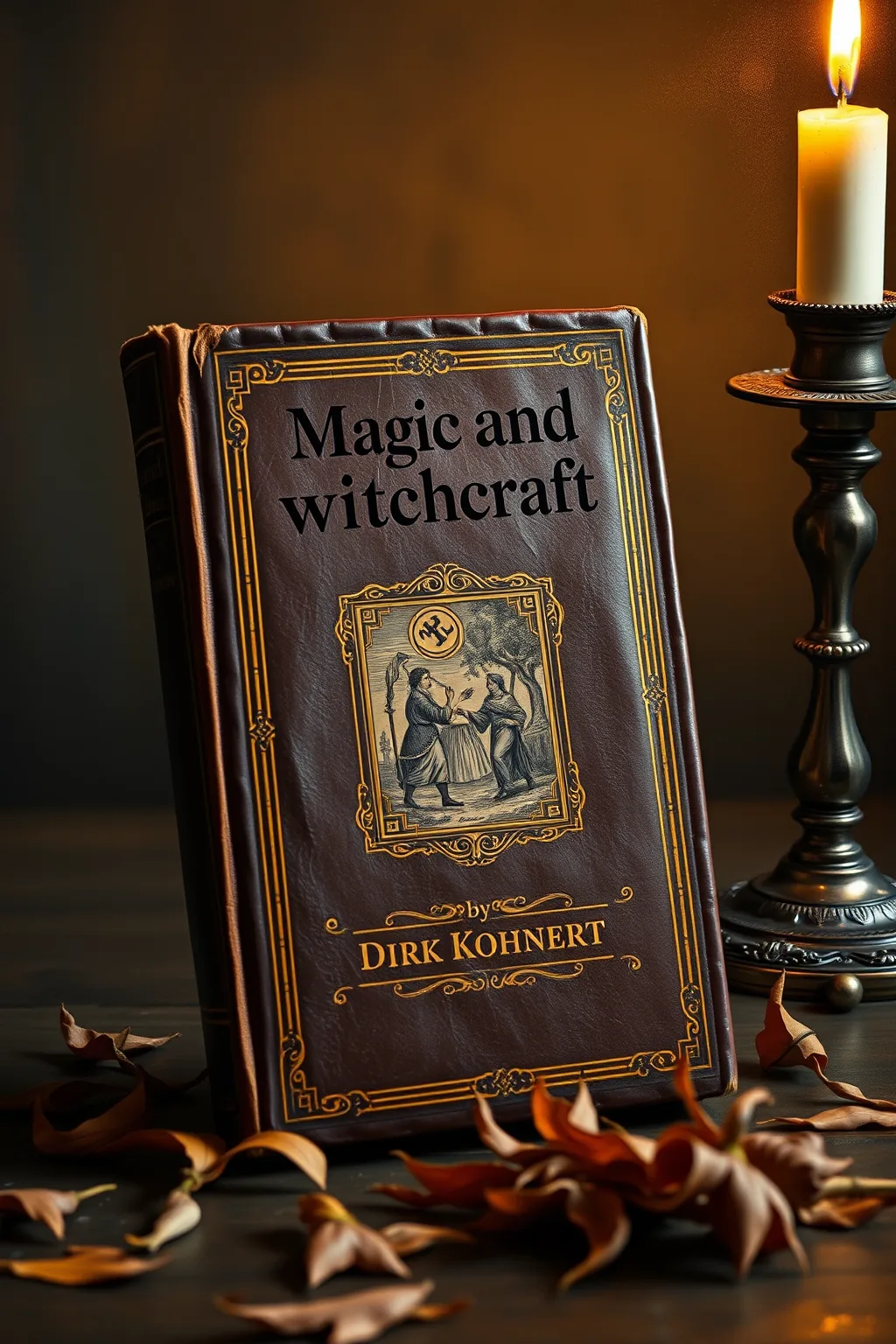
Magic and witchcraft: Implications for Democratization and poverty-alleviating aid in Africa", World Development, 24.1996.8: 1347 - 1355
 84
84

Magic and witchcraft: Implications for Democratization and poverty-alleviating aid in Africa", World Development, 24.1996.8: 1347 - 1355



Dirk Kohnert's 'Magic and Witchcraft: Implications for Democratization and Poverty-Alleviating Aid in Africa' is a pioneering work that bridges the gap between esoteric beliefs and socio-political realities. Published in World Development, this book offers a deep dive into how occult practices influence African societies, making it a must-read for modern esoteric seekers. Kohnert's meticulous research and clear writing style make complex ideas accessible, providing a rich context for understanding the role of magic and witchcraft in contemporary Africa. The text is particularly valuable for its exploration of how these beliefs can both hinder and aid social progress. For those interested in the intersection of spirituality and societal development, this book is an invaluable resource. The detailed historical and cultural analysis makes it a standout in the field of esoteric studies.
📝 Description
84
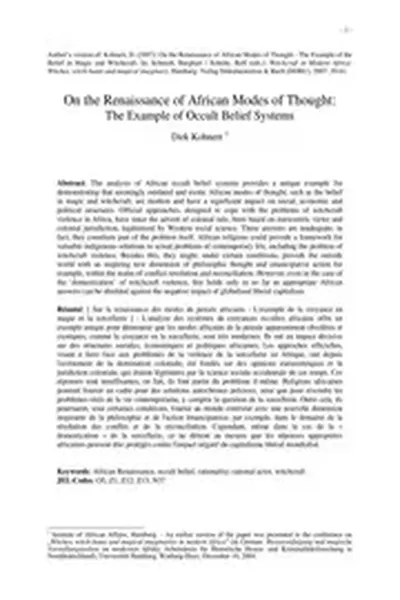
Dirk Kohnert's 1996 article examines magic and witchcraft's role in African democratization and aid.
In his 1996 article published in World Development, Dirk Kohnert investigates the connection between magic, witchcraft beliefs, and their impact on democratization and poverty-alleviating aid in Sub-Saharan Africa. The work addresses how these belief systems, often dismissed by development studies, actively shape socio-political dynamics. Kohnert argues that understanding these practices is not separate from development efforts but is integral to their success.
The article challenges conventional approaches to aid and governance by highlighting the agency of local populations who operate within these spiritual frameworks. It suggests that ignoring or misunderstanding the influence of magic and witchcraft can lead to the failure of external interventions. Kohnert's analysis aims to integrate these esoteric dimensions into practical development strategies, recognizing their significance for social change.
This work situates within a critical examination of how non-Western belief systems influence global development discourse. It moves beyond a purely materialist understanding of social change to acknowledge the power of symbolic and spiritual frameworks. By focusing on magic and witchcraft, Kohnert engages with traditions often relegated to the margins of academic study, suggesting their practical relevance in tangible areas like political stability and economic aid. The article thus bridges anthropological perspectives on belief with political economy.
💡 Why Read This Book?
Reading 'Magic and Witchcraft: Implications for Democratization and Poverty-Alleviating Aid in Africa' today offers a unique perspective on how ancient beliefs continue to shape modern societies. This book provides readers with a deeper understanding of the complex social and political landscapes in Africa, helping them appreciate the role of esoteric practices in community dynamics. It is an essential read for anyone looking to gain insights into the challenges and opportunities for development in regions where occult beliefs are prevalent.
⭐ Reader Reviews
Honest opinions from readers who have explored this book.
❓ Frequently Asked Questions
What is the main focus of 'Magic and Witchcraft'?
The main focus is on how beliefs in occult forces influence democratization and poverty alleviation in African societies.
Who should read this book?
This book is ideal for anthropologists, sociologists, and anyone interested in the intersection of esoteric beliefs and societal development.
How does the book address the role of witchcraft accusations?
The book explores how witchcraft accusations often work to the disadvantage of the poor but can sometimes be a tool for the marginalized under certain conditions.
🔮 Key Themes & Symbolism
Occult Beliefs in African Societies
This theme explores the deep-rooted belief in occult forces across various African societies, regardless of education, religion, and social class. Kohnert explores how these beliefs shape societal structures and influence individual behavior, providing a mystical lens through which to view the continent's complex social dynamics.
Magic and Witchcraft as Tools for Social Change
Kohnert examines how magic and witchcraft can be both a curse and a blessing for the poor. Under particular circumstances, these beliefs can become a means for the poor to assert their power and drive social change, offering a unique perspective on the potential for esoteric practices to influence societal development.
Development Aid and Occult Beliefs
This theme explores the intersection of development aid and occult beliefs, highlighting how understanding these ancient practices can enhance the effectiveness of poverty-alleviating efforts. Kohnert provides insights into how development practitioners can leverage occult beliefs to create more sustainable and impactful aid programs.
💬 Memorable Quotes
Direct passages from the work, attributed to the author.
“The belief in occult forces is deeply rooted in many African societies.”
— This emphasizes the pervasive influence of occult beliefs across different social strata and educational backgrounds.
“Under particular circumstances, magic and witchcraft can become a means of the poor.”
— This highlights the potential for occult beliefs to drive social change and empower marginalized communities.
💡 Key Ideas
Editorial paraphrase of the work's core concepts — not direct quotes.
Magic and witchcraft accusations often work to the disadvantage of the poor.
This quote underscores the dual nature of occult beliefs, highlighting how they can both empower and oppress.
Modernization processes often increase the incidence of occult beliefs.
This quote reveals how social stress and strain can amplify the belief in occult forces, providing a mystical angle to modern societal challenges.
The process of democratization is deeply influenced by occult beliefs.
This quote illustrates how esoteric practices can shape political landscapes and influence the democratic process.
🌙 Esoteric Significance
Tradition
This book belongs to the broader tradition of Hermetic and occult studies, focusing on the influence of ancient beliefs on modern societies. It draws on esoteric principles to provide a unique perspective on development aid and democratization.
Symbolism
Key symbols in this work include the dual nature of magic and witchcraft, representing both empowerment and oppression. The symbolism of social stress and strain is also prominent, highlighting how modern challenges can amplify occult beliefs.
Modern Relevance
This book remains relevant today, as occult beliefs continue to influence African societies. Modern practitioners in development aid and esoteric studies can use its insights to create more effective and sustainable solutions. The work of Dirk Kohnert continues to inspire those seeking to understand the deeper, often unseen, forces that drive human behavior and societal evolution.
👥 Who Should Read This Book
This book is ideal for scholars and practitioners in the fields of development aid, anthropology, and esoteric studies. Beginners interested in the intersection of mysticism and societal development will find it accessible and enlightening. Spiritual seekers will appreciate the deep dive into ancient traditions and their modern relevance. Those involved in democratization efforts and poverty alleviation will gain valuable insights into the hidden dynamics of African societies.
📜 Historical Context
Published in 1996, Dirk Kohnert's work emerged during a time of significant social and political change in Africa. The post-colonial era was marked by struggles for democratization and efforts to alleviate poverty. Kohnert's exploration of occult beliefs provided a fresh perspective on these challenges, highlighting the need for a deeper understanding of African societies' mystical underpinnings. His work has since influenced both academic research and development practices, emphasizing the importance of integrating esoteric insights into modern solutions.
📔 Journal Prompts
How do occult beliefs shape your understanding of societal development?
In what ways can magic and witchcraft be harnessed for social change?
How do modern challenges amplify the belief in occult forces?
What role do ancient traditions play in shaping contemporary societies?
How can development practitioners integrate esoteric insights into their work?
🗂️ Glossary
Occult Beliefs
Beliefs in hidden or mysterious forces that influence the natural world.
Magic
The use of supernatural powers to achieve specific outcomes.
Witchcraft
The practice of magic, often with harmful intent.
Development Aid
Assistance provided to developing countries to promote economic growth and alleviate poverty.
Democratization
The process of establishing a democratic political system.
This book appears in 2 collections
🔮 Readers Also Liked
Browse all →







More by Dirk Kohnert
All books →
From the “Witchcraft” Collection
View all →







More Free Witchcraft & Paganism Books
View all →





![The old colony town [Plymouth, Mass.], and other sketches. 1893: Iss 118](/img/thumb/the-old-colony-town-plymouth-mass-and-other-sketches-1893-iss-118-bliss-william-root-1825-1906.webp)