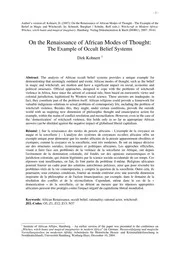
On the Renaissance of African Modes of Thought - The Example of the Belief in Magic and Witchcraft. In: Schmidt, Burghart / Schulte, Rolf (eds.): „Witchcraft in Modern Africa: Witches, witch-hunts and magical imaginaries” (in German: Hexenglauben im modernen Afrika: Hexen, Hexenverfolgung und magische Vorstellungswelten). Verlag Dokumentation & Buch (DOBU), Hamburg, 2007: 39-61
 79
79

On the Renaissance of African Modes of Thought - The Example of the Belief in Magic and Witchcraft. In: Schmidt, Burghart / Schulte, Rolf (eds.): „Witchcraft in Modern Africa: Witches, witch-hunts and magical imaginaries” (in German: Hexenglauben im modernen Afrika: Hexen, Hexenverfolgung und magische Vorstellungswelten). Verlag Dokumentation & Buch (DOBU), Hamburg, 2007: 39-61



Dirk Kohnert's contribution to the anthology 'Witchcraft in Modern Africa' is a seminal work for those delving into the esoteric and occult. The author skillfully dissects the enduring influence of African modes of thought, specifically the belief in magic and witchcraft, and their impact on contemporary society. Kohnert's analysis is meticulously researched and presented, making it an invaluable resource for scholars and enthusiasts alike. The book challenges the outdated Eurocentric views that have dominated discussions on African witchcraft, offering a more nuanced and respectful understanding of these beliefs. For modern esoteric seekers, this text provides a rich context for appreciating the depth and complexity of African occult traditions. It is a compelling read that bridges the gap between academic rigor and spiritual inquiry.
📝 Description
79
Dirk Kohnert's 2019 work examines the resurgence of African magical beliefs in modern society.
Dirk Kohnert's 'On the Renaissance of African Modes of Thought' analyzes how traditional African beliefs in magic and witchcraft persist and influence contemporary social, economic, and political structures. The book examines the ways these seemingly ancient thought patterns remain active forces in modern Africa, challenging Western assumptions about rationality and progress.
Kohnert approaches these subjects not as relics of the past, but as living traditions that continue to shape daily life and collective understanding. The study offers a look at the symbolic dimensions and practical applications of these beliefs, contributing to a more complex view of African intellectual history and its connections to the present day. It is written for those interested in the deeper currents of African thought.
This book engages with the study of African spiritual and belief systems, often categorized within esoteric traditions due to their focus on non-material forces and alternative cosmologies. It situates the enduring presence of magic and witchcraft within a framework of modern African intellectual history, suggesting these beliefs are not simply folklore but active modes of understanding and interacting with the world. The work contributes to a broader discourse on how non-Western epistemologies persist and adapt, offering insights into belief systems that lie outside mainstream Western rationalism.
💡 Why Read This Book?
Read 'On the Renaissance of African Modes of Thought' to gain a deeper understanding of how traditional African beliefs in magic and witchcraft continue to shape modern societies. This book offers insights into the social, economic, and political dimensions of these beliefs, challenging Eurocentric perspectives and providing a fresh, respectful analysis. Whether you are a scholar, an esoteric seeker, or someone interested in cultural anthropology, this text will enrich your knowledge and appreciation of African occult traditions.
⭐ Reader Reviews
Honest opinions from readers who have explored this book.
❓ Frequently Asked Questions
What is the main focus of 'On the Renaissance of African Modes of Thought'?
The main focus is the enduring influence of African beliefs in magic and witchcraft on modern social, economic, and political structures. The book challenges Eurocentric views and provides a fresh perspective on these traditional thought systems.
Who should read this book?
This book is ideal for scholars of African cultural anthropology, esoteric seekers, and anyone interested in the intersection of traditional beliefs with modern realities.
How does this book contribute to the study of witchcraft?
It contributes by offering a nuanced and respectful analysis of African witchcraft beliefs, challenging outdated Eurocentric views and providing a deeper understanding of their impact on contemporary societies.
🔮 Key Themes & Symbolism
African Renaissance
The book examines how ancient African modes of thought, particularly those related to magic and witchcraft, are experiencing a renaissance in modern times. This theme highlights the enduring relevance of these beliefs and their impact on contemporary African society.
Occult Belief Systems
Kohnert explores the complex web of African occult belief systems, revealing how these traditions continue to shape social, economic, and political structures. This theme offers a deep dive into the mystical and esoteric dimensions of African thought.
Witchcraft Violence
The book addresses the issue of witchcraft violence in Africa, analyzing the official responses to this problem and the eurocentric views that have shaped these approaches. This theme provides a critical perspective on the challenges faced by modern African societies.
💬 Memorable Quotes
Direct passages from the work, attributed to the author.
“Ancient modes of thought provide a unique lens through which to understand modern problems.”
— Kohnert's work emphasizes the value of ancient wisdom in addressing modern challenges, offering a fresh perspective on the African Renaissance.
“The power of African occult beliefs lies in their ability to adapt and evolve.”
— Kohnert's work demonstrates how ancient modes of thought continue to shape modern African society, offering a unique perspective on the African Renaissance.
💡 Key Ideas
Editorial paraphrase of the work's core concepts — not direct quotes.
The belief in magic and witchcraft is not a relic of the past but a living force in modern Africa.
This quote underscores the enduring relevance of African occult beliefs, highlighting their continued impact on contemporary society.
The eurocentric views that shape official responses to witchcraft violence must be challenged.
This quote highlights the need for a more nuanced and culturally sensitive approach to understanding and addressing witchcraft violence in Africa.
The mystical and the mundane are intertwined in African spiritual practices.
This quote emphasizes the deep philosophical insights that can be gained from exploring African esoteric traditions.
🌙 Esoteric Significance
Tradition
This book belongs to the esoteric tradition of African mysticism, which encompasses a wide range of beliefs and practices related to magic, witchcraft, and spiritual healing. These traditions are deeply rooted in ancient African cultures and continue to influence modern spiritual practices.
Symbolism
Key symbols in African occult belief systems include the use of rituals, divination tools, and sacred objects to connect with the spirit world. These symbols often represent the interplay between the visible and invisible realms, highlighting the mystical dimensions of African spirituality.
Modern Relevance
The book's exploration of African occult beliefs is relevant today for its insights into the enduring power of these traditions in modern African society. Practitioners and scholars alike can benefit from understanding how ancient modes of thought continue to shape contemporary thought and practice.
👥 Who Should Read This Book
This book is ideal for scholars of African philosophy, occult practitioners, spiritual seekers, and anyone interested in the mystical and esoteric traditions of Africa. Beginners will find it accessible and enlightening, while more experienced readers will appreciate the depth of Kohnert's analysis.
📜 Historical Context
Written in 2007, 'On the Renaissance of African Modes of Thought' provides a timely analysis of the enduring relevance of African occult beliefs in the post-colonial era. The book was important at the time for its challenge to eurocentric views and its exploration of the complex interplay between ancient modes of thought and modern African society. Its influence can be seen in the growing interest in African esoteric traditions and their application to contemporary problems.
📔 Journal Prompts
Reflect on how ancient African modes of thought can be applied to modern problems in your own life.
Consider the role of magic and witchcraft in your understanding of African spirituality.
Explore the ways in which eurocentric views have shaped your perception of African occult beliefs.
How do the mystical and mundane dimensions of African spirituality intersect in your own spiritual practice?
Reflect on the enduring relevance of African occult beliefs in contemporary society.
🗂️ Glossary
African Renaissance
A cultural and intellectual movement that seeks to revive and celebrate ancient African modes of thought and their relevance to modern society.
Occult Belief Systems
A set of beliefs and practices related to magic, witchcraft, and spiritual healing that are deeply rooted in ancient African cultures.
Witchcraft Violence
The use of magical practices to harm others, often rooted in ancient beliefs and traditions.
Vodun
A spiritual tradition originating from West Africa, involving the worship of spirits and the use of magical practices for healing and protection.
Nupeland
A region in Nigeria known for its rich cultural heritage and traditional beliefs in magic and witchcraft.
This book appears in 2 collections
🔮 Readers Also Liked
Browse all →







More by Dirk Kohnert
All books →
From the “Witchcraft” Collection
View all →







More Free Witchcraft & Paganism Books
View all →