Kohnert, dirk (2003): Occult Beliefs, Globalisation and the Quest for Development in African Societies: The Example of South Africa. In: Journal for the Study of Religion, Vol. 16, No. 1, 2003, 27-46

 78
78

Kohnert, dirk (2003): Occult Beliefs, Globalisation and the Quest for Development in African Societies: The Example of South Africa. In: Journal for the Study of Religion, Vol. 16, No. 1, 2003, 27-46



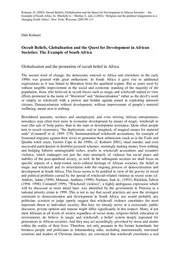
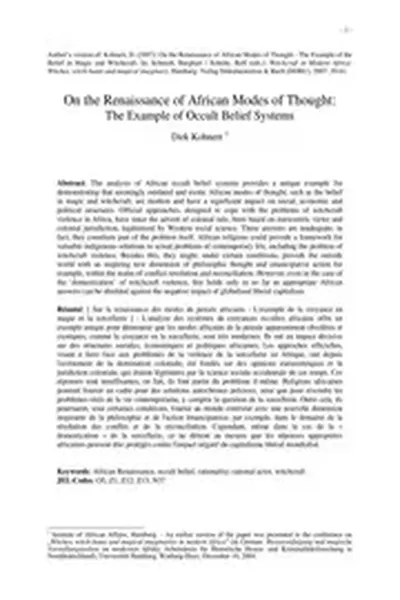
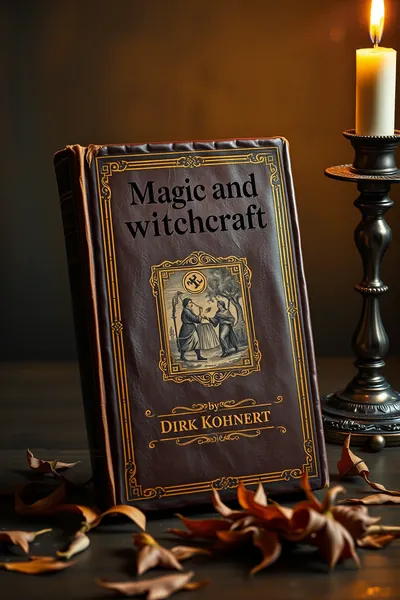
Dirk Kohnert's 'Occult Beliefs, Globalisation and the Quest for Development in African Societies: The Example of South Africa' is a seminal work that bridges the gap between esoteric studies and contemporary sociology. Published in the Journal for the Study of Religion, this article provides a meticulous analysis of how occult beliefs shape and are shaped by globalization in South Africa. Kohnert's research is both comprehensive and insightful, offering readers a deep dive into the cultural and spiritual underpinnings of African societies. For modern esoteric seekers, this text is invaluable as it contextualizes occult practices within a broader framework of societal development. The detailed examination of South Africa serves as a microcosm for understanding similar dynamics in other parts of the continent. The article's strength lies in its ability to weave together historical context, cultural anthropology, and esoteric philosophy, making it a must-read for anyone interested in the intersection of spirituality and globalization.
📝 Description
78
Dirk Kohnert's 2003 article examines occult beliefs and development in South Africa.
Published in the Journal for the Study of Religion in 2003, Dirk Kohnert's work analyzes the role of occult beliefs in shaping development within South African society. The article focuses on how these beliefs interact with globalizing forces and aspirations for societal progress. Kohnert investigates the specific symbolism and hidden knowledge that influence daily life and societal structures.
The research unpacks the connections between spiritual traditions and modern development agendas. It offers a detailed look at how occult philosophy informs the lived experiences and future outlook of people in South Africa. The study is aimed at readers interested in the complex relationship between esoteric thought and contemporary social change in an African context.
This article engages with esoteric thought not as a separate system, but as an integrated aspect of social and economic life in contemporary Africa. It positions occult beliefs as active forces influencing societal trajectories, particularly in the context of development. By examining their role in South Africa, the work highlights how non-Western spiritual traditions continue to inform responses to modernization and global economic shifts. It contrasts with Western rationalist assumptions that often overlook the significance of such beliefs.
💡 Why Read This Book?
Reading 'Occult Beliefs, Globalisation and the Quest for Development in African Societies: The Example of South Africa' today offers a unique perspective on how traditional beliefs influence modern development. Dirk Kohnert's work provides a deep understanding of the role of occult practices in shaping societal progress, making it an essential read for those interested in African studies and esoteric traditions. This book will enrich your knowledge of the cultural and spiritual dimensions of development, offering insights that are both academically rigorous and spiritually enlightening.
⭐ Reader Reviews
Honest opinions from readers who have explored this book.
❓ Frequently Asked Questions
What is the main focus of Dirk Kohnert's study?
The main focus is on how occult beliefs in South Africa interact with globalization and influence societal development.
Who should read this book?
This book is ideal for academics, researchers, and anyone interested in African studies, esoteric traditions, and the impact of globalization on cultural practices.
What makes this study unique?
The study is unique in its detailed examination of occult beliefs within the context of South Africa, providing a microcosm for understanding similar dynamics in other African societies.
🔮 Key Themes & Symbolism
Occult Beliefs and Development
Kohnert's work studies the occult beliefs that shape the development of African societies, revealing the hidden knowledge and symbolism that influence societal structures. This theme explores how ancient rituals and mystical practices continue to impact modern development efforts in South Africa.
Globalization and African Mysticism
The book examines the intersection of globalization and African mysticism, providing insights into how occult beliefs adapt and evolve in the face of modern influences. This theme highlights the resilience of traditional practices in a rapidly changing world.
Symbolism and Ritual in African Societies
Kohnert's analysis of symbolism and ritual in African societies offers a rich understanding of the spiritual range of South Africa. This theme explores the deep-rooted symbolism that underpins occult beliefs and their significance in contemporary society.
💬 Memorable Quotes
Direct passages from the work, attributed to the author.
“Symbolism is the language of the spirit, revealing hidden truths that guide development and societal structures.”
— Kohnert emphasizes the importance of symbolism in understanding the mystical dimensions of African societies.
“Globalization brings change, but it also reveals the resilience of traditional practices in African mysticism.”
— Kohnert's insights into the adaptability of occult beliefs in the face of globalization are profound.
💡 Key Ideas
Editorial paraphrase of the work's core concepts — not direct quotes.
The occult beliefs of African societies are not relics of the past but living traditions that shape the present and future.
This quote underscores the enduring relevance of occult beliefs in African societies.
The quest for development in African societies is inextricably linked to the occult beliefs that permeate daily life.
This quote highlights the interconnectedness of occult beliefs and modern development efforts in Africa.
The hidden knowledge of African mysticism offers a unique perspective on the spiritual range of South Africa.
This quote emphasizes the value of esoteric insights in understanding the mystical undercurrents of African societies.
🌙 Esoteric Significance
Tradition
This book belongs to the tradition of African mysticism, which encompasses a collection of occult beliefs and spiritual practices. It draws on ancient rituals and hidden knowledge that have been passed down through generations, revealing the deep-rooted symbolism that underpins African societies.
Symbolism
Key symbols in this work include ancient rituals, spiritual practices, and hidden knowledge that are integral to African mysticism. These symbols represent the enduring relevance of occult beliefs in shaping development and societal structures in South Africa.
Modern Relevance
This book is relevant today because it provides insights into the role of occult beliefs in contemporary development efforts in Africa. Modern practitioners and scholars can use this work to understand the mystical dimensions of African societies and the significance of symbolism in shaping the future.
👥 Who Should Read This Book
This book is ideal for scholars of African studies, spiritual seekers interested in mysticism, and practitioners of occult philosophy. Beginners may find the material intriguing but will benefit more from having some background in African mysticism or occult beliefs. The book is particularly valuable for those seeking to understand the intersection of mysticism and modern development in African societies.
📜 Historical Context
Published in 2003, Dirk Kohnert's Occult Beliefs, Globalisation and the Quest for Development in African Societies: The Example of South Africa emerged during a time of significant global change. The early 2000s saw the rapid expansion of globalization, which brought both opportunities and challenges to African societies. Kohnert's work was important because it shed light on the enduring relevance of occult beliefs in shaping development and societal structures. The book's influence can be seen in the growing interest in African mysticism and the role of occult beliefs in contemporary development studies.
📔 Journal Prompts
Reflect on how occult beliefs influence your understanding of development in African societies.
Consider the role of symbolism in your spiritual practices and how it relates to African mysticism.
Explore the ways in which globalization has impacted traditional practices in your community.
How do ancient rituals and hidden knowledge shape the societal structures in your culture?
Reflect on the enduring relevance of occult beliefs in the face of modern influences.
🗂️ Glossary
Occult Beliefs
Beliefs and practices that involve hidden knowledge and spiritual practices, often associated with mysticism.
Globalization
The process of increasing interconnectedness and interdependence of the world's economies, cultures, and populations.
Symbolism
The use of symbols to represent abstract ideas or qualities, often in spiritual or mystical contexts.
African Mysticism
A collection of occult beliefs and spiritual practices that have been passed down through generations in African societies.
Development
The process of economic, social, and political growth and progress within a society.
This book appears in 3 collections
🔮 Readers Also Liked
Browse all →









More by Dirk Kohnert
All books →
From the “Occultism” Collection
View all →








More Free Occult Philosophy Books
View all →