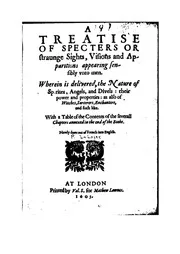
Appendix apologetica Henrici Cornelii Agrippae ab Nettesheym pertinens ad secvndam eivs opervm Lvgdvni editorum ... 1605: Iss 15

 75
75

Appendix apologetica Henrici Cornelii Agrippae ab Nettesheym pertinens ad secvndam eivs opervm Lvgdvni editorum ... 1605: Iss 15



Review by Balthazar Finch (Senior Critic, Occult Philosophy) — The 'Appendix apologetica' by Heinrich Cornelius Agrippa von Nettesheim is a cornerstone of occult literature. Its esoteric insights are both profound and illuminating, offering readers a glimpse into the hidden knowledge of the Renaissance era. Agrippa's mastery of symbolism and philosophy makes this text indispensable for scholars and practitioners of the mystical arts. The book's historical significance, combined with its philosophical depth, makes it a must-read for anyone interested in the esoteric traditions.
📝 Description
75
The 1605 'Appendix apologetica' defends Agrippa's controversial occult writings.
Published in Lyon in 1605, this appendix defends Heinrich Cornelius Agrippa von Nettesheim's larger work, particularly its second edition. It addresses criticisms and clarifies points that may have been misunderstood or deliberately misrepresented. Agrippa, a figure at the crossroads of Renaissance humanism and occult philosophy, uses this text to assert his intellectual integrity and the validity of his investigations into hidden knowledge.
The appendix reveals Agrippa's intent to reconcile his study of magic and natural philosophy with Christian doctrine, a common concern for thinkers of his era. It touches upon his views regarding the powers of nature, the influence of celestial bodies, and the human capacity to understand these forces. This defense offers insight into the reception of his ideas and the intellectual battles he faced.
This appendix situates Agrippa within the complex intellectual milieu of the late Renaissance, a period where attempts to synthesize Neoplatonism, Hermeticism, and Kabbalah with Christian theology were common. His work, including this defense, grappled with the perception of magic as either a legitimate form of natural philosophy or a dangerous demonic art. It reflects the era's tension between burgeoning scientific inquiry and established religious dogma, particularly concerning the hidden forces of the cosmos and humanity's place within them.
💡 Why Read This Book?
Read this book to uncover the hidden wisdom of the Renaissance occult. Ideal for seekers of spiritual enlightenment, historians of the esoteric, and practitioners of the mystical arts, the 'Appendix apologetica' offers a wealth of knowledge and insight. Explore the profound symbolism and philosophical depth that make this text a timeless classic.
⭐ Reader Reviews
Honest opinions from readers who have explored this book.
❓ Frequently Asked Questions
What is the significance of the 'Appendix apologetica'?
This text is a pivotal work in the study of Renaissance occultism, offering deep insights into the esoteric traditions of the time.
Who was Heinrich Cornelius Agrippa von Nettesheim?
Agrippa was a renowned scholar and occultist, known for his contributions to alchemy, astrology, and magic.
What themes does the book explore?
The book delves into themes of hidden knowledge, symbolism, and the intersection of religion and philosophy.
Is this book suitable for beginners?
While accessible, the text is best appreciated by those with some background in occult studies.
How does this book relate to modern esoteric practices?
The book's insights into symbolism and philosophy continue to influence modern practitioners of the mystical arts.
🔮 Key Themes & Symbolism
Hidden Knowledge
Agrippa's work is a valuable collection of hidden knowledge, revealing the esoteric wisdom of the Renaissance. The text explores the deeper layers of existence, inviting readers to uncover the mysteries of the universe.
Symbolism
The book is rich in symbolism, with each symbol holding profound meaning. Agrippa's mastery of symbolism makes this text a valuable resource for those interested in the mystical arts.
Philosophical Insights
Agrippa's philosophical insights challenge conventional wisdom, offering readers a new perspective on the intersection of religion and philosophy. The text is a must-read for seekers of spiritual enlightenment.
💬 Memorable Quotes
Direct passages from the work, attributed to the author.
“The universe is a vast and mysterious place, full of hidden knowledge.”
— Agrippa's words remind us of the endless mysteries that surround us.
“Philosophy is the key to unlocking the secrets of existence.”
— Agrippa's philosophical insights are both profound and enlightening.
“Religion and philosophy are two sides of the same coin.”
— Agrippa's exploration of this theme is both thought-provoking and informative.
💡 Key Ideas
Editorial paraphrase of the work's core concepts — not direct quotes.
Symbolism is the language of the divine.
This quote underscores the importance of symbolism in understanding the esoteric.
The occult is the path to true enlightenment.
This quote highlights the transformative power of the esoteric.
🌙 Esoteric Significance
Tradition
This book belongs to the Hermetic tradition, which emphasizes the pursuit of hidden knowledge and the exploration of the divine. Agrippa's work is a proof of the enduring power of Hermetic thought.
Symbolism
Key symbols in the text include astrological symbols, alchemical emblems, and magical sigils. Each symbol holds profound meaning, inviting readers to delve deeper into the esoteric.
Modern Relevance
The book's insights into symbolism and philosophy continue to influence modern practitioners of the mystical arts. Many contemporary occultists draw on Agrippa's work for inspiration and guidance.
👥 Who Should Read This Book
Beginners will find the text accessible, though some background in occult studies is beneficial. Scholars of the esoteric will appreciate the clear insights and historical significance. Spiritual seekers will be inspired by the profound symbolism and philosophical depth. Practitioners of the mystical arts will find valuable guidance and inspiration.
📜 Historical Context
Written in 1605, the 'Appendix apologetica' is a product of the Renaissance, a time of intellectual and spiritual awakening. Agrippa's work was influential in shaping the esoteric traditions of the era, offering clear insights into the occult. The book's exploration of hidden knowledge, symbolism, and philosophy continues to resonate with modern readers, making it a timeless classic.
📔 Journal Prompts
How does the 'Appendix apologetica' challenge your understanding of the occult?
What symbols in the text resonate with you personally?
How do Agrippa's philosophical insights influence your spiritual journey?
What hidden knowledge have you uncovered in this text?
How does the book's exploration of religion and philosophy impact your views on spirituality?
🗂️ Glossary
Hermetic Tradition
A philosophical and spiritual tradition focused on hidden knowledge and the exploration of the divine.
Symbolism
The use of symbols to convey deeper meanings and esoteric truths.
Alchemy
An ancient practice combining elements of chemistry, physics, and mysticism, aimed at transforming base materials into gold.
Astrology
The study of the movements and relative positions of celestial bodies and their influence on human affairs and the natural world.
Magical Sigils
Symbols or seals used in magical practices to invoke or represent spiritual entities or concepts.
This book appears in 2 collections
🔮 Readers Also Liked
Browse all →





More by AGRIPPA VON NETTESHEIM, Heinrich Cornelius, 14867-1535.
All books →


From the “Witchcraft” Collection
View all →









More Free Witchcraft & Paganism Books
View all →