Dirk Kohnert
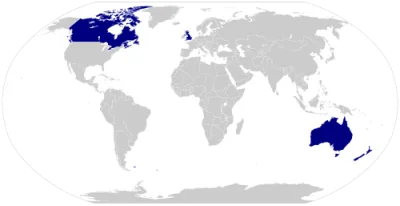
CANZUK is a proposed alliance of Canada, Australia, New Zealand, and the UK for enhanced cooperation.
CANZUK is a concept for a proposed alliance or confederation between Canada, Australia, New Zealand, and the United Kingdom. The idea centers on deepening cooperation in areas such as trade, foreign policy, military matters, and citizen mobility, drawing on shared cultural, social, and political systems. The term itself was first used in 1967, but the modern popularization of the idea began around 2015. Supporters see it as a way to leverage the combined strengths of these nations, potentially positioning them as a significant force in global affairs. The proposal is supported by various advocacy groups, think tanks, and has seen interest from politicians across the four countries. The four nations share historical ties, a common head of state in King Charles III, and are predominantly English-speaking, with many shared institutional and cultural similarities.
Origins and Evolution of the CANZUK Concept
The term "CANZUK" was initially coined by William David McIntyre in his 1967 book, "Colonies into Commonwealth," referring to a potential "CANZUK Union." The concept of enhanced migration, trade, and foreign policy collaboration among these nations was significantly developed and promoted starting in 2015 by James Skinner, CEO and Founder of CANZUK International. Following the UK's 2016 decision to leave the European Union, the idea gained further traction. Writers and academics, including Andrew Lilico and Andrew Roberts, advocated for the formation of a new political entity from these four countries. Roberts proposed that such a bloc could serve as a "third pillar of the West" alongside the United States and the European Union, potentially qualifying as a "great power" or even an "emerging superpower" due to its vast territory, geographic reach, and advanced economies.
Forms of Cooperation and Shared Identity
Advocates envision CANZUK in various forms, ranging from a federal or confederal union to a "geopolitical partnership" similar to the former European Economic Community. A more commonly favored model, supported by CANZUK International and the Conservative Party of Canada, includes establishing a free-movement zone, a multilateral free trade agreement, and a security partnership. Beyond these specific proposals, there is broad support for deepening trade ties among the countries, with figures like former Prime Ministers Scott Morrison, Justin Trudeau, Theresa May, and Jacinda Ardern expressing interest in this general concept. The shared identity is reinforced by historical ties as former dominions of the British Empire, similar governmental systems (Westminster model), common law traditions, and the English language. All four nations are Commonwealth realms with King Charles III as head of state, and they participate in various military and intelligence-sharing initiatives such as Five Eyes and ABCANZ Armies.
Bilateral and Multilateral Agreements
The four CANZUK nations maintain strong relationships, evident in shared cultural and diplomatic ties, and reflected in national symbols like the Union Flag on their respective flags. Beyond the broader CANZUK concept, significant bilateral and multilateral agreements already exist. Australia and New Zealand have had a formal trade agreement, the Closer Economic Relations (CER) agreement, since 1983. In 2021, Australia and the United Kingdom finalized a comprehensive trade agreement that significantly liberalized the movement of goods and people, aiming to reduce trade barriers and harmonize professional qualifications, such as for lawyers. This agreement also simplifies visa requirements for certain sectors. Furthermore, all four nations are members of the Comprehensive and Progressive Agreement for Trans-Pacific Partnership (CPTPP), with the UK joining in 2024, underscoring their existing economic integration.
Key Ideas
- Proposed alliance or confederation of Canada, Australia, New Zealand, and the United Kingdom.
- Focus on increased cooperation in trade, foreign policy, military affairs, and citizen mobility.
- Shared values, political systems, legal traditions, and English language as foundational elements.
- Potential for the bloc to be a significant global power.
- Models range from federal unions to geopolitical partnerships and free trade zones.
Books by Dirk Kohnert
7 free public domain books · Read online or download