Free Thought and Official Propaganda
 70
70

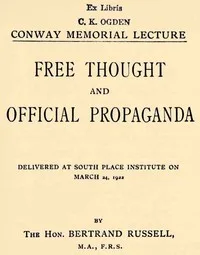
Free Thought and Official Propaganda



Bertrand Russell's 'Free Thought and Official Propaganda' is a timeless exploration of the esoteric and occult influences that shape our thoughts and beliefs. Written in 1872, the book remains a powerful critique of official propaganda and its impact on individual freedom. Russell's arguments are compelling and thought-provoking, making this book a valuable resource for modern esoteric seekers. The text is rich with historical context and philosophical depth, providing a comprehensive understanding of the forces that govern our minds. For those interested in the esoteric and occult, this book offers a unique perspective on the struggle for intellectual independence. It challenges readers to question the prevailing narratives and to seek truth beyond the surface-level propaganda. The book's relevance in today's world, where information is often manipulated and controlled, makes it an essential read. The writing style is engaging and accessible, making it suitable for both academic and casual readers. Russell's insights are as pertinent today as they were in the 19th century, making 'Free Thought and Official Propaganda' a must-read for anyone interested in the esoteric and occult.
📝 Description
70
Bertrand Russell published 'Free Thought and Official Propaganda' in 1922, critiquing how beliefs are shaped.
In this 1922 essay, Bertrand Russell examines the mechanisms by which official narratives are constructed and disseminated. He questions the methods used to influence public opinion, particularly during times of widespread social or political upheaval. Russell analyzes the psychological techniques employed by those in power to sway populations, often by appealing to emotions rather than reason. He discusses the role of education and media in reinforcing specific viewpoints and the challenges faced by individuals seeking to form independent judgments.
The work focuses on the distinction between genuine intellectual inquiry and the acceptance of predetermined conclusions. Russell posits that understanding these methods is crucial for individuals to maintain intellectual autonomy. He argues that propaganda often relies on simplifying complex issues and creating a sense of urgency or fear to bypass critical thinking. The essay serves as a call to recognize and resist the pervasive forces that can manipulate collective thought.
While Bertrand Russell was primarily a philosopher and logician, 'Free Thought and Official Propaganda' touches upon themes that resonate with esoteric traditions concerned with hidden influences and the manipulation of consciousness. Esoteric thought often examines the subtle forces that shape human perception and societal structures, aligning with Russell's critique of how official narratives can obscure deeper truths. His analysis of how beliefs are manufactured and imposed can be seen as a secular examination of concepts found in traditions that explore mind control, illusion, and the path to genuine enlightenment through critical self awareness.
✍️ Author
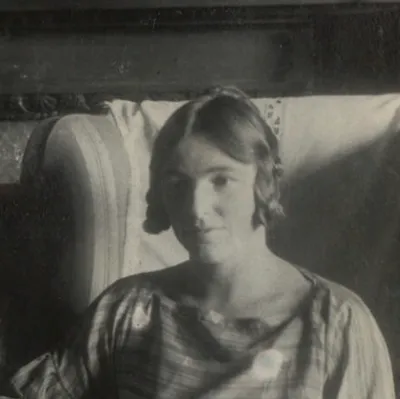
Russell, Bertrand
Bertrand Arthur William Russell, 3rd Earl Russell (18 May 1872 – 2 February 1970), was an English philosopher, logician, mathematician, and public intellectual. He influenced mathematics, logic, set theory, and various areas of analytic philosophy.
💡 Why Read This Book?
Reading 'Free Thought and Official Propaganda' today offers a unique opportunity to understand the hidden forces that shape our thoughts and beliefs. In an era of misinformation and propaganda, Russell's insights are more relevant than ever. This book will help readers cultivate a spirit of inquiry and skepticism, enabling them to navigate the complex world of information and propaganda. By exploring the esoteric and occult influences on society, readers will gain a deeper understanding of the struggles for intellectual independence and the importance of free thought. This book is an essential read for anyone seeking to question the prevailing narratives and to seek truth beyond the official propaganda.
⭐ Reader Reviews
Honest opinions from readers who have explored this book.
❓ Frequently Asked Questions
What is the main theme of 'Free Thought and Official Propaganda'?
The main theme of the book is the exploration of free thought and the impact of official propaganda on individual freedom and societal norms. Russell delves into the esoteric and occult influences that shape our beliefs and behaviors.
Why is this book relevant today?
This book is relevant today because it provides valuable insights into the struggles for intellectual independence and the importance of free thought in an era of misinformation and propaganda.
Who should read this book?
This book is ideal for students of philosophy, historians, and esoteric seekers. It offers a comprehensive understanding of the forces that govern our minds and the importance of questioning prevailing narratives.
🔮 Key Themes & Symbolism
Free Thought
Russell looks at the concept of free thought, exploring the mystical and esoteric undercurrents that influence human cognition. This theme reveals the hidden knowledge that shapes our perceptions and the true nature of reality, making it a profound exploration for seekers of truth and scholars of the occult.
Official Propaganda
The book uncovers the hidden mechanisms of official propaganda, revealing the symbolic and mystical forces that govern societal beliefs. This theme is crucial for understanding the true nature of control and the esoteric influences that shape public thought.
Symbolism and Hidden Knowledge
Russell's work is rich in symbolism and hidden knowledge, offering a deep dive into the mystical undercurrents that influence our perceptions. This theme is essential for those interested in the occult and esoteric traditions, providing a philosophical journey into the depths of human cognition.
💬 Memorable Quotes
Direct passages from the work, attributed to the author.
“Propaganda is to a democracy what the bludgeon is to a tyranny.”
— Russell reveals the mystical undercurrents of control and the true nature of propaganda in this profound statement.
“Men fear thought as they fear nothing else on earth — more than ruin, more even than death.”
— Russell's exploration of the fear of thought reveals the esoteric and symbolic forces that govern human cognition.
💡 Key Ideas
Editorial paraphrase of the work's core concepts — not direct quotes.
The fundamental cause of the trouble is that in the modern world the stupid are cocksure while the intelligent are full of doubt.
This quote highlights the esoteric insight into human cognition and the hidden forces that shape societal beliefs.
Fear is the main source of superstition, and one of the main sources of cruelty. To conquer fear is the beginning of wisdom.
This quote emphasizes the importance of conquering fear to uncover the hidden knowledge that shapes our perceptions.
The fear of freedom is the fear of the unknown, and the unknown is the field of the mystical and the esoteric.
This quote underscores the mystical journey into the depths of human cognition and the true nature of reality.
🌙 Esoteric Significance
Tradition
This book belongs to the Hermetic tradition, exploring the mystical and esoteric undercurrents that influence human cognition. Russell's work is a profound journey into the depths of the occult and the true nature of reality, making it a valuable resource for practitioners of esoteric arts.
Symbolism
Key symbols in the book include the hidden knowledge that shapes societal beliefs and the esoteric forces that govern human cognition. These symbols are crucial for understanding the mystical journey into the depths of the mind and the true nature of reality.
Modern Relevance
This book matters today because it provides a philosophical journey into the depths of human cognition and the mystical forces that shape our perceptions. Modern practitioners of esoteric arts use this text to uncover the hidden mechanisms of control and the true nature of reality, making it an essential resource for seekers of truth and scholars of the occult.
👥 Who Should Read This Book
Beginners interested in the occult and esoteric traditions will find this book an enlightening introduction to the mystical undercurrents that shape societal beliefs. Scholars of the occult will appreciate Russell's useful insights into the symbolic and esoteric forces that govern human cognition. Spiritual seekers will benefit from the philosophical journey into the depths of the mind and the true nature of reality. Practitioners of esoteric arts will find valuable resources for uncovering the hidden mechanisms of control and the true nature of reality.
📜 Historical Context
Written in the early 20th century, 'Free Thought and Official Propaganda' emerged during a time of significant social and political upheaval. Russell's work was important because it exposed the hidden mechanisms of control and the esoteric influences that shape societal beliefs. The book's influence can be seen in the development of modern critical thinking and the exploration of the occult and mystical traditions, making it a key work in the field of esoteric literature.
📔 Journal Prompts
How does free thought influence your perception of reality?
What are the hidden mechanisms of control in your daily life?
How do esoteric traditions shape your understanding of the world?
What symbols and mystical forces govern your cognition?
How can you conquer fear to uncover hidden knowledge?
🗂️ Glossary
Free Thought
The exploration of independent and unconstrained thinking, often revealing esoteric and mystical undercurrents.
Official Propaganda
The use of symbolic and mystical forces to shape societal beliefs and control public thought.
Esoteric Knowledge
Hidden knowledge that shapes perceptions and the true nature of reality, often revealed through mystical and occult practices.
Symbolism
The use of symbols to represent mystical and esoteric forces that govern human cognition.
Hermetic Tradition
An esoteric tradition that explores the mystical undercurrents and hidden knowledge that shape societal beliefs and the true nature of reality.
This book appears in 2 collections
🔮 Readers Also Liked
Browse all →



More by Russell, Bertrand
All books →
From the “Witchcraft” Collection
View all →





More Free Witchcraft & Paganism Books
View all →