La Divina Commedia

 75
75

La Divina Commedia


Review by Sophia Crane (Associate Editor) — 'La Divina Commedia' is a cornerstone of esoteric literature, blending profound spiritual insights with unparalleled poetic craftsmanship. Dante's journey through the afterlife serves as a powerful allegory for the soul's ascent towards divine understanding. The text is replete with hidden knowledge and symbolism, making it a treasure trove for those interested in alchemy, Hermeticism, and mystical traditions. Its enduring appeal lies in its ability to resonate with both scholars and spiritual seekers, offering timeless wisdom on the human condition and the quest for redemption. This is a must-read for anyone delving into the depths of esoteric thought.
📝 Description
75
Dante Alighieri began writing 'La Divina Commedia' around 1308, a poem that maps the afterlife.
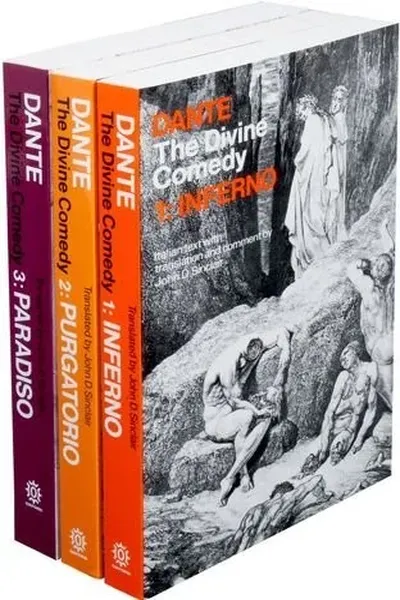
This epic poem recounts Dante's imagined journey through Hell, Purgatory, and Paradise. Written in the early 14th century, it is a rich allegory filled with symbolic meaning and hidden knowledge. The narrative follows Dante as he encounters historical figures, mythical beings, and celestial entities, all while contemplating themes of divine justice and human redemption.
The poem’s allegorical landscapes and encounters serve as a vehicle for exploring faith, virtue, and the soul's pursuit of salvation. Dante uses intricate symbolism to invite readers to consider fundamental questions about existence and the divine order. Its layered meanings have made it a subject of study for those interested in spiritual enlightenment and literary analysis.
Written in the early 14th century, 'La Divina Commedia' draws heavily on medieval Christian theology and Aristotelian philosophy. Its allegorical structure and symbolic language reflect a worldview common in esoteric traditions that sought deeper, hidden meanings within religious texts and cosmology. The poem's detailed mapping of the afterlife, its moral and spiritual hierarchies, and its focus on the soul's transformation align with contemplative practices and mystical thought prevalent during the late medieval period.
💡 Why Read This Book?
Read 'La Divina Commedia' to explore the rich tapestry of symbolism and hidden knowledge embedded within its verses. Ideal for seekers of spiritual enlightenment, literary scholars, and practitioners of esoteric traditions, this epic poem provides a profound journey through the afterlife, revealing the mysteries of faith, virtue, and divine justice. Its philosophical significance and timeless wisdom make it an essential addition to any mystical library.
⭐ Reader Reviews
Honest opinions from readers who have explored this book.
❓ Frequently Asked Questions
What is the significance of 'La Divina Commedia' in esoteric literature?
The Divine Comedy is pivotal in esoteric literature for its deep symbolism and exploration of the afterlife, offering insights into redemption and divine justice.
Who should read 'La Divina Commedia'?
This book is ideal for spiritual seekers, literary scholars, and practitioners of alchemy and Hermeticism.
What are some key themes in 'La Divina Commedia'?
Key themes include the journey through Hell, Purgatory, and Paradise, the quest for redemption, and the exploration of faith and virtue.
How does 'La Divina Commedia' relate to alchemy and Hermeticism?
The text is rich with alchemical symbols and Hermetic teachings, reflecting Dante's esoteric knowledge and philosophical insights.
What makes 'La Divina Commedia' a timeless classic?
Its profound symbolism, philosophical depth, and timeless wisdom make it a enduring classic in both literary and esoteric circles.
🔮 Key Themes & Symbolism
The Journey Through the Afterlife
Dante's pilgrimage through Hell, Purgatory, and Paradise serves as an allegorical journey of the soul's quest for redemption and enlightenment. Each realm is rich with symbolic landscapes and encounters that reveal the mysteries of divine justice and human frailty.
Redemption and Divine Justice
The Divine Comedy explores the themes of redemption and divine justice, presenting a vision of the afterlife where souls are judged and purified according to their deeds on Earth. This journey underscores the importance of faith, virtue, and the pursuit of spiritual growth.
Symbolism and Hidden Knowledge
Dante's work is a valuable collection of symbolism and hidden knowledge, drawing from alchemical, Hermetic, and mystical traditions. The text is filled with allegorical figures and scenes that invite readers to contemplate the deeper meanings of existence and the divine order.
💬 Memorable Quotes
Direct passages from the work, attributed to the author.
“The path to paradise begins in purgatory.”
— This phrase captures the idea that spiritual purification and growth are necessary steps on the journey to divine enlightenment.
💡 Key Ideas
Editorial paraphrase of the work's core concepts — not direct quotes.
The darkest places in hell are reserved for those who maintain their neutrality in times of moral crisis.
This line underscores the importance of taking a stand in moral dilemmas, highlighting the consequences of inaction.
There is no greater pain than to be remembered in pain.
This quote reflects the eternal suffering of souls in Hell, emphasizing the enduring impact of one's actions.
Hope is the thing with feathers.
This line illustrates the resilience of hope, which persists even in the face of adversity and despair.
The greatest gift is the passion for reading.
This quote emphasizes the transformative power of literature and the pursuit of knowledge.
🌙 Esoteric Significance
Tradition
La Divina Commedia belongs to the Hermetic tradition, drawing on alchemical and mystical teachings to explore the mysteries of the soul and the divine order. Dante's journey through the afterlife reflects the alchemical process of purification and transformation, making it a key text for practitioners of Hermeticism and esoteric traditions.
Symbolism
Key symbols in the text include the nine circles of Hell, the mountain of Purgatory, and the celestial spheres of Paradise. Each symbol represents stages of spiritual growth and the soul's journey towards enlightenment. The encounters with historical figures and mythical creatures further enrich the text's esoteric significance.
Modern Relevance
Today, 'La Divina Commedia' continues to inspire seekers of spiritual enlightenment and practitioners of esoteric traditions. Its timeless wisdom and profound symbolism make it a valuable resource for those exploring the mysteries of the soul and the divine order. Modern practitioners often turn to Dante's work for insights into alchemy, Hermeticism, and the quest for redemption.
👥 Who Should Read This Book
Beginners in esoteric studies will find 'La Divina Commedia' an accessible introduction to alchemical and Hermetic teachings. Scholars of literature and philosophy will appreciate its detailed symbolism and philosophical depth. Spiritual seekers will be drawn to its exploration of the afterlife and the quest for redemption. Practitioners of esoteric traditions will find valuable insights and hidden knowledge embedded within its verses.
📜 Historical Context
Written in the early 14th century, 'La Divina Commedia' reflects the political and religious turmoil of Dante's time. The poem was a response to the political exiles and the divisive Church politics of the era. It became a foundational text for both Italian literature and esoteric traditions, influencing generations of writers, scholars, and mystics. Its enduring impact lies in its exploration of the human condition, the afterlife, and the quest for spiritual enlightenment.
📔 Journal Prompts
How does Dante's journey through the afterlife reflect your own spiritual quest?
What symbols in 'La Divina Commedia' resonate with your personal experiences?
How does the theme of redemption in the text apply to your life?
What insights into alchemy and Hermeticism have you gained from reading the poem?
How does the Divine Comedy's exploration of divine justice influence your understanding of morality?
🗂️ Glossary
Alchemy
A medieval chemical science with an occult philosophical dimension, aimed at the transmutation of base metals into gold and the search for the elixir of life.
Hermeticism
A philosophical and spiritual tradition based on the writings of Hermes Trismegistus, emphasizing the unity of all things and the pursuit of divine knowledge.
Purgatory
In Christian theology, the state or place of purification or satisfaction for sins committed during life, where souls are prepared for heaven.
Symbolism
The use of symbols to represent ideas or qualities, often in literature and art, to convey deeper meanings and hidden knowledge.
Redemption
The act of being saved from sin, error, or evil, often through divine intervention or spiritual growth.
This book appears in 3 collections
🔮 Readers Also Liked
Browse all →








More by Dante Alighieri
All books →



From the “Hermeticism” Collection
View all →








More Free Alchemy & Hermeticism Books
View all →