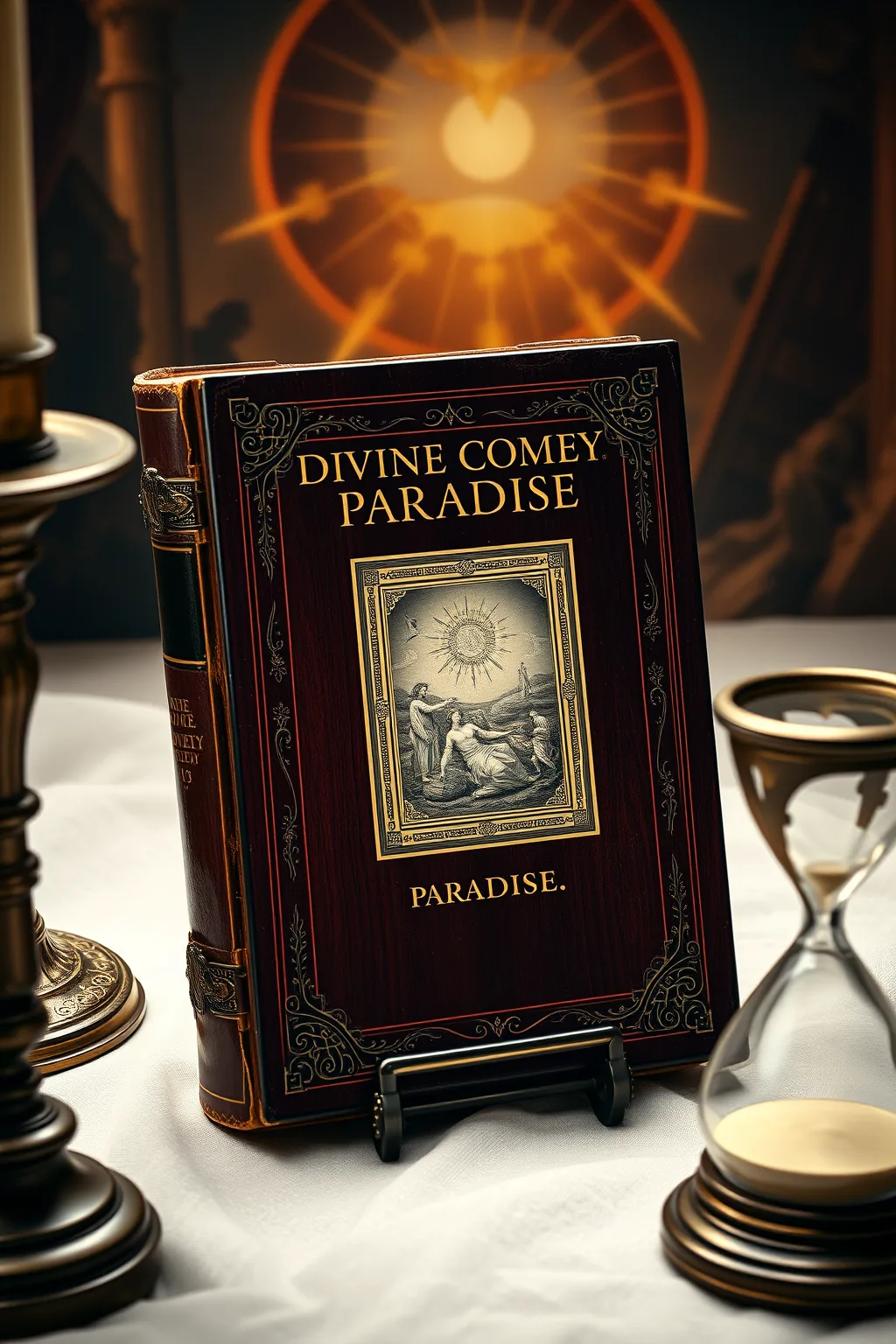
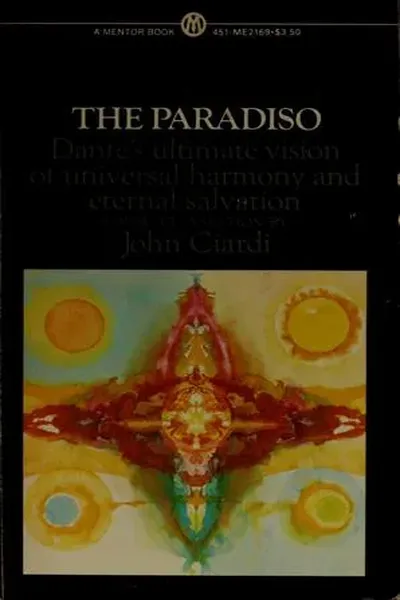
Divine Comedy : Paradise
 62
62

Divine Comedy : Paradise



Isolde Whitaker, Sacred Texts Editor
'Divine Comedy: Paradise' represents the apex of Dante Alighieri's visionary masterpiece, a profound exploration of spiritual ascension. This volume transcends mere narrative, offering a sophisticated cartography of the soul's journey toward divine union. Whitaker illuminates the intricate allegorical layers, the philosophical underpinnings drawn from Aquinas and Neoplatonism, and the rich symbolic language that speaks directly to the esoteric seeker. The clarity with which Dante navigates the celestial spheres, revealing the hierarchy of grace and the nature of ultimate joy, is breathtaking. This is essential reading for anyone engaged in contemplative practice, philosophical inquiry, or the study of Western mystical traditions, offering profound insights into the architecture of consciousness and the pursuit of divine knowledge.
📝 Description
62
Dante Alighieri completed 'Paradise' around 1320, detailing his final ascent to God.
The third part of the Divine Comedy, 'Paradise,' follows Dante's journey through the nine celestial spheres. Unlike the earlier parts, this section focuses on theological concepts and the nature of divine love. Dante encounters souls in each sphere, arranged according to their virtue and proximity to God. The text explains the medieval understanding of the cosmos, governed by angelic intelligences.
Dante's ascent is not just a physical movement but a spiritual and intellectual progression. He grapples with complex philosophical and theological questions, drawing on Neoplatonic ideas and Christian mysticism. The poem uses intricate symbolism and numerology to convey its meanings. It aims to represent the soul's direct experience of God's presence and the ultimate harmony of the universe.
Written in the early 14th century, 'Paradise' reflects a medieval synthesis of Christian theology and Neoplatonic cosmology. It incorporates elements of scholasticism, mysticism, and esoteric traditions that viewed the universe as a divinely ordered hierarchy. The poem's structure, based on the Ptolemaic model of the heavens, and its use of numerology and allegory, align with esoteric practices of finding hidden meaning in creation. This work represents a culmination of learned thought on spiritual ascent and the divine.
💡 Why Read This Book?
For those yearning to grasp the architecture of the divine and the ultimate nature of beatitude, 'Paradise' is an essential guide. It offers profound esoteric insights into cosmic harmony, spiritual ascent, and the language of divine love. Ideal for seekers of hidden wisdom, scholars of Western esotericism, and practitioners aiming to deepen their understanding of the soul's journey towards ultimate truth and illumination.
⭐ Reader Reviews
Honest opinions from readers who have explored this book.
❓ Frequently Asked Questions
What is the primary esoteric theme of 'Paradise'?
The primary esoteric theme is the soul's ascent through celestial realms to achieve direct communion with the Divine, revealing the ordered beauty of creation and the nature of divine love through allegory and symbolism.
How does 'Paradise' differ from the previous parts of the Divine Comedy?
'Paradise' shifts focus from sin and penitence to divine grace, illumination, and the ultimate reward of the virtuous soul, depicting a journey of increasing spiritual understanding and ecstatic union.
What philosophical traditions heavily influence 'Paradise'?
It is deeply influenced by Thomistic philosophy, Neoplatonism, and medieval cosmology, weaving together theological doctrine with mystical contemplation and symbolic representation.
Who is Beatrice in the context of Dante's journey?
Beatrice serves as Dante's guide through Paradise, representing divine revelation, theology, and grace, leading him from earthly love to spiritual understanding and ultimate divine vision.
Is 'Paradise' accessible to modern readers without prior knowledge?
While rich in complexity, with scholarly editions and annotations, 'Paradise' can be approached by modern readers seeking profound spiritual and philosophical insights, though some familiarity with medieval thought enhances appreciation.
🔮 Key Themes & Symbolism
Celestial Ascent and Divine Illumination
The journey through the nine heavens represents the soul's progressive purification and elevation, moving from the earthly realm towards direct apprehension of the Divine Light. Each sphere imparts a unique form of knowledge and grace, mirroring the stages of mystical union. This ascent is not merely spatial but a profound transformation of consciousness, where the soul sheds its limitations and becomes receptive to divine truths, ultimately experiencing the beatific vision.
The Architecture of Divine Love and Order
Paradise is depicted as a meticulously ordered cosmos, governed by divine love and immutable laws. Dante's vision reveals the intricate celestial hierarchy, from the Empyrean to the outermost spheres, all interconnected by the animating force of God's will. This section explores the concept of universal harmony, where every element, from the smallest star to the highest seraph, plays its part in the grand design, reflecting a perfect balance and benevolent intelligence.
Symbolism of Beatitude and Spiritual Attainment
The souls encountered in Paradise embody different degrees of blessedness and virtues, serving as living examples of spiritual attainment. Dante employs detailed symbolism, from the light and music of the heavens to the specific virtues represented by each saint, to convey the ineffable nature of divine joy and the rewards of a life lived in accordance with God's will. This theme studies the esoteric understanding of spiritual fulfillment and the ultimate purpose of human existence.
💬 Memorable Quotes
Direct passages from the work, attributed to the author.
“The love that moves the sun and the other stars.”
— This iconic closing line captures the poem's ultimate revelation: the universe is driven by divine love, a force of creation and cohesion that permeates all existence.
“And I beheld that it was the nature of the blessed to be enclosed in that substance.”
— This signifies the soul's ultimate resting place and fulfillment within the divine essence, a state of perfect contentment and being.
“Here piety found its home, and mercy, and justice, and temperance, and fortitude, and prudence.”
— This highlights the celestial realm as the origin and perfect manifestation of all virtues, illustrating their divine source and harmonious interplay.
“Beauty that was not of this world, but born from the eternal fountain.”
— This refers to the transcendent beauty of the Empyrean and the divine presence, a beauty that surpasses all earthly comprehension and originates from the ultimate source.
💡 Key Ideas
Editorial paraphrase of the work's core concepts — not direct quotes.
Within its depth I saw gathered, bound by love in one volume, whatever is scattered in the universe.
This quote describes Dante's vision of God as the unifying principle of all reality, where disparate elements are brought together into a singular, perfect whole.
🌙 Esoteric Significance
Tradition
The 'Paradise' is deeply rooted in the Western esoteric tradition, particularly drawing from Neoplatonic philosophy's concept of emanation from the One and the soul's ascent back to its divine source. It also integrates elements of Christian mysticism, angelic hierarchies, and medieval scholasticism, presenting a cohesive, albeit allegorical, cosmology that speaks to the soul's journey towards ultimate union and illumination.
Symbolism
Symbolism abounds in 'Paradise,' with celestial bodies representing divine attributes, virtues, and souls of varying spiritual merit. Light, music, and geometric perfection are recurring motifs signifying divine presence and order. The spheres themselves form a symbolic map of consciousness, and the figures Dante encounters—saints, theologians, angels—serve as archetypes of spiritual attainment, each sphere and inhabitant offering a lesson in divine wisdom.
Modern Relevance
In an era often characterized by fragmentation and materialism, 'Paradise' offers a powerful antidote, presenting a vision of cosmic unity, divine purpose, and the soul's inherent capacity for transcendence. Its exploration of consciousness, grace, and the pursuit of higher truth continues to resonate with modern seekers, providing a framework for contemplating existence, morality, and the enduring quest for meaning and spiritual fulfillment.
👥 Who Should Read This Book
This volume is essential for scholars of medieval literature, theology, and philosophy, offering primary source material for understanding the intellectual and spiritual field of the era. Esoteric practitioners and seekers of spiritual wisdom will find clear insights into the nature of consciousness, divine order, and the path of soul ascension. Beginners interested in the foundational texts of Western mysticism will discover a rich allegorical narrative that, with guidance, can illuminate complex metaphysical concepts. Those drawn to poetry that marries profound philosophical inquiry with breathtaking visionary imagery will find 'Paradise' an exceptional reading experience.
📜 Historical Context
Written in the early 14th century, Dante Alighieri's 'Divine Comedy' emerged from a turbulent period in Italian history, marked by political strife between Guelphs and Ghibellines, and the intellectual ferment of the late Middle Ages. The poem synthesizes elements of classical philosophy (Aristotle, Plato, Virgil), Christian theology (Thomas Aquinas), and contemporary scientific understanding of cosmology. Esoterically, it draws upon Neoplatonic ideals of emanation and ascent, Kabbalistic notions of divine order, and the rich allegorical tradition prevalent in medieval literature and spirituality. The 'Comedy' was not merely a literary endeavor but a profound theological and philosophical statement, intended to guide readers towards salvation and a deeper understanding of God's justice and mercy in a world grappling with sin and seeking divine order.
📔 Journal Prompts
Reflect on a moment in your life when you felt a profound sense of order or harmony in the universe.
Consider the concept of 'divine love' as presented by Dante. How does this concept manifest or how might it manifest in your own life?
What does the idea of 'celestial ascent' mean to you metaphorically? What are the steps or stages in your own personal or spiritual journey?
Identify a virtue that you aspire to embody more fully. How might cultivating this virtue bring you closer to a state of inner 'paradise'?
Dante encounters souls in Paradise who embody different forms of blessedness. How might you describe different states of spiritual fulfillment or peace?
🗂️ Glossary
Empyrean
The highest heaven, the dwelling place of God and the blessed souls, considered the area of pure light and divine presence, beyond the physical cosmos.
Beatific Vision
The direct, unmediated vision of God experienced by the blessed in Paradise, considered the ultimate state of spiritual fulfillment and joy.
Neoplatonism
A philosophical system influenced by Plato, emphasizing the existence of a transcendent, ineffable 'One' from which all reality emanates, and the soul's journey to return to this source.
Thomism
The philosophical and theological system developed by Saint Thomas Aquinas, which synthesized Aristotelian philosophy with Christian doctrine.
Allegory
A literary or symbolic representation in which characters, events, and settings represent abstract ideas or principles, used extensively by Dante to convey spiritual truths.
This book appears in 3 collections
🔮 Readers Also Liked
Browse all →







More by Dante Alighieri
All books →



From the “Tarot” Collection
View all →








More Free Divination & Tarot Books
View all →