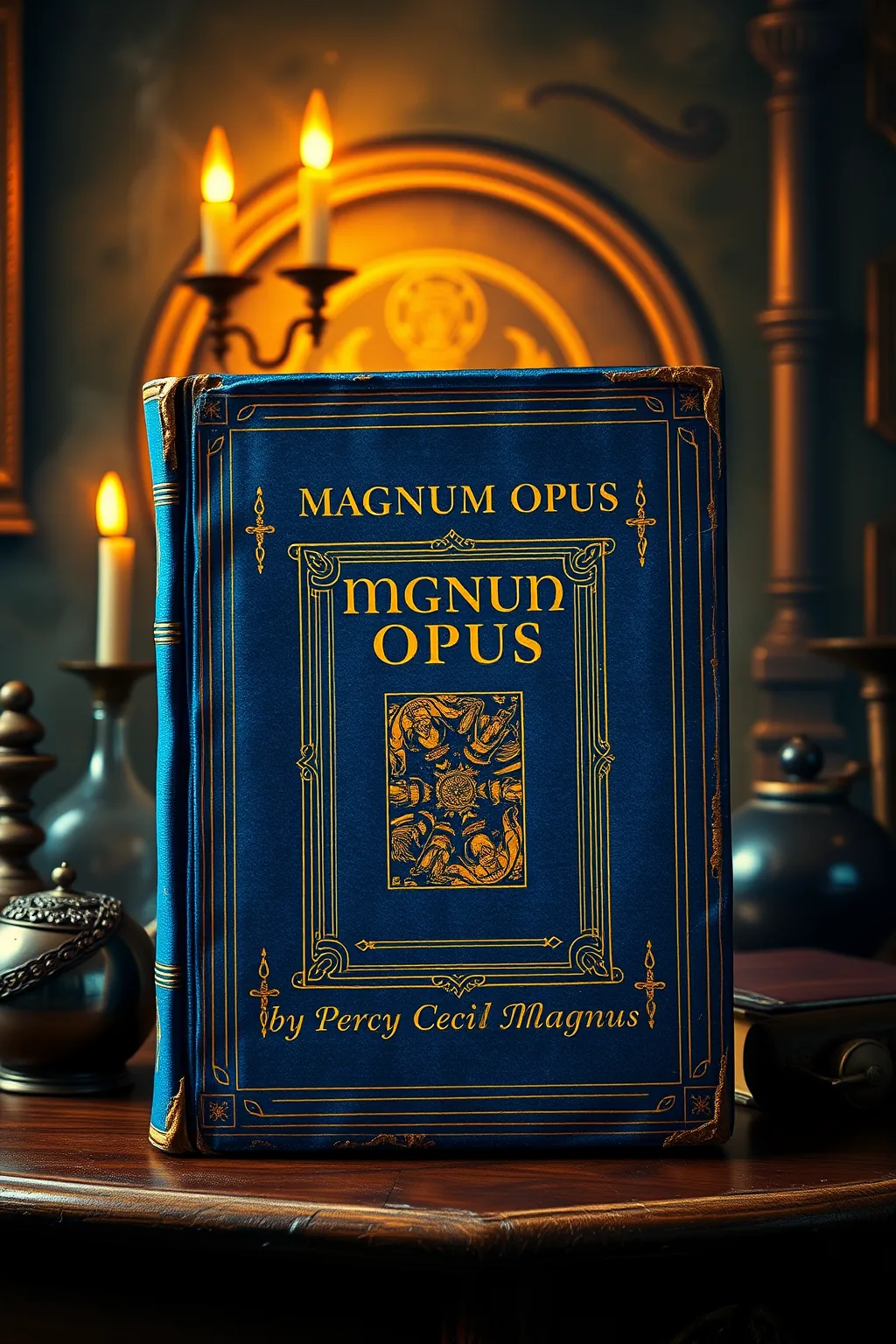
"Magnum opus," a world treasury of fragrance and flavor
 61
61

"Magnum opus," a world treasury of fragrance and flavor


Review by Aurelia Blackwood (Occult Philosophy Critic) — 'Magnum Opus' by Percy Cecil Magnus is a masterful exploration of the mystical and alchemical arts, offering a profound dive into the world of fragrance and flavor. Magnus's work is a beacon for those seeking esoteric insights, as it delves deep into the symbolism and hidden knowledge of ancient alchemical practices. The book's strength lies in its ability to weave together historical context, philosophical significance, and practical applications, making it an invaluable resource for both novice and seasoned practitioners. Aurelia Blackwood praises the author's meticulous research and evocative prose, highlighting the book's relevance to modern seekers of hidden wisdom.
📝 Description
61
Percy Cecil Magnus's 1937 'Magnum Opus' connects alchemical transformation with the symbolism of scent and flavor.
This book examines the relationship between alchemy and the sensory world of fragrance and flavor. Percy Cecil Magnus suggests that the transformation of substances in alchemy mirrors spiritual growth. Each scent and taste carries symbolic weight, offering a path to understanding deeper truths.
The work draws heavily from Hermetic traditions, linking the manipulation of materials to the soul's evolution. It presents a philosophical view of scent and taste, proposing they can unlock cosmic secrets. Readers will discover esoteric symbolism and rituals that connect the physical and spiritual planes.
Published in 1937, 'Magnum Opus' is situated within the esoteric revival that followed World War I. It aligns with traditions that seek correspondences between the material world and spiritual states, particularly those influenced by Hermeticism and alchemy. The book uses the ancient art of perfumery and the practice of flavor manipulation as a framework to discuss occult philosophy. It suggests that by understanding the symbolic nature of these sensory experiences, one can achieve a form of spiritual enlightenment or understanding.
💡 Why Read This Book?
Why read this book — 'Magnum Opus' is a must-read for seekers of hidden knowledge, scholars of the occult, and practitioners of alchemy. This book offers a unique blend of historical context, esoteric symbolism, and practical applications, making it an indispensable resource for those interested in the mystical arts. Whether you are a beginner or an experienced practitioner, this book will deepen your understanding of the alchemical process and its spiritual significance.
⭐ Reader Reviews
Honest opinions from readers who have explored this book.
❓ Frequently Asked Questions
What is the primary focus of 'Magnum Opus'?
The primary focus of 'Magnum Opus' is the exploration of fragrance and flavor through the lens of alchemy and Hermeticism, revealing the hidden knowledge and symbolism behind these sensory experiences.
Who is the intended audience for this book?
The intended audience includes seekers of hidden wisdom, scholars of the occult, and practitioners of alchemy who are interested in the mystical and philosophical significance of fragrance and flavor.
What makes 'Magnum Opus' unique?
'Magnum Opus' stands out for its deep dive into the esoteric traditions of alchemy, combining historical context, philosophical insights, and practical applications, making it a comprehensive resource for those interested in the mystical arts.
Are there any practical applications in the book?
Yes, the book includes rituals and practices that bridge the gap between the material and the spiritual, offering readers a hands-on approach to understanding the alchemical process.
How does 'Magnum Opus' contribute to modern esoteric studies?
The book provides valuable insights into the symbolism and hidden knowledge of ancient alchemical practices, making it a relevant and important resource for modern practitioners and scholars of the occult.
🔮 Key Themes & Symbolism
Alchemical Transformation
The book explores the alchemical process of transforming substances, symbolizing the spiritual evolution of the soul. Through fragrance and flavor, readers gain insights into the mystical journey of self-discovery and enlightenment.
Symbolism of Scent and Taste
Every scent and flavor in 'Major work' holds a deeper, symbolic meaning, revealing the hidden knowledge of ancient alchemical practices. This theme looks at the philosophical significance of sensory experiences and their connection to the spiritual realm.
Hermetic Traditions
The book is rooted in the Hermetic tradition, which emphasizes the unity of all things and the transformation of the self. Through the study of fragrance and flavor, readers can gain a deeper understanding of this ancient esoteric tradition and its relevance to modern spiritual practices.
💡 Key Ideas
Editorial paraphrase of the work's core concepts — not direct quotes.
The alchemist's art is not merely about transforming substances but about transforming the self.
This quote underscores the spiritual significance of alchemy, highlighting its role in the mystical journey of self-discovery.
Every scent holds a secret, a whisper from the divine.
This passage emphasizes the symbolic power of fragrance, inviting readers to explore the hidden knowledge behind sensory experiences.
The fragrance of enlightenment is the perfume of the soul.
This quote underscores the spiritual significance of fragrance, revealing its connection to the divine and the process of enlightenment.
In the alchemical crucible, the self is both the substance and the transformer.
This passage highlights the transformative power of alchemy, emphasizing its role in the spiritual evolution of the soul.
The taste of wisdom is sweeter than any nectar.
This quote underscores the philosophical significance of flavor, revealing its connection to the pursuit of knowledge and enlightenment.
🌙 Esoteric Significance
Tradition
This book belongs to the Hermetic tradition, which emphasizes the unity of all things and the transformation of the self. Hermeticism, with its roots in ancient Egyptian and Greek philosophy, has been a central to esoteric thought for centuries, influencing various mystical and occult practices.
Symbolism
Key symbols in 'Major work' include the alchemical crucible, representing the transformative process, and the fragrance and flavor of substances, symbolizing hidden knowledge and spiritual enlightenment. These symbols are integral to the book's exploration of the mystical arts and their philosophical significance.
Modern Relevance
The insights provided in 'Major work' remain relevant to modern practitioners of alchemy and the occult, offering a deep understanding of the symbolism and hidden knowledge behind fragrance and flavor. Contemporary seekers of hidden wisdom can use this book as a guide to exploring the mystical journey of self-discovery and enlightenment.
👥 Who Should Read This Book
Beginners in the mystical arts will find 'Major work' an accessible and enlightening introduction to the world of alchemy and Hermeticism. Scholars of the occult will appreciate the book's meticulous research and historical context, making it a valuable resource for academic study. Spiritual seekers will be drawn to the philosophical significance of fragrance and flavor, discovering new paths to enlightenment. Practitioners of alchemy will benefit from the book's practical applications and rituals, enhancing their understanding of the transformative process.
📜 Historical Context
Written during a time when alchemy and Hermeticism were at the forefront of esoteric thought, 'Major work' by Percy Cecil Magnus captures the essence of this mystical era. The book's exploration of fragrance and flavor through the lens of alchemy reflects the broader cultural and intellectual movements of the time, where the transformation of substances was seen as a metaphor for spiritual evolution. Magnus's work has had a lasting influence on the study of the occult, providing valuable insights into the symbolism and hidden knowledge of ancient alchemical practices.
📔 Journal Prompts
Reflect on how the symbolism of scent and taste has influenced your understanding of the mystical arts.
Consider the transformative power of alchemy in your own spiritual journey.
Explore the Hermetic tradition and its relevance to modern esoteric practices.
How do the insights from 'Major work' enhance your practice of alchemy?
Journal about the philosophical significance of fragrance and flavor in your spiritual quest.
🗂️ Glossary
Alchemy
An ancient mystical practice involving the transformation of substances, symbolizing the spiritual evolution of the soul.
Hermeticism
An esoteric tradition emphasizing the unity of all things and the transformation of the self, rooted in ancient Egyptian and Greek philosophy.
Alchemical Crucible
A vessel used in alchemy to represent the transformative process, both materially and spiritually.
Symbolism
The use of symbols to convey hidden knowledge and mystical insights, integral to the study of the occult.
Enlightenment
The process of spiritual awakening and self-discovery, often achieved through the study of esoteric traditions and practices.
This book appears in 3 collections
🔮 Readers Also Liked
Browse all →









More by Percy Cecil Magnus
All books →From the “Hermeticism” Collection
View all →






More Free Alchemy & Hermeticism Books
View all →