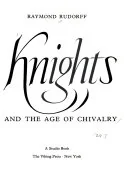
Knights and the Age of Chivalry
 73
73

Knights and the Age of Chivalry
Rudorff's exploration of the knightly class is commendably thorough, especially in its engagement with the material culture of warfare and the feudal underpinnings of knighthood. The section detailing the transition in armor from mail to plate, for instance, provides a solid, factual anchor. However, the work occasionally falters in its synthesis of the more abstract elements of chivalry; the discussion of courtly love, while present, feels somewhat detached from the martial focus, lacking a nuanced integration. The prose, while clear, can sometimes lean towards a descriptive cataloging rather than a dynamic historical narrative. Despite these limitations, "Knights and the Age of Chivalry" serves as a valuable, if somewhat dated, reference for understanding the multifaceted role of the medieval knight. It is a useful, if not entirely compelling, historical survey.
📝 Description
73
Raymond Rudorff's 1974 book examines the medieval knightly class, from martial origins to ritualized forms.
Originally published in 1974, Raymond Rudorff's "Knights and the Age of Chivalry" scrutinizes the medieval knightly class. The work charts the progression of knighthood, beginning with its martial roots and advancing to its later, more ritualized and symbolic manifestations. Rudorff details the social structures, ethical codes, and combat methods that characterized this significant historical era. The book intends to provide a thorough overview of the knight's position within medieval society, covering warfare, courtly life, and the growth of chivalric principles.
This text is suitable for individuals interested in medieval history, particularly its military and social dimensions. Students of European history, social historians, and those fascinated by medieval warfare will find its detailed accounts useful. It also addresses readers curious about the historical basis for concepts such as honor, loyalty, and martial skill as expressed by the knightly orders. Those interested in the shift from early medieval warrior elites to the more structured knights of later periods will find this book informative.
Published in 1974, Rudorff's work entered a scholarly discourse concerned with medieval social history. It emerged during a time when historians were reevaluating romanticized views of chivalry, seeking to connect them with tangible social and economic realities. This period saw significant studies on feudal systems and socio-economic analyses of the Middle Ages. Rudorff's approach likely contributed to this by offering a grounded perspective on knighthood, distinct from purely literary or idealized interpretations.
💡 Why Read This Book?
• Understand the practicalities of 'knight service' and its feudal obligations, learning how land tenure directly shaped a knight's military and social standing in the 11th century. • Trace the evolution of knightly equipment and warfare through specific technological shifts, such as the development of plate armor by the late 15th century, and its impact on battlefield tactics. • Analyze the historical roots of chivalric ideals, discerning how concepts like 'courtly love' were both idealized and, at times, separate from the brutal realities of medieval conflict.
⭐ Reader Reviews
Honest opinions from readers who have explored this book.
❓ Frequently Asked Questions
What is the primary focus of Raymond Rudorff's "Knights and the Age of Chivalry"?
The book primarily examines the medieval knightly class, tracing their evolution from early martial figures to their later, more ritualized roles. It details their social structures, codes of conduct, and military practices throughout the Middle Ages.
When was "Knights and the Age of Chivalry" first published?
The book was first published in 1974, placing it within a period of significant academic interest in medieval social and military history.
Does the book discuss the concept of courtly love?
Yes, Rudorff's work addresses the tradition of courtly love, analyzing its influence on knightly behavior and expression, while also considering its distinction from the more pragmatic aspects of knightly life and warfare.
What historical period does "Knights and the Age of Chivalry" cover?
The book covers the broad sweep of the Middle Ages, focusing on the development and characteristics of the knightly class from their early medieval origins through to later medieval periods.
What kind of reader would benefit most from this book?
Readers interested in medieval history, social historians, military history enthusiasts, and those seeking to understand the historical context of chivalric ideals and the knight's role in society would find this book beneficial.
Are specific battles or military campaigns detailed in the book?
While the book focuses on the knightly class and their practices, it discusses the evolution of warfare and weaponry, providing context for military engagements rather than detailed campaign analyses.
🔮 Key Themes & Symbolism
Evolution of the Knight
The work charts the transformation of the knight from a primarily military figure in the early Middle Ages to a more codified and symbolic presence in later centuries. This includes examining changes in their social standing, legal status, and the development of specific chivalric duties. Rudorff highlights how the role was shaped by evolving feudal relationships and the changing nature of warfare, moving from battlefield dominance to ceremonial functions and territorial administration.
Chivalric Codes and Ideals
Rudorff analyzes the emergence and application of chivalric codes, differentiating between the idealized concepts of honor, loyalty, and courtesy, and the often harsher realities faced by knights. The book explores how these ideals influenced knightly conduct, both in war and peace, and how they were propagated through literature and social customs. It also touches upon the complexities of concepts like 'courtly love' and their integration into the knightly ethos.
Material Culture of Knighthood
A significant aspect of the book involves the examination of the knight's equipment and its historical development. This includes detailed discussions on the evolution of armor, from chainmail to plate armor, and the advancements in weaponry. Rudorff connects these material changes to shifts in military tactics and the economic capacity required to maintain a knightly status, illustrating how technology directly impacted the profession.
Feudal Structure and Obligation
The work underscores the knight's position within the feudal system. It explains the concept of 'knight service' as a fundamental obligation tied to land ownership and the military duties expected of vassals. Rudorff illustrates how this structure dictated a knight's power, responsibilities, and relationships with lords and subordinates, forming the bedrock of medieval social and political order.
💬 Memorable Quotes
Direct passages from the work, attributed to the author.
“The knight was fundamentally a warrior, his status derived from martial prowess.”
— This statement captures the core identity of the knight, emphasizing that despite later developments in chivalric ceremony and courtly ideals, the foundation of knighthood rested upon skill and effectiveness in combat.
“Armor evolved significantly to counter new battlefield threats.”
— This highlights the adaptive nature of knightly equipment, showing that advancements in weaponry and combat tactics directly drove changes in defensive gear, such as the shift from mail to plate armor.
“Feudal obligations dictated much of a knight's life and service.”
— This points to the overarching influence of the feudal system, where a knight's duties, land tenure, and social position were largely determined by their sworn oaths and reciprocal relationships within the hierarchy.
“Chivalric ideals often presented a refined image distinct from military reality.”
— This suggests a duality in knighthood: the aspirational code of honor and courtesy versus the often brutal necessities of warfare and political maneuvering.
“The term 'chivalry' itself underwent considerable change over the centuries.”
— This indicates that the concept of chivalry was not static but developed and shifted in meaning and practice throughout the medieval period, reflecting broader societal and cultural transformations.
🌙 Esoteric Significance
Tradition
While "Knights and the Age of Chivalry" is primarily a historical work, its focus on codes, symbolism, and ideals touches upon themes relevant to Western esoteric traditions. The emphasis on structured hierarchies, oaths, and the pursuit of virtue can be seen as resonating with certain chivalric orders that incorporated mystical or quasi-religious elements. The book, however, does not explicitly align with a specific esoteric lineage like Hermeticism or Theosophy, but rather provides the historical context from which such symbolic systems often draw.
Symbolism
The knightly sword, for example, often symbolized justice, truth, and divine authority in medieval iconography, extending beyond its martial purpose. The castle represented not only a defensive structure but also a microcosm of the feudal order and a symbol of earthly power. The very act of dubbing a knight, with its rituals and oaths, carried symbolic weight, signifying a spiritual as well as a social transformation, a concept explored in various initiatory traditions.
Modern Relevance
Contemporary practitioners of Western esoteric traditions, particularly those involved with chivalric orders or initiatory societies, often draw upon the historical understanding of knighthood presented in works like Rudorff's. Understanding the historical development of chivalric ideals, the symbolism embedded in knightly practices, and the martial context provides a foundation for interpreting modern symbolic systems that claim lineage or inspiration from medieval chivalry.
👥 Who Should Read This Book
• History students specializing in the European Middle Ages seeking a foundational understanding of the knightly class. • Enthusiasts of military history interested in the evolution of armor, weaponry, and medieval warfare tactics. • Readers curious about the historical origins of concepts like honor, loyalty, and chivalry, wanting to separate historical fact from later romanticization.
📜 Historical Context
Published in 1974, Raymond Rudorff's "Knights and the Age of Chivalry" entered a scholarly landscape increasingly focused on the social and economic underpinnings of medieval society. This period saw historians like Georges Duby challenging romanticized views of feudalism and chivalry, emphasizing class conflict and material realities. Rudorff's work likely engaged with this trend, offering a detailed look at the knightly class's function within the feudal structure and the evolution of their martial and social roles. While not explicitly engaging with a named contemporary scholar in this specific text, the book operates within a broader academic milieu that included figures like Marc Bloch, whose studies on feudal society were highly influential. The reception of such works in the 1970s often involved debates about whether to prioritize socio-economic analysis or the cultural and ideological aspects of medieval life.
📔 Journal Prompts
The evolution of the knight's armor from chainmail to plate armor.
Consider the relationship between 'knight service' and land tenure.
Reflect on the symbolic meaning of the knight's sword.
Analyze the historical basis for the ideal of courtly love.
Compare the martial realities of the 11th-century knight with the late 15th-century knight.
🗂️ Glossary
Knight Service
The military obligation owed by a vassal to his lord in exchange for land (a fief) under the feudal system. This typically involved providing armed men for a specified period each year.
Chivalry
A medieval knightly code of conduct that emphasized bravery, honor, loyalty, courtesy, and the protection of the weak, though its practical application often varied.
Fief
An estate of land held from a feudal lord in return for service, typically military service. It was the economic basis for knighthood.
Courtly Love
A medieval literary and courtly ideal of love, often unconsummated and characterized by devotion, service, and adoration from a knight to a noble lady.
Mail Armor
Protective clothing worn by knights, made of interlocking metal rings. It was common from the early Middle Ages until the widespread adoption of plate armor.
Plate Armor
Full body armor made from shaped metal plates, developed in the late medieval period. It offered superior protection against blows and projectiles compared to mail.
Dubbing
The ceremonial act of conferring knighthood, often involving a symbolic strike with a sword on the shoulder and an oath of fealty.
This book appears in 1 collection
🔮 Readers Also Liked
Browse all →









From the “Templar Knights” Collection
View all →









More Free Esoteric History & Biography Books
View all →