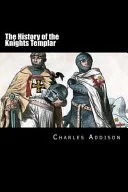
The History of the Knights Templar
 81
81

The History of the Knights Templar
Addison’s meticulously researched history of the Knights Templar offers a solid, unvarnished account of the Order's trajectory. The strength lies in its detailed chronology and its dispassionate presentation of the facts, particularly concerning the financial and military infrastructure the Templars developed. A limitation, however, is the text's somewhat dry delivery, which can make the intricate political maneuvering feel less dramatic than its subject warrants. The section detailing the accusations and subsequent trials, especially the coerced confessions under torture, provides a stark and impactful look at the era's judicial realities. It avoids sensationalism, letting the grim facts speak for themselves. This is a valuable resource for understanding the Templars as historical actors, rather than mythic figures.
📝 Description
81
Charles Addison's 1842 history details the Knights Templar from their 12th-century origins to their 14th-century suppression.
Published in 1842, Charles Addison's "The History of the Knights Templar" provides a detailed account of the medieval military order. Addison traces the Knights Templar from their founding after the First Crusade, their establishment as monks and warriors, and their significant role in financing medieval Europe. The book covers their involvement in the Crusades and their influence across the continent.
Addison examines how the Templars amassed wealth through land and banking, and their complex organizational structure. He also discusses the accusations of heresy and blasphemy that led to their downfall, detailing the actions of Philip IV of France and the mass arrests in 1307. This work aims to offer a factual understanding of the Order, separating historical reality from later myths and speculation.
While Addison's work is a historical narrative, it touches upon themes that resonate with later esoteric traditions. The Templars' alleged secret rituals, their immense wealth, and their mysterious suppression have fueled centuries of speculation. These elements contributed to their mystique, influencing later secret societies and occult theories that sought to connect with or reinterpret the Order's legacy. Addison's factual approach stands in contrast to later romanticized or speculative interpretations, yet his detailed account of the Order's history provides the raw material for such esoteric continuations.
💡 Why Read This Book?
• Gain a clear understanding of the Knights Templar's operational structure and financial influence, drawing on specific details about their land acquisition and banking practices documented in the text. • Grasp the historical context of their downfall, particularly the events surrounding the mass arrests in France in 1307 and the political motivations behind them. • Explore the evolution of military religious orders during the Crusades, recognizing their distinct role and power dynamics as presented through Addison's analysis.
⭐ Reader Reviews
Honest opinions from readers who have explored this book.
❓ Frequently Asked Questions
When were the Knights Templar founded and by whom?
The Knights Templar were founded around 1119 by French knights Hugh de Payens and Godfrey de Saint-Omer, initially to protect Christian pilgrims in the Holy Land.
What was the primary role of the Knights Templar?
Their primary roles evolved from protecting pilgrims to becoming elite fighting units in the Crusades and managing significant financial assets across Europe.
What led to the downfall of the Knights Templar?
The Order was suppressed following accusations of heresy and blasphemy, amplified by King Philip IV of France, leading to mass arrests in 1307 and eventual dissolution by the Pope.
How long did the Knights Templar organization exist?
The organization existed for nearly two centuries, from its founding around 1119 until its official dissolution in 1312.
What were the distinctive symbols of the Knights Templar?
Their most recognizable symbol was the white mantle adorned with a red cross, signifying their dual nature as monks and warriors.
Was Charles Addison's book originally written in the 19th century?
No, Charles Addison's 'The History of the Knights Templar' was first published much later, on February 22, 2016, though it draws on historical research.
🔮 Key Themes & Symbolism
Military Prowess and Devotion
The book details the dual identity of the Templars as warrior monks. It explores their rigorous martial training and their monastic vows, examining how these seemingly contradictory aspects defined their effectiveness on the battlefield during the Crusades and their unique position within the Church hierarchy. Addison highlights their skilled combat, often in distinctive white mantles with a red cross, while also recounting their adherence to monastic rules and spiritual devotion.
Financial Power and Influence
Addison meticulously documents the Knights Templar's significant economic power. The work examines their role as early bankers, managing vast sums for pilgrims and royalty, and their extensive landholdings across Europe. This section explores how their financial acumen and network allowed them to accumulate wealth and exert considerable influence, becoming indispensable to medieval economies and monarchies.
Accusations and Suppression
A crucial aspect of the book is the account of the Order's downfall. It details the widespread arrests initiated in 1307 under Philip IV of France, the subsequent trials, and the often-coerced confessions of heresy and blasphemy. Addison analyzes the political motivations behind these accusations and the Papal decision to dissolve the Order in 1312, shedding light on the complex forces that led to their demise.
Legacy and Mythos
While focusing on historical fact, Addison's work implicitly touches upon the enduring legacy of the Templars. The book provides the factual foundation upon which later myths and esoteric interpretations have been built. By presenting a clear historical narrative, it allows readers to distinguish between the actual historical figures and the later romanticized or conspiratorial portrayals that have emerged over centuries.
💬 Memorable Quotes
Direct passages from the work, attributed to the author.
“The Order existed for nearly two centuries.”
— This simple statement underscores the significant duration of the Knights Templar's influence, a period spanning from the early 12th century to the early 14th century, demonstrating their deep integration into medieval society.
“Templar knights, in their distinctive white mantles with a red cross, were among the most skilled fighting units of the Crusades.”
— This highlights the Templars' dual identity as religious figures and elite warriors, emphasizing their martial effectiveness and iconic visual representation that became synonymous with the Crusades.
“In 1307, many of the Order's members in France were arrested, tortured into giving false confessions...”
— This points to the violent suppression of the Templars, revealing the brutal methods employed to dismantle the Order and the alleged coercion involved in securing damaging testimonies against them.
“The Poor Fellow-Soldiers of Christ and of the Temple of Solomon...”
— This formal designation reveals the spiritual and architectural origins of the Order, linking their identity to Christ, Solomon's Temple, and a sense of humble service, contrasting with their later immense power.
“...among the wealthiest and most powerful of the Western Christian military orders.”
— This emphasizes the substantial economic and political sway the Templars commanded, positioning them as a dominant force within the medieval landscape, far beyond their initial military mandate.
🌙 Esoteric Significance
Tradition
While Addison's work is primarily historical, it provides the foundational context for many esoteric interpretations of the Knights Templar. These interpretations often draw from Hermetic, Gnostic, and Masonic traditions, viewing the Templars not just as soldiers but as custodians of ancient knowledge or initiatory rites. Addison's factual account of their structure, beliefs (as officially stated), and their persecution offers a critical baseline against which these later esoteric claims can be evaluated.
Symbolism
The distinctive white mantle with a red cross is central, symbolizing purity and martyrdom. The Order's association with the Temple of Solomon itself carries profound symbolic weight, linking them to ancient wisdom, sacred geometry, and hidden spiritual truths in esoteric lore. Addison details their official role, but the Templars' architectural and financial power in the medieval period also lends itself to symbolic interpretations of hidden influence and sacred order.
Modern Relevance
Contemporary esoteric thinkers and practitioners, particularly within Freemasonry and various Rosicrucian and Templar-inspired orders, continue to draw inspiration from the Knights Templar narrative. Addison's historical grounding allows these modern groups to connect their own symbolic systems and rituals to a tangible historical predecessor, exploring themes of chivalry, spiritual warfare, and the preservation of esoteric knowledge through the ages.
👥 Who Should Read This Book
• Students of medieval military history seeking a factual overview of the Knights Templar's rise and fall, appreciating the detailed account of their organization and campaigns. • Researchers interested in the intersection of religion, finance, and politics in the Middle Ages, who will benefit from the book's exploration of Templar banking and landholdings. • Enthusiasts of historical mysteries and the origins of secret societies, who can use this text to understand the historical basis before exploring more speculative theories.
📜 Historical Context
Charles Addison's "The History of the Knights Templar" emerged in 2016, a period marked by renewed popular interest in historical military orders and esoteric traditions. The work situates itself within the long tradition of Templar scholarship, which dates back to contemporary chroniclers and continued through historians like Joseph von Hammer-Purgstall in the 19th century. Addison's research confronts the era of the High Middle Ages, a time when religious fervor, papal authority, and the nascent power of European monarchies created a complex political climate. The book implicitly engages with the intellectual currents of its own time, offering a factual counterpoint to more speculative theories about Templar secrets. It addresses the important events of 1307, when King Philip IV of France orchestrated the mass arrests, a move that significantly impacted the Order's reception and led to its eventual suppression by Pope Clement V in 1312.
📔 Journal Prompts
The Templars' dual role as warrior and monk: how does this concept challenge conventional categories?
Reflect on the significance of the 1307 arrests for the Order's public image.
Consider the financial mechanisms the Templars employed to gain power.
Analyze the symbolic weight of the Temple of Solomon in relation to the Order.
Explore the contrast between the Templars' official vows and their documented wealth.
🗂️ Glossary
Poor Fellow-Soldiers of Christ and of the Temple of Solomon
The full, official name of the Knights Templar, indicating their religious devotion and their founding association with the site of Solomon's Temple in Jerusalem.
Crusades
A series of religious wars sanctioned by the Latin Church in the medieval period, primarily aimed at recovering the Holy Land from Islamic rule, in which the Templars played a significant military role.
Military Orders
Religious organizations founded in the Middle Ages, comprising knights who vowed to serve God through military action, often defending Christian territories or pilgrims.
Heresy
Belief or opinion contrary to orthodox religious doctrine. Accusations of heresy were central to the charges brought against the Templars during their suppression.
Philip IV of France
The French monarch who initiated the arrest of the Knights Templar in 1307, driven by financial motives and a desire to consolidate royal power.
Dissolution
The formal disbandment of the Knights Templar Order, decreed by Pope Clement V in 1312 under pressure from King Philip IV.
White Mantle with Red Cross
The iconic attire of the Knights Templar, symbolizing their purity and their commitment to martyrdom in service to Christ.
This book appears in 1 collection
🔮 Readers Also Liked
Browse all →









From the “Templar Knights” Collection
View all →







More Free Occult Philosophy Books
View all →