Kabbalah

 63
63

Kabbalah

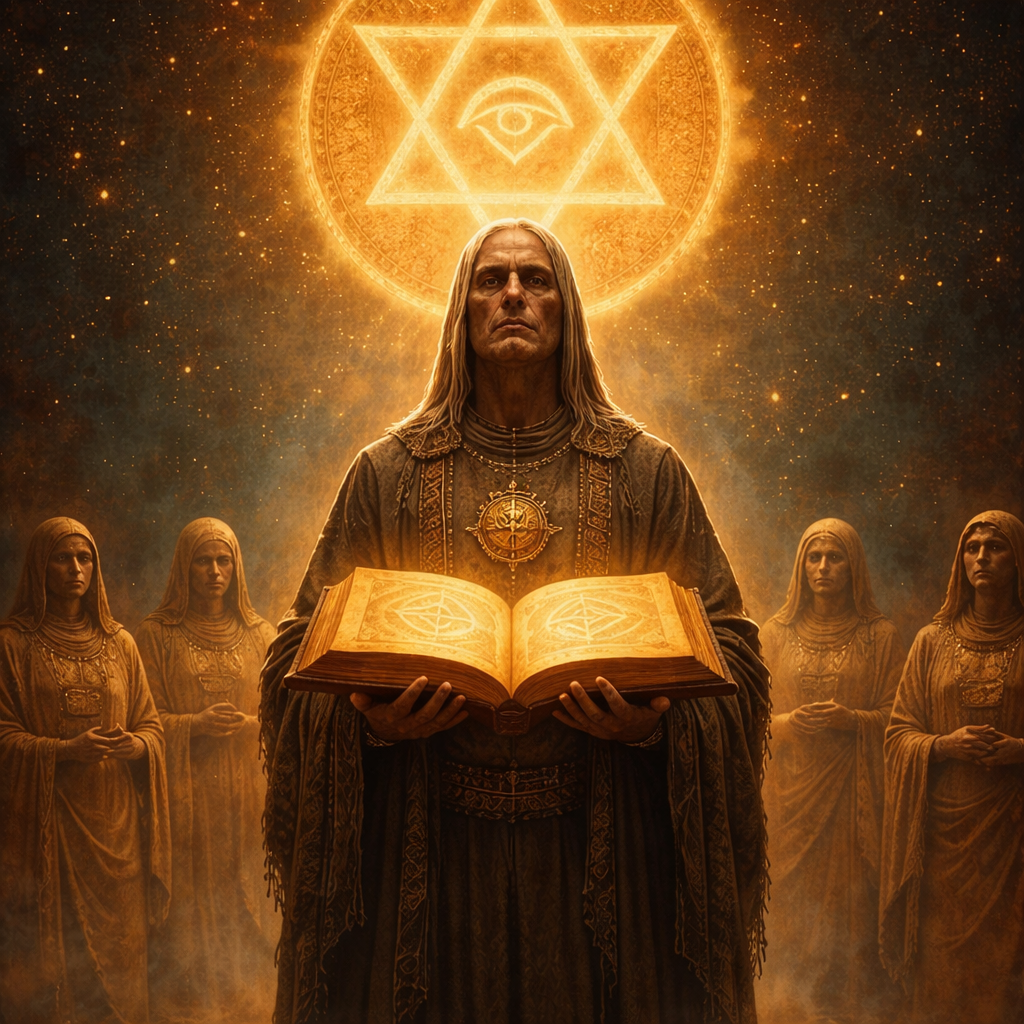

Isolde Whitaker (Sacred Texts Editor) — Z'ev ben Shimon Halevi's 'Kabbalah' stands as a monumental achievement in accessible esoteric scholarship. Halevi masterfully demystifies the often-opaque language of Kabbalistic thought, presenting its complex cosmologies and psychological frameworks with remarkable clarity and grace. This work is indispensable for anyone seeking to understand the deep currents of Jewish mysticism, offering profound insights into the nature of God, creation, and the human soul's ascent. Its strengths lie in its comprehensive yet focused approach, making the profound accessible without sacrificing its inherent mystery. Ideal for serious students of mysticism, Kabbalah practitioners, and those exploring the intersection of spirituality and psychology.
📝 Description
63
Z'ev ben Shimon Halevi published Kabbalah in 1975, a guide to Jewish mysticism.
This book examines the core principles of Kabbalah, the mystical tradition within Judaism. Halevi details the Tree of Life, a central diagram in Kabbalah, explaining its ten Sephiroth and their symbolic meanings. He also discusses the Hebrew alphabet and its role in creation and divine communication. The text aims to show the spiritual structure of the cosmos and the human soul's connection to it. It presents Kabbalah not just as a philosophical system but as a path for spiritual development and self-knowledge.
Halevi's approach connects the ancient teachings to contemporary understanding. He illustrates how Kabbalistic concepts relate to psychology and the search for deeper meaning. The book is intended for those seeking to grasp the hidden structure of reality and to undertake a personal spiritual quest. It makes accessible complex ideas about divine emanation and the nature of existence.
Kabbalah is the esoteric tradition of Jewish mysticism, originating in medieval Provence and Spain. It interprets the Torah and Jewish religious practice through symbolic and allegorical lenses. Central to Kabbalah is the concept of Ein Sof (the Infinite), from which creation emanates through a series of divine attributes or emanations known as the Sephiroth. These Sephiroth form the structure of the Tree of Life, a map of the cosmos and the human psyche. Kabbalistic texts often use complex symbolism, numerology, and meditative practices to achieve spiritual insight and union with the divine.
💡 Why Read This Book?
Embark on an illuminating journey into the heart of Jewish mysticism. This book offers an unparalleled exploration of Kabbalistic cosmology, symbolism, and its profound psychological implications. It is essential reading for seekers of hidden knowledge, scholars of esoteric traditions, and practitioners aiming to deepen their spiritual understanding and connection to the divine.
⭐ Reader Reviews
Honest opinions from readers who have explored this book.
❓ Frequently Asked Questions
What is Kabbalah?
Kabbalah is a mystical tradition within Judaism that explores the divine nature and the creation of the universe through a system of symbolism, numerology, and meditation, seeking a direct experience of God.
Who was Z'ev ben Shimon Halevi?
Z'ev ben Shimon Halevi (Warren Kenton) was a renowned author and teacher of Kabbalah, known for his ability to present complex esoteric concepts with clarity and depth, bridging ancient wisdom with modern understanding.
What is the Tree of Life in Kabbalah?
The Tree of Life is a central diagram in Kabbalah, representing the ten Sephiroth (divine emanations) and their interconnections, mapping the path from the divine to the material world and the soul's journey.
How does Kabbalah relate to psychology?
Kabbalah offers a rich framework for understanding the human psyche, its development, and its potential for transformation, aligning its symbolic journey with psychological growth and self-realization.
Is this book suitable for beginners?
Yes, while deep, Halevi's clear exposition makes it accessible to dedicated beginners eager to explore the foundational principles and profound insights of Kabbalistic thought.
🔮 Key Themes & Symbolism
The Tree of Life as Cosmic Blueprint
This theme explores the Tree of Life not merely as a diagram, but as the fundamental structure of existence, mapping the flow of divine energy from the Ein Sof (Infinite) through ten Sephiroth to the manifest world. It details how each Sephirah represents a divine attribute and a stage of creation, offering a profound cosmology that mirrors the inner field of the human soul. Understanding this blueprint is key to grasping the interconnectedness of all things and the divine order underlying reality.
Symbolism and the Hebrew Alphabet
Central to Kabbalistic understanding is the profound meaning embedded within the Hebrew alphabet and its letters. This theme studies how each letter is not just a phonetic symbol but a carrier of cosmic force and divine intention. The book illuminates how these sacred characters form the building blocks of creation and serve as keys to unlocking deeper spiritual truths through gematria, notarikon, and other esoteric interpretive methods. It highlights the power of language as a conduit to the divine.
The Psychology of the Soul's Ascent
Halevi masterfully connects Kabbalistic concepts to the inner journey of the human soul. This theme examines the stages of spiritual development as depicted by the Sephiroth, framing the path of ascent as a profound psychological process of purification, integration, and self-realization. It explores how confronting one's inner 'shadows' and integrating divine attributes leads to a deeper understanding of oneself and one's place in the cosmos, offering a blueprint for personal transformation and spiritual maturity.
💬 Memorable Quotes
Direct passages from the work, attributed to the author.
“The letters are divine sparks.”
— This highlights the esoteric belief that the Hebrew letters are more than symbols; they are imbued with divine energy and consciousness, serving as fundamental building blocks of creation and potent tools for spiritual work.
“To know oneself is to know God.”
— This aphorism emphasizes the Gnostic principle of self-knowledge as the direct path to understanding the divine, suggesting that introspection reveals the immanent divine within the human being.
“The Kabbalah is the language of the soul.”
— This suggests that Kabbalistic symbols and concepts speak directly to the deepest levels of human consciousness, providing a framework for understanding and expressing the ineffable experiences of the spiritual realm.
“Every step upward is a descent into self.”
— This paradoxical statement underscores that true spiritual progress involves profound self-examination and integration, implying that external ascent is mirrored by an inward journey of self-discovery.
💡 Key Ideas
Editorial paraphrase of the work's core concepts — not direct quotes.
The Tree of Life is the map of consciousness.
This quote expresses the core idea that the Kabbalistic Tree of Life is not just an external cosmic map, but a profound representation of the human mind and its journey toward enlightenment and divine connection.
🌙 Esoteric Significance
Tradition
This work is deeply rooted in the Kabbalistic tradition, a rich esoteric branch of Jewish mysticism that seeks to understand the nature of God, creation, and the human soul through symbolic interpretation and contemplative practices. It draws heavily on ancient Hebrew texts and lore, reinterpreting them to reveal a hidden, spiritual dimension to existence and a pathway for divine communion.
Symbolism
The book masterfully unpacks the profound symbolism inherent in Kabbalah, focusing on the Tree of Life, the Sephiroth, the Hebrew alphabet, and archetypal imagery. These symbols are not mere decorative elements but serve as a divine language, a cosmic blueprint for understanding the emanation of the universe, the structure of consciousness, and the journey of the soul towards its divine source. Each symbol acts as a key to unlocking deeper layers of spiritual reality.
Modern Relevance
In an age often marked by spiritual seeking and existential questioning, Halevi's 'Kabbalah' offers profound relevance. It provides a sophisticated framework for understanding the human psyche, its innate potential for growth, and its connection to a transcendent reality. The book's emphasis on inner transformation, the integration of opposites, and the search for meaning resonates deeply with contemporary seekers exploring consciousness, psychology, and the perennial questions of life.
👥 Who Should Read This Book
This important work is an indispensable resource for a diverse audience. Serious students of esoteric traditions, particularly those drawn to Jewish mysticism, will find its comprehensive yet accessible approach invaluable. Scholars of religion and comparative mysticism will benefit from its insightful analysis. Spiritual seekers yearning for a deeper understanding of cosmic order and the soul's journey will find profound guidance. Furthermore, practitioners of meditation and contemplative disciplines will discover powerful tools for self-exploration and spiritual development within its pages.
📜 Historical Context
Emerging from the wide range of Jewish thought, Kabbalah flourished in medieval Europe, particularly in Spain and Provence, during a period of intense intellectual and spiritual ferment. It arose as a response to both philosophical inquiries and a deep yearning for direct experiential knowledge of the divine. This era saw the consolidation of its core texts, such as the Zohar, and the development of intricate systems of interpretation and practice. Kabbalah's influence extended beyond Jewish communities, subtly tying its way into Christian and later esoteric movements, becoming a foundational element of Western mysticism. Halevi's work situates this ancient tradition within a lineage of esoteric transmission, highlighting its enduring relevance through the ages.
📔 Journal Prompts
Reflect on the first Sephirah, Keter, and its representation of the primordial will. How does this concept resonate with your own sense of purpose or desire?
Consider the symbolism of a specific Hebrew letter discussed in the text. How can its esoteric meaning be applied to an aspect of your daily life or inner experience?
Map your own personal journey onto the ascending path of the Sephiroth. Where do you feel you are currently on this spiritual ladder, and what are the challenges you face?
Explore the psychological implications of the Kabbalistic concept of 'Tzimtzum' (contraction). How does this idea of divine withdrawal relate to human experience and free will?
Meditate on the interconnectedness of all things as suggested by the Kabbalistic cosmology. How does this perspective shift your understanding of your relationships and responsibilities?
🗂️ Glossary
Sephiroth
The ten divine emanations or attributes through which God manifests in creation, forming the structure of the Kabbalistic Tree of Life.
Ein Sof
The Kabbalistic term for the Infinite, the transcendent, unknowable aspect of God beyond all comprehension or limitation.
Tree of Life (Etz Chaim)
A central symbolic diagram in Kabbalah, consisting of ten interconnected Sephiroth, representing the divine structure of the universe and the path of spiritual development.
Tzimtzum
The Kabbalistic concept of divine 'contraction' or withdrawal, creating a space for creation to exist and allowing for free will and individuation.
Gematria
A Kabbalistic interpretive method that assigns numerical values to Hebrew letters and words to reveal hidden meanings and relationships between concepts.
This book appears in 1 collection
🔮 Readers Also Liked
Browse all →







More by Z'ev ben Shimon Halevi
All books →





From the “Kabbalah” Collection
View all →







More Free Kabbalah & Jewish Mysticism Books
View all →