The school of Kabbalah
 62
62

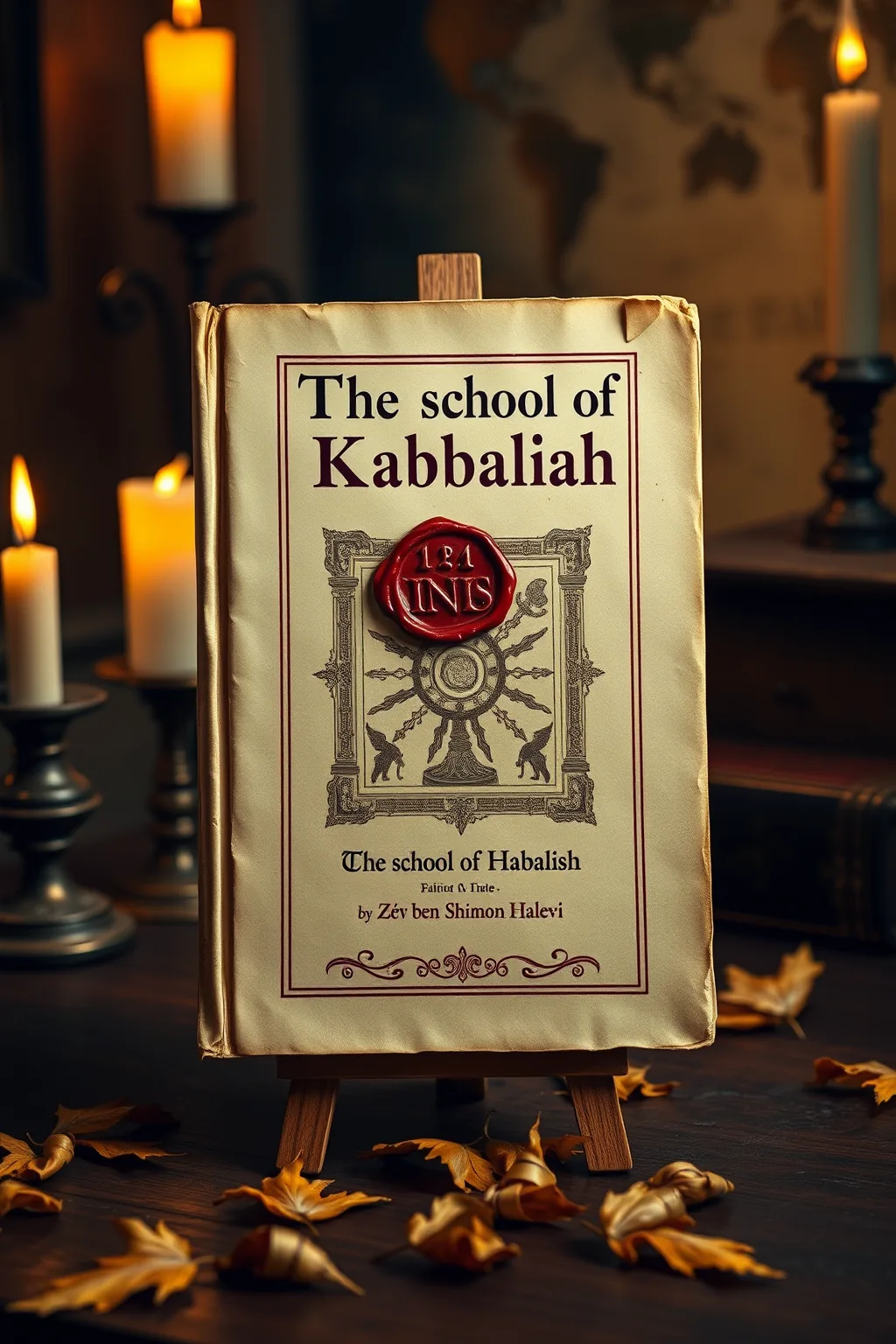
The school of Kabbalah


Aurelia Blackwood (Occult Philosophy Critic) — Z'ev ben Shimon Halevi's 'The School of Kabbalah' stands as a cornerstone for anyone seeking authentic entry into this profound mystical tradition. Halevi's unparalleled clarity demystifies complex Kabbalistic concepts, presenting them with both scholarly rigor and spiritual reverence. He navigates the intricate symbolism of the Tree of Life and the Sephiroth with a grace that resonates deeply, making the esoteric accessible without sacrificing its inherent mystery. This work is essential for serious students of Western esotericism, offering a pathway to understanding the underlying principles of creation and consciousness. Its strength lies in its balanced approach, catering to both the intellectual and the intuitive seeker.
📝 Description
62
Z'ev ben Shimon Halevi published 'The School of Kabbalah' to explain the Tree of Life as a cosmic blueprint.
Published by Z'ev ben Shimon Halevi, 'The School of Kabbalah' details the core concepts of Jewish mysticism. Halevi interprets the Tree of Life not just as a symbolic diagram, but as a map of creation and human consciousness. The book explains the ten sefirot and their connections, illustrating how they relate to both the macrocosm and the microcosm. Halevi’s approach aims to make these complex ideas accessible to those interested in spiritual development.
The text discusses practical applications of Kabbalistic thought for personal growth. It guides the reader through understanding the structure of reality as understood within this tradition. Halevi seeks to connect the material world with spiritual dimensions, offering insights into life's deeper questions. The book addresses esoteric doctrines and ancient symbolism, presenting them within a coherent philosophical system.
This book fits within the Western esoteric tradition, specifically focusing on Kabbalah, a Jewish mystical system. Kabbalah has influenced numerous esoteric movements since the Renaissance, including Hermeticism and ceremonial magic. Halevi's work engages with traditional Kabbalistic texts and concepts, such as the sefirot and the structure of the cosmos, but presents them in a way intended for a modern audience seeking spiritual understanding beyond purely academic study.
💡 Why Read This Book?
Delve into the ancient, sacred science of Kabbalah with an authoritative guide. 'The School of Kabbalah' offers a clear, systematic exploration of its core principles, symbolism, and practical applications. Ideal for spiritual seekers, students of comparative religion, and anyone drawn to the profound mysteries of existence, this book provides the foundational knowledge to understand the Tree of Life and its relevance to personal growth and cosmic awareness.
⭐ Reader Reviews
Honest opinions from readers who have explored this book.
❓ Frequently Asked Questions
What is the primary focus of 'The School of Kabbalah'?
The book's primary focus is to provide a comprehensive and accessible introduction to the core principles, symbolism, and practical dimensions of Kabbalistic mysticism, particularly through the lens of the Tree of Life.
Is this book suitable for absolute beginners in Kabbalah?
Yes, Halevi's clear and structured approach makes it an excellent starting point for individuals with no prior knowledge of Kabbalah, while still offering depth for those with some familiarity.
What is the significance of the Tree of Life in this book?
The Tree of Life is presented as the central diagram and framework for understanding the Kabbalah, illustrating the divine emanations, the structure of the cosmos, and the path of spiritual development.
Does the book offer practical exercises or meditations?
While primarily an expository text, it lays the groundwork for understanding the experiential aspects of Kabbalah, enabling readers to approach practical work with a solid theoretical foundation.
What makes Z'ev ben Shimon Halevi a respected authority on Kabbalah?
Halevi was a renowned teacher and author who dedicated his life to Kabbalah, bringing a unique blend of scholarly research and profound personal experience to his teachings, making complex subjects understandable.
🔮 Key Themes & Symbolism
The Tree of Life as a Cosmic Blueprint
This central theme explores the Kabbalistic concept of the Tree of Life not merely as a diagram, but as a dynamic, living map of creation, consciousness, and spiritual evolution. Halevi elucidates how each of its ten Sephiroth and twenty-two paths represents a fundamental divine attribute and a stage in the unfolding of the universe and the human psyche. Understanding this intricate structure is presented as key to comprehending the interconnections between the divine, the cosmos, and the individual, offering a profound framework for self-discovery and spiritual ascent.
Symbolism and Esoteric Language
The book delves deeply into the rich symbolic language of Kabbalah, revealing how ancient Hebrew letters, numbers, and mythical narratives serve as vehicles for transmitting profound metaphysical truths. Halevi guides readers to decode these layers of meaning, demonstrating how Kabbalistic symbolism offers a powerful means of accessing hidden knowledge and esoteric wisdom. This exploration emphasizes that the true understanding of Kabbalah lies not just in intellectual comprehension, but in the intuitive apprehension of its symbolic language, bridging the gap between the material and the spiritual.
The Path of Spiritual Transformation
Central to 'The School of Kabbalah' is the concept of the individual's journey towards spiritual realization. The book presents Kabbalah as a practical path for inner work, outlining how understanding the divine emanations and one's place within the cosmic order can lead to profound personal growth. Halevi emphasizes the process of integrating spiritual principles into daily life, fostering self-awareness, and ultimately achieving a state of conscious union with the Divine. This theme highlights Kabbalah's transformative potential for the seeker.
💬 Memorable Quotes
Direct passages from the work, attributed to the author.
“The Tree of Life is the map of the human soul.”
— This emphasizes the deeply personal and psychological dimension of Kabbalah, presenting the Tree of Life as a guide to understanding one's inner landscape and potential.
“Every symbol has a thousand meanings.”
— This points to the multi-layered nature of Kabbalistic symbolism, suggesting that true wisdom comes from perceiving the interconnectedness and depth of these esoteric representations.
“The universe is a reflection of the divine.”
— This highlights the principle of correspondence in Kabbalah, suggesting that the macrocosm (universe) mirrors the microcosm (individual) and the divine emanations.
💡 Key Ideas
Editorial paraphrase of the work's core concepts — not direct quotes.
The Kabbalah is not a religion, but a science of the soul.
This quote highlights the author's perspective that Kabbalah is an empirical and systematic study of consciousness and spiritual principles, rather than a dogma-bound faith.
To know God is to know oneself.
A core tenet of many mystical traditions, this quote underscores the Kabbalistic belief that self-understanding is intrinsically linked to the understanding of the Divine.
🌙 Esoteric Significance
Tradition
This work is deeply rooted in the Western Esoteric Tradition, specifically within the lineage of Jewish Kabbalah. It represents a modern, accessible interpretation of the ancient Kabbalistic teachings, which have influenced numerous mystical, occult, and philosophical systems for centuries. Halevi's approach emphasizes the practical and philosophical dimensions, making it a significant contribution to the ongoing study and practice of Kabbalah as a path of spiritual development and cosmic understanding within the broader esoteric landscape.
Symbolism
The core symbolism revolves around the Tree of Life, a diagram composed of ten Sephiroth (divine emanations) and twenty-two paths. This intricate symbol serves as a map of creation, consciousness, and the divine structure. Halevi meticulously unpacks the symbolic meanings of the Hebrew letters, numbers (Gematria), and archetypal figures within Kabbalah, revealing them as keys to unlocking deeper layers of reality and understanding the interconnectedness of all things. The symbolism is presented not as mere metaphor, but as a living language of the cosmos.
Modern Relevance
In an age often characterized by materialism and spiritual searching, 'The School of Kabbalah' offers profound relevance. It provides a coherent framework for understanding existence, consciousness, and the human condition from a spiritual perspective. The emphasis on inner transformation, self-knowledge, and the interconnectedness of all beings resonates deeply with contemporary desires for meaning and purpose. Halevi's clear exposition allows modern seekers to engage with ancient wisdom, finding practical guidance for navigating life's challenges and fostering a deeper connection to the divine within and without.
👥 Who Should Read This Book
This book is useful for several groups. **Beginners** seeking a clear, foundational understanding of Kabbalah will find Halevi's structured approach reassuring and informative. **Scholars** of religion and mysticism will appreciate its depth and adherence to traditional sources, while also noting its modern interpretive lens. **Spiritual seekers** yearning for a deeper connection to the divine and a map for inner growth will find practical wisdom and useful insights. **Practitioners** of esoteric arts will benefit from the solid theoretical underpinning it provides for their contemplative and meditative practices, enhancing their understanding of symbolic systems.
📜 Historical Context
Z'ev ben Shimon Halevi (Warren Susman) was a prominent 20th-century figure in the revival and dissemination of Western esoteric traditions. 'The School of Kabbalah' emerged during a period of renewed interest in mysticism and occultism, following the intellectual currents of the late 19th and early 20th centuries. Halevi, drawing from his deep engagement with Jewish mysticism and his own spiritual experiences, sought to present Kabbalah in a way that was both authentic to its ancient roots and relevant to the modern seeker. His work contributed significantly to making these complex teachings accessible to a broader audience, bridging the gap between historical esoteric schools and contemporary spiritual exploration.
📔 Journal Prompts
Reflect on your understanding of the Tree of Life after reading this chapter. How does it relate to your own perceived inner landscape?
Choose one Sephirah and consider its attributes in your daily life. Where do you see its influence, and where could you cultivate it more fully?
Explore the concept of divine emanation. How does the idea of continuous creation impact your view of the universe and your place within it?
Consider the role of symbolism in your own life. How can you approach everyday experiences with a more symbolic or esoteric perspective?
What does 'knowing oneself' mean to you in the context of spiritual development as presented in this book?
🗂️ Glossary
Sephirah (plural: Sephiroth)
The ten divine emanations or attributes of God described in Kabbalah, forming the structure of the Tree of Life. They represent stages of creation and divine unfolding.
Tree of Life (Etz Chaim)
The central diagram in Kabbalah, consisting of ten Sephiroth connected by twenty-two paths. It symbolizes the divine order of the universe and the pathway of spiritual ascent.
Ein Sof
The Kabbalistic term for God in His absolute, unknowable essence, prior to any manifestation or emanation. It represents infinite, boundless divinity.
Gematria
A system of Jewish numerology where Hebrew letters are assigned numerical values. It is used to find hidden connections and deeper meanings between words and concepts.
Keter
The first Sephirah on the Tree of Life, representing the Crown or Divine Will. It is the highest point of emanation, closest to Ein Sof.
This book appears in 1 collection
🔮 Readers Also Liked
Browse all →







More by Z'ev ben Shimon Halevi
All books →





From the “Kabbalah” Collection
View all →






More Free Kabbalah & Jewish Mysticism Books
View all →