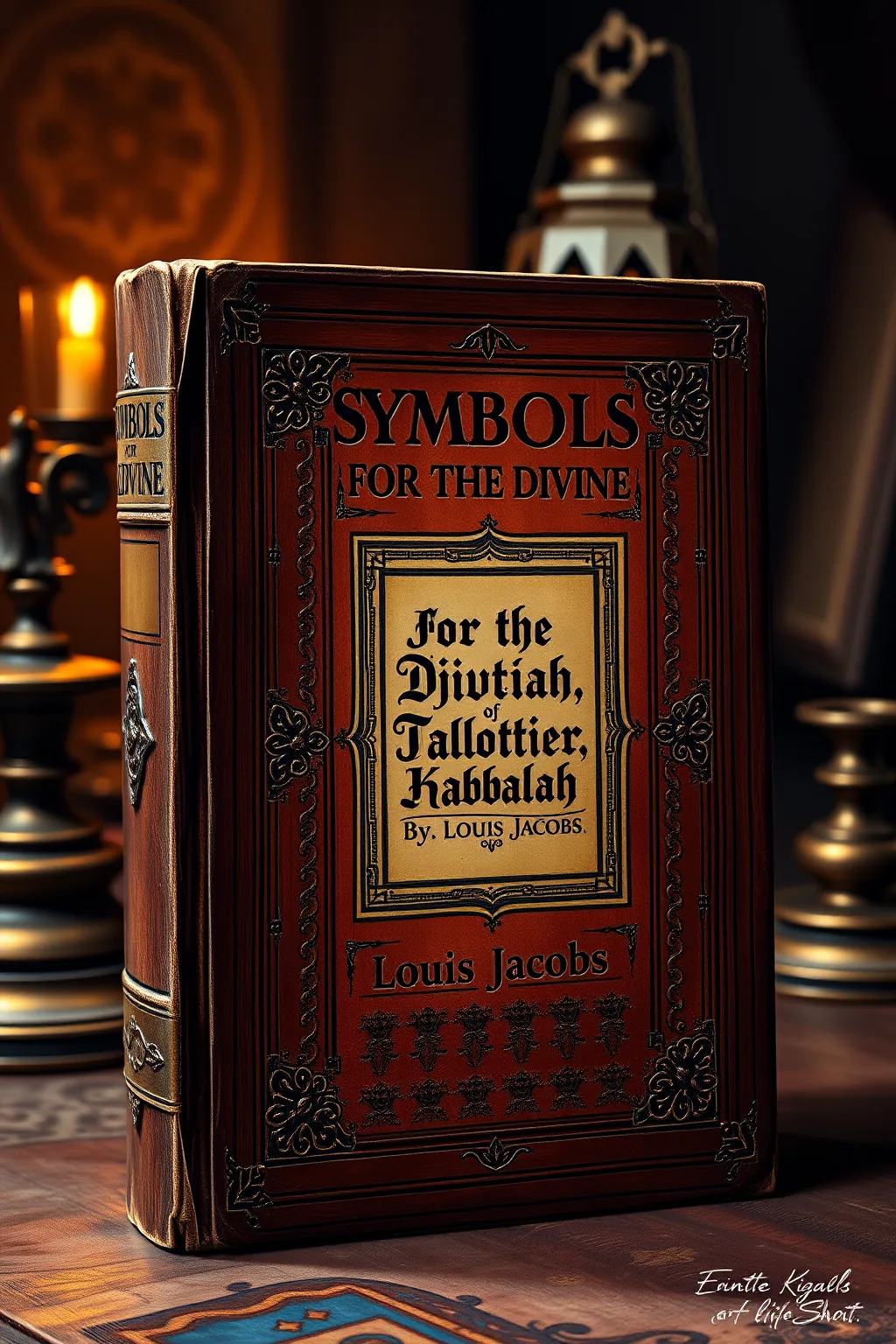
Symbols for the divine in the Kabbalah
 61
61

Symbols for the divine in the Kabbalah



Cassian Rothmann (Senior Critic, Ancient Wisdom) — Louis Jacobs' 'Symbols for the Divine in the Kabbalah' is an indispensable compendium for those seeking to penetrate the veil of Jewish mysticism. Jacobs masterfully decodes the complex symbolic lexicon of Kabbalah, rendering its profound esoteric insights accessible without sacrificing their depth. His authoritative yet lucid prose illuminates the interconnectedness of divine emanations and the practical application of symbolic understanding in spiritual ascent. This work is a treasure for students of mysticism, practitioners of contemplative traditions, and anyone yearning for a more profound grasp of the divine architecture. It stands as a beacon of clarity in a sometimes-impenetrable field.
📝 Description
61
Louis Jacobs' 1990 book examines Kabbalistic symbols for the divine.
In 'Symbols for the Divine in the Kabbalah,' Louis Jacobs analyzes the symbolic language of Jewish mysticism. He dissects concepts like the Sephirah, Gematria, and the mystical significance of Hebrew letters. Jacobs shows how these elements function as pathways to divine understanding and hidden knowledge within Kabbalistic thought. The book addresses both those new to Kabbalah and those with prior study, aiming to provide a clear explanation of its symbolic structures. It details how these symbols connect to the divine presence and the structure of existence.
The work invites readers to understand the symbolic patterns of the universe and the divine immanent in creation. It focuses on the esoteric principles that have informed Kabbalistic practice over time. Jacobs' approach aims to transform perception by clarifying these complex ideas. This text is for anyone interested in the deeper aspects of spiritual knowledge found within Kabbalah.
This book sits within the tradition of Kabbalah, a school of Jewish mysticism that developed in the Middle Ages. Kabbalah uses symbolic interpretation, meditation, and other techniques to understand the divine nature and the creation of the universe. It has a complex system of theology, cosmology, and philosophy, often expressed through esoteric texts. Jacobs' work focuses specifically on how Kabbalah employs symbols to represent and interact with the divine, a core concern within this mystical tradition.
💡 Why Read This Book?
Unravel the enigmatic symbolism central to Kabbalistic thought. Gain profound insights into the divine emanations and cosmic structure. Elevate your spiritual practice with a deeper understanding of esoteric principles. Ideal for seekers, students of comparative mysticism, and scholars of Jewish tradition who wish to explore the metaphysical dimensions of the Kabbalah.
⭐ Reader Reviews
Honest opinions from readers who have explored this book.
❓ Frequently Asked Questions
What are the primary symbols discussed in the book?
The book delves into key Kabbalistic symbols such as the Sefirot (divine emanations), Hebrew letters and their mystical meanings, Gematria (numerical values of letters), and various divine names, explaining their roles in representing the divine and facilitating spiritual connection.
Is prior knowledge of Kabbalah required?
While prior knowledge is beneficial, Louis Jacobs' clear and systematic approach makes 'Symbols for the Divine in the Kabbalah' accessible to dedicated beginners eager to explore the foundational concepts of Jewish mysticism.
How does this book differ from other Kabbalah texts?
Jacobs emphasizes the *symbolic* aspect, providing a focused exploration of how these potent visual and conceptual tools serve as pathways to understanding the divine, offering a unique lens on traditional Kabbalistic teachings.
Can this book be used for practical spiritual development?
Absolutely. By understanding the symbolic language, readers can engage in deeper meditation, contemplation, and a more nuanced approach to their spiritual journey, fostering a more profound connection with the divine.
What is the historical significance of the symbols discussed?
The symbols explored are deeply rooted in ancient Jewish mystical traditions, evolving over centuries and forming the core of Kabbalistic cosmology and theology, offering a glimpse into the historical development of esoteric thought.
🔮 Key Themes & Symbolism
The Sefirot as Divine Emanations
This theme explores the ten Sefirot, the fundamental building blocks of Kabbalistic cosmology, representing stages of divine emanation from the Infinite (Ein Sof) to the manifested world. Jacobs elucidates how each Sefirah embodies distinct divine attributes and energies, acting as a divine blueprint for creation and a ladder for spiritual ascent. Understanding their interconnectedness is crucial for grasping the Kabbalistic view of God's relationship with the universe and the human soul's potential for reunion with the divine source.
The Mystical Power of Hebrew Letters
Central to Kabbalistic thought is the profound spiritual significance attributed to the Hebrew alphabet. This theme examines how each letter is not merely a phonetic symbol but a conduit of divine energy and a carrier of cosmic secrets. Louis Jacobs examines the concept of Gematria, Notarikon, and Temurah, revealing how these methods of interpretation unlock deeper layers of meaning within sacred texts, connecting the mundane to the divine and clear the hidden structures of reality through the sacred language.
Symbolism as a Pathway to the Divine
This theme addresses the core tenet that symbols in Kabbalah are not mere representations but active forces and gateways to direct experience of the divine. Jacobs illustrates how visual, numerical, and linguistic symbols serve as mnemonic devices and meditative tools, enabling the mystic to contemplate divine attributes, read through the spiritual realms, and ultimately achieve a state of unio mystica. The book highlights how mastering this symbolic language is essential for anyone aspiring to a deeper, experiential understanding of God and the cosmos.
💬 Memorable Quotes
Direct passages from the work, attributed to the author.
“Within each letter lies a universe.”
— This highlights the microcosmic-macrocosmic principle, asserting that the smallest components of the sacred language (Hebrew letters) contain the totality of divine wisdom and cosmic structure.
“The Sefirot bridge the Infinite and the Finite.”
— This concisely explains the crucial role of the Sefirot as intermediaries, connecting the unknowable divine essence with the manifest, perceivable world, providing a framework for understanding divine immanence.
“Meaning is found in the spaces between.”
— This alludes to the importance of context, relationship, and the subtle connections between symbols, suggesting that true understanding emerges not just from individual elements but from their interplay and the unspoken depths they reveal.
“To know the symbol is to approach the divine.”
— This emphasizes the transformative power of engaging with Kabbalistic symbolism, positing that the act of understanding these sacred forms is a direct means of drawing closer to the divine presence and essence.
💡 Key Ideas
Editorial paraphrase of the work's core concepts — not direct quotes.
The symbols are not dead, but living forces.
This quote underscores the dynamic and potent nature of Kabbalistic symbols, suggesting they actively influence reality and serve as active conduits for divine energy, not just passive representations.
🌙 Esoteric Significance
Tradition
This book is deeply rooted in the Kabbalistic tradition, a mystical interpretation of Judaism that emerged in the Middle Ages. It focuses on the esoteric dimensions of the Torah and Jewish liturgy, seeking to understand the nature of God, creation, and the soul through symbolic language and contemplative practices. The work examines concepts like divine emanations (Sefirot), the mystical properties of Hebrew letters, and the hidden meanings within sacred texts, providing a comprehensive overview of Kabbalah's symbolic framework.
Symbolism
The core of the book lies in its detailed analysis of Kabbalistic symbols. This includes the Sefirot, often visualized as a Tree of Life, representing the stages of divine outflow; the Hebrew alphabet, where letters possess numerical values (Gematria) and can be rearranged (Notarikon, Temurah) to reveal hidden meanings; and divine names, believed to hold immense power. These symbols are presented not as mere metaphors but as keys to unlocking the divine architecture of the cosmos and the inner field of the soul.
Modern Relevance
In an age often characterized by materialism and a perceived disconnect from the sacred, 'Symbols for the Divine in the Kabbalah' offers a potent antidote. It provides tools for deeper introspection, spiritual contemplation, and a renewed appreciation for the hidden order and divine presence within the universe. For contemporary seekers, the book serves as a guide to working through the complexities of existence with a more profound sense of purpose and connection, demonstrating that ancient esoteric wisdom remains profoundly relevant for personal growth and spiritual enlightenment.
👥 Who Should Read This Book
This book is a vital resource for a diverse audience. **Beginners** in Kabbalah will find a clear, structured introduction to its foundational symbolic language, explaining complex concepts. **Scholars** of religious studies and Jewish mysticism will appreciate the rigorous scholarship and detailed analysis. **Spiritual seekers** drawn to esoteric traditions will discover powerful tools for contemplation, meditation, and a deeper connection with the divine. **Practitioners** of contemplative arts will find invaluable insights for enhancing their understanding and practice, unlocking new dimensions of spiritual experience through the profound symbolism of Kabbalah.
📜 Historical Context
Louis Jacobs' exploration of Kabbalistic symbols is situated within the collection of Jewish mystical history, particularly the post-medieval period when Kabbalah flourished and influenced broader Jewish thought. Emerging from the esoteric traditions of ancient Israel and developing through thinkers like Isaac Luria in the 16th century, Kabbalah sought to understand the nature of God, creation, and the human soul through complex symbolic systems. Jacobs' work builds upon centuries of textual analysis and meditative practice, making these useful insights accessible to a modern audience. It reflects a lineage of scholarship dedicated to preserving and interpreting the esoteric dimensions of Judaism, offering a bridge between ancient wisdom and contemporary spiritual seeking.
📔 Journal Prompts
Reflect on a personal symbol that holds deep meaning for you. How does its meaning evolve with time and experience?
Consider the Sefirot as described by Jacobs. Which Sefirah resonates most with your current life challenges or aspirations, and why?
Choose a Hebrew letter discussed in the book and meditate on its symbolic representations. What insights emerge from this contemplation?
How can the concept of Gematria, or finding meaning in numerical relationships, be applied to understanding patterns in your own life?
Imagine the 'spaces between' the symbols you encounter daily. What hidden meanings or connections might you discover by paying attention to these less obvious aspects?
🗂️ Glossary
Sefirot
The ten divine emanations or attributes through which God, as Ein Sof (the Infinite), manifests and interacts with the created universe, forming the central structure of Kabbalistic cosmology.
Ein Sof
The Kabbalistic term for the 'Infinite' or 'Endless,' representing God in His absolute, unknowable, and transcendent essence, beyond all conceptualization or manifestation.
Gematria
A Kabbalistic interpretive method that assigns numerical values to Hebrew letters and words, revealing hidden connections and deeper meanings within sacred texts and divine names.
Kabbalah
A mystical tradition within Judaism that seeks to understand the nature of God, creation, and humanity's relationship with the divine through esoteric interpretation of religious texts and practices.
Unio Mystica
The mystical union or direct experience of oneness with the divine, a central goal in many esoteric traditions, often sought through contemplative practices and the understanding of divine symbolism.
This book appears in 1 collection
🔮 Readers Also Liked
Browse all →






More by Louis Jacobs
All books →





From the “Kabbalah” Collection
View all →









More Free Kabbalah & Jewish Mysticism Books
View all →