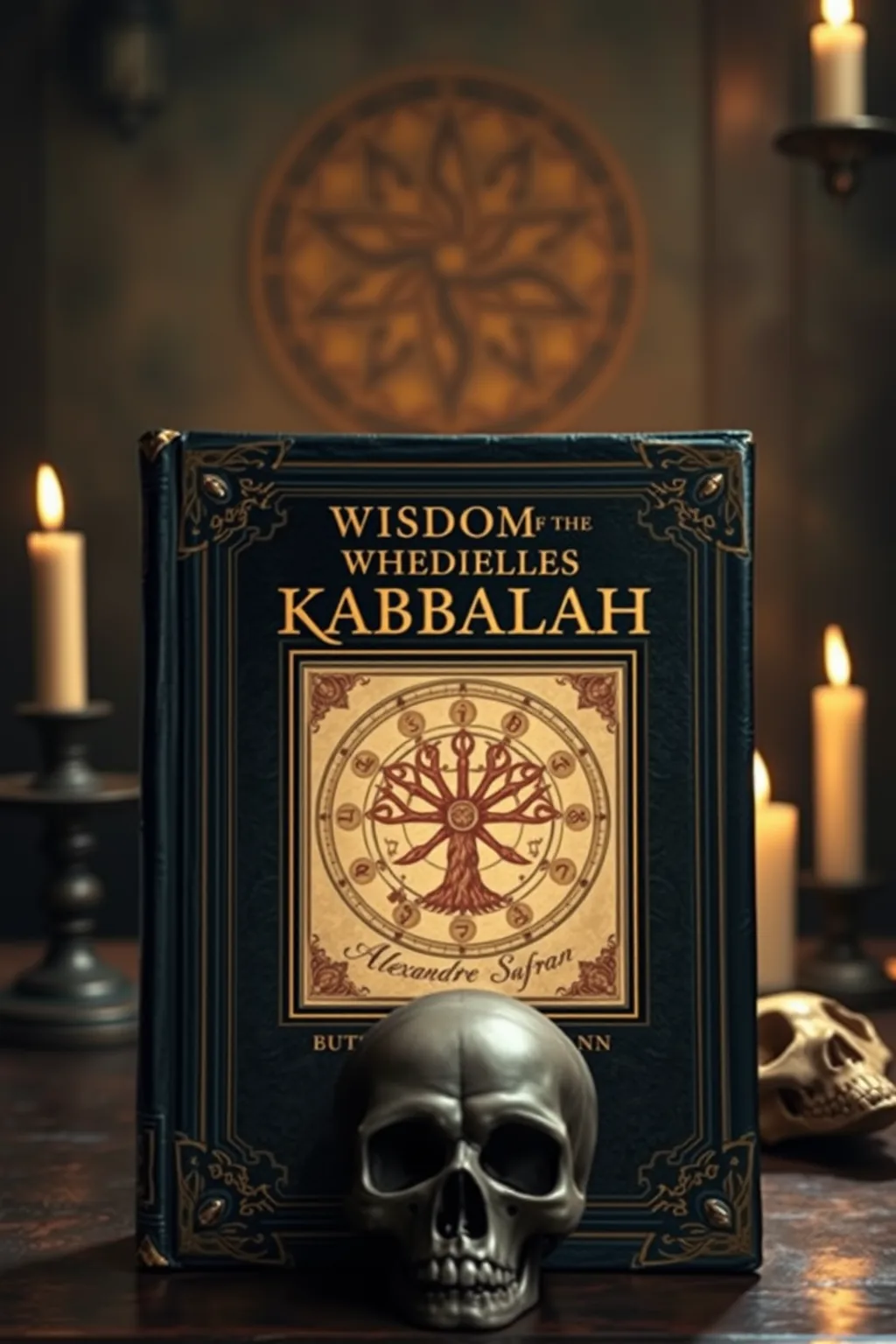
Wisdom of the Kabbalah
 61
61

Wisdom of the Kabbalah


Isolde Whitaker (Sacred Texts Editor) — Alexandre Safran's 'Wisdom of the Kabbalah' is a luminous exposition of this ancient mystical system. Safran masterfully navigates the complex symbolic language, rendering the divine emanations and the structure of the cosmos accessible. His work is particularly strong in its elucidation of the practical applications of Kabbalistic principles for spiritual growth. This text is invaluable for serious students of Jewish mysticism and esoteric philosophy, offering profound contemplative insights and a bridge to understanding the deeper currents of spiritual reality.
📝 Description
61
Alexandre Safran's 'Wisdom of the Kabbalah' was published in 1988, detailing Jewish mysticism.
Alexandre Safran's 'Wisdom of the Kabbalah' examines the core tenets of Kabbalistic thought. The book maps out the structure of the Tree of Life, a central concept in this mystical tradition. Safran explains its symbolism and its role in understanding the cosmos. He also discusses divine emanations, the nature of the soul, and methods for spiritual growth. This work is not merely a religious text; it is a philosophical inquiry into existence. It aims to provide readers with a clearer grasp of the hidden forces that shape the universe and humanity's place within them.
Safran's writing encourages deep reflection on these complex ideas. He presents Kabbalah not just as a historical tradition, but as a living system of understanding. The book serves as a guide for those seeking to connect with the divine and comprehend the underlying reality of the world. It presents a path toward a form of spiritual knowledge, drawing on traditional sources.
This book engages with Kabbalah, a Jewish mystical tradition that developed in the Middle Ages. It focuses on interpreting the Torah through esoteric means, seeking to understand the divine nature and the creation of the universe. Key elements often include the Sephirot (divine attributes or emanations) and the Tree of Life as a symbolic map of creation and consciousness. Kabbalistic thought also addresses the soul's journey and its relationship to the divine. Safran's work places itself within this lineage, aiming to clarify these concepts for a modern audience.
💡 Why Read This Book?
Embark on a transformative journey into the profound wisdom of the Kabbalah. This book offers an unparalleled exploration of its esoteric dimensions, revealing hidden spiritual truths and the intricate symbolism of the Tree of Life. Ideal for seekers of higher consciousness, scholars of ancient traditions, and practitioners wishing to deepen their understanding of divine mechanics and personal transformation.
⭐ Reader Reviews
Honest opinions from readers who have explored this book.
❓ Frequently Asked Questions
What is the primary focus of 'Wisdom of the Kabbalah'?
The book's primary focus is the esoteric and mystical aspects of Kabbalah, exploring its core concepts, symbolism, and philosophical implications for understanding the divine and human existence.
Is prior knowledge of Kabbalah required to read this book?
While prior knowledge can enhance understanding, Safran's clear exposition makes it accessible to dedicated beginners, though a genuine interest in mystical traditions is beneficial.
What is the 'Tree of Life' in Kabbalistic terms?
The Tree of Life is a central symbolic diagram in Kabbalah, representing the divine emanations and the structure of the cosmos, often used as a map for spiritual ascent and understanding.
How does this book differ from historical Kabbalistic texts?
Safran's work provides a modern, coherent interpretation and synthesis of complex Kabbalistic ideas, making them more digestible for contemporary readers while retaining their profound esoteric essence.
Can this book be used for practical spiritual development?
Yes, the book offers insights and contemplative frameworks that can be applied to personal spiritual growth, introspection, and a deeper connection with the divine.
🔮 Key Themes & Symbolism
The Tree of Life as Cosmic Blueprint
The central motif of the Kabbalah, the Tree of Life, is presented not merely as a diagram but as a living blueprint of creation. Safran elucidates its ten Sephiroth (divine emanations) and twenty-two pathways, revealing how they represent the stages of divine descent and the structure of both the macrocosm and the microcosm. This theme looks at the interconnectedness of all things, the flow of divine energy, and the symbolic map for ascending back to the source.
Divine Emanations and the Nature of God
This theme explores the Kabbalistic concept of Ein Sof (the Infinite) and how the divine manifests through a series of emanations. Safran unpacks the essence of each Sephirah, from the boundless Keter (Crown) to the manifest Malkuth (Kingdom), detailing their unique energies and roles. It addresses the paradox of God's transcendence and immanence, offering a framework for understanding the divine presence within the created world.
The Soul's Journey and Spiritual Ascent
Safran illuminates the Kabbalistic understanding of the human soul, its origins, and its ultimate destiny. This theme focuses on the spiritual journey, the challenges and opportunities for growth encountered on the path of ascent through the different realms represented by the Tree of Life. It provides insights into the nature of consciousness, free will, and the ultimate goal of spiritual perfection and reunification with the divine.
💬 Memorable Quotes
Direct passages from the work, attributed to the author.
“The Kabbalah is the science of the soul.”
— This pithy statement expresses the core of Kabbalistic study as a discipline aimed at understanding the intricacies of human consciousness and its divine connection.
“Each Sephirah is a divine attribute made manifest.”
— This highlights the concept that the Sephiroth are not abstract ideas but active forces and qualities of the divine that shape reality.
“The universe unfolds from the Infinite.”
— This points to the fundamental Kabbalistic principle of emanation, where all existence originates from the unmanifest, boundless divine.
“To know the self is to know the divine.”
— This emphasizes the introspective nature of Kabbalah, suggesting that self-discovery is intrinsically linked to understanding the divine nature within.
“The pathways of the Tree are journeys of transformation.”
— This underscores the dynamic and experiential aspect of Kabbalistic practice, framing it as a process of spiritual evolution and change.
🌙 Esoteric Significance
Tradition
This work is deeply embedded within the Western Esoteric tradition, specifically the Kabbalistic branch of Jewish Mysticism. It represents a lineage of thought that seeks to understand the hidden workings of the universe and the divine through symbolic language, numerology, and contemplative practices, offering a path to direct spiritual experience and gnosis.
Symbolism
The core symbolism revolves around the Tree of Life, a complex diagram of ten Sephiroth and twenty-two paths, representing divine emanations, cosmic structure, and the journey of the soul. Other key symbols include Hebrew letters, divine names, and the interplay of masculine and feminine divine principles, all serving as keys to unlock deeper spiritual truths.
Modern Relevance
In an era often marked by spiritual seeking and a desire for deeper meaning, 'Wisdom of the Kabbalah' offers useful insights into the interconnectedness of all things, the nature of consciousness, and the potential for personal transformation. Its philosophical depth and symbolic richness provide a timeless framework for understanding one's place in the cosmos and cultivating a more profound spiritual life.
👥 Who Should Read This Book
This volume is essential for scholars of comparative religion and mysticism, offering a clear and authoritative exposition of Kabbalistic principles. Seekers of spiritual truth and esoteric knowledge will find profound wisdom and contemplative tools for their journey. Practitioners of meditation and spiritual disciplines will discover new layers of understanding regarding consciousness and divine connection. While accessible to dedicated beginners, it particularly rewards those with an established interest in looking at the deeper philosophical and mystical currents of ancient traditions.
📜 Historical Context
Alexandre Safran's work emerges from a rich tradition of Kabbalistic thought, which blossomed in medieval Spain and gained profound development in Safed during the 16th century with figures like Isaac Luria. This period saw Kabbalah move from a more esoteric, philosophical current within Judaism to a more mystical and devotional practice, deeply concerned with the restoration of cosmic harmony. Safran's interpretation, while rooted in these historical currents, often bridges the gap between ancient texts and modern philosophical inquiry, making the complex doctrines of divine emanations, the nature of the soul, and the mechanics of creation accessible to a contemporary audience seeking spiritual understanding.
📔 Journal Prompts
Reflect on the concept of divine emanation. How might this inform your understanding of your own existence?
Consider the Tree of Life as a map of consciousness. Which Sephirah or pathway resonates most with your current inner state?
What does the idea of 'restoring cosmic harmony' mean to you on a personal level?
Explore the relationship between the microcosm (human) and the macrocosm (universe) as presented in Kabbalistic thought.
How can the principles of Kabbalistic symbolism be applied to your daily life to foster greater spiritual awareness?
🗂️ Glossary
Sephirah
A divine emanation or attribute of God, forming the ten spheres of the Kabbalistic Tree of Life, representing stages of creation and divine manifestation.
Ein Sof
The Kabbalistic concept of the Infinite or God in His absolute, unknowable essence, beyond all comprehension or manifestation.
Tzimtzum
The concept of divine contraction or withdrawal, the initial act by which Ein Sof created a void for the universe to exist within.
Gematria
A Kabbalistic system of numerology where Hebrew letters are assigned numerical values, used to interpret the mystical significance of words and phrases.
Malkuth
The tenth Sephirah, representing the Kingdom or Earth, the lowest and most manifest level of divine emanation, often symbolizing the physical world.
This book appears in 1 collection
🔮 Readers Also Liked
Browse all →







More by Alexandre Safran
All books →
From the “Kabbalah” Collection
View all →







More Free Kabbalah & Jewish Mysticism Books
View all →