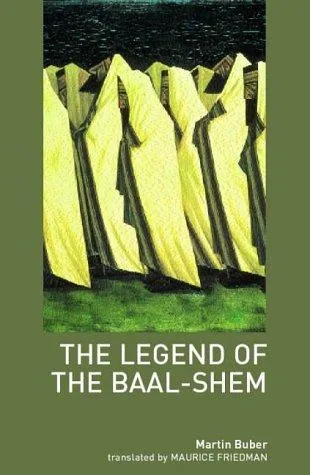
Die Legende des Baalschem
 65
65

Die Legende des Baalschem


Martin Buber's "Die Legende des Baalschem" is an indispensable exploration into the foundational narratives of Hasidism. Buber, a preeminent scholar of Jewish mysticism, breathes life into the tales of the Baal Shem Tov, illuminating the ecstatic ('hitlahavut') and profoundly immanent aspects of God's presence. His masterful prose captures the spirit of these legends, offering not just historical accounts but living parables of spiritual transformation. This volume is a treasure for anyone seeking to understand the esoteric underpinnings of Jewish devotional life, providing profound insights into divine encounter and the ecstatic pursuit of holiness. A truly essential read for students of Kabbalah and spiritual seekers alike.
📝 Description
65
Martin Buber translated tales of the Baal Shem Tov, focusing on 'hitlahavut' or ecstatic devotion.
In "Die Legende des Baalschem," Martin Buber presents translations of stories concerning Israel ben Eliezer, the founder of Hasidic Judaism, known as the Baal Shem Tov. Buber focuses on the concept of 'hitlahavut,' the burning ardor or ecstatic devotion central to Hasidic practice. The book collects and retells legends that illustrate the spiritual life and teachings of the Baal Shem Tov.
These narratives aim to convey the mystical insights and fervent faith of early Hasidism. Buber's approach highlights the transmission of esoteric wisdom through storytelling, bridging the gap between the everyday and the miraculous. The collection touches on themes of divine presence, the interconnectedness of all things, and the power of ecstatic prayer and contemplation.
This collection situates itself within the Hasidic movement, a branch of Jewish mysticism that emerged in 18th-century Eastern Europe. Hasidism emphasizes direct, personal experience of God through prayer, joy, and community. The stories of the Baal Shem Tov, as retold by Buber, serve as conduits for this experiential spirituality, illustrating concepts like divine immanence and the elevation of everyday actions into sacred acts. The focus on ecstatic devotion, or 'hitlahavut,' is a hallmark of Hasidic practice, seeking an intense emotional connection with the divine.
💡 Why Read This Book?
Embark on a journey into the incandescent soul of Hasidism. "Die Legende des Baalschem" offers direct access to the ecstatic wisdom and profound spiritual practices of the Baal Shem Tov. Discover ancient tales that illuminate divine immanence, the power of faith, and the ecstatic pursuit of holiness. Ideal for seekers of spiritual depth, scholars of Jewish mysticism, and anyone drawn to the transformative power of sacred storytelling. Experience the 'burning' of divine love.
⭐ Reader Reviews
Honest opinions from readers who have explored this book.
❓ Frequently Asked Questions
What is 'hitlahavut' as described in the book?
'Hitlahavut' signifies 'the burning,' representing the intense ardor, ecstatic fervor, and passionate devotion experienced in spiritual practice and divine contemplation within the Hasidic tradition.
Who was the Baal Shem Tov?
The Baal Shem Tov (Rabbi Israel ben Eliezer) was a revered 18th-century mystic and healer, the founder of the Hasidic movement, renowned for his teachings on divine immanence and ecstatic communion with God.
Is this book a historical biography?
While rooted in historical figures, "Die Legende des Baalschem" primarily presents hagiographical legends and mystical tales, focusing on spiritual lessons and esoteric insights rather than a strict biographical account.
What is the primary esoteric tradition explored?
The book is deeply rooted in Hasidism, a vibrant stream of Jewish mysticism that emerged in 18th-century Eastern Europe, emphasizing ecstatic prayer, divine immanence, and the spiritual significance of everyday life.
Can beginners read this book?
Yes, Buber's accessible yet profound style makes these legends engaging for beginners interested in Jewish mysticism, while offering rich depth for experienced practitioners and scholars.
🔮 Key Themes & Symbolism
Divine Immanence and Ecstatic Devotion
This theme explores the core Hasidic belief that God is not distant but intimately present within all creation and human experience. The legends illustrate how the Baal Shem Tov and his followers achieved profound connection through 'hitlahavut' – the burning ardor of ecstatic devotion. This involves transcending the ordinary through prayer, song, and joyous contemplation, finding the divine spark in every moment and action. The narratives serve as practical guides, demonstrating how to cultivate this heightened awareness and experience the palpable presence of the sacred in the everyday world, transforming mundane existence into a continuous spiritual encounter.
The Power of Storytelling as Spiritual Transmission
Buber’s work highlights the vital role of narrative in conveying esoteric wisdom. The legends of the Baal Shem Tov are not mere anecdotes; they are potent vehicles for transmitting spiritual insights, ethical teachings, and mystical experiences across generations. Each tale, imbued with symbolic depth and allegorical meaning, offers a unique pathway into the heart of Hasidic thought. By engaging with these stories, readers can internalize complex metaphysical concepts and divine principles, fostering a direct, felt understanding of spiritual truths. This theme underscores how sacred stories act as living conduits, preserving and disseminating the luminous legacy of the Baal Shem Tov's teachings.
Miracles, Faith, and the Transformation of Reality
The legends are replete with accounts of miraculous interventions and the extraordinary power of faith. These narratives explore how unwavering belief and devoted spiritual practice can influence and transform the fabric of reality. The Baal Shem Tov's actions often demonstrate a profound understanding of cosmic energies and divine will, enabling him to affect healing, provide guidance, and bring about spiritual awakenings. This theme invites readers to contemplate the potent interplay between human intention, faith, and the unfolding of divine providence, suggesting that through heightened spiritual consciousness, one can participate in the miraculous and align with a higher order of existence.
💬 Memorable Quotes
Direct passages from the work, attributed to the author.
“God is in everything.”
— This simple yet profound statement captures the Hasidic doctrine of divine immanence, suggesting that the sacred is not confined to temples or rituals but is present in every aspect of existence, waiting to be perceived.
“Joy is the highest form of worship.”
— This captures the Hasidic emphasis on ecstatic joy and celebration as essential components of spiritual practice, viewing true happiness as a direct manifestation of divine connection.
💡 Key Ideas
Editorial paraphrase of the work's core concepts — not direct quotes.
The true prayer is not in words, but in the soul's yearning.
This quote emphasizes the internal, ecstatic dimension of prayer ('hitlahavut'), prioritizing the burning desire and heartfelt connection of the soul over mere verbal recitation.
Even the smallest act can be a bridge to the divine.
Highlighting the spiritual significance of the mundane, this quote suggests that through mindful intention and devoted action, everyday tasks can become pathways to experiencing God's presence.
To see the world as it is, and to see it as it should be.
This quote points to the dual vision of the spiritual aspirant: acknowledging the present reality while actively striving, through faith and action, to manifest a divinely inspired ideal.
🌙 Esoteric Significance
Tradition
This work is a reference for understanding Hasidism, a vibrant and deeply esoteric branch of Jewish mysticism. Hasidism, emerging in the 18th century, focuses on the ecstatic experience of God's immanence in all things, the power of prayer and intention ('kavanah'), and the spiritual transformation of the individual and community. It draws heavily from earlier Kabbalistic concepts, reinterpreting them through a lens of fervent devotion, joy, and direct, personal encounter with the divine, often expressed through the concept of 'hitlahavut' – burning spiritual ardor.
Symbolism
The legends are rich with symbolic meaning. The Baal Shem Tov himself often functions as a Christ-like figure or divine intermediary, embodying spiritual wisdom and the power to connect the earthly with the celestial. Animals, natural phenomena, and everyday objects frequently carry deeper spiritual significance, representing divine forces or pathways to spiritual insight. The stories use allegory to illustrate concepts like the nature of evil, the path to redemption, divine providence, and the transformative power of a righteous soul, offering a symbolic map for working through the spiritual journey.
Modern Relevance
In a world often perceived as secular and disconnected, the teachings within "Die Legende des Baalschem" offer a potent reminder of the sacredness inherent in existence. The emphasis on divine immanence, the power of joy and ecstatic devotion, and the spiritual significance of every moment provides a profound counter-narrative to alienation and materialism. For contemporary seekers, these tales offer practical wisdom on cultivating spiritual awareness, finding meaning in daily life, and fostering a deeper connection with the divine, resonating with a universal yearning for transcendence and spiritual fulfillment.
👥 Who Should Read This Book
This collection is a profound treasure for several groups. For **beginners** curious about Jewish mysticism, Buber's accessible prose offers an engaging entry point into the vibrant world of Hasidism. **Scholars** of religion and philosophy will find Buber's nuanced interpretation and the primary source material important for academic study. **Spiritual seekers** drawn to ecstatic practices, divine immanence, and the power of faith will discover rich inspiration and practical insights. **Practitioners** of contemplative or mystical traditions may find common ground and new perspectives on prayer, devotion, and the ecstatic experience of the divine. Ultimately, anyone seeking a deeper, more luminous understanding of the human spirit's connection to the sacred will be profoundly moved.
📜 Historical Context
"Die Legende des Baalschem" emerges from the fertile spiritual field of 18th-century Eastern Europe, a period marked by both socio-economic hardship and profound religious fervor within Jewish communities. The Hasidic movement, spearheaded by the Baal Shem Tov, arose as a counterpoint to intellectualized rabbinic Judaism, emphasizing ecstatic prayer, joy, the immanence of God, and the spiritual significance of the common person. Martin Buber, a key figure in 20th-century philosophy and Jewish thought, rediscovered and reinterpreted these ancient tales, presenting them to a wider audience with his unique philosophical lens. His work bridged the gap between historical accounts and existential meaning, making the spiritual core of Hasidism accessible and relevant for modern readers grappling with faith, meaning, and the divine.
📔 Journal Prompts
Reflect on a moment in your life where you felt a profound sense of divine immanence. Describe the circumstances and the feeling it evoked.
Consider the concept of 'hitlahavut' (burning ardor) in your own spiritual practice. How can you cultivate more fervent devotion in your prayers or meditations?
Analyze a challenging situation you have faced. How might a Hasidic perspective, focusing on divine presence and faith, offer a different way of understanding or responding to it?
Identify an everyday object or activity that you could imbue with greater spiritual significance, transforming it into a 'bridge to the divine.'
Explore the role of joy in your spiritual life. How can you integrate more celebration and gratitude into your journey of faith, as advocated by Hasidic tradition?
🗂️ Glossary
Hitlahavut
A Hebrew term signifying 'burning' or 'ardor,' referring to the intense, ecstatic fervor and passionate devotion central to Hasidic spiritual practice and the experience of divine presence.
Baal Shem Tov
Literally 'Master of the Good Name,' this was the title of Rabbi Israel ben Eliezer (c. 1698–1760), the founder of the Hasidic movement, revered as a mystic, healer, and spiritual leader.
Kavanah
Hebrew for 'intention' or 'direction,' referring to the focused, mindful intention and spiritual concentration required in Jewish prayer and ritual practice to connect with the divine.
Immanence
The philosophical or theological concept that divine presence is pervasive and inherent within the material universe and all of existence, a core tenet of Hasidism.
Shivhe ha-Besht
A foundational collection of hagiographical legends and biographical accounts of the Baal Shem Tov, providing insight into his life, teachings, and miracles.
This book appears in 1 collection
🔮 Readers Also Liked
Browse all →









More by Martin Buber
All books →




From the “Kabbalah” Collection
View all →









More Free Kabbalah & Jewish Mysticism Books
View all →